What Is Wheel Balancing
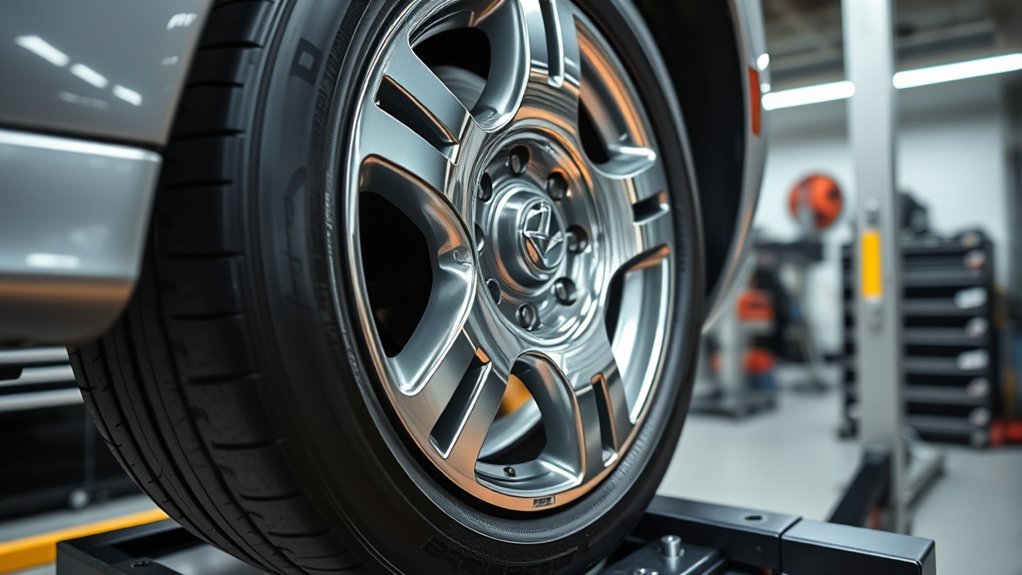
Wheel balancing guarantees your tires and wheels rotate evenly around the axle by placing small weights on the rim to counteract heavy spots. This process is essential to ensure smooth and safe driving. It prevents vibrations, uneven tire wear, and handling issues caused by imbalances.
Properly balanced wheels improve your ride comfort, protect suspension components, and can even boost fuel efficiency. If you experience shaking at higher speeds or uneven tire wear, it’s time for a balance check.
You can find out how balancing saves you money and how to get it done professionally next.
What Wheel Balancing Means and How It Works
How does wheel balancing improve your vehicle’s performance? It guarantees that your tire and wheel assembly rotates evenly around the axle, preventing vibrations.
When you drive, any imbalance causes the wheel to wobble slightly, which compromises handling and accelerates tire wear. Wheel balancing involves placing small weights on the wheel rim to counteract heavy spots detected by a balancing machine.
This process is not an unrelated topic to vehicle maintenance but a crucial technical adjustment. Unlike a random idea, wheel balancing relies on precise measurements and calibration to optimize stability and ride comfort.
Why Wheel Balancing Matters for Your Car
Why should you prioritize wheel balancing for your car? Proper wheel balance ensures even weight distribution, preventing uneven tire wear. It also reduces vibrations that affect handling and comfort.
When wheels are unbalanced, you risk damage to suspension components and decreased fuel efficiency.
| Aspect | Impact of Poor Wheel Balance | Benefit of Proper Wheel Balance |
|---|---|---|
| Tire Wear | Uneven, premature wear | Even wear, longer tire life |
| Vehicle Vibration | Steering wheel, seat shakes | Smooth ride, reduced vibrations |
| Mechanical Stress | Damaged suspension parts | Preserved suspension integrity |
Signs Your Wheels Need Wheel Balancing Now
When should you get your wheels balanced? You need to address imbalanced wheels as soon as you notice vibration symptoms. These usually occur as a shaking sensation in the steering wheel, floorboard, or seat, especially at speeds above 50 mph.
If your vehicle pulls to one side or you detect uneven tire wear, these are also clear indicators that your wheels require balancing. Ignoring these signs can lead to compromised handling and increased stress on suspension components.
Additionally, if you recently had new tires installed or experienced a tire repair, it’s prudent to check for wheel balance. Promptly responding to vibration symptoms ensures smoother rides and prime tire performance, preventing further mechanical issues related to wheel imbalance.
How Wheel Balancing Saves You Money and Extends Tire Life
Regularly balancing your wheels prevents uneven tire wear and reduces strain on your vehicle’s suspension system. This balance procedure ensures wheel weights are correctly applied, which helps reduce vibration and improves handling.
By maintaining balanced wheels, you minimize the need to replace tires prematurely, ultimately saving you money. When you analyze costs, investing in regular wheel balancing is far more economical than frequent tire replacements or suspension repairs.
| Benefit | Explanation |
|---|---|
| Reduce Vibration | Minimizes shaking, enhancing comfort and safety |
| Improve Handling | Ensures stable and responsive steering |
| Extend Tire Life | Prevents uneven wear, maximizing tire usage |
| Lower Maintenance Cost | Reduces wear on suspension, cutting repair bills |
Consistent balancing keeps your vehicle efficient and cost-effective.
How to Get Your Wheels Professionally Balanced
Maintaining balanced wheels plays a key role in vehicle performance and cost savings, but achieving this requires professional equipment and expertise. To get your wheels professionally balanced, visit a certified automotive service center equipped with computerized balancers.
A technician will first inspect your tires and adjust tire pressure to manufacturer specifications, ensuring accurate balance readings. Next, the wheel assembly is mounted on the balancing machine, which spins it to detect imbalances.
The machine then indicates precise locations for weight placement. The technician attaches calibrated weights to the rim to correct any imbalance, achieving smooth rotation. After balancing, they’ll perform a road test to confirm vibration elimination.
Regular professional balancing, alongside proper tire pressure maintenance, helps optimize tire wear, improve fuel efficiency, and enhance driving safety.
Frequently Asked Questions
Can I Balance My Wheels at Home Without Special Equipment?
You can’t properly balance your wheels at home without specialized equipment. Effective wheel balancing requires precise tools, so for accurate results and safe home maintenance, it’s best to rely on professional services rather than DIY attempts.
How Often Should Wheel Balancing Be Done for New Tires?
Don’t put the cart before the horse; balance new tires every 5,000 to 6,000 miles. Timing considerations matter, as unrelated topic factors like road conditions affect wear, ensuring smooth performance and extending tire lifespan.
Does Wheel Balancing Affect Fuel Efficiency Significantly?
Wheel balancing doesn’t markedly improve fuel efficiency; its primary function prevents random noise and vibrations. Treat fuel economy as an unrelated topic when balancing wheels. Focus on ride quality and tire longevity for practical benefits instead.
Are There Different Types of Wheel Balancing Methods?
Yes, you’ll find two primary types of balancing: static and dynamic. Static balances weight distribution on one plane, while dynamic considers multiple planes.
This methods overview helps you choose the right approach for precise wheel performance.
Can Wheel Balancing Fix All Types of Vibration Issues?
No, wheel balancing can’t fix all vibration issues. Some problems, like worn suspension parts, are unrelated topics.
Think of it as an off topic example: fixing your tires won’t solve engine or brake vibrations.
Conclusion
You might think wheel balancing is a minor detail, but neglecting it can cause major issues—from uneven tire wear to costly repairs.
On the flip side, properly balanced wheels ensure smooth driving, extend tire life, and save you money over time.
Don’t let a small imbalance turn into a big problem; take action now and get your wheels professionally balanced to maintain optimum vehicle performance and safety. Proper wheel balancing is essential for a safe and comfortable ride.