How to Tighten a Tonneau Cover
To tighten your tonneau cover, start by inspecting all mounting points for gaps, looseness, or misalignment. This initial check helps identify areas that need adjustment for a secure fit.
Use appropriate tools like a ratchet wrench or screwdriver to evenly adjust tension straps, clamps, and fasteners. Make sure the cover is snug and wrinkle-free without overstretching any components.
Recalibrate tension knobs after weather changes and ensure that latches securely engage. Regularly verify the rails and attachment points to maintain a tight seal.
To master specific cover types and troubleshoot fit issues, continue exploring these key techniques and adjustments.
How to Inspect Your Tonneau Cover for Looseness
How can you tell if your tonneau cover needs tightening? Begin with a thorough inspection check, focusing on the mounting alignment and the cover’s tension. Visually examine all mounting points for gaps, misalignment, or looseness.
Run your hand along the edges to detect any slack or uneven tension. Next, test the cover by applying gentle pressure in different areas; noticeable movement indicates looseness. Check for rattling noises while driving, which often signal poor mounting alignment or loose fasteners.
Also, inspect the latches and clamps to ensure they engage securely. If you find misaligned mounts, loose hardware, or sagging fabric, it’s time to tighten the cover. Regular inspection checks prevent water ingress and wind noise, maintaining optimal performance and durability.
Essential Tools for Tightening Tonneau Covers
What tools do you need to tighten your tonneau cover effectively? Start with a ratchet wrench or socket set to adjust bolts or clamps securely. A torque wrench helps you apply manufacturer-specified tightness, crucial for adhering to your maintenance schedule and avoiding damage.
You’ll also need a flathead or Phillips screwdriver, depending on your cover’s fasteners. A rubber mallet can assist in repositioning parts without causing dents. Keep a clean cloth handy to wipe surfaces before tightening, ensuring proper grip and reducing wear.
Always consult your tonneau cover’s manual for specific tool requirements and torque values to respect warranty considerations. Using these tools precisely keeps your cover tight, functional, and compliant with maintenance protocols, extending its lifespan and maintaining warranty eligibility.
Tightening Soft Roll-Up and Folding Covers
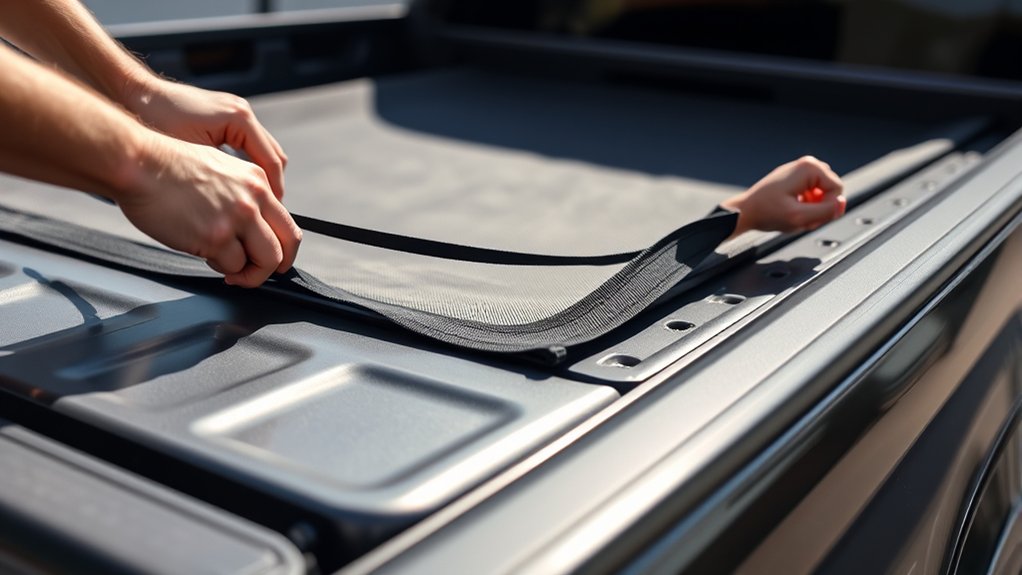
After gathering the necessary tools, you can focus on tightening soft roll-up and folding tonneau covers. These covers rely on tension systems that may loosen over time, affecting protection and appearance.
Gather tools and tighten your soft roll-up or folding tonneau cover to restore tension and maintain protection.
Start by checking the tension on the cover’s front rail or clamps. Next, adjust the side rails or Velcro strips for a snug fit. Finally, inspect the cover’s snaps or straps to ensure they’re secure.
Tighten clamps or latches along the front edge to increase tension.
Adjust side rails or Velcro strips to remove slack.
Secure snaps or straps firmly without overstretching the cover.
These steps ensure your soft roll-up and folding covers remain taut, preventing water pooling and wind noise.
How to Tighten Hard Folding and Retractable Covers
When was the last time you checked the tension on your hard folding or retractable tonneau cover? To maintain optimal fit, regularly tighten fasteners and adjust seals to prevent air and water leaks.
Start by inspecting all bolts and clamps, tightening as necessary to restore rigidity. Next, examine seals along the edges and adjust or replace them to ensure a snug, weather-tight closure.
Avoid over-tightening, which can damage components.
| Step | Action | Purpose |
|---|---|---|
| 1 | Tighten fasteners | Restore frame rigidity |
| 2 | Inspect seals | Identify wear or gaps |
| 3 | Adjust seals | Ensure weather-tight fit |
| 4 | Test cover tension | Confirm proper alignment |
| 5 | Repeat regularly | Maintain long-term cover integrity |
Securing Snap-On and Clamp-On Tonneau Covers
To secure snap-on tonneau covers, you’ll need to properly align and press the snaps until they click firmly in place. For clamp-on covers, tighten the clamps evenly using the appropriate wrench or screwdriver to ensure a snug fit without damaging the frame. Gather basic tools like a socket wrench set and pliers before starting to streamline the adjustment process.
Snap-On Cover Adjustment
How do you guarantee your snap-on or clamp-on tonneau cover stays firmly secured? Focus on precise snap-on adjustment to maintain tension and prevent loosening. Start by inspecting the snap fasteners for wear or debris; clean and replace as needed.
Next, adjust the cover by repositioning the snaps along the mounting rail, ensuring uniform tension across the bed. Finally, test the cover’s firmness by pressing down at various points to spot any slack.
Key steps for effective snap-on adjustment:
- Check snap fasteners for damage or dirt buildup
- Reposition snaps evenly to balance cover tension
- Confirm secure fit by applying pressure across the cover
These actions ensure your snap-on tonneau cover remains taut, durable, and secure.
Clamp-On Cover Tightening
After ensuring your snap-on tonneau cover is properly adjusted, focus on tightening clamp-on covers for a secure fit. Start by locating the clamps along the truck bed rails. Check the clamp on contents to confirm they include tightening screws or bolts.
Using two word discussion ideas, approach each clamp systematically, tightening incrementally to avoid uneven pressure that could warp the cover. Ensure the clamps engage firmly without over-tightening, which risks damaging the rails or cover.
Once all clamps are snug, inspect the cover’s tension across the bed to verify uniformity. Adjust as needed by loosening and re-tightening individual clamps. Proper clamp-on cover tightening enhances weather resistance and prevents flapping while driving, maintaining the cover’s longevity and your cargo’s protection.
Tools Needed for Securing
Which tools do you need to secure snap-on and clamp-on tonneau covers effectively? Proper tension testing and leak prevention require the right equipment.
First, you’ll want a tension gauge to measure and adjust cover tightness accurately, ensuring optimal tension for durability and weather resistance. Next, a set of adjustable clamps is essential for clamp-on covers, providing secure attachment without damaging your truck bed.
Finally, a rubber mallet helps you gently snap covers into place without causing tears or dents. These tools work together to maintain cover integrity and prevent water ingress. Using them correctly guarantees a tight fit, enhancing performance and longevity of your tonneau cover.
Always check tension after installation to avoid slack that leads to leaks.
- Tension gauge
- Adjustable clamps
- Rubber mallet
Tips to Keep Your Tonneau Cover Snug Over Time
To keep your tonneau cover snug over time, maintain a regular cleaning routine to prevent dirt buildup that can affect tension. Periodically inspect and adjust the tension mechanisms to compensate for material stretching or weather changes. These steps ensure consistent fit and optimal performance.
Regular Cleaning Routine
How often should you clean your tonneau cover to maintain its tightness? Establishing a consistent cleaning cadence is crucial for regular maintenance and preventing material degradation. Dirt, debris, and grime can loosen the cover’s fit, so timely removal preserves tension and extends lifespan.
To maintain optimal snugness, follow this cleaning routine:
- Use a mild soap solution and soft cloth to gently remove dirt without damaging the cover’s surface.
- Rinse thoroughly with water to prevent soap residue buildup, which can deteriorate seals.
- Allow the cover to air dry completely before closing to avoid moisture-related sagging or mold formation.
Adhering to this schedule, ideally once every two weeks or after heavy use, ensures your tonneau cover remains taut and functional over time.
Adjusting Tension Mechanisms
When should you adjust the tension mechanisms on your tonneau cover to maintain a snug fit? Perform adjustment calibration after heavy use, exposure to extreme weather, or noticeable slack. Proper tension ergonomics prevent flapping and water pooling, extending cover life.
Use the table below to guide your calibration process:
| Trigger Condition | Adjustment Action | Expected Outcome |
|---|---|---|
| Cover slack noticed | Tighten tension straps | Snug, wrinkle-free cover |
| Post-weather change | Recalibrate tension knobs | Uniform tension across |
| After cleaning | Check and retighten fasteners | Secure fit without gaps |
Regularly inspect and adjust to maintain optimal tension ergonomics. This precise calibration ensures your tonneau cover remains tight, protecting your truck bed effectively.
Troubleshooting Common Tonneau Cover Fit Problems
Why does your tonneau cover fail to fit snugly despite proper installation? Often, stray concerns or irrelevant topics, like unrelated bed accessories, distract from diagnosing fit issues. Focus on key mechanical and material factors affecting fit.
Check these common problems:
- Improper tension adjustment: Even slight loosening can cause sagging; re-tension per manufacturer guidelines.
- Warped or damaged rails: Inspect rails for bends or damage that prevent a tight seal.
- Incorrect attachment points: Verify that clamps and fasteners are secured at correct locations to avoid gaps.
Addressing these issues directly ensures a tighter fit. Avoid chasing irrelevant topics that don’t impact tension or seal integrity, as they waste time and don’t solve your cover’s fit problems.
Frequently Asked Questions
What Materials Are Tonneau Covers Typically Made From?
You’ll find tonneau covers made from materials diversity like vinyl, fiberglass, aluminum, and canvas. Fabrication techniques vary, including welding and stitching, to enhance durability, flexibility, and weather resistance, ensuring optimal protection and performance on your truck bed.
How Do Tonneau Covers Affect Fuel Efficiency?
Oh sure, tonneau covers won’t turn your truck into a rocket, but they do subtly improve fuel efficiency by smoothing airflow.
Yep, they alter aerodynamics just enough to shave off drag and save you some gas.
Can Tonneau Covers Be Painted to Match My Truck?
Yes, you can paint your tonneau cover, but ensure paint compatibility with its material, usually vinyl or fiberglass. For precise color matching, use automotive-grade paint and primer designed for flexible surfaces to prevent cracking or peeling over time.
Are Tonneau Covers Waterproof or Water-Resistant?
You’ll find tonneau covers mostly water-resistant, not fully waterproof. Waterproof vs water-resistant matters because water-resistant materials repel moisture but may allow seepage under pressure, while waterproof ones provide complete protection against water intrusion.
How Do I Clean and Maintain My Tonneau Cover?
You should follow a regular maintenance schedule, using gentle cleaning techniques like mild soap and water. Avoid harsh chemicals, rinse thoroughly, and dry completely to prevent damage.
Inspect seals and hardware monthly for optimal durability and performance.
Conclusion
You want your tonneau cover tight and secure, not loose and flapping in the wind. While a slack cover invites damage and water leaks, a properly tightened one protects your cargo and boosts your truck’s efficiency.
By regularly inspecting, adjusting clamps, and tightening mechanisms, you maintain a precise fit. The difference between a sloppy cover and a snug, well-maintained one is subtle but essential—your truck’s performance depends on it.
Stay proactive and keep it tight to ensure your tonneau cover provides the best protection and durability. Tightening your tonneau cover properly is key to maintaining its effectiveness and your truck’s overall performance.