Can I Mix Conventional and Synthetic Oil
You can mix conventional and synthetic oil since they’re chemically compatible, but doing so may change viscosity and reduce additive effectiveness, impacting engine protection.
To keep your engine running smoothly, use oils with the same viscosity grade and ensure both meet your vehicle’s specifications. Avoid mixing if a full oil change is imminent, as blends can degrade faster and potentially affect warranty coverage.
Understanding these factors helps maintain engine health and performance over time.
What’s the Difference Between Conventional and Synthetic Oil?
How do conventional and synthetic oils differ in composition and performance? Conventional oil derives from crude oil through refining, containing natural hydrocarbons with additives to enhance function.
Synthetic oil, however, is engineered by chemically modifying base molecules, optimizing engine chemistry for consistent performance. This design improves thermal stability, oxidation resistance, and flow characteristics under extreme conditions.
You might have heard viscosity myths suggesting synthetic oils are always thinner, but viscosity grades exist across both types, ensuring compatibility with specific engines. Synthetic oils maintain viscosity better over time, reducing engine wear and sludge buildup.
Understanding these distinctions helps you choose the right oil based on your engine’s demands and operating environment, ensuring optimal lubrication and protection.
Can You Safely Mix Conventional and Synthetic Oil?
You can generally mix conventional and synthetic oils because they are chemically compatible, but it may affect overall performance. It’s important to consider how the blend impacts viscosity, additives, and engine protection. Always follow your vehicle manufacturer’s recommendations to ensure optimal engine function and warranty compliance.
Chemical Compatibility Explained
Why does chemical compatibility matter when mixing conventional and synthetic oils? Understanding this ensures you maintain your engine’s health and adhere to maintenance basics effectively. Both oil types share base oils and additives, but their chemical structures differ. When mixed, these differences can affect oil performance and protection.
Here are key points about chemical compatibility:
- Additive Interaction: Synthetic oils contain advanced additives that may not blend uniformly with conventional oil additives.
- Viscosity Stability: Mixing can alter viscosity, impacting lubrication efficiency.
- Engine Terminology: Compatibility impacts oil film strength and wear protection.
- Deposit Control: Improper mixing may reduce detergency, leading to sludge buildup.
Being aware of these factors helps you make informed decisions, ensuring your engine stays protected without compromising oil function.
Performance Impact Considerations
When considering whether you can safely mix conventional and synthetic oil, it’s essential to evaluate the performance impacts on your engine’s lubrication system. Mixing oils can alter oil viscosity and additive effectiveness, potentially affecting engine protection and efficiency.
Also, you must consider warranty implications, as some manufacturers may void coverage if non-recommended blends are used.
| Factor | Impact on Engine Performance |
|---|---|
| Oil Viscosity | Mixing may change viscosity, affecting flow and protection |
| Additive Package | Dilution can reduce anti-wear and detergency properties |
| Thermal Stability | Synthetic oils generally offer better stability under heat |
| Warranty Implications | Non-compliance may lead to denied claims or reduced coverage |
Understanding these variables helps you decide if mixing oils aligns with your vehicle’s needs.
Manufacturer Recommendations Matter
How do manufacturer guidelines influence the decision to mix conventional and synthetic oils? They provide essential directives to ensure normal compatibility and maintain engine integrity. Ignoring these can lead to performance issues or warranty voidance.
When considering mixing oils, pay close attention to:
- Approved Oil Types: Verify if the manufacturer permits blending synthetic with conventional.
- Oil Specifications: Ensure both oils meet required viscosity and quality standards.
- Long Term Storage Advice: Follow recommendations to prevent degradation during storage.
- Warranty Conditions: Confirm that mixing won’t affect warranty coverage.
How Mixing Oils Affects Engine Performance and Protection
When you mix conventional and synthetic oils, the overall lubrication quality can change, potentially affecting engine efficiency. This blend may alter how well the oil protects against wear and tear, impacting engine longevity. You also need to consider the compatibility of additives and base oils to ensure optimal performance and protection.
Impact On Lubrication Quality
Although mixing conventional and synthetic oils may seem convenient, it can alter the lubricant’s viscosity and additive balance, potentially compromising engine performance and protection. There’s insufficient evidence on the long term effects of such mixtures, leaving uncertainty about their reliability.
When you mix these oils, consider:
- Changes in viscosity that may reduce lubrication efficiency.
- Dilution of additives designed for specific oil types.
- Potential incompatibility affecting oil stability under heat.
- Variations in detergent and anti-wear properties impacting protection.
These factors can affect how well the oil maintains a protective film and resists breakdown, which is critical for optimal engine operation. To ensure consistent lubrication quality, it’s best to follow manufacturer recommendations rather than mixing oil types.
Engine Wear And Tear
Mixing conventional and synthetic oils can directly influence engine wear and tear by altering the protective properties that each oil type provides. Synthetic oils generally offer superior oxidation resistance and maintain viscosity better under extreme conditions, which safeguards engine components more effectively.
When you mix the two, you might compromise these benefits, potentially increasing metal-to-metal contact and accelerating wear. Modern engine design often demands consistent oil performance to optimize fuel efficiency and minimize friction.
Using a mixed oil blend may disrupt this balance, reducing overall engine protection and possibly impacting fuel economy. To ensure your engine runs smoothly and lasts longer, you need to consider how the mixed oil affects the lubrication film strength and additive performance, both critical for protecting intricate engine parts designed for specific oil characteristics.
Oil Compatibility Considerations
How does combining conventional and synthetic oils impact your engine’s performance and protection? Understanding oil compatibility is essential because mixing can alter additive interaction, which directly affects lubrication quality. Here’s what you should consider:
- Additive Formulation Differences: Synthetic oils contain advanced additives that may not blend seamlessly with conventional oil additives, risking reduced effectiveness.
- Viscosity Stability: Mixing oils can change viscosity, impacting how well the oil protects against wear and maintains pressure.
- Detergent and Dispersant Balance: Incompatible additive packages may compromise engine cleanliness and sludge control.
- Manufacturer Recommendations: Always check if your engine’s specs allow mixing to avoid voiding warranties or reducing protection.
What Happens to Oil Additives When You Mix Oils?
What exactly happens to the oil additives when you combine conventional and synthetic oils? When you mix oils, the additive packages, such as detergents, dispersants, and anti-wear agents, may interact differently depending on their formulation.
Mixing conventional and synthetic oils can cause additive interactions that vary based on their specific formulations.
Oil branding significantly influences these additives’ compatibility; proprietary blends often optimize additive balance for either conventional or synthetic bases. Mixing can dilute the effectiveness of certain additives, reducing performance benefits like oxidation resistance or deposit control.
However, synthetic blends are designed to balance additive packages, offering more compatibility with conventional oils. Still, inconsistent additive chemistry might lead to reduced protection or sludge buildup over time.
To ensure additive synergy, it’s best to use oils from the same brand or those explicitly labeled as compatible synthetic blends, minimizing potential negative interactions in your engine’s lubrication system.
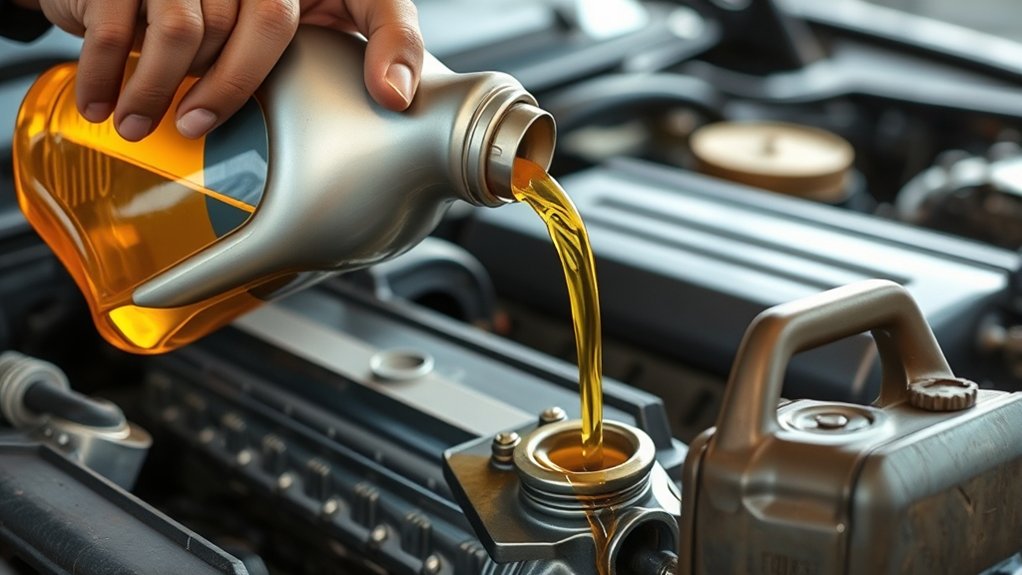
When Is It Okay to Top off Your Oil With a Different Type?
Understanding the behavior of additive packages when combining oils helps clarify when adding a different type of oil is acceptable. You can top off your oil with a different type under specific circumstances, provided you practice mindful maintenance and adhere to proper oil etiquette.
Consider these guidelines:
- Use the same viscosity grade to maintain consistent flow properties.
- Ensure both oils meet your engine’s specification standards.
- Limit topping off to emergency situations or minor oil level corrections.
- Avoid mixing if your vehicle is due for a full oil change soon.
How to Choose the Right Oil When Mixing Conventional and Synthetic
You need to guarantee the oils are compatible by checking their base stocks and additive packages before mixing. Consider factors like your vehicle’s manufacturer specifications, driving conditions, and oil viscosity ratings. Choosing the right combination helps maintain engine protection and performance.
Understanding Oil Compatibility
How do you determine if conventional and synthetic oils can safely mix in your engine? Understanding oil compatibility hinges on matching their chemical properties and additive packages. Here’s what you should consider:
- Base Oil Type: Both oils must share compatible base oils; synthetic blends often ease synthetic transitions.
- Additive Packages: Check for additive compatibility to avoid conventional pitfalls like sludge or deposit formation.
- Viscosity Grades: Ensure the viscosity ratings align to maintain proper lubrication under varying temperatures.
- Manufacturer Recommendations: Always follow your vehicle’s manual to confirm approved oil types and mixing guidelines.
Factors Influencing Oil Choice
When choosing oil for blending conventional and synthetic types, which factors should you prioritize to guarantee peak engine performance? Focus on matching oil viscosity grades to ensure consistent lubrication and prevent engine wear. Also, consider the oil’s additive package to maintain engine cleanliness and optimize performance.
Pay attention to how the blend affects engine emissions, as improper mixing can increase harmful outputs. Finally, check manufacturer specifications to avoid voiding warranties.
| Factor | Importance |
|---|---|
| Oil Viscosity | Ensures proper lubrication |
| Additive Package | Maintains engine cleanliness |
| Engine Emissions | Controls pollutant output |
| Manufacturer Specs | Compliance and warranty safety |
| Oil Quality | Overall engine protection |
Signs Your Engine Shows Damage From Mixing Oil Types
Why does your engine start making unusual noises or showing decreased performance after mixing conventional and synthetic oils? The primary issue lies in inconsistent engine oil viscosity and altered lubrication properties, which can compromise your engine’s internal protection.
When oil types mix, their chemical formulations may not blend uniformly, leading to suboptimal film strength and additive performance. Here are four signs indicating damage from mixing oil types:
- Increased engine knocking or ticking noises due to insufficient lubrication.
- Noticeable decline in engine responsiveness or acceleration.
- Elevated engine temperature caused by improper oil viscosity affecting heat dissipation.
- Accelerated oil degradation, shortening effective oil change intervals.
Monitoring these symptoms helps you identify potential harm early and maintain optimal engine health.
How Often Should You Change Oil if You Mix Conventional and Synthetic?
Recognizing the signs of engine stress from mixing conventional and synthetic oils highlights the importance of adjusting your oil change schedule. Because the oil chemistry differs, mixed oils can degrade faster, affecting lubrication and protection.
You should consider shortening oil change intervals compared to using a single oil type. Here are some discussion ideas for your maintenance plan:
| Oil Type Mix | Recommended Oil Change Interval | Notes |
|---|---|---|
| 100% Conventional | 3,000 – 5,000 miles | Standard protection |
| 100% Synthetic | 7,500 – 10,000 miles | Enhanced durability |
| Mixed Conventional + Synthetic | 4,000 – 6,000 miles | Balanced approach; monitor closely |
Adjusting intervals helps counteract potential chemical incompatibilities and ensures optimal engine performance.
Tips for Switching From Conventional to Synthetic Oil Completely
How can you ensure a smooth transition from conventional to synthetic oil? Start by considering the mixed compatibility of the two oil types, especially regarding oil additives that might affect performance. Follow these tips:
Ensure a smooth switch to synthetic oil by understanding additive compatibility and following key transition steps.
- Drain the conventional oil completely to avoid additive conflicts.
- Replace the oil filter to prevent contamination from residual conventional oil additives.
- Use a synthetic oil meeting your vehicle’s specifications to ensure optimal chemical compatibility.
- Monitor oil pressure and engine performance closely after switching to detect any irregularities.
What Experts Say About Mixing Conventional and Synthetic Oil
When you consider mixing conventional and synthetic oil, experts emphasize that compatibility depends largely on the specific formulations and additives used in each oil type. They caution against common mixing myths, such as the belief that combining oils will automatically degrade performance or cause engine damage.
In reality, most modern oils are designed with base stocks and additive packages that can blend without immediate issues. However, safety notes stress that frequent mixing or switching without proper oil change intervals can reduce the protective qualities of the lubricant, affecting viscosity and additive effectiveness.
To ensure optimal engine protection, experts recommend following manufacturer guidelines and using oils that meet the same industry standards rather than mixing indiscriminately. This approach minimizes risk while maximizing engine longevity and efficiency.
Frequently Asked Questions
Can Mixing Oils Affect My Vehicle’s Warranty?
Yes, mixing oils with different viscosity or poor compatibility can cause engine sludge, potentially voiding your warranty. Always check your manufacturer’s guidelines to avoid warranty implications and ensure your oil choice maintains optimal engine protection.
Do Different Oil Viscosities Impact Mixing Safety?
You might think mixing different oil viscosities is unsafe, but cross brand compatibility often ensures stability.
Still, combining oils with vastly different viscosities can affect performance, so always check manufacturer recommendations for optimal engine protection.
How Does Temperature Influence Mixed Oil Performance?
Temperature effects alter viscosity interactions in mixed oils, impacting flow and lubrication. You’ll notice thicker oil at low temperatures, reducing performance, while high heat thins the blend, potentially compromising engine protection and efficiency.
Are Synthetic Blends a Better Alternative to Mixing?
You’ll find synthetic blends better since they combine oils professionally, avoiding compatibility concerns. You cannot merge categories yourself without risking performance issues, so synthetic blends offer consistent protection and stability compared to mixing conventional and synthetic oils.
Can Mixing Oils Cause Sludge Buildup in the Engine?
Imagine your engine as a smoothie blender. Mixing oils with viscosity mismatch can create sludge buildup, like unblended chunks.
You’ll risk thickening deposits that harm performance, so avoid mixing to keep your engine’s lubrication precise and clean.
Conclusion
Mixing conventional and synthetic oil isn’t usually harmful in small amounts, but why risk compromising your engine’s performance? While the blend may dilute synthetic benefits, occasional top-offs are generally safe.
However, for optimal protection and longevity, sticking to one type and following recommended oil change intervals is best. If you decide to switch completely, do it carefully.
Ultimately, understanding your engine’s needs ensures you maintain peak efficiency and avoid costly damage. When it comes to mixing conventional and synthetic oil, it’s always wise to prioritize your engine’s health by choosing the right oil type consistently.