Is Soft or Hard Tonneau Cover Better
Choosing between a soft or hard tonneau cover depends on what matters most to you when selecting a tonneau cover. Soft covers offer lightweight flexibility, easy installation, and quick bed access, making them budget-friendly but less secure and durable.
Hard covers provide stronger theft protection, better weather resistance, and long-term durability, though they’re heavier and usually cost more. Your lifestyle and priorities, like security or convenience, will guide your choice.
If you want detailed insights on each option’s pros and cons, keep exploring.
Key Differences Between Soft and Hard Tonneau Covers
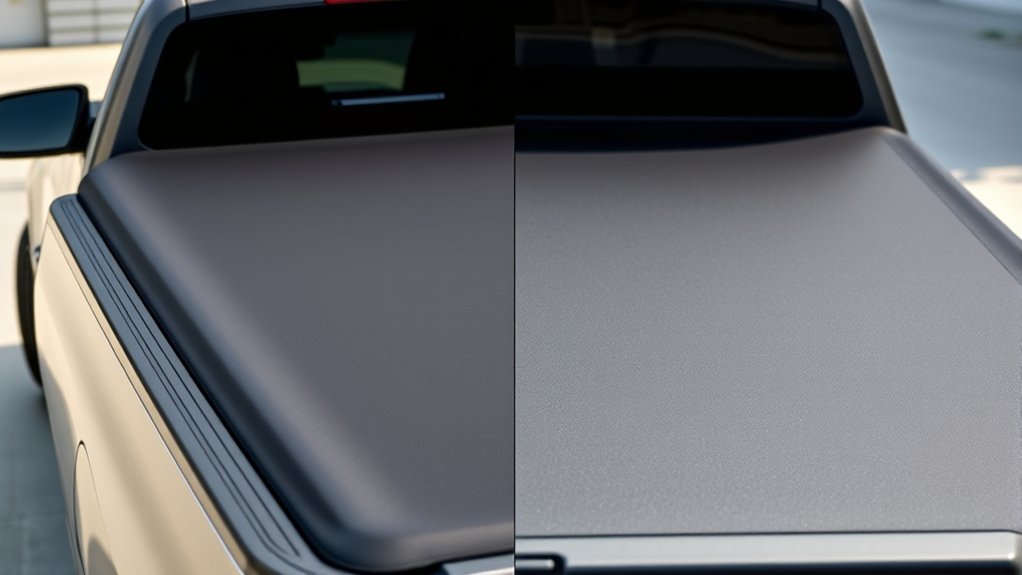
What sets soft and hard tonneau covers apart? You’ll notice soft accessories are typically made from vinyl or fabric, offering flexibility and lightweight convenience. They’re easier to roll or fold, making quick access to your truck bed simple.
On the other hand, hard styling features rigid materials like fiberglass or aluminum, providing enhanced security and durability. Hard covers generally resist weather and impacts better, giving your cargo solid protection.
While soft accessories appeal to those valuing ease and affordability, hard styling attracts users prioritizing robustness and a sleek, polished look. Understanding these fundamental differences helps you decide which type aligns with your needs, balancing factors like convenience, security, and aesthetics without getting bogged down in installation or upkeep details.
How Installation and Maintenance Differ for Soft vs. Hard Covers
You’ll find that installing soft tonneau covers is generally quicker and requires fewer tools than hard covers, which often need more precise fitting. Maintenance also varies, with soft covers needing regular cleaning and occasional tightening, while hard covers demand periodic lubrication and inspection for damage. Understanding these differences can help you choose the cover that fits your routine and durability expectations.
Installation Process Comparison
How much effort does it take to install and maintain soft versus hard tonneau covers? When you install a soft cover, you’ll typically find the process straightforward and quick, often requiring only clamps or snaps. This ease complements the soft security it provides. While easy to manage, it’s less rigid and offers moderate protection.
On the other hand, hard covers demand more precise installation steps, sometimes needing drilling or specialized tools, but they deliver hard reliability once in place. Their robust structure ensures a tighter, more secure fit, which justifies the additional effort. Both types generally include clear instructions, but your choice affects installation time and complexity.
Understanding these differences helps you decide which cover suits your needs and skill level best.
Maintenance Requirements Overview
After installing your tonneau cover, understanding the maintenance each type demands helps keep it functional and looking good over time. Soft covers require regular cleaning with mild soap and water to prevent dirt buildup and protect the vinyl or fabric.
You’ll also need to check and tighten the snaps, Velcro, or clamps periodically to ensure a secure fit. Hard covers, on the other hand, demand less frequent cleaning but benefit from occasional waxing to maintain their finish and protect against UV damage.
You should inspect hard cover seals to prevent water leaks and lubricate hinges or locks to keep them operating smoothly. Both types need proper care, but soft covers generally require more regular attention, while hard covers involve occasional preventive maintenance to stay in top shape.
Durability and Upkeep Differences
Typically, soft tonneau covers install more quickly and require simpler tools compared to hard covers, which often need precise alignment and sometimes professional assistance.
When it comes to durability, hard covers generally withstand impacts and weather better, resisting dents and scratches more effectively. However, soft durability has improved with modern materials, offering decent protection against UV rays and moisture, though they may be more prone to tears over time.
Regarding upkeep, soft upkeep usually involves regular cleaning and occasional reapplication of water repellents to maintain flexibility and prevent mildew. Hard covers demand less frequent maintenance but benefit from periodic checks of hinges and seals to avoid water leaks.
Understanding these differences helps you choose based on how much time and effort you want to spend on installation and maintenance.
Why Hard Tonneau Covers Offer Better Security and Durability
When you choose a hard tonneau cover, you get enhanced theft protection thanks to its solid construction and secure locking mechanisms. You’ll also benefit from superior weather resistance, keeping your cargo safe from rain, snow, and UV damage. Over time, hard covers maintain their material strength better, offering long-term durability compared to softer alternatives.
Enhanced Theft Protection
Because hard tonneau covers are constructed from sturdy materials like aluminum or fiberglass, they provide a markedly higher level of theft protection compared to soft covers. When you choose a hard cover, you benefit from hard durability that resists cutting, prying, and forced entry, unlike soft covers, which offer only soft security due to their flexible vinyl or fabric construction.
Hard covers often come with integrated locking mechanisms that securely fasten the cover to your truck bed, adding another layer of defense against theft. While soft covers can deter casual snooping, they’re more vulnerable to quick breaches.
If enhanced theft protection is a priority, hard tonneau covers provide peace of mind by combining robust materials with secure locking options, making it much harder for thieves to access your cargo.
Superior Weather Resistance
Beyond theft protection, the ability of a tonneau cover to shield your truck bed from harsh weather conditions plays a significant role in its overall security and durability. Soft protection covers, typically made from vinyl or fabric, offer basic water resistance but may allow moisture and debris to seep through during heavy rain or snow.
In contrast, hard tonneau covers provide superior weather resistance due to their solid construction, which prevents water infiltration and withstands extreme temperatures without warping or cracking. This hard durability ensures your cargo stays dry and protected, reducing the risk of rust or damage to the truck bed itself.
When you prioritize weather resistance, hard covers deliver a more reliable barrier, enhancing both the security and longevity of your truck bed.
Long-Term Material Strength
Although both soft and hard tonneau covers serve to protect your truck bed, hard covers stand out for their superior long-term material strength. Hard covers typically use rigid materials like fiberglass or aluminum, which resist wear and deformation over time.
Their low material flexibility means they maintain shape and structural integrity under stress, unlike soft covers that can sag or tear. This rigidity also enhances theft deterrence by making unauthorized access more difficult, giving you peace of mind when leaving your truck unattended.
While soft covers offer convenience and lighter weight, they generally don’t match the durability or security hard covers provide. If you’re prioritizing long-term protection and want a cover that withstands both environmental challenges and potential theft attempts, hard tonneau covers are the stronger, more secure choice.
How Soft Tonneau Covers Provide Flexibility and Easy Access
How do soft tonneau covers stand out when it comes to flexibility and easy access? Unlike hard covers, a soft cover is typically made from vinyl or fabric materials that are lightweight and easy to manipulate. You can quickly fold or roll back a soft cover, giving you quick access to your truck bed without struggling with heavy panels or complex latches.
This flexibility allows you to partially open the cover for longer items or fully retract it when needed. Additionally, many soft covers use simple snap or Velcro systems, making installation and removal straightforward. If you often haul varying cargo sizes or need to access your bed frequently, a soft tonneau cover offers convenience and adaptability, balancing protection with ease of use in everyday scenarios.
Weather Resistance: Soft vs. Hard Tonneau Covers Compared
When you’re choosing between soft and hard tonneau covers, weather resistance is a critical factor to take into account. Soft tonneau covers offer advantages like flexibility and water resistance, thanks to durable vinyl or fabric that sheds rain effectively.
However, they may allow occasional water seepage during heavy storms or when improperly sealed. On the other hand, hard tonneau covers provide superior weather protection through rigid, sealed panels that prevent water intrusion more reliably.
Their hard security also means they resist wind uplift and harsh conditions better, keeping your cargo dry and safe. While both cover types protect against most weather elements, hard covers generally offer a tighter barrier against extreme weather, whereas soft advantages focus on convenience and adequate resistance for everyday use.
Your choice depends on your typical weather challenges and cargo protection needs.
Budget and Long-Term Costs Compared for Tonneau Covers
When choosing between soft and hard tonneau covers, you’ll want to contemplate both the initial purchase price and the ongoing maintenance costs. Soft covers generally cost less upfront but may require more frequent replacements or repairs. Hard covers typically have a higher initial price but tend to offer greater durability, potentially saving you money over time.
Initial Purchase Price
Why does the initial purchase price play such a pivotal role in choosing between soft and hard tonneau covers? When you’re budgeting, that upfront cost often sets the tone for your decision.
Soft covers typically come with a lower price tag, making them attractive if you want to save initially. Hard covers, on the other hand, usually demand a higher investment due to materials and construction.
While this might seem like an unrelated topic to some, comparing these costs isn’t a random comparison; it’s essential for understanding your financial commitment. You’ll want to weigh how much you’re willing to spend now versus potential benefits, keeping in mind that this is just the starting point before considering other factors like maintenance or durability costs.
Maintenance and Durability Costs
How much you’ll spend on maintenance and repairs over time can considerably affect the true cost of your tonneau cover. While initial price matters, ongoing expenses often get overlooked, an irrelevant topic in some reviews but crucial for your budget. Comparing soft and hard covers, consider these factors:
- Soft covers usually need more frequent cleaning and occasional vinyl treatment to prevent cracking.
- Hard covers require less regular maintenance but may incur higher repair costs if hinges or locks fail.
- Replacement parts for hard covers tend to be pricier and less readily available.
- Soft covers might wear out faster, leading to full replacement sooner than hard covers.
This omitted discussion highlights how maintenance affects long-term value, helping you make a well-informed choice.
How Your Lifestyle Influences the Best Tonneau Cover Choice
What role does your daily routine play in choosing the right tonneau cover? Your lifestyle directly impacts which cover suits you best. If you frequently haul camping gear, you’ll want a cover that offers easy access and reliable protection from weather and theft.
Soft covers are typically lighter and more flexible, making loading gear quicker but potentially less secure. Hard covers, while often pricier, provide sturdier protection, which can reduce the risk of damage and lower insurance claims if your truck bed contents are valuable.
Consider how often you open and close the cover and the types of items you transport daily. Balancing convenience, security, and durability based on your routine ensures you select a tonneau cover that truly fits your lifestyle and protects your investment.
Truck Owners’ Views on Soft vs. Hard Tonneau Covers
When considering soft versus hard tonneau covers, truck owners often weigh their personal experiences and preferences heavily. You’ll find opinions vary, shaped by daily use rather than any unrelated topic or off topic discussion. Here’s what many truck owners consider:
- Durability: Hard covers often feel sturdier, while soft covers may wear faster under harsh conditions.
- Ease of Use: Soft covers usually fold back easily, offering quick access.
- Security: Hard covers generally provide better protection against theft.
- Appearance: Some prefer the sleek look of hard covers, while others like the flexibility of soft ones.
Understanding these views helps you decide which cover aligns best with your needs without getting sidetracked by unrelated topic debates or off topic discussion.
When to Choose a Soft Tonneau Cover
Deciding on a soft tonneau cover often depends on your priorities for convenience and flexibility. You’ll want a soft cover if you frequently need quick access to your truck bed since soft covers typically roll or fold back easily.
They’re lightweight and simple to install or remove, making them ideal if you switch between covered and uncovered loads. Soft covers usually cost less than hard covers, so they’re a practical choice if budget matters.
Additionally, if you’re looking for a cover that offers decent weather protection without the rigidity of a hard cover, a soft cover can be sufficient. However, keep in mind that soft covers may offer less security compared to hard covers, so consider your specific needs for protection and durability when making your choice.
When to Invest in a Hard Tonneau Cover
Why choose a hard tonneau cover over a soft one? When evaluating the benefit comparison, hard covers generally offer superior security and durability. If you want a cover that withstands harsh weather and resists theft, hard covers excel.
Hard tonneau covers provide better security and durability, ideal for harsh weather and theft protection.
However, consider the installation nuance. They often require more precise fitting and sometimes professional installation.
You should invest in a hard tonneau cover if:
- You need enhanced protection against theft and weather.
- You prefer a more rigid and durable material.
- You’re willing to manage a more involved installation process.
- You want a cover that maintains its shape under heavy loads.
Understanding these points helps you weigh if a hard tonneau cover fits your specific needs and lifestyle.
Frequently Asked Questions
Can Tonneau Covers Improve My Truck’s Fuel Efficiency?
Yes, tonneau covers like soft tonneau and hard tonneau can improve your truck’s fuel efficiency by reducing aerodynamic drag.
Hard tonneau covers typically offer better fuel savings due to their rigid, streamlined design.
Are Tonneau Covers Compatible With Truck Bed Liners?
You know what they say, “Measure twice, cut once.” Both soft tonneau and hard tonneau covers are compatible with most truck bed liners, but you should check fit and clearance to avoid damage or poor sealing.
Do Tonneau Covers Affect Truck Insurance Premiums?
You typically won’t see a direct insurance impact from installing a tonneau cover, soft or hard. Soft installation is easier, but neither usually affects premiums unless it significantly improves security or reduces theft risk.
Can I Customize the Color or Design of Tonneau Covers?
Yes, you can customize your tonneau cover with a custom color or unique design to match your style. Many manufacturers offer options or decals, letting you personalize your truck’s look while maintaining protection and functionality.
How Do Tonneau Covers Impact Truck Resale Value?
You’ll find tonneau resale value often improves with well-maintained covers, adding curb appeal and protection. Consider two word discussion ideas like “cover durability” and “market demand” to gauge how much impact your tonneau cover really makes.
Conclusion
Choosing between soft and hard tonneau covers feels like deciding between a fortress and a Swiss Army knife. If you crave unbeatable security and durability, hard covers are your ironclad champions.
But if flexibility and quick access are your game, soft covers are your nimble sidekicks. Your lifestyle and needs will tip the scales, so weigh these factors carefully.
Because when it comes to protecting your truck bed, choosing the right tonneau cover is essential. Ultimately, the best choice depends on whether you prioritize security or convenience in your soft or hard tonneau cover.