Where Is Highlander Built
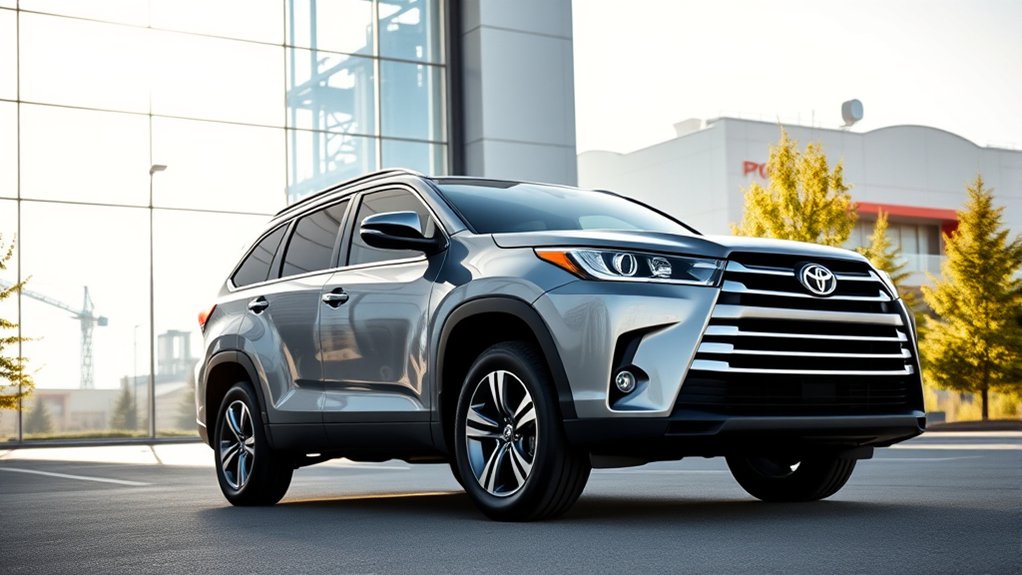
You’ll find the Toyota Highlander built mainly in North America and Asia, with sites chosen for market demand, cost efficiency, and supply chain advantages.
North American plants benefit from skilled labor and strong union collaboration, while Japanese facilities focus on precision and advanced robotics. Each location’s costs and supplier networks influence pricing and availability.
Toyota also plans to expand automation and sustainability efforts across production. Discover how these factors shape Highlander manufacturing and pricing worldwide.
Key Takeaways
- The Toyota Highlander is built in major production plants located in North America and Asia.
- North American Highlander plants benefit from skilled labor and close proximity to key buyers for faster delivery.
- Asian Highlander plants leverage integrated supply chains and just-in-time manufacturing for efficiency.
- Site selection depends on market demand, cost efficiency, and regional incentives such as tax breaks.
- Production locations influence pricing due to varying labor costs, supplier diversity, and regulatory compliance.
Where Is the Toyota Highlander Manufactured
Where is the Toyota Highlander manufactured? You’ll find its production spread across multiple strategic locales worldwide. Toyota selects these production locales based on factors like market demand and cost efficiency.
Regional incentives, such as tax breaks or subsidies offered by local governments, also heavily influence these decisions. By leveraging these incentives, Toyota optimizes manufacturing costs and supply chain logistics, ensuring competitive pricing and timely deliveries.
Understanding these factors helps you grasp why the Highlander isn’t built in just one place. Instead, Toyota maintains flexibility by operating in several regions, allowing it to adapt quickly to market changes and consumer preferences. This approach supports both global reach and localized production efficiency.
Major Highlander Production Plants by Region
Which key regions house the major production plants for the Toyota Highlander? Primarily, you’ll find significant manufacturing facilities in North America and Asia. Toyota employs a global sourcing strategy to ensure high-quality materials and components reach these plants efficiently.
In North America, plants operate with strong collaboration from labor unions, which play a critical role in maintaining workforce stability and production standards. Meanwhile, Asian plants benefit from integrated supply chains that support just-in-time manufacturing.
These regions are strategically selected based on market demand, logistics, and workforce expertise. Understanding where Highlanders are built helps you appreciate the complexity behind their assembly and the importance of regional factors like labor unions and global sourcing in shaping production efficiency and vehicle quality.
Why North American Plants Matter for Highlander Production
How do North American plants contribute to the success of Highlander production? They play a pivotal role by enabling efficient engine relocation and ensuring smooth coordination with labor unions. This flexibility helps optimize manufacturing costs and maintain high-quality standards.
You’ll find that North American facilities adapt quickly to market demands, giving Highlander a competitive edge.
| Aspect | Impact on Production | Benefit to Highlander |
|---|---|---|
| Engine Relocation | Streamlines supply chain | Reduces downtime, cuts costs |
| Labor Unions | Collaborative workforce | Enhances productivity |
| Market Proximity | Closer to key buyers | Faster delivery times |
| Skilled Labor | Experienced assembly teams | Maintains build quality |
| Regulatory Compliance | Meets local standards | Avoids legal delays |
These factors show why North American plants matter immensely for Highlander production.
Unique Features of Highlander Assembly in Japan
When you explore Highlander assembly in Japan, you’ll find precision engineering standards that guarantee every component meets strict quality criteria. You’ll also notice the advanced robotics integration streamlines production with consistent accuracy. This process is supported by a highly skilled workforce that combines technical expertise with meticulous attention to detail.
Precision Engineering Standards
What sets the Highlander apart in terms of assembly is the meticulous precision engineering standard upheld in its Japanese manufacturing plants. You’ll notice how every component undergoes rigorous quality assurance to ensure optimal performance and durability.
This precision engineering approach guarantees that each Highlander meets exacting standards before it reaches you.
Key aspects include:
- Strict dimensional accuracy checks to maintain part consistency.
- Real-time monitoring systems that detect deviations instantly.
- Comprehensive quality assurance protocols at every assembly stage.
- Skilled technicians performing detailed inspections to uphold standards.
Advanced Robotics Integration
Why does the Highlander assembly process stand out in the automotive industry? It’s largely due to the advanced robotics integration used in its production. When you observe the assembly line in Japan, you’ll notice autonomous assembly systems handling complex tasks with remarkable precision.
These advanced robotics perform repetitive and delicate operations consistently, reducing human error and boosting efficiency. You’ll find robots seamlessly coordinating to weld, paint, and assemble components, ensuring each Highlander meets strict quality standards.
This integration allows for a streamlined workflow, minimizing downtime and optimizing production speed. By combining autonomous assembly with real-time monitoring, the facility quickly identifies and addresses any issues, maintaining high reliability.
This sophisticated use of technology sets Highlander’s assembly apart, reflecting Japan’s commitment to innovation in automotive manufacturing.
Skilled Workforce Expertise
Alongside cutting-edge robotics, the Highlander assembly benefits immensely from the expertise of a highly skilled workforce in Japan. This skilled workforce plays a crucial role in ensuring quality and precision throughout production, complementing automated systems.
Japan’s commitment to continuous gear modernization keeps the assembly process efficient and up-to-date with global standards. As part of a global workforce, these experts integrate traditional craftsmanship with advanced technology, enhancing overall vehicle performance.
Key aspects of the skilled workforce expertise include:
- Precision assembly techniques refined over decades
- Ongoing training programs focused on gear modernization
- Collaboration with robotics to optimize efficiency
- Strict quality control aligned with global workforce standards
You can see how Japan’s workforce excellence supports Highlander’s reputation for reliability.
Quality Control in Highlander Factories
How does Toyota guarantee that every Highlander meets its high standards before reaching your driveway? It’s all about rigorous quality control integrated into every step of the manufacturing process.
You’ll find that Highlander factories employ advanced inspection technologies and real-time data monitoring to catch defects early. This proactive approach not only ensures high-quality outcomes but also boosts factory efficiency by reducing rework and downtime.
Skilled technicians perform systematic checks on components, assembly lines, and final products, adhering strictly to Toyota’s quality protocols. By combining automated systems with human expertise, these factories maintain consistency and reliability.
How Global Supply Chains Affect Highlander Availability
Where do the various parts that make up your Highlander come from, and how does that impact its availability? The Highlander relies on a complex global supply chain, making global logistics essential. Efficient management ensures timely delivery of components from different regions, directly affecting production schedules.
Supplier diversification also plays a key role by mitigating risks like shortages or delays.
Here’s how global supply chains impact Highlander availability:
- Multiple suppliers reduce dependency on any single source.
- Transportation networks influence delivery speed and reliability.
- Disruptions in one region can delay the entire production line.
- Inventory management balances between overstock and shortage risks.
Understanding these factors helps you appreciate the challenges behind your Highlander’s availability.
How Manufacturing Locations Affect Toyota Highlander Pricing
The location where your Toyota Highlander is manufactured plays a significant role in determining its final price. Different manufacturing sites incur varying location costs, including labor, utilities, and taxes, which directly impact production expenses.
For example, plants in regions with higher wages or stricter regulations may lead to increased vehicle prices. Additionally, supplier diversity at each location influences costs; sites with access to a broad range of local suppliers can reduce transportation and logistics expenses, potentially lowering prices.
Conversely, limited supplier options can drive up costs due to reliance on distant or fewer vendors. Understanding how these factors vary by manufacturing location helps explain the price differences you might see in Highlanders across different markets and highlights Toyota’s strategic decisions in balancing cost efficiency with quality.
Toyota’s Future Plans for Highlander Production
What changes can you expect in the production of the Toyota Highlander in the coming years? Toyota plans to optimize production logistics by integrating advanced automation to enhance efficiency. They’ll also focus on strengthening collaboration with labor unions to ensure smooth workforce transitions amid technological upgrades.
Additionally, Toyota aims to diversify manufacturing locations to mitigate supply chain risks and meet global demand more effectively. Lastly, the company is committed to sustainability, incorporating eco-friendly materials and energy-efficient processes in future Highlander production.
- Implement advanced automation in production logistics
- Enhance cooperation with labor unions for workforce stability
- Diversify manufacturing sites globally
- Adopt sustainable manufacturing practices
These steps will help Toyota maintain Highlander’s quality while adapting to evolving market and environmental demands.
Frequently Asked Questions
What Engines Are Used in the Toyota Highlander?
You’ll find the Highlander engine options include a 3.5-liter V6 and a hybrid 2.5-liter four-cylinder. Both balance power and fuel economy, giving you efficient performance whether you choose traditional or hybrid models.
How Fuel-Efficient Is the Toyota Highlander?
You’ll find the Toyota Highlander offers solid fuel economy, especially with its hybrid option, balancing efficiency and power. Plus, its interior design maximizes comfort and space, making your fuel savings feel even more worthwhile on every trip.
What Safety Features Does the Highlander Include?
You know what they say, “Better safe than sorry.” The Highlander safety features include adaptive cruise control, lane departure alert, and automatic emergency braking, helping you confidently navigate mountain roads with enhanced protection and peace of mind.
Are There Hybrid Versions of the Toyota Highlander?
Yes, the Toyota Highlander offers hybrid availability, combining fuel efficiency with performance.
Depending on regional production, hybrid models may vary, so you should check local dealerships for specific configurations and options tailored to your area.
What Are the Top Competitors of the Toyota Highlander?
Picture oil paint blending vintage radios. Toyota Highlander’s top competitors, like Honda Pilot, Ford Explorer, and Subaru Outback, mix style and function.
You’ll find these rivals offer strong performance and family-friendly features, matching Highlander’s appeal precisely.
Conclusion
When you picture the Toyota Highlander rolling off assembly lines in North America and Japan, you see a blend of precision and innovation. These global plants, each with unique expertise and rigorous quality control, shape the Highlander’s reliability and pricing.
Understanding where it’s built helps you appreciate how Toyota’s supply chains and future plans keep this SUV ready for your journey—crafted thoughtfully across continents to meet your needs with consistent excellence.
Knowing where the Highlander is built gives you insight into the quality and care that go into this popular SUV.