Which Is Bigger Crv or Hrv
If you’re deciding between the Honda CR-V and HR-V, the CR-V is clearly bigger in overall exterior size, interior space, and cargo capacity. The CR-V offers more legroom and rear-seat comfort, making it a better choice for families or those needing extra space.
You’ll get up to 75.8 cubic feet of cargo room when folding the seats down in the CR-V. This larger size also provides better highway stability, though it can be trickier to park in tight spaces.
On the other hand, the compact HR-V is great for city driving and maneuverability. Keep exploring to see how these size differences impact your daily use.
Key Takeaways
- The CR-V is noticeably larger than the HR-V in overall length, width, and height.
- CR-V features bigger wheels, enhancing its larger exterior stance and road presence.
- Interior space, including legroom and headroom, is generally more spacious in the CR-V.
- CR-V offers significantly more cargo capacity both behind rear seats and with seats folded.
- The HR-V’s smaller size favors easier maneuverability and parking in tight urban environments.
Honda CR-V vs HR-V: Exterior Size Comparison
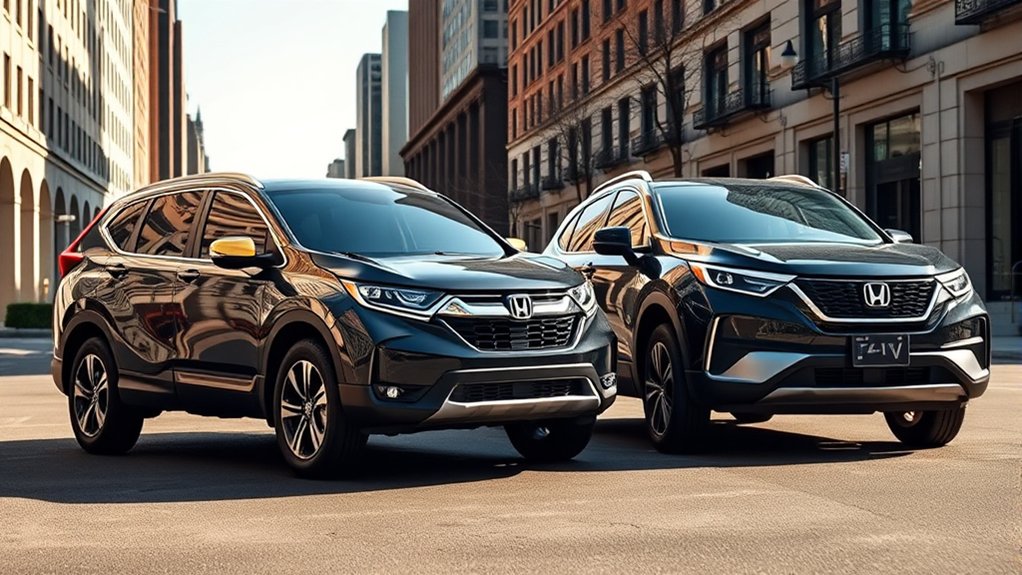
How do the Honda CR-V and HR-V compare regarding exterior size? The CR-V is noticeably larger, offering greater overall length, width, and height than the HR-V. This difference impacts your perception before you even step inside.
The HR-V’s more compact dimensions might lead you to expect a cramped cabin, but its design aims to maximize interior space despite its smaller footprint. The CR-V, however, sits on bigger, oversized wheels that contribute to a more commanding road presence and slightly higher ground clearance.
These wheels also affect the vehicle’s stance, emphasizing the CR-V’s larger exterior. When choosing between the two, you’ll find the CR-V’s size better suited for those prioritizing a larger vehicle, while the HR-V appeals if you want a smaller, more maneuverable option without sacrificing too much utility.
Which SUV Feels Roomier Inside?
When comparing the interior space of the Honda CR-V and HR-V, which one feels roomier can substantially influence your comfort and driving experience. The CR-V generally offers more legroom and headroom, making it feel more spacious, especially in the rear seats.
You’ll notice the HR-V, being smaller, feels cozier but can feel cramped on longer trips. Both vehicles provide adequate seating comfort, but the CR-V’s cabin design enhances openness.
Regarding ride quality, the HR-V may transmit more road imperfections, leading to a slightly bumpy ride, while the CR-V handles uneven surfaces better. Wind noise is minimal in both, but the CR-V’s refined sealing and aerodynamic design reduce external noise more effectively, contributing to a quieter, more comfortable interior environment.
Cargo Capacity: CR-V vs HR-V Compared
Beyond passenger comfort, cargo capacity plays a significant role in choosing between the Honda CR-V and HR-V. When you consider cargo space and interior volume, these factors influence how much gear or groceries you can carry. Here’s how they compare:
- Honda CR-V: Offers about 39.2 cubic feet of cargo space behind the rear seats, expanding to 75.8 cubic feet with seats folded. Its larger interior volume suits those needing more storage flexibility.
- Honda HR-V: Provides roughly 24.3 cubic feet behind the seats and 58.8 cubic feet when folded, reflecting its subcompact design.
- Practical Impact: If you regularly transport bulky items, the CR-V’s superior cargo space will better accommodate your needs, while the HR-V suits lighter cargo demands.
This clear difference in interior volume makes the CR-V the better choice for cargo capacity.
How Size Impacts Driving and Parking
Why does vehicle size matter so much behind the wheel and in tight parking spots? When comparing big vs tiny SUVs like the CR-V and HR-V, size directly affects your driving and parking experience.
A bigger vehicle like the CR-V offers more stability and comfort on highways, making long drives smoother. However, maneuvering in city environments becomes more challenging due to its larger footprint.
On the other hand, the smaller HR-V excels in tight city spaces, allowing you to park easily and navigate narrow streets with confidence. Yet, its compact size might compromise highway comfort and cargo space.
Understanding how size influences handling and parking helps you adapt your driving style to different environments, whether you’re tackling busy urban streets or cruising on open highways.
Choosing the Right SUV Based on Size
How do you decide which SUV size suits your lifestyle best? Start by assessing your daily needs and priorities. When choosing between models like the CR-V and HR-V, consider these factors:
- Interior Space: Larger SUVs provide more passenger and cargo room, essential if you regularly carry family or gear.
- Budget Trims: Smaller SUVs often come with more affordable base models, making them attractive if you want value without many extras.
- Off Road Capability: If you plan on adventurous driving, opt for models offering enhanced off road features, which might be more prevalent in certain trims or sizes.
Frequently Asked Questions
What Are the Fuel Efficiency Differences Between the CR-V and HR-V?
You’ll find the HR-V offers better fuel economy, especially in city driving, while the CR-V balances power with slightly lower efficiency.
Both are quiet inside, but the CR-V’s interior noise is marginally reduced on highways.
How Do the Safety Features Compare Between the CR-V and HR-V?
You’ll find the CR-V offers advanced safety features and adaptive cruise control, while the HR-V provides essential safety tech with fewer driver aids. Both ensure confidence during ceremonial drives, but the CR-V leads in comprehensive protection.
Which SUV Has Better Technology and Infotainment Options?
You’ll find the CR-V offers better technology with crystal clarity displays and more advanced infotainment options. The HR-V’s quirky ergonomics might appeal, but its tech feels less refined and user-friendly compared to the CR-V’s setup.
What Is the Price Difference Between the CR-V and HR-V?
Think of the CR-V as a larger ship and the HR-V as a nimble boat; the CR-V’s price is typically higher due to its size, cargo space, and features.
You’ll pay about $5,000 more for the CR-V.
How Do Maintenance Costs Compare for the CR-V and HR-V?
You’ll find the CR-V’s maintenance costs slightly higher than the HR-V’s, but it offers better resale value. Both vehicles are reliable, so your overall expenses balance out depending on how long you keep the car.
Conclusion
When deciding between the Honda CR-V and HR-V, size really matters. The CR-V offers about 39.2 cubic feet of cargo space behind the rear seats, nearly double the HR-V’s 24.3 cubic feet, giving you much more room for gear or groceries.
If you need a roomier interior and greater cargo capacity, the CR-V is the smarter choice. However, the HR-V’s smaller size makes parking and city driving easier. Consider where you’ll use it most.
In conclusion, when comparing which is bigger, the CR-V clearly provides more space than the HR-V.