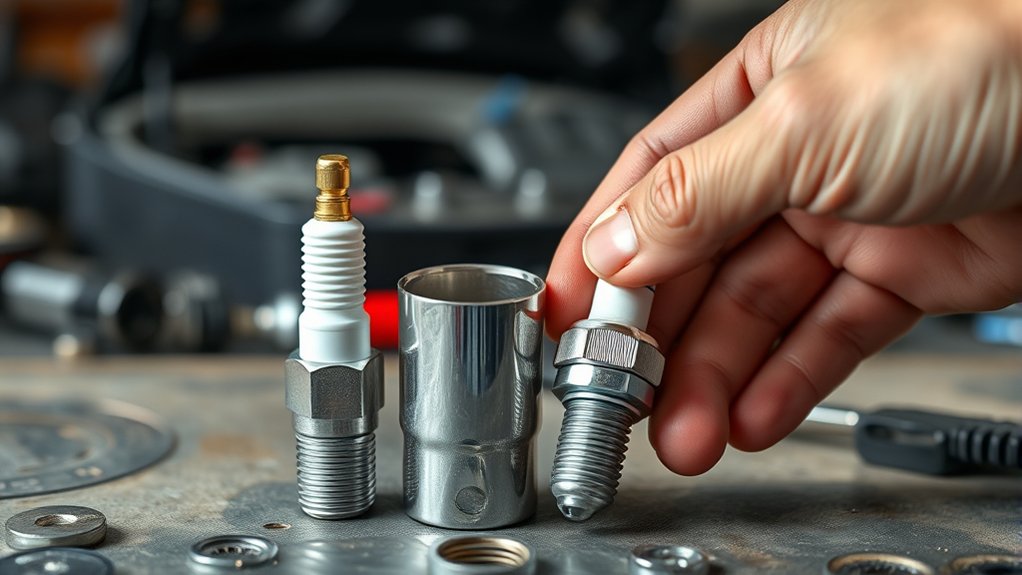
What Size Socket for Spark Plugs
You’ll usually need a 5/8-inch socket for most standard spark plugs, while larger or heavy-duty engines often require a 13/16-inch socket. Choosing the right size socket for spark plugs is essential to ensure a proper fit and avoid damage.
Select the socket based on the plug’s hex size, not just the engine type, to guarantee a snug fit and prevent damage. Deep sockets work best for recessed plugs, and using a socket with a rubber insert or magnet helps secure the plug.
Proper tool choice is key to maintaining your engine’s performance and longevity. Learn how to choose and use the right socket for any situation.
Key Takeaways
- Common spark plug socket sizes are 5/8-inch (16mm) and 13/16-inch (21mm), chosen based on plug hex size.
- Use 5/8-inch sockets for smaller, standard plugs and 13/16-inch for larger or heavy-duty plugs.
- Measure the spark plug hex size with a caliper or ruler to ensure correct socket fit.
- Deep sockets are ideal for recessed plugs; shallow sockets suit easily accessible plugs.
- Choose sockets with rubber inserts or magnetic cores to securely hold plugs and protect porcelain insulators.
Why the Right Spark Plug Socket Matters
Why does choosing the right spark plug socket matter? Using the correct socket ensures you don’t damage the spark plug or engine components during installation or removal.
A proper socket fits snugly around the spark plug, preventing slippage that could harm the non ignition portion of the plug. If you use an ill-fitting socket, you risk deforming the spark plug’s hex or affecting the critical spark gap, which compromises ignition performance.
Additionally, a socket designed with a rubber insert or magnetic feature secures the plug, protecting the fragile porcelain insulator and maintaining the spark gap’s integrity. Precision in socket choice directly impacts engine efficiency and longevity by preserving the spark plug’s structural and functional condition.
Common Spark Plug Socket Sizes and Their Uses
You’ll encounter standard spark plug socket sizes like 5/8-inch and 13/16-inch, each suited to specific plug dimensions. Your vehicle’s make and model often dictate the correct socket size, so matching them ensures a proper fit. Additionally, specialty sockets exist for tight spaces or unique plugs, enhancing accessibility and protection.
Standard Spark Plug Sizes
Which socket size fits your spark plugs? Standard spark plug sockets commonly come in three sizes, designed to match typical spark plug hex dimensions. Using the correct socket size guarantees proper torque application, preventing damage and aiding corrosion prevention.
Don’t fall for spark plug myths that suggest one size fits all; precision is key for engine performance and longevity.
| Socket Size (mm) | Common Spark Plug Type |
|---|---|
| 16 | Small thread plugs (10mm) |
| 18 | Most standard plugs (12mm) |
| 21 | Large thread plugs (14mm) |
| 5/8 inch (16mm) | Older or specialty plugs |
Select the correct socket to avoid rounding hex edges and ensure effective spark plug installation or removal.
Socket Size by Vehicle
How do you determine the right spark plug socket size for your vehicle? You start by identifying the specific socket size commonly used for your make and model. Most passenger cars use either a 5/8-inch (16mm) or 13/16-inch (21mm) socket.
For example, many Honda and Toyota models require a 5/8-inch socket, while some Ford and GM vehicles often need a 13/16-inch size. Avoid off topic ideas like irrelevant topic discussions about unrelated tools or accessories. Stick to the manufacturer’s recommendations to ensure you choose the correct socket size.
Using the proper socket size prevents damage to the spark plug or cylinder head and ensures a secure fit, streamlining your maintenance process and saving time during installation or removal.
Specialty Spark Plug Sockets
Why do specialty spark plug sockets matter? You need these sockets to access spark plugs in tight or recessed engine spaces where standard sockets won’t fit. Specialty sockets come with rubber inserts or magnetic cores to secure the plug during removal or installation, preventing damage.
Common sizes include 5/8-inch and 13/16-inch, but the socket’s design is often more essential than size alone. Avoid confusing this with an irrelevant topic like general socket sets or unrelated concepts like wrench types. They serve different functions.
When selecting a specialty socket, focus on the plug size, engine accessibility, and whether you need extra grip or protection. Using the right specialty spark plug socket ensures efficient, safe maintenance without risking plug damage or engine harm.
How to Identify the Correct Spark Plug Socket Size
Determining the correct spark plug socket size starts with identifying the dimensions of your spark plugs. First, check the spark plug’s hex size, usually stamped on its packaging or visible on the plug itself. Common sizes include 5/8-inch and 13/16-inch, but don’t assume based on unrelated concepts or irrelevant topics like engine type alone.
Measure the hex width accurately with a caliper or ruler for precision. Next, confirm the socket depth to ensure it accommodates the plug’s length and built-in insulator. Avoid confusing unrelated concepts such as thread size or spark gap with socket size; they are irrelevant topics here.
5/8-Inch vs. 13/16-Inch Spark Plug Sockets: Which to Use
You’ll often encounter spark plugs requiring either a 3/4-inch or 13/16-inch socket, depending on the engine design. Choosing the correct socket size guarantees proper fit and prevents damage during installation or removal. Focus on your vehicle’s specifications to determine which socket matches your application.
Common Spark Plug Sizes
Which socket size fits your spark plug best: 5/8-inch or 13/16-inch? Most spark plugs fall into these two common sizes, each suited for specific engine designs. The 5/8-inch socket typically fits smaller, standard plugs, while the 13/16-inch socket handles larger plugs, common in heavy-duty or performance engines.
When selecting your socket, consider the spark plug’s hex size, not just the engine type. Using the correct size ensures proper torque application and prevents damage. Just as scent analysis requires precision to detect subtle differences, choosing the right socket size demands attention to detail.
Moreover, like lunar weather influences delicate scientific equipment, environmental factors can affect socket selection and tool wear. Understand these sizes well to maintain spark plug integrity and engine performance.
Socket Size Compatibility
How do you decide between a 5/8-inch and a 13/16-inch spark plug socket? It comes down to the spark plug’s hex size, not unrelated chatter or random musings. Using the wrong socket risks damaging the plug or the engine.
Here’s a clear comparison:
| Feature | 5/8-Inch Socket |
|---|---|
| Common Spark Plug Size | 16mm |
| Typical Use | Small to mid-sized engines |
| Risk of Damage | Lower with correct fit |
| Availability | Widely available |
| Compatibility | Standard plugs |
| Feature | 13/16-Inch Socket |
| Common Spark Plug Size | 21mm |
| Typical Use | Larger engines |
| Risk of Damage | Higher if forced fit |
| Availability | Less common |
| Compatibility | Heavy-duty plugs |
Choose based on the plug size, not random musings.
Choosing Based On Application
When selecting between a 5/8-inch and a 13/16-inch spark plug socket, consider the engine’s size and plug design carefully. Typically, smaller engines and standard spark plugs require a 5/8-inch socket due to its precise fit and ease of access.
Larger engines or those with iridium or platinum plugs often need a 13/16-inch socket to accommodate bigger plug dimensions. Avoid engaging in unrelated topic or off topic discussions that divert focus from these practical considerations.
Using the wrong socket size can damage the spark plug or the engine, so stay clear of advice unrelated to spark plugs. Prioritize compatibility to ensure proper torque application and safe removal or installation.
Your choice should align strictly with the plug’s hex size and engine type for optimal results.
When to Use Deep vs. Shallow Spark Plug Sockets
Why choose a deep socket instead of a shallow one for spark plugs? Deep sockets are essential when spark plugs sit recessed, allowing full engagement without damaging the plug or ignition wire.
Shallow sockets work when plugs are easily accessible. Avoid unrelated topic or off topic discussion. Focus solely on fit and function.
| Socket Type | Best Use Case | Emotion Evoked |
|---|---|---|
| Deep Socket | Recessed spark plugs | Confidence |
| Shallow Socket | Easily accessible plugs | Efficiency |
| Both | Correct tool choice | Satisfaction |
Using the right socket prevents stripping and ensures a secure fit. You’ll save time and avoid frustration by picking deep or shallow based on plug depth, not convenience or guesswork.
Key Features of Quality Spark Plug Sockets
Although selecting the correct size socket is essential, the key features of quality spark plug sockets ensure durability, proper fit, and protection for both the plug and ignition components. When you choose a socket, consider these factors to maintain the integrity of spark plug brands and meet torque specs accurately:
- Material Strength: Opt for sockets made from chrome vanadium or similar alloys to resist wear and handle torque without deformation.
- Rubber Insert or Magnetic Core: These secure the plug inside the socket, preventing damage during removal or installation.
- Precise Fit: A socket that matches your spark plug size prevents rounding the plug hex and ensures accurate torque application.
- Drive Compatibility: Ensure the socket fits your ratchet or torque wrench to apply torque specs precisely without slippage.
Choosing the Right Spark Plug Socket for Your Vehicle Type
You’ll need to match your spark plug socket size to the common sizes used in your vehicle, typically 5/8-inch or 13/16-inch. Consider your vehicle type—cars, trucks, and motorcycles often require different socket designs and lengths. Choosing the correct socket assures proper fit and prevents damage during removal or installation.
Common Spark Plug Sizes
Which spark plug socket size fits your vehicle? To avoid confusion and unrelated topics, focus on these common sizes used across most vehicles. Avoidance strategies include selecting the correct socket to prevent damage and ensure efficient spark plug removal.
- 5/8 inch (16mm) The most common size, fitting many domestic and Asian vehicles.
- 13/16 inch (21mm) Used for larger spark plugs, often in trucks and older models.
- 9/16 inch (14mm) Common in small engines and some European cars.
- 3/4 inch (19mm) Found in certain specific applications, less frequent but important to know.
Stick to these sizes to streamline your tool selection and avoid mixing unrelated socket types.
Vehicle Type Considerations
How do you choose the right spark plug socket for your vehicle type? Begin by identifying your engine’s spark plug size and design, as passenger cars, motorcycles, and trucks often require different socket dimensions.
For instance, many cars use 5/8-inch or 13/16-inch sockets, while motorcycles might need smaller or specialized sizes. Avoid confusing your choice by considering irrelevant topics like unrelated concept sizes from unrelated tools.
Focus strictly on the spark plug’s hex size and reach, as incorrect sockets can damage plugs or make removal difficult. Always consult your vehicle’s manual or specifications to confirm the exact socket size.
This targeted approach ensures efficient maintenance and prevents errors linked to mismatched tools for your specific vehicle type.
Essential Tools to Use With Spark Plug Sockets
Why do you need specific tools alongside spark plug sockets? Using the right tools ensures you avoid damage and achieve proper installation torque. Ignoring this need often leads to mistakes rooted in irrelevant topics or unrelated concepts, like using general sockets or pliers unsuitable for spark plugs.
Here are four essential tools to pair with your spark plug socket:
- Torque Wrench – Critical for applying precise torque, preventing over-tightening or under-tightening.
- Ratchet Handle – Provides controlled turning power and easy access in tight spaces.
- Socket Extension – Helps reach deep-set spark plugs without forcing or bending.
- Spark Plug Gap Gauge – Ensures the spark plug gap matches manufacturer specifications before installation.
Using these tools alongside the correct socket size guarantees efficient, safe spark plug maintenance.
Tips for Safely Removing and Installing Spark Plugs
When removing and installing spark plugs, what steps guarantee you avoid damage and maintain engine performance? First, ensure the engine is cool to prevent thread damage. Use the correct size socket with a rubber insert to grip the plug securely without cracking the porcelain. Turn counterclockwise gently to loosen, avoiding excessive force that can strip threads.
When installing, thread the plug by hand initially to prevent cross-threading, then tighten to the manufacturer’s torque specs using a torque wrench.
Incorporate these careful steps to support efficient combustion, reducing emissions and promoting green energy goals. For vehicles used in urban farming equipment, maintaining spark plug integrity ensures reliable engine function, supporting sustainable agriculture practices.
Proper spark plug care contributes to environmental responsibility and operational longevity.
What to Do When Your Spark Plug Socket Doesn’t Fit
Following the careful removal and installation of spark plugs, encountering a socket that doesn’t fit can halt your progress. Avoid veering into irrelevant topics and focus on precise troubleshooting.
First, perform a misalignment analysis to ensure the socket and spark plug sizes match exactly. Second, check the socket for wear or deformation that may prevent a proper fit.
Third, verify the spark plug’s hex size against manufacturer specifications to rule out size mismatches. Fourth, consider using an adapter or a different socket designed specifically for your spark plug type.
Caring for and Storing Spark Plug Sockets
How can you extend the lifespan of your spark plug sockets and maintain their performance? First, clean sockets after each use to remove debris and prevent corrosion. Use a dry cloth or compressed air; avoid water to prevent rust.
Clean spark plug sockets after use with a dry cloth or compressed air to prevent debris buildup and corrosion.
Store sockets in a dedicated, organized toolbox or socket holder to avoid damage and loss. Keep them in a dry environment to prevent moisture-related deterioration.
Avoid mixing spark plug sockets with unrelated tools that don’t fit their specifications, as this can cause wear or damage. Focus on maintenance relevant to spark plug sockets, steering clear of irrelevant topic procedures that don’t impact their function.
Regular inspection for cracks or wear ensures safe use. Proper care and storage prolong socket life and guarantee reliable spark plug removal and installation.
Frequently Asked Questions
Can I Use a Universal Socket for Spark Plugs?
You shouldn’t use a universal socket for spark plugs because it lacks precise grip, risking damage. Instead, choose a dedicated spark plug socket to avoid unrelated topics like two word ideas distracting from proper tool selection.
How Often Should Spark Plug Sockets Be Replaced?
You should replace spark plug sockets after 3-5 years or when wear affects grip and torque accuracy. Regular relevance checks ensure safety and efficiency.
Topic ideas include socket material, wear signs, and maintenance frequency for optimal performance.
Are Spark Plug Sockets Compatible With Power Tools?
Yes, you can use spark plug sockets with power tools, but ensure torque accuracy to maintain spark plug longevity. Over-torquing risks damage, so use a torque wrench for precision and avoid compromising the spark plug’s performance.
What Materials Are Spark Plug Sockets Made From?
Spark plug sockets are made from chrome vanadium or chrome molybdenum steel, chosen for strength. Manufacturers perform durability testing to ensure resistance to wear and heat, so you get reliable, long-lasting tools for tough automotive work.
Can Spark Plug Sockets Damage the Spark Plugs?
Absolutely, you can damage spark plugs if you’re careless; using the wrong socket or applying excessive force risks cracking or stripping. Avoid irrelevant topic or off topic discussion. Focus strictly on precise socket fit and proper technique.
Conclusion
Choosing the right spark plug socket is the key that opens smooth engine maintenance. Whether you opt for a 5/8-inch or 13/16-inch size, using the proper socket guarantees a secure fit and prevents damage.
Remember to select deep or shallow sockets based on your engine’s design, and always pair them with essential tools for safety. Keep your sockets well-maintained and stored properly.
By paying attention to these details, you’ll handle spark plug tasks with precision and confidence every time. Choosing the right size socket for spark plugs is essential for effective and safe engine work.