How Many Mm Should Brake Pads Be
You should keep your brake pads at least 3 millimeters thick to ensure safe braking performance.
How many mm should brake pads be is a crucial question for maintaining vehicle safety.
New pads typically start between 8 and 12 mm, depending on your vehicle type and driving conditions.
Worn pads below 3 mm risk reduced stopping power, overheating, and potential brake failure.
Monitoring thickness regularly helps you avoid costly damage and maintain control.
Understanding how thickness impacts safety and when to replace your pads is crucial for reliable vehicle performance.
Key Takeaways
- New brake pads generally measure between 10–12 mm in thickness.
- Brake pads should be replaced when worn down to around 3 mm thickness.
- Thickness below 3 mm significantly reduces braking efficiency and safety.
- SUVs and trucks may use thicker pads, often 12–15 mm, for durability.
- Regularly checking pad thickness prevents brake failure and costly repairs.
What Is the Recommended Brake Pad Thickness for Safe Driving?
How thick should your brake pads be to ensure safe driving? Generally, new brake pads measure about 10-12 mm thick. For safe operation, you should replace them once they wear down to around 3 mm.
This threshold accounts for how brakes wear differently based on driving habits, conditions, and pad material variance. Organic, semi-metallic, and ceramic pads each degrade at varied rates due to their distinct compositions.
Monitoring thickness regularly helps you detect excessive wear before it compromises braking efficiency. Staying above the 3 mm mark ensures sufficient friction material remains to dissipate heat and maintain stopping power.
Neglecting this can lead to reduced brake responsiveness and potential rotor damage, increasing safety risks. So, keep an eye on your brake pad thickness to maintain optimal vehicle safety.
Why Brake Pad Thickness Matters for Your Vehicle’s Performance
You need to maintain optimal brake pad thickness to ensure your vehicle stops efficiently and safely. Thinner pads increase stopping distances and reduce your control during critical moments. Keeping pads within recommended thickness preserves both safety and overall vehicle performance.
Optimal Brake Pad Thickness
Why does the thickness of your brake pads considerably impact your vehicle’s braking performance? Brake pads with adequate thickness ensure proper friction against the rotors, enabling efficient deceleration.
When pads wear below the optimal range, typically around 7 to 8 mm for new pads, you risk reduced braking efficiency and potential damage to other components. Novice questions often arise about when to replace pads, and it’s crucial to distinguish facts from maintenance myths.
For instance, waiting until pads are dangerously thin can cause rotor scoring and costly repairs. By monitoring optimal brake pad thickness, you maintain consistent contact pressure, heat dissipation, and overall system reliability.
Staying proactive prevents performance degradation and enhances safety, so always check thickness using accurate measuring tools rather than relying on guesswork.
Impact On Stopping Distance
When does brake pad thickness start to noticeably affect your vehicle’s stopping distance? Typically, once your pads wear below 3 mm, you’ll see a significant increase in stopping distance due to reduced friction efficiency. This directly impacts your vehicle’s performance and safety.
Here’s why managing pad thickness matters:
- Increased stopping distance can cause accidents.
- Worn pads generate more heat, reducing braking power.
- Sudden brake failure risks rise with thin pads.
- Unexpected repairs disrupt your planning budget.
Safety And Vehicle Control
How exactly does brake pad thickness influence your vehicle’s safety and control during operation? Thicker brake pads provide consistent friction, ensuring reliable stopping power and maintaining optimal pedal responsiveness.
When brake pads wear thin, you risk reduced braking efficiency, which compromises your ability to control the vehicle, especially in emergency situations. This is crucial whether you’re dealing with new car purchases that come equipped with advanced braking technology or maintaining older vehicles with old braking systems prone to quicker pad wear.
Thin brake pads can cause uneven braking force, leading to instability during maneuvers. By regularly monitoring and replacing brake pads before they fall below the recommended thickness, typically around 3mm, you maintain safe vehicle handling and prolong the lifespan of other braking components, ultimately enhancing your overall driving safety.
How to Measure Brake Pad Thickness Correctly
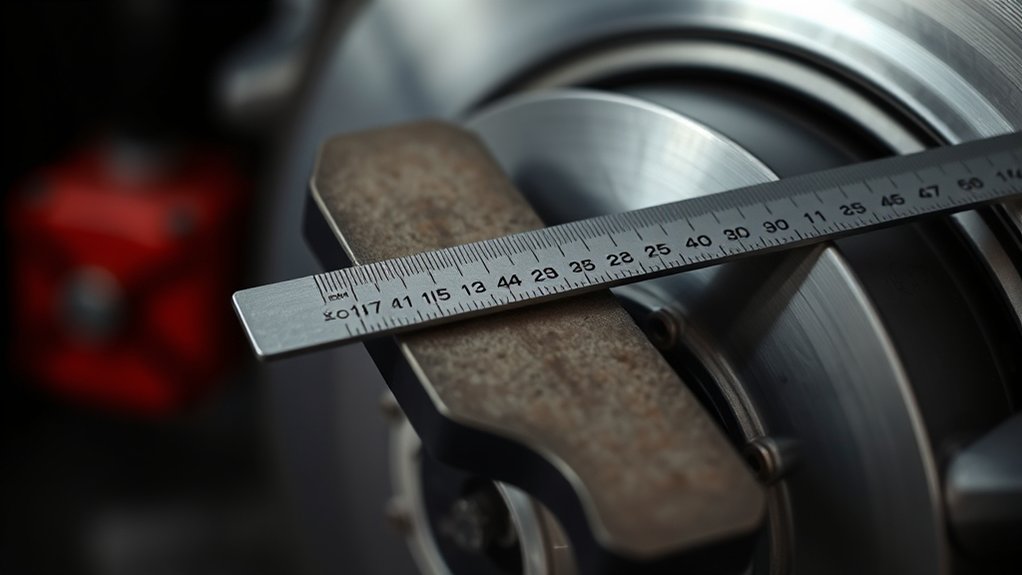
To measure brake pad thickness correctly, you’ll need a caliper or a brake pad gauge for accurate readings. Start by removing the wheel to access the brake pads, then position your tool against the friction material. Follow a step-by-step method to guarantee consistent results and avoid measurement errors.
Tools Needed
Which tools do you need to measure brake pad thickness accurately? Avoid irrelevant discussion or unrelated topic distractions. Precision is key.
To ensure accurate measurements, equip yourself with the following essential tools:
- Vernier Caliper – Offers precise thickness readings down to fractions of a millimeter.
- Brake Pad Gauge – Specifically designed for brake components, allowing quick and repeatable measurements.
- Flashlight – Illuminates tight spaces for clear visibility of the brake pad surface.
- Mechanic’s Mirror – Provides access to hard-to-see areas without dismantling the brake assembly.
Using these tools guarantees a reliable assessment of brake pad wear, helping you determine if replacement is necessary. Don’t confuse this step with irrelevant discussion; focus on accurate tools to avoid costly errors in brake maintenance.
Step-by-Step Process
When should you measure your brake pad thickness for the most accurate results? Ideally, do this when the pads are cool and the vehicle is on a level surface. Start by removing the wheel to access the brake caliper.
Use a caliper gauge or a brake pad thickness gauge to measure the friction material precisely, avoiding unrelated topics like tire tread or brake fluid levels. Insert the gauge between the caliper and the rotor, ensuring it touches the pad’s surface.
Record the measurement and compare it with manufacturer specifications. Typically, new pads range from 8 to 12 mm, with a minimum safe thickness around 3 mm. Remember, discussion ideas about other brake system components can distract; focus solely on pad thickness for accurate assessment.
Signs Your Brake Pads Need Replacing
How can you tell if your brake pads need replacing before they compromise safety? It’s critical to focus on concrete signs rather than irrelevant topic or random chatter that can confuse your judgment. Here are four key indicators:
1. Squealing or screeching noises
This high-pitched sound signals worn brake pads and shouldn’t be ignored.
2. Reduced braking responsiveness
If your vehicle takes longer to stop, it’s a precise cue to inspect the pads.
3. Vibrations during braking
Pulsations felt through the brake pedal often indicate uneven pad wear.
4. Visible pad thickness below safety margin
Although thickness details come next, spotting unusually thin pads visually demands immediate attention.
Recognizing these signs early helps prevent brake failure and ensures your driving safety remains uncompromised.
When to Replace Brake Pads Based on Thickness
Observing the thickness of your brake pads offers a direct, measurable way to determine their condition. When the pad material wears down to approximately 3 millimeters, it’s time to contemplate replacement. This threshold is widely accepted in automotive maintenance and helps you avoid compromising braking efficiency.
Don’t fall for maintenance myths suggesting pads can safely function below this thickness; they increase stopping distance and risk damage to rotors. For accurate assessment, use a calibrated gauge or a visual inspection on exposed pads.
These discussion ideas clarify why relying on subjective wear indicators can be misleading. Timely replacement based on thickness ensures peak performance and safety, preventing costly repairs and maintaining consistent braking response under varying conditions. Always prioritize measurable criteria over assumptions.
How Brake Pad Thickness Varies by Vehicle Type
Why does brake pad thickness differ across vehicle types? It’s because each vehicle’s design, weight, and intended use demand specific braking performance. For example, heavier trucks need thicker pads to withstand higher friction and heat. You must consider these factors carefully to maintain optimal safety and avoid uneven tyre wear or suspension alignment issues.
Brake pad thickness varies by vehicle to ensure safety, handle weight, and prevent uneven wear.
Here’s how thickness varies by type:
- Passenger cars typically use pads around 10-12 mm when new.
- SUVs require thicker pads, often 12-15 mm, for added durability.
- Light trucks and vans need pads up to 15 mm for heavier loads.
- High-performance or racing vehicles may use thinner pads for better heat dissipation but at the expense of faster wear.
Understanding these differences helps you choose the right pads and extend your vehicle’s lifespan.
How Driving Habits Affect Brake Pad Thickness
Brake pad thickness doesn’t just depend on vehicle type; your driving habits play a substantial role as well. Aggressive braking, frequent stop-and-go traffic, and high-speed driving accelerate pad wear. Fatigue factors such as road conditions and brake system temperature also impact thickness loss.
Understanding how your habits affect brake pads helps you maintain optimal braking performance and safety.
| Driving Habit | Effect on Brake Pad Thickness |
|---|---|
| Aggressive braking | Rapid thickness reduction |
| City stop-and-go | Moderate wear due to frequent use |
| Highway driving | Slower wear, consistent pace |
| Coasting & smooth braking | Minimal wear, prolongs pad life |
Adjusting your driving style can significantly extend brake pad lifespan by reducing unnecessary wear.
Why You Shouldn’t Ignore Worn Brake Pads
How long can you safely drive with worn brake pads before risking damage or failure? Ignoring worn brake pads compromises your vehicle’s braking efficiency and safety. It’s not an unrelated topic or a random thought; it directly affects your control and accident risk.
Consider these consequences:
- Increased stopping distance, jeopardizing your safety.
- Damage to rotors, leading to costly repairs.
- Brake system overheating, causing brake fade.
- Complete brake failure, risking your life and others.
You must monitor brake pad thickness regularly and replace them once they reach the minimum safe thickness (usually around 3mm). Delaying replacement means risking mechanical failure and higher expenses.
Don’t treat worn brake pads as an unrelated topic; prioritize their maintenance to ensure safe driving.
Frequently Asked Questions
Can Brake Pad Thickness Affect Fuel Efficiency?
Yes, worn brake pads increase friction, making your engine work harder and reducing fuel efficiency.
Knowing how many millimeters your brake pads have left helps you maintain optimal performance and save fuel by replacing them timely.
What Materials Are Brake Pads Typically Made From?
Like a two-story building’s sturdy foundation, brake pads use two story materials: semi-metallic and ceramic. You’ll notice brake pad density varies, affecting heat resistance and wear, ensuring optimal stopping power and longevity under pressure.
How Do Brake Pads Differ From Brake Shoes?
You’ll find brake pads press against a rotor, while brake shoes push outward on a drum.
Understanding brake pad terminology helps you compare these brake system components precisely with respect to design and function.
Can Worn Brake Pads Damage Brake Rotors?
In the age of chariots, worn brake pads definitely damage brake rotors by causing uneven wear reduction and increasing noise concerns. You’ll want to replace pads timely to prevent costly rotor grooves and maintain optimal braking efficiency.
Are There Eco-Friendly Brake Pad Options Available?
Yes, you can find eco-friendly brake pad options made from sustainable materials like organic fibers and non-toxic resins. These alternatives reduce environmental impact without compromising braking performance or durability. They fit modern eco-conscious automotive standards effectively.
Conclusion
Don’t let your brake pads wear down to the wire—keeping them above 3mm guarantees safe, reliable stopping power. Measuring thickness regularly helps you catch wear before it compromises performance. Remember, your driving habits directly affect pad lifespan, so stay vigilant.
Replacing pads on time isn’t just maintenance; it’s your vehicle’s lifeline on the road. Keep your brakes sharp, and you’ll drive with confidence, knowing safety is always under control. Knowing how many mm should brake pads be is key to maintaining that safety.