What Is a Trickle Battery Charger
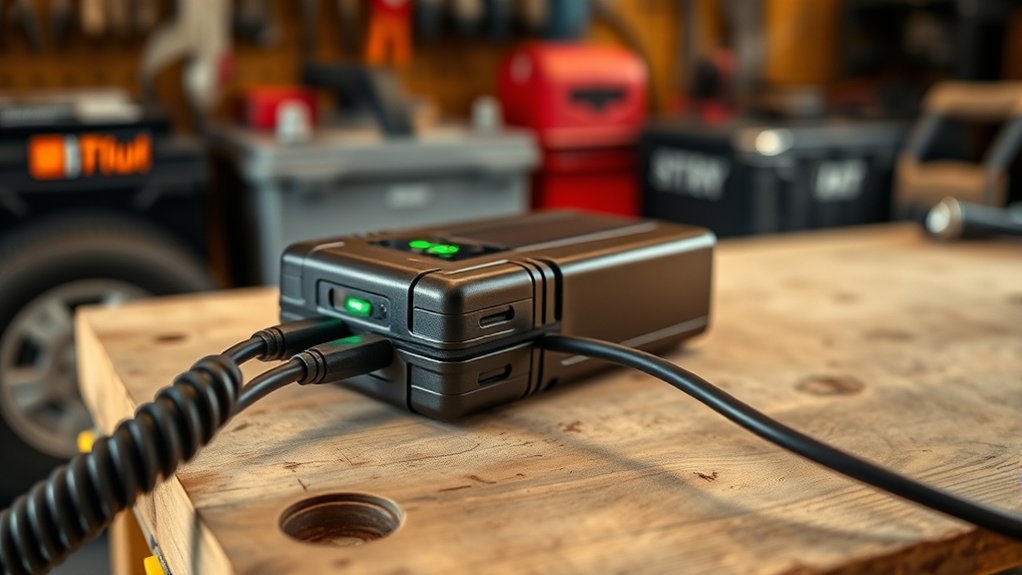
A trickle battery charger maintains your battery’s charge by delivering a low, steady current that matches its self-discharge rate, preventing overcharging and minimizing stress. It continuously monitors and adjusts output, preserving battery chemistry and extending lifespan.
These chargers are energy-efficient, safe, and compatible with various battery types. Using one helps avoid overheating risks and reduces the need for frequent checks.
If you want to fully understand how to select and use these chargers effectively, more detailed insights are available.
Key Takeaways
- A trickle battery charger supplies a low, steady current to maintain a battery’s full charge over time.
- It matches the battery’s self-discharge rate to prevent overcharging and minimize battery stress.
- Continuous monitoring allows the charger to adjust output dynamically for safe and efficient charging.
- Trickle chargers help extend battery lifespan by preserving internal chemistry and preventing heat damage.
- They are versatile, compatible with various battery types, and ideal for long-term battery storage maintenance.
What Is a Trickle Battery Charger and How Does It Work?
How does a trickle battery charger maintain your battery’s charge without overloading it? It supplies a low, steady current that matches the battery’s self-discharge rate, preventing overcharging and minimizing stress on battery components. This controlled current ensures charging efficiency by delivering just enough energy to keep the battery at full capacity.
Aside from charging efficiency, the trickle charger’s regulated output reduces heat generation, which directly influences the lifespan impact by preserving the battery’s internal chemistry. By avoiding excessive voltage spikes, it prevents degradation commonly seen with traditional chargers.
When you connect a trickle charger, it continuously monitors voltage and current, adjusting output dynamically. This precise regulation safeguards your battery, maintaining optimal charge levels while extending overall service life without manual intervention.
Key Benefits of Using a Trickle Battery Charger (and Why Use One)
Why should you choose a trickle battery charger over other types? Its design offers precise, low-current charging that prevents battery overcharge and degradation, unlike fast chargers. This approach extends battery lifespan and maintains optimal charge without constant monitoring.
Consider these key benefits:
- Continuous Maintenance: Keeps batteries at full charge without damage during long-term storage.
- Energy Efficiency: Uses minimal power, reducing unnecessary energy consumption.
- Safety Assurance: Minimizes overheating risks common in high-amperage charging.
- Versatility Compatibility: Works effectively with diverse battery types and sizes.
Common Types of Trickle Battery Chargers
Understanding the benefits of trickle battery chargers naturally leads to recognizing the different types available to suit various applications. You’ll encounter basic manual chargers, which require monitoring to prevent overcharging, and automatic chargers that adjust current flow based on battery state.
Some models integrate microprocessors for precise voltage regulation and enhanced safety. Avoid trickle charger misconceptions by knowing that not all chargers are suited for every battery type or size.
Proper charging etiquette means selecting a charger that matches your battery’s specifications and usage patterns. Additionally, solar trickle chargers provide a renewable option for maintaining charge in remote locations.
How to Choose the Right Trickle Battery Charger
When selecting a trickle battery charger, you need to contemplate factors such as battery type, voltage requirements, and charging current capacity. Ensuring compatibility with your battery chemistry, whether lead-acid, AGM, or lithium, is critical for battery safety and optimal performance. Avoid common charging myths like “faster charging is better,” which can damage your battery.
Analyze these technical aspects before purchase:
- Battery Voltage: Match charger output voltage precisely with battery specifications.
- Current Capacity: Choose a charger with a current rating appropriate to your battery’s size and usage.
- Automatic Shutoff: Look for chargers that prevent overcharging by stopping current flow when full.
- Safety Features: Ensure protection against reverse polarity, short circuits, and overheating.
Safe Use and Maintenance Tips for Trickle Battery Chargers
You need to connect the charger correctly to avoid sparks or damage, ensuring polarity matches precisely. Regularly inspect the battery for corrosion or leaks to maintain ideal performance and safety. Store the charger in a dry, cool place to prevent electrical faults and extend its lifespan.
Proper Charger Connection
Although connecting a trickle battery charger may seem straightforward, guaranteeing proper polarity and secure attachment is critical to prevent damage to both the charger and the battery. You must verify charger compatibility with your battery type to avoid voltage and current mismatches.
Achieving a proper connection requires careful attention to the polarity of clamps, red to positive, black to negative, and guaranteeing clamps are free from corrosion for optimal conductivity. Secure attachment prevents accidental disconnections that could interrupt charging or cause sparks.
Key points to guarantee proper charger connection:
- Confirm charger voltage matches battery specifications.
- Connect positive clamp to battery’s positive terminal first.
- Secure clamps firmly to prevent movement during charging.
- Avoid contact between clamps to prevent short circuits.
Adhering to these steps maximizes charging efficiency and safety.
Regular Battery Inspection
Ensuring a proper charger connection lays the groundwork for effective battery maintenance, but ongoing inspection plays a crucial role in preserving battery health and charger performance. Regularly inspect battery terminals for corrosion or looseness, as compromised terminals disrupt current flow and impact the charging cadence. Clean terminals with an appropriate solution to maintain optimal conductivity.
Additionally, monitor the battery casing for swelling or damage, which indicates internal issues affecting charge retention.
| Inspection Point | Recommended Action |
|---|---|
| Battery Terminals | Clean and tighten regularly |
| Charging Cadence | Verify charger settings align |
| Battery Casing | Check for physical deformation |
| Electrolyte Levels | Monitor and top-up if applicable |
Safe Storage Practices
How should you store a trickle battery charger to maximize its lifespan and performance? Proper storage is essential to ensure seasonal readiness and optimal functionality. During extended storage duration, disconnect the charger from power sources and batteries to prevent accidental discharge or damage.
Store it in a dry, cool environment to avoid moisture-induced corrosion and electronic degradation. Maintain cable integrity by coiling wires loosely to prevent kinks or breaks. Use protective covers or cases to shield the unit from dust and physical impacts.
Consider these guidelines:
- Disconnect charger during long storage duration to prevent electrical faults
- Select a stable ambient temperature to maintain electronic component integrity
- Avoid humidity exposure to reduce corrosion risk
- Store cables and accessories neatly to prevent mechanical damage
Following these practices ensures your charger remains reliable and ready for seasonal use.
Troubleshooting Common Issues With Trickle Battery Chargers
Why isn’t your trickle battery charger working as expected? Begin troubleshooting battery indicators by verifying the charger’s LED signals; inconsistent or absent lights often indicate connection issues or internal faults.
Next, inspect the battery terminals for corrosion or loose contacts, as these affect current flow. Diagnosing charging noises is equally critical. Unusual sounds like buzzing or clicking may signal transformer problems or relay failures.
Ensure your charger is correctly rated for the battery type and voltage. Additionally, test the power source and cable integrity to rule out external faults.
If the charger’s output voltage deviates from specifications under load, it may require recalibration or replacement. Systematic analysis of these factors helps you pinpoint issues efficiently and maintain reliable charging performance.
Frequently Asked Questions
Can a Trickle Charger Damage a Lithium-Ion Battery?
You can’t use a trickle charger for lithium-ion battery charging safely because it supplies a continuous low current, potentially causing overcharging and damage.
Instead, use chargers designed specifically for lithium-ion chemistry to avoid harm.
How Long Does It Take to Fully Charge a Car Battery?
Charging car batteries can commonly consume six to twelve hours, depending on battery capacity and charger type.
Understanding battery maintenance and busting charging myths assures you optimize efficiency without overcharging or damaging your battery’s delicate design.
Are Trickle Chargers Suitable for Motorcycle Batteries?
Yes, trickle chargers suit motorcycle batteries well, but you must debunk battery myths and prioritize charging safety. They maintain charge gently, preventing overcharging, ensuring your battery stays healthy without causing damage or reducing lifespan.
Can I Leave a Trickle Charger Connected Overnight?
You can leave a trickle charger connected overnight only if it has built-in overcharge protection. Otherwise, overcharging risk and compatibility concerns with your battery type could cause damage or reduced lifespan.
Always verify specs first.
Do Trickle Chargers Work With AGM or Gel Batteries?
Yes, trickle chargers work with AGM and gel batteries, but you must understand trickle charger basics and avoid battery chemistry myths.
Use chargers designed for these chemistries to prevent damage and ensure proper charging and battery longevity.
Conclusion
Using a trickle battery charger can extend your battery’s lifespan by up to 50%, making it a smart investment for maintaining best performance. By supplying a steady, low current, it prevents overcharging and battery degradation.
Understanding the types and safe usage ensures you maximize efficiency while avoiding common pitfalls. With proper selection and care, you’ll keep your batteries reliable and ready.
Ultimately, using a trickle battery charger not only saves you time but also reduces replacement costs, making it an essential tool for battery maintenance.