How Does a Battery Charger Work
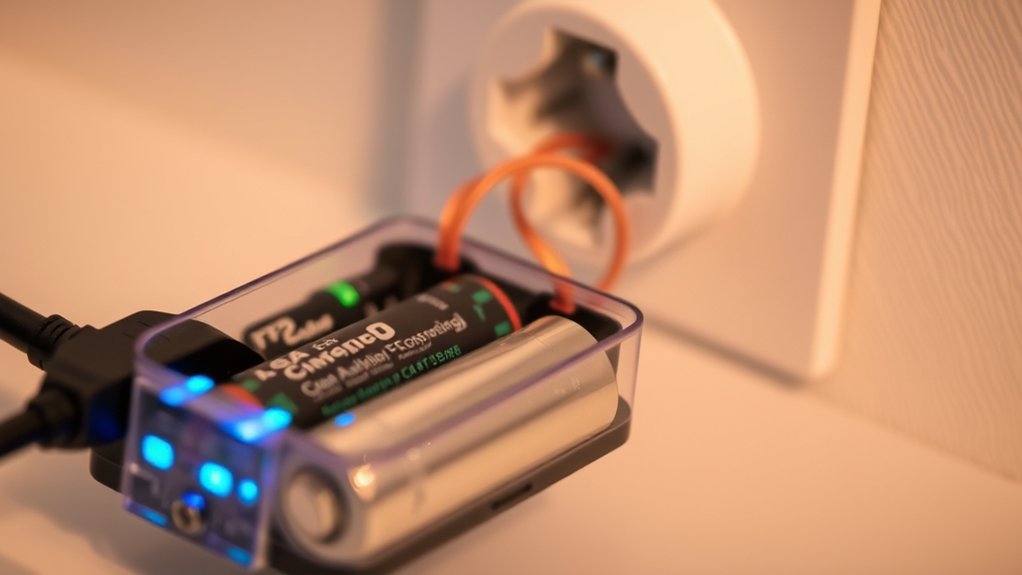
A battery charger works by supplying controlled electrical current that reverses chemical reactions inside your battery’s cells, restoring its energy. It continuously regulates voltage and current to prevent overcharging, overheating, or undercharging, adapting to the battery’s chemistry like lithium-ion, NiMH, or lead-acid.
Smart chargers use sensors and microprocessors to optimize this process, ensuring safety and efficiency. Understanding how chargers function helps you choose the best type and maintain your battery’s health over time.
What a Battery Charger Is and Why It Matters
What exactly does a battery charger do, and why should you care? A battery charger replenishes electrical energy in a battery by applying controlled current based on the battery chemistry, be it lithium-ion, nickel-metal hydride, or lead-acid.
Understanding this is crucial because each chemistry demands specific charging etiquette to maintain capacity and lifespan. If you ignore these protocols, you risk overcharging, overheating, or undercharging, which degrades performance.
When you choose or use a charger, you’re directly influencing how effectively and safely the battery regains charge. Proper charging etiquette ensures you don’t compromise the battery’s internal structure or cycle life.
How Battery Chargers Actually Work
You’ll first understand the charging process, where electrical energy converts into chemical energy within the battery. Then, you’ll explore different types of chargers, each designed to optimize efficiency and compatibility. Finally, you’ll examine built-in safety mechanisms that prevent overcharging and electrical hazards.
Charging Process Explained
Although battery chargers come in various designs, they all perform the critical function of converting electrical energy from a power source into a controlled flow of current that restores a battery’s charge. When you charge a battery, the process optimizes charging efficiency and dispels common safety myths by regulating voltage and current precisely.
Here’s how the charging process works:
- Initial current flow begins to reverse the chemical reactions inside the battery cells.
- Voltage is monitored constantly to prevent overcharging and overheating.
- Current gradually decreases as the battery approaches full charge, ensuring longevity.
- Chargers often include safety features to mitigate risks like short circuits or thermal runaway.
Types Of Battery Chargers
Battery chargers come in several types, each designed to manage the charging process according to the battery’s chemistry and application. You’ll encounter basic trickle chargers, which supply a low, steady current ideal for maintaining battery charge without overcharging.
Fast chargers deliver higher currents to reduce charging time but require precise control to prevent battery damage. Smart chargers use microprocessors to adjust voltage and current dynamically, optimizing charging safety by preventing overheating and overcharging.
Additionally, inductive chargers employ electromagnetic fields, allowing wireless charging for convenience. Selecting the appropriate charger influences battery lifespan and impacts battery disposal considerations, as improper charging can cause premature failure or hazardous conditions.
Understanding these types helps you maintain battery integrity, ensuring efficient recharging while minimizing risks associated with unsafe charging practices and environmental harm during disposal.
Safety Mechanisms Included
Selecting the right charger is only part of ensuring safe and effective battery management. Understanding the safety mechanisms built into chargers reveals how they protect both the battery and user during operation.
Modern battery chargers integrate multiple safeguards to prevent damage, overheating, and hazardous conditions. Key safety features include:
- Safety sensors: Detect voltage, current irregularities, and battery status to adjust charging parameters dynamically.
- Thermal monitoring: Continuously measures temperature to prevent overheating and thermal runaway.
- Overcharge protection: Automatically stops charging once the battery reaches full capacity to avoid stress and degradation.
- Short-circuit and reverse polarity protection: Shields circuitry and battery by interrupting current flow in fault conditions.
These mechanisms work collectively to maintain charging efficiency while ensuring operational safety at all times.
The Main Types of Battery Chargers
How do different types of chargers impact the efficiency and safety of recharging your batteries? Understanding the main types of battery chargers is essential to mastering charging basics and ensuring optimal safety features.
The simplest type, the trickle charger, supplies a low, steady current to maintain battery charge but lacks advanced control, which may risk overcharging. Standard chargers provide a constant current until the battery reaches full charge, then stop, offering basic protection.
Fast chargers increase current to reduce charging time but require precise regulation to avoid overheating or damage. Each type balances charging speed, efficiency, and safety differently. Selecting the right charger means considering your battery’s chemistry and capacity, alongside the charger’s ability to implement necessary safety features to protect against overvoltage, overheating, and short circuits.
Smart Chargers and How They Protect Your Battery
While traditional chargers focus on delivering current at varying rates, smart chargers incorporate advanced technology to continuously monitor and adjust the charging process. With smart charging, you protect your battery health by preventing overcharging and minimizing wear. These chargers use sensors and microprocessors to analyze battery conditions in real time.
Here’s how smart chargers safeguard your battery:
- Detect battery type and capacity to optimize charging parameters.
- Monitor voltage, temperature, and current to avoid overheating.
- Switch to maintenance or float mode once full charge is reached.
- Diagnose battery health and alert you to potential issues early.
How to Choose the Right Battery Charger
Choosing the right battery charger requires evaluating your specific battery type, capacity, and usage patterns. First, confirm the charger specifications match your battery chemistry, such as lead-acid, lithium-ion, or NiMH, to ensure compatibility and efficient charging.
Evaluate your battery type and capacity to select a charger compatible with your battery chemistry for efficient charging.
Next, consider the battery’s amp-hour rating; select a charger that delivers an appropriate current without exceeding safe limits, preserving battery health. Also, assess charger features like voltage regulation and automatic shutoff to prevent overcharging.
Don’t overlook outlet safety: use chargers with built-in surge protection and proper insulation to minimize electrical hazards during operation. By analyzing these technical parameters, you can optimize charging performance, extend battery life, and maintain safe electrical connections in your environment.
This ensures your charger meets both operational demands and safety standards effectively.
Common Charging Problems and Fixes
You might encounter overcharging issues that degrade battery life or slow charging caused by poor connections or charger faults. Incompatibility between the charger and battery type can also prevent efficient energy transfer. Understanding these problems helps you apply targeted fixes to maintain optimal charging performance.
Overcharging Issues
How can overcharging impact your battery’s performance and lifespan? Overcharging issues degrade battery health by causing excessive heat and chemical imbalance. This accelerates capacity loss and increases the risk of permanent damage.
To prevent such problems, you should understand the following key factors:
- Thermal Stress: Prolonged overcharging raises internal temperature, damaging electrodes and electrolytes.
- Electrochemical Degradation: Excess voltage drives unwanted side reactions, reducing charge acceptance.
- Swelling and Leakage: Overcharging causes gas buildup, leading to physical deformation and potential leaks.
- Reduced Cycle Life: Repeated overcharge cycles significantly shorten overall battery lifespan.
Slow Charging Causes
Although slow charging might seem like a minor inconvenience, it often signals underlying issues that can compromise your battery’s efficiency and lifespan. Slow charging typically results from poor electrical connections, degraded charger components, or a weakened battery.
Corroded terminals increase resistance, reducing current flow and extending charging time. Similarly, a charger delivering insufficient voltage or current due to internal faults will slow the charging process. Additionally, battery aging leads to increased internal resistance, causing slower charge acceptance.
To fix slow charging, inspect and clean terminals, test charger output with a multimeter, and replace faulty chargers or cables. If the battery itself is deteriorating, consider replacement. Addressing these causes promptly ensures optimal charging time and preserves battery health.
Battery Compatibility Problems
Why do some chargers fail to power certain batteries effectively? The root cause often lies in battery compatibility and differing charging standards. Chargers are designed to meet specific voltage, current, and chemistry requirements. Using a charger incompatible with your battery can lead to inefficient charging or even damage.
Key factors causing battery compatibility problems include:
- Voltage mismatch Chargers supplying incorrect voltage can overcharge or undercharge batteries.
- Chemistry differences Lithium-ion, NiMH, and lead-acid batteries require distinct charging profiles.
- Connector incompatibility Physical plug differences prevent proper connection and communication.
- Charging standard conflicts Proprietary protocols or lack of smart charging features hinder optimal charging.
Ensuring your charger matches your battery’s specifications and charging standards prevents these problems and extends battery life.
How Charging Affects Your Device and Battery
When you plug in your device, what exactly happens inside the battery and circuitry? The charger supplies controlled electrical current, initiating chemical reactions within the battery cells to store energy. Proper charging safety mechanisms regulate voltage and current, preventing overheating, overcharging, and potential damage.
These protections ensure device preservation by maintaining optimal battery temperature and voltage thresholds. The circuitry monitors battery status, adjusting power flow to avoid stress on the cells, which extends battery lifespan and maintains performance.
However, improper charging can accelerate degradation through thermal stress or lithium plating. Understanding this interaction helps you appreciate why using compatible chargers and adhering to charging safety guidelines are critical for preserving your device’s battery health and ensuring reliable, long-term operation.
Tips to Extend Battery Life With Your Battery Charger
How can you maximize your device’s battery lifespan through proper charging habits? By optimizing your battery charger use and managing heat effectively, you can significantly extend battery lifespan. Follow these key tips:
- Avoid Overcharging: Use smart chargers with auto shutoff to prevent continuous charging, which degrades battery chemistry.
- Control Charging Speed: Prefer moderate charging currents; fast charging increases internal heat, reducing battery lifespan.
- Maintain Optimal Temperature: Ensure proper ventilation around the charger and device to facilitate heat management and avoid thermal stress.
- Charge at Partial Levels: Keep the battery between 20% and 80% charge cycles to minimize chemical strain and prolong longevity.
Implementing these practices enhances battery health by mitigating heat-induced wear and preserving electrochemical stability over time.
Frequently Asked Questions
Can a Battery Charger Be Used to Jump-Start a Car?
You generally can’t jump-start a car with a standard battery charger, as battery charging fundamentals require slow, controlled current.
Always follow the charger’s safety guidelines to avoid damage or injury; use a jump starter specifically designed for that purpose.
Are Battery Chargers Safe to Use in Wet Conditions?
You shouldn’t use battery chargers in wet conditions unless they feature a waterproof design or splash resistance. Even then, exposure risks electric shock or damage, so always follow manufacturer guidelines to ensure safe, effective operation.
How Do Temperature Extremes Affect Charging Efficiency?
You’ll notice temperature effects reduce charging efficiency; extreme cold slows chemical reactions, lowering charge acceptance, while extreme heat accelerates degradation, causing overcharge risks.
Maintaining moderate temperatures optimizes charging efficiency and battery longevity.
Can a Battery Charger Cause Electrical Interference With Other Devices?
Yes, your battery charger can cause electrical interference, but manufacturers implement interference mitigation techniques and ensure regulatory compliance to minimize disruptions with other devices. They maintain proper electromagnetic compatibility and reduce noise emissions effectively.
What Are the Environmental Impacts of Disposing Old Battery Chargers?
You might toss old chargers unaware their disposal concerns cause environmental impacts like soil contamination and toxic leaching. Proper recycling prevents hazardous waste, so you should handle disposal responsibly to minimize ecological harm and resource depletion.