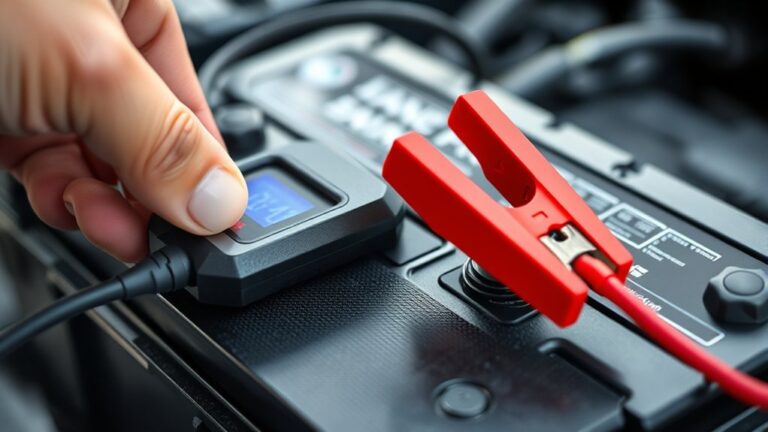
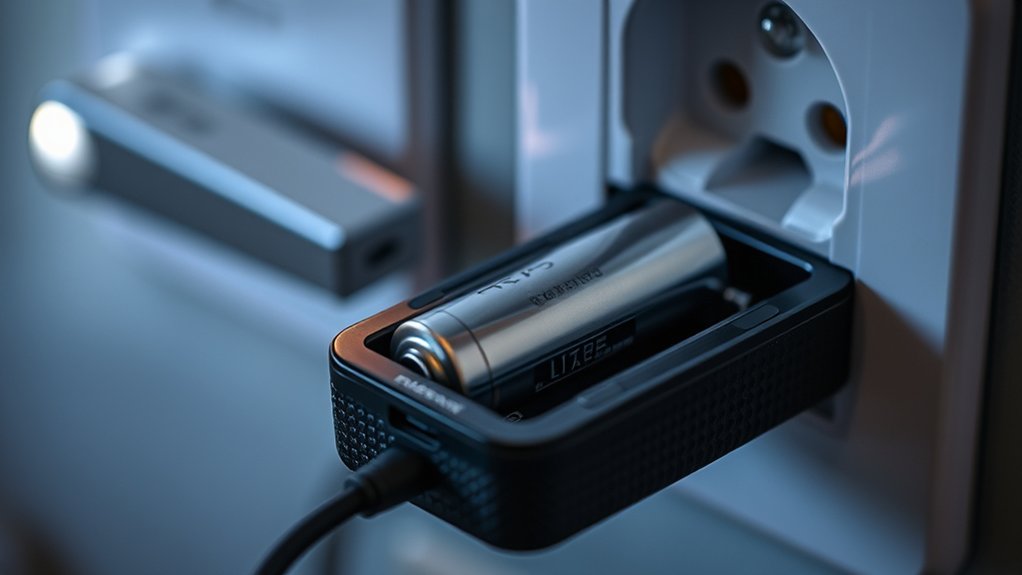
How Does a Battery Charger Work
You connect your battery charger to convert AC mains into regulated DC, aligning voltage and current with your battery’s chemistry for safe energy restoration.
The charger monitors the battery state continuously, adjusting output to prevent overcharge, overheating, or damage.
Different charger types balance speed and longevity through varied current delivery.
Precise voltage and current control maximizes efficiency and battery life.
Understanding these functions helps you select the right charger and safeguard your battery effectively.
Key Takeaways
- A battery charger converts AC power into controlled DC output to safely charge batteries.
- It regulates voltage and current to match the battery’s chemistry and charging requirements.
- Chargers monitor battery state and adjust output dynamically to optimize energy delivery and prevent damage.
- Different charger types (trickle, fast, pulse) vary in charging speed, efficiency, and battery impact.
- Safety features include overcharge protection, temperature control, and compatibility with battery types.
How Battery Chargers Transfer Power?
How exactly do battery chargers transfer power to your device? They convert electrical energy from a source, typically AC mains, into a controlled DC output compatible with your battery’s chemistry and voltage requirements. This power transfer involves regulating current and voltage to optimize charging efficiency and prevent damage.
Battery chargers convert AC power into controlled DC, regulating current and voltage for efficient, safe charging.
Chargers monitor the battery’s state, adjusting output dynamically to maintain ideal conditions. Efficient power transfer minimizes energy loss as heat and reduces charging time.
Internal circuitry employs transformers, rectifiers, and regulators to ensure a stable, precise current flow. By managing these electrical parameters carefully, the charger maximizes energy delivery while safeguarding battery longevity.
Understanding this process helps you appreciate how chargers balance speed, safety, and efficiency during power transfer.
The Main Types of Battery Chargers
Effective power transfer relies on the specific design and functionality of the battery charger you use. There are primarily three types: trickle, fast, and pulse chargers, each impacting recharge cycles and charging efficiency differently.
Trickle chargers maintain a low current, optimizing battery longevity but extending recharge time. Fast chargers increase current to reduce charging time but may degrade battery life if overused. Pulse chargers deliver intermittent high-current bursts, balancing speed and efficiency.
| Charger Type | Charging Efficiency | Impact on Recharge Cycles |
|---|---|---|
| Trickle | Low | Extends cycles |
| Fast | High | Reduces cycles |
| Pulse | Moderate | Balanced effect |
Understanding these distinctions helps you select a charger that aligns with your battery’s performance needs.
How Smart Charging Protects Your Battery
Why should you trust a smart charger over a traditional one? Smart charging actively monitors your battery’s state, adjusting voltage and current in real time. This precision prevents overcharging and overheating, common issues with conventional chargers that degrade battery cells.
By optimizing charge cycles, smart charging reduces stress on the battery’s chemical components, directly enhancing battery longevity. It also switches to maintenance or trickle mode once full charge is detected, preserving capacity without causing damage.
This adaptive approach minimizes sulfation and thermal runaway risks, safeguarding your battery’s health. Ultimately, smart charging extends the usable life of your battery through controlled, data-driven charging strategies, offering a technically superior solution to maintain performance and reliability over time.
Why Battery Charger Voltage and Current Matter
What impact do voltage and current have on your battery charger’s performance? Understanding voltage dynamics and current regulation is essential to optimize charging efficiency and maintain battery health.
Voltage and current control are key to maximizing charging efficiency and preserving battery health.
If voltage exceeds the battery’s tolerance, it risks overcharging, degrading cells over time. Conversely, insufficient voltage fails to complete charging cycles effectively. Proper current regulation ensures the charger supplies adequate current without overheating or stressing the battery, preserving its longevity.
Balancing these electrical parameters directly influences how efficiently energy transfers and how well the battery sustains capacity. You’ll find that precise control of voltage and current minimizes energy loss and prevents damage.
Thus, voltage dynamics and current regulation form the core of effective charging strategies, safeguarding your battery’s performance and extending its usable life.
Choosing the Right Charger for Your Battery Type
How do you guarantee your battery charger matches the specific requirements of your battery type? Choosing charger models designed for your battery’s chemistry ensures optimal performance and longevity.
Battery compatibility isn’t just about fitting connectors; it involves matching charging algorithms to the battery’s voltage, current, and charge profile. Consider these critical factors:
- Chemistry type (e.g., Li-ion, NiMH, Lead-acid) to select compatible charging methods
- Voltage rating alignment to prevent under- or overcharging
- Current limits that respect the battery’s maximum charge rate
- Smart features that detect battery condition and adjust charging accordingly
Key Safety Features of Battery Chargers
When ensuring safe operation, you need to contemplate the critical safety features built into battery chargers. Effective safety feature design minimizes risks associated with overcharging, overheating, and incorrect connections. These designs focus on user error prevention, ensuring the charger responds appropriately to abnormal conditions, thus protecting both the battery and user.
| Safety Feature | Purpose |
|---|---|
| Overcharge Protection | Prevents battery damage |
| Temperature Control | Avoids overheating |
| Reverse Polarity Protection | Stops damage from wrong connection |
| Short Circuit Protection | Prevents electrical hazards |
Understanding these features helps you select chargers that incorporate fail-safes, improving reliability and safety. Always prioritize chargers with robust safety feature design to mitigate risks and enhance your battery maintenance routine.
Frequently Asked Questions
Can I Use a Car Battery Charger for Other Battery Types?
You can’t use a car battery charger for other battery types without checking compatibility. Different chemistries require specific charging profiles, so using the wrong charger risks damage.
Always verify voltage ratings and charging modes for safe operation.
How Long Does It Take to Fully Charge a Battery?
Charging time varies like a ticking clock, depending on the battery’s capacity and charger’s output. You’ll notice charging behavior and efficiency directly impact how quickly it reaches full charge. Typically, charging times range from 1 to 12 hours.
What Happens if I Overcharge My Battery?
If you overcharge your battery, overcharging risks like capacity loss and reduced lifespan increase. Excessive heat may trigger thermal runaway, causing swelling, leakage, or even fire, so you must monitor charging closely to prevent damage.
Are Battery Chargers Safe to Use in Wet Conditions?
You shouldn’t use battery chargers in wet conditions because moisture compromises electrical safety, increasing shock and short-circuit risks.
Always keep chargers dry and follow manufacturer guidelines to assure safe operation and prevent device damage or personal injury.
Can a Battery Charger Fix a Dead Battery?
You can’t always fix a dead battery with a charger, but if charging indicators show activity, it means the battery can hold charge.
If indicators remain off, the battery likely needs replacement.
Conclusion
Now that you understand how a battery charger transfers power and the importance of voltage, current, and smart charging, you can choose the right charger like a pro.
Remember, selecting the right charger is not just plug-and-play; it’s the heartbeat of your battery’s health. With key safety features in place, you’ll ensure optimal performance and longevity.
So, charge wisely—because your battery’s life depends on the power you give it. Choosing the right battery charger is essential for maintaining your battery’s health and maximizing its lifespan.