Can You Gate Check a Car Seat
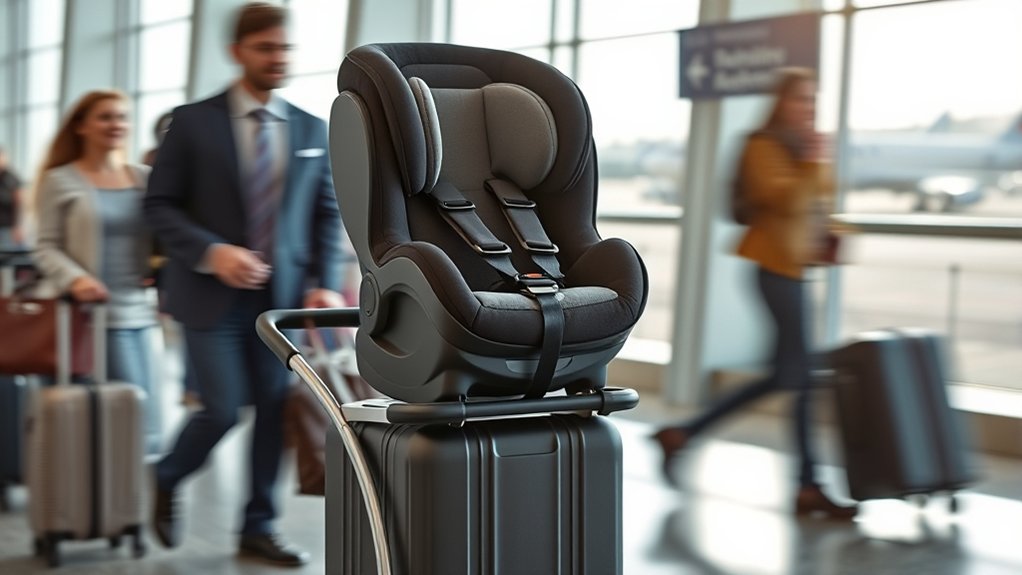
Yes, you can gate check a car seat on most airlines, but you need to follow specific policies and prepare it properly.
Remove loose accessories, use a protective bag, and label it with your contact info to protect against damage.
At the gate, hand it to the agent and inspect it upon arrival. Some seats have restrictions, so always check with your airline first.
Keep these tips in mind to guarantee your car seat’s safety and find out how to handle any potential issues.
Do All Airlines Allow Gate Checking Car Seats?
Do all airlines let you gate check car seats? Not exactly. Airline policies on gate travel vary, so it’s crucial you check with your specific carrier before your trip.
Most airlines allow gate checking car seats, recognizing the convenience and safety it offers when traveling with children. However, some may have restrictions based on aircraft size or type, while others might require you to use a protective bag.
Knowing these policies helps you avoid last-minute hassles and ensures your car seat is handled properly. Always confirm details like where to drop off and pick up your car seat at the gate.
Can You Use Your Gate-Checked Car Seat on the Plane?
How can you make the most of your gate-checked car seat during your flight? First, understand that gate check considerations vary widely due to airline policy nuances. Most airlines require you to install a separate car seat on the plane if you want your child secured during takeoff and landing.
Gate-checking your car seat means it won’t be used inside the aircraft but stored in the cargo hold.
| Scenario | Can You Use On Plane? | Notes |
|---|---|---|
| Gate-checked seat | No | Stored separately, not onboard |
| Personal seat onboard | Yes | Must meet FAA safety standards |
| Airline-provided seat | Yes | May not fit all child sizes |
Always confirm with your airline to ensure compliance and safety.
Which Car Seat Types Can You Gate Check?
You can gate check certain types of car seats, but it’s important to know the rules for each. Infant car seats are usually accepted, while convertible car seats might face restrictions due to size. Booster seats often aren’t allowed for gate checking since they don’t have a base for secure handling.
Infant Car Seats
When traveling with an infant, understanding which car seat types you can gate check becomes essential for both convenience and safety. Infant car seats are generally accepted for gate checking by most airlines, but you must follow specific airline policies to ensure smooth handling.
Before your flight, verify the carrier’s rules about gate etiquette and the size or type of seat allowed. Always label your car seat clearly with your contact information and use a protective bag if possible to prevent damage.
When you hand over your seat at the gate, ensure it’s securely fastened and easily identifiable. Following these steps helps protect your infant’s car seat and ensures compliance with airline policies, making your travel experience safer and more convenient.
Convertible Car Seats
Infant car seats often receive clear guidelines for gate checking, but convertible car seats come with different considerations. Unlike infant seats, convertible car seats are bulkier and heavier, making gate checking less straightforward.
When you gate check a convertible car seat, you risk damage due to rough handling and exposure to the elements. Always check your airline’s specific policy on convertible car seats, as some may not accept them for gate check or may require a protective bag.
To maximize airline safety, use a sturdy travel bag designed for convertible car seats to protect it during transit. Whenever possible, bring your convertible car seat onboard or use it during the flight to ensure your child’s safety.
Prioritize airline safety guidelines to avoid compromising your car seat’s integrity.
Booster Seats Rules
How should booster seats be handled during air travel? Unlike infant or convertible car seats, booster seats typically aren’t approved for use on airplanes, according to most car seat regulations. Because they rely on the vehicle’s seat belt and don’t have their own harness, airlines often don’t allow booster seats to be used during flight.
When it comes to booster guidelines, many airlines permit you to gate check them, but they won’t be used as a restraint onboard. You should label your booster seat clearly and carry it to the gate for check-in. Always check your airline’s specific policies ahead of time, as car seat regulations can vary.
Prioritizing safety and following booster seat rules ensures a smoother travel experience for you and your child.
How to Prepare Your Car Seat for Gate Check
Before gate checking your car seat, remove any loose accessories to prevent damage or loss during handling. Make sure to use a protective cover designed for car seats to shield it from dirt and impacts. Taking these steps helps keep your car seat safe and clean throughout your travels.
Remove Loose Accessories
Why should you remove loose accessories from your car seat before gate checking it? Loose accessories like toys, straps, or cup holders can get damaged, lost, or cause safety hazards during handling. Removing them ensures your car seat remains intact and ready for use upon arrival.
Here’s a quick guide on what to remove and why:
| Loose Accessory | Reason to Remove |
|---|---|
| Toys | Prevent damage or loss |
| Straps & Harness Covers | Avoid tangling or breakage |
| Cup Holders | Reduce risk of cracking or breaking |
Use Protective Cover
Where can you find the best protection for your car seat during gate check? Using a protective cover is your top option. These covers shield the seat from dirt, moisture, and potential damage while handling occurs.
When choosing a cover, weigh the pros and cons carefully. A padded cover offers superior protection but can add bulk, making it harder to carry. Lightweight covers are easier to manage but may provide less impact resistance.
Consider your travel needs: if you’re moving through multiple airports or weather conditions, a durable, waterproof cover is essential. Always ensure the cover fits snugly, so it doesn’t slip off during transit.
How to Gate Check Your Car Seat Step by Step
Wondering how to gate check your car seat without hassle? First, confirm with your airline about their gate check policies to follow proper travel etiquette.
When you arrive at the gate, remove any loose items from the seat and ensure it’s clean and dry. Use a protective cover to safeguard the car seat from dirt and damage during handling.
At airport security, you’ll need to carry the car seat through screening, so prepare to manage it alongside your child. When it’s time to board, hand the car seat to the gate agent, clearly labeled with your contact details.
This step-by-step approach prioritizes safety and respect for airport security procedures, ensuring a smooth gate check experience for you and your little one.
What to Expect When Dropping Off Your Car Seat at the Gate
When you drop off your car seat at the gate, expect staff to tag it carefully and handle it with caution. They’ll follow specific procedures to protect your seat during transit. Make sure to inspect your car seat promptly upon pickup to confirm it’s in good condition.
Gate Check Process Overview
How does the gate check process work when you drop off your car seat? When you arrive at the gate, airline staff will ask you to tag your car seat for gate travel. You’ll hand it over just before boarding, and it will be stored in the cargo hold during the flight.
Understanding safety basics is crucial here: ensure your car seat is clean, free of loose parts, and clearly labeled with your contact information. The staff will attach a tag indicating it’s a gate-checked item, but remember, the responsibility for the car seat’s condition rests with you.
After landing, retrieve your car seat at the jet bridge or designated area. Knowing this process helps you prepare and keeps your child’s safety gear secure during travel.
Car Seat Handling Procedures
Although handing over your car seat at the gate might seem straightforward, knowing the exact handling procedures guarantees your child’s safety equipment stays protected. When you drop off your car seat, airline staff will typically tag it for gate-checked luggage, following strict airline policies designed to minimize damage.
Your seat will be stored in the cargo hold, so ensure it’s clean and free of loose items. Most airlines recommend using a protective bag to safeguard the car seat from dirt and moisture.
Pickup and Inspection Tips
What should you expect when picking up your car seat after gate check? Once you reach your destination gate, your car seat will typically be returned to you by airline staff or placed in a designated area near the jet bridge.
Inspect your car seat thoroughly before use, checking for any damage caused by luggage handling or transport. Look for cracks, broken buckles, or compromised straps that could affect safety.
Keep in mind that airport security may have opened your gate-checked item for inspection, so ensure all components are intact and functioning properly. If you notice any damage, report it immediately to the airline staff before leaving the airport.
Prioritizing a careful inspection helps ensure your child’s safety throughout your travels.
How to Protect Your Gate-Checked Car Seat From Damage
Where should you start to protect your gate-checked car seat from damage? Begin by using a sturdy, padded travel bag designed specifically for car seats. This prevents scratches and absorbs shocks during handling.
Avoid focusing on irrelevant topics like unrelated concepts such as weatherproofing, which don’t directly impact gate check safety. Secure all loose parts and straps tightly to prevent snagging.
Label the bag clearly with your contact information and a “Fragile” sticker to alert baggage handlers to treat it carefully. Finally, double-check airline policies before your flight to ensure compliance with their gate check requirements.
What Happens If Your Gate-Checked Car Seat Gets Damaged?
If your gate-checked car seat gets damaged, you’ll need to act quickly to assess the extent of the harm and determine whether it remains safe to use. First, inspect the seat thoroughly for cracks, broken parts, or compromised harnesses that could affect gate safety. Even minor damage can reduce the seat’s protective capabilities.
Next, check the airline policy regarding damaged gate-checked items. Some airlines may offer compensation or require a damage report at the gate. Document the damage immediately with photos and notify the airline staff before leaving the airport to ensure your claim is valid.
Ultimately, your child’s safety is the priority; if the car seat’s integrity is in question, it’s best to replace it rather than risk using a compromised seat.
Tips for Traveling With a Car Seat Without Checking It
How can you guarantee your child’s safety while avoiding the hassle of checking a car seat? First, bring a lightweight, FAA-approved car seat designed for air travel; it’s easier to carry and fits airplane seats securely.
Avoid relying on advice from non travel topics or unrelated car models, as these won’t address airline-specific safety standards. Use a car seat travel bag with shoulder straps for easier transport through the airport.
When boarding, request pre-boarding to install the car seat without rush. Always check with your airline about their specific policies, since some allow you to bring the car seat on board free of charge.
Finally, practice installing the seat at home beforehand to ensure a smooth, safe setup on the plane. These steps keep your child secure without the risks of gate checking.
Alternatives to Gate Checking a Car Seat
Wondering what options you have besides gate checking your car seat? One alternative is bringing the car seat onboard as a carry-on, if airline policies allow. Many airlines permit you to use an FAA-approved car seat in your child’s seat on the plane, ensuring ideal car seat safety during the flight.
Another option is using a lightweight, travel-specific car seat designed for air travel; these often meet safety standards and are easier to carry. Some parents opt for harness devices approved for in-flight use, but these must comply with airline policies and FAA regulations.
Before you decide, always check the specific airline’s rules on car seat use and transport to balance convenience with your child’s safety effectively.
How to Choose the Best Car Seat for Air Travel
Selecting the right car seat for air travel depends on several factors, including safety certifications, weight, and ease of installation. First, ensure the car seat meets all current car seat regulations, such as FAA approval, which guarantees it’s safe for use on airplanes.
Next, consider the seat’s weight and size, as lighter, compact models are easier to carry and fit better within airline seating rules. You’ll want a car seat that installs quickly and securely, preferably with a simple latch system or seatbelt attachment that complies with airline guidelines.
Finally, verify your airline’s specific seating rules, as some have restrictions on which car seats are allowed onboard. By focusing on these key elements, you’ll choose a car seat that keeps your child safe and travels smoothly.
Frequently Asked Questions
Can You Gate Check a Car Seat on International Flights?
Just like navigating a labyrinth, you can usually gate check a car seat on international flights, but you must follow specific car seat regulations.
Always confirm with your airline to ensure safe, hassle-free international travel for your little one.
Are There Additional Fees for Gate Checking a Car Seat?
You usually won’t pay additional fees for gate checking a car seat, but airline policies vary. Check boarding alternatives and your airline’s rules beforehand to ensure your car seat is accepted without extra charges, prioritizing safety.
How Early Should You Arrive to Gate Check a Car Seat?
Think of your arrival timing as the anchor securing your journey. You should arrive at least two hours early, allowing ample time for packing considerations and ensuring your car seat is safely gate checked without rushing or risking damage.
Can You Gate Check a Car Seat With a Stroller Attached?
You can gate check a car seat with a stroller attached if the stroller attachment is compatible and secure.
Always confirm with your airline for specific policies to ensure safety and avoid damage during handling.
Is Gate Checking a Car Seat Safe During Winter Travel?
You can gate check a car seat during winter travel, but gate check safety depends on protecting it from cold, moisture, and rough handling. Use a weatherproof bag and label it fragile to keep your car seat safe.