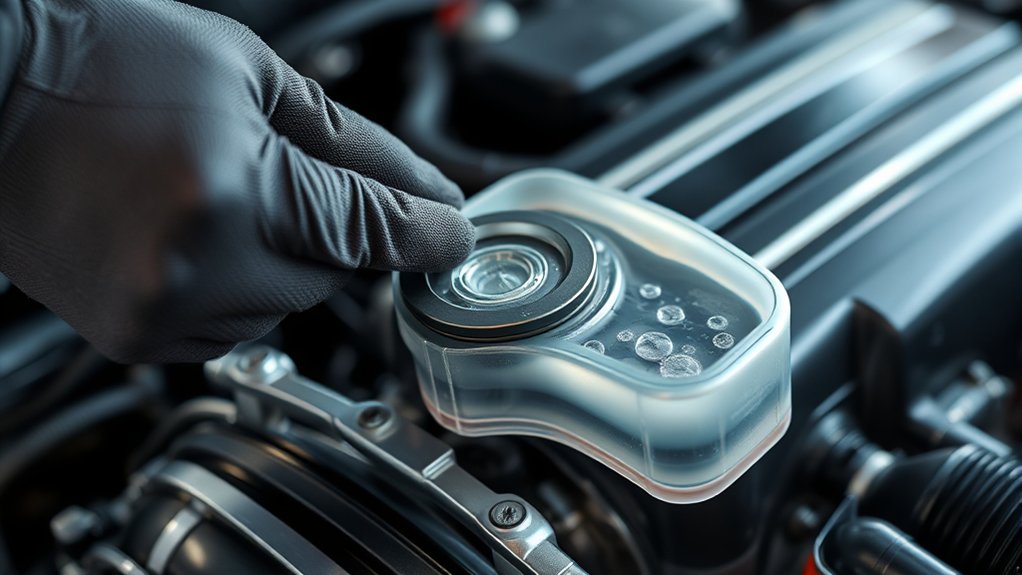
How to Burp Coolant System
To properly burp your coolant system, first ensure the engine is completely cool and parked on a level surface. Slowly remove the radiator or reservoir cap to release any built-up pressure.
Next, start the engine with the cap off to allow the coolant to circulate and trapped air to escape. Gently squeeze the upper radiator hose to help expel air bubbles, topping off the coolant as necessary.
Once no more air bubbles appear, securely replace the cap. Finally, verify that the engine temperature remains stable. Following these steps helps prevent overheating and maintains the efficiency of your cooling system.
Explore further for more detailed procedures and helpful tips.
Why You Need to Burp Your Coolant System
Why is it essential to burp your coolant system after maintenance or coolant replacement? When you drain and refill the coolant, system air pockets can form inside the cooling passages. These trapped air pockets disrupt coolant flow, reducing heat transfer efficiency and causing engine hotspots.
If you don’t burp coolant properly, the air pockets can lead to overheating and potential engine damage. By actively burping the coolant system, you force trapped air out through the radiator or designated bleeder valves, ensuring consistent coolant circulation.
This process restores optimal cooling performance and maintains system pressure balance. Skipping this step compromises the cooling system’s reliability and can lead to costly repairs. So, always burp coolant after service to eliminate system air pockets and ensure your engine runs safely.
Signs You Need to Burp Your Coolant System
How can you tell when your coolant system needs burping? Key signs include persistent overheating, fluctuating temperature gauge readings, and unusual gurgling noises from the radiator or heater core. You might also notice coolant circulation issues, such as heater malfunction or cold spots in the radiator.
Air trapped in the system disrupts coolant flow, causing these symptoms.
Air trapped in the cooling system interrupts flow, leading to overheating and performance issues.
Avoid confusing these indicators with unrelated topics like engine oil issues or electrical malfunctions. Focus on coolant-specific signs to generate practical ideas for diagnosis.
If you experience repeated coolant loss without leaks, it’s another clear sign air pockets exist.
Recognizing these symptoms early helps prevent severe engine damage. Addressing the issue through proper burping restores optimal coolant flow, ensuring efficient heat transfer and system reliability.
Tools and Materials for Burping Your Coolant System
What tools and materials do you need to effectively burp your coolant system? First, gather a coolant funnel or spill-free funnel to avoid air introduction during refills. Use a pressure tester to check for leaks post-burping.
Have a basic toolkit ready, including screwdrivers or pliers, to perform minor disassembly techniques that may be necessary to access bleed valves or remove coolant reservoir caps safely. Gloves and safety glasses protect you from harmful coolant chemistry, which can be toxic and corrosive.
Use the correct coolant type specified for your vehicle to maintain optimal system performance. Finally, keep a clean rag or shop towels handy to wipe spills and monitor for air bubbles during the bleeding process.
Proper tools and materials ensure an efficient, safe burping procedure.
Preparing Your Car Before Burping the Coolant System
Before burping your coolant system, you need to guarantee the engine is completely cool to prevent injury and inaccurate air removal. Proper burp preparation ensures coolant air pockets are effectively expelled, maintaining system efficiency.
Ensure the engine is fully cool before burping to safely and effectively remove air pockets.
Follow these steps to prepare your car:
- Park on a level surface and engage the parking brake to stabilize the vehicle.
- Remove the radiator or coolant reservoir cap slowly to release any residual pressure.
- Inspect coolant levels and top off with the correct mixture if necessary, avoiding overfilling.
- Position a clean container to catch any overflow during burping.
Completing these preparatory steps minimizes the risk of air pockets remaining trapped, which can cause overheating or inefficient cooling. Proper preparation sets the foundation for a successful coolant system burp.
Step-by-Step Guide to Burping Your Coolant System
With your car properly prepared and coolant levels checked, you can begin the burping process to remove trapped air from the system. Start by running the engine with the radiator cap off, allowing the coolant to circulate.
Squeeze the upper radiator hose to force air bubbles out. Continue until no more bubbles appear. Add coolant as needed to maintain levels. Close the radiator cap securely.
| Step | Purpose |
|---|---|
| Run engine & open cap | Circulate coolant; release air |
| Squeeze hose | Expel trapped air bubbles |
| Add coolant & close cap | Maintain level; seal system |
This step-by-step ensures efficient air removal, addressing discussion idea one. Proper execution reflects discussion idea two, optimizing your cooling system’s performance.
How to Verify Proper Coolant Flow After Burping
After burping the coolant system, check temperature consistency across the engine to ensure even heat distribution. Monitor coolant levels closely for any unexpected drops, which could indicate trapped air or leaks. These steps confirm proper coolant flow and system integrity before full operation.
Check Temperature Consistency
How can you confirm that coolant is flowing properly once you’ve burped the system? Checking temperature consistency across the cooling system is essential for diagnosing flow issues and ensuring optimal coolant chemistry. Use these steps:
- Measure the temperature at the radiator inlet and outlet to verify proper heat exchange.
- Inspect radiator airflow by ensuring the fan and fins are unobstructed, facilitating efficient cooling.
- Use an infrared thermometer to scan hoses and the engine block, looking for uniform temperature distribution.
- Compare the temperature readings to manufacturer specifications; significant deviations may indicate trapped air or flow blockages.
Consistent temperatures confirm that coolant circulates correctly, maintaining system pressure and preventing overheating. This process complements proper coolant chemistry, ensuring corrosion inhibitors and additives function effectively.
Monitor Coolant Levels
Why does monitoring coolant levels matter once you’ve burped the system? Because maintaining correct coolant levels ensures the system is free of air pockets that can cause overheating or inefficient heat transfer.
After burping, check the coolant reservoir and radiator to verify they’re filled to the recommended marks. Low coolant levels may indicate remaining air pockets or leaks.
Run the engine until it reaches operating temperature, then recheck levels, topping off as needed to compensate for expansion and contraction.
Consistent coolant levels confirm proper flow and pressure in the system, reducing the risk of hotspots and mechanical damage. Monitoring coolant levels after burping is critical to confirm that trapped air is expelled and the cooling system operates at optimal efficiency.
How Often Should You Burp Your Coolant System?
Regularly burping your coolant system guarantees that trapped air bubbles don’t compromise engine cooling efficiency. You should avoid treating this as an unrelated topic or engaging in off topic discussion, as consistent maintenance is key.
Follow these guidelines to determine how often you should burp your coolant system:
- After every coolant flush or replacement to remove newly introduced air.
- When you detect overheating symptoms or fluctuating temperature gauges.
- Following any repair involving the cooling system, such as radiator or hose replacement.
- Periodically during routine maintenance every 12,000 to 15,000 miles or annually.
Common Mistakes When Burping Your Coolant System
Maintaining an ideal coolant system requires more than just routine burping; avoiding common mistakes during the process is equally important. One frequent error is rushing the procedure, which can leave air pockets trapped and cause system inefficiency.
Also, failing to use the correct coolant mixture or neglecting to check for leaks before burping compromises the process. Avoid engaging in unrelated topic tangential discussion, such as focusing on unrelated engine components, which distracts from the precise steps needed.
Overlooking the importance of keeping the engine at operating temperature during burping reduces effectiveness. Finally, never open the radiator cap when the engine is hot, as it risks injury and disturbs pressure balance.
Troubleshooting Overheating Related to Coolant System Air Pockets
How can you identify overheating caused by air pockets in your coolant system? Air pockets disrupt airflow dynamics within pressurized reservoirs, causing uneven coolant flow and localized hot spots. To troubleshoot, focus on these key indicators:
- Monitor fluctuating temperature readings. Sudden spikes suggest trapped air disturbing coolant circulation.
- Check for inconsistent heater performance. Air pockets reduce heat transfer efficiency.
- Inspect the reservoir for visible air bubbles during engine operation. Persistent bubbles indicate incomplete burping.
- Listen for gurgling sounds near the radiator or reservoir, signaling air trapped within the system.
Addressing these symptoms promptly helps restore proper coolant flow and prevents engine damage. You must ensure all pressurized reservoirs are properly burped to maintain optimal airflow dynamics and system pressure stability.
Benefits of Regularly Burping Your Coolant System
Identifying and resolving air pockets prevents immediate overheating issues, but routinely burping your coolant system offers ongoing protection and performance benefits. By regularly removing trapped air, you maintain consistent coolant flow and optimal engine temperature.
This practice reduces corrosion and prolongs component lifespan, preventing failures that an irrelevant topic like unrelated insight on unrelated engine parts might overlook.
| Benefit | Technical Impact |
|---|---|
| Consistent Cooling | Eliminates hot spots, stabilizes temperature |
| Enhanced Component Life | Minimizes corrosion, reduces wear |
| Improved Efficiency | Optimizes coolant circulation, maintains pressure |
Regular burping ensures your system operates efficiently, avoiding performance drops and costly repairs linked to unnoticed air pockets. Don’t dismiss this critical maintenance step as an irrelevant topic; it directly influences your vehicle’s reliability.
Frequently Asked Questions
Can I Use Any Type of Coolant for My Vehicle?
You can’t use any coolant type; ensure coolant compatibility with your vehicle’s specifications. Focus on two word discussion ideas like “coolant type” and “manufacturer guidelines” to avoid damage and maintain optimal engine performance.
What Happens if I Don’T Burp the Coolant System?
If you don’t burp the coolant system, air pockets form, causing neglected cooling and hotspots. This leads to inefficient heat transfer, potential overheating, and engine damage.
You must eliminate trapped air for optimal system performance.
Is Burping the Coolant System a DIY Task or Should I Hire a Mechanic?
Think of burping your coolant system like tuning a delicate instrument; with proper DIY guidance, you can do it safely. However, if safety concerns arise or precision is essential, hiring a mechanic ensures expert handling and peace of mind.
Can Burping the Coolant System Fix a Leaking Radiator?
No, the burp process won’t fix a leaking radiator. It’s meant to remove air pockets.
You need to perform a thorough leak diagnosis to identify and repair the actual source causing the coolant loss.
How Do I Dispose of Old Coolant Safely?
You should use approved disposal methods like taking old coolant to hazardous waste centers or auto shops. Avoid pouring it down drains to minimize environmental impact, as coolant contains toxic chemicals harmful to ecosystems and water supplies.