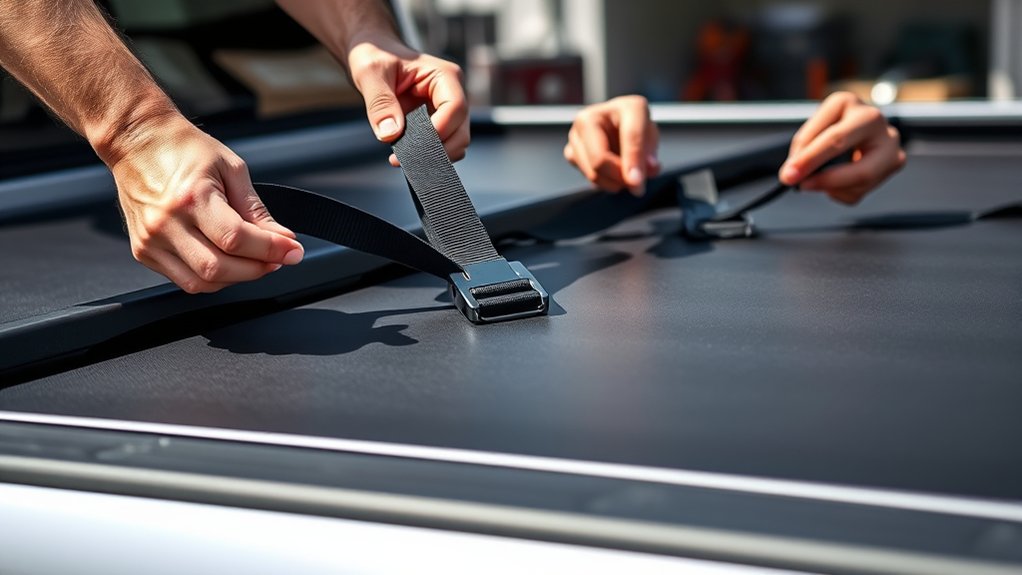
How to Replace Tonneau Cover Straps
To replace your tonneau cover straps, start by inspecting them for any fraying or damage near the buckles and attachment points. This initial check ensures you identify all areas that need attention before proceeding.
Next, gather the necessary tools such as a flathead screwdriver, socket wrench, needle-nose pliers, and a utility knife. Having these tools ready will make the replacement process smoother.
Carefully detach the old straps by locating and loosening all attachment points. Then, select durable nylon or polypropylene replacements that match your cover’s specifications.
Securely install the new straps, making sure they have firm tension for a snug fit. Following these steps guarantees reliable protection for your tonneau cover. Detailed guidance is available for each phase to assist you throughout the process.
How to Spot Worn Tonneau Cover Straps
How can you tell when your tonneau cover straps need replacing? Start by carefully inspecting the straps for spotting frayed edges or fibers, which indicate material degradation. Pay close attention to areas near buckles and attachment points, as these endure the most stress and wear.
Compare your straps to those from reputable brands to evaluate material quality and durability differences. If your straps appear thinner, more brittle, or show consistent fraying compared to new ones, replacement is necessary. Also, check for stretched or deformed buckles that compromise tension and security.
What Tools You’ll Need to Replace Tonneau Cover Straps
What tools do you need to replace tonneau cover straps efficiently? Start with a flathead screwdriver and a socket wrench set, ensuring tools compatibility with the specific fasteners on your truck bed. A pair of needle-nose pliers is essential for gripping and maneuvering small components during strap installation.
Start with a flathead screwdriver, socket wrench set, and needle-nose pliers for efficient tonneau cover strap replacement.
Additionally, a utility knife helps trim excess strap material for a clean finish.
For organized storage solutions, keep all small parts and tools in a compartmentalized container to avoid misplacing hardware. Magnetic trays can also secure screws and bolts during the process.
Verify that your tools match the size and type of the existing hardware to prevent damage and ensure a seamless replacement. Proper tool selection and storage streamline your work, saving time and effort.
How to Remove Old Tonneau Cover Straps Safely
Start by locating all the attachment points where the straps connect to the tonneau cover and truck bed. Use the correct removal tools, like pliers or screwdrivers, to avoid damaging these points. Work methodically to detach each strap safely without stressing surrounding components.
Identifying Strap Attachment Points
Where exactly do the old tonneau cover straps connect to your truck bed? Identifying strap attachment points is essential before removal. Typically, straps fasten to metal loops or hooks mounted on the truck’s side rails or near the tailgate.
Inspect these points carefully to understand the connection method, whether clips, snaps, or buckles. While examining, focus on spotting worn straps; look for frayed fabric, cracked plastic, or weakened stitching near these attachments.
Worn straps can compromise cover security and are often stressed at these points. Clear identification of these locations ensures you avoid damaging the truck bed or cover during removal. Take note of each attachment style and condition for a smoother replacement process.
Using Proper Removal Tools
After pinpointing the exact attachment points and evaluating the condition of your tonneau cover straps, gather the right tools to remove them without causing damage. Use a flathead screwdriver or a trim removal tool to carefully pry away clips or fasteners, ensuring you avoid excessive force that could harm the truck bed or cover.
Avoid using unrelated accessories like pliers or knives, as they increase the risk of tearing fabric or scratching surfaces. Inspect each strap’s hardware for signs of wear and tear, such as rusted screws or brittle plastic clips, and select tools accordingly.
Work methodically, detaching one fastener at a time to maintain control and prevent accidental damage. Proper tool use ensures a clean removal, preserving both the tonneau cover and truck surface for a smooth replacement process.
How to Choose the Right Replacement Tonneau Cover Straps
How do you guarantee your replacement tonneau cover straps will provide the durability and fit you require? Start by evaluating how to compare different strap materials. Focus on tensile strength, UV resistance, and water repellency. Materials like nylon or polypropylene offer robust performance.
Next, assess strap color options to ensure compatibility with your truck’s aesthetic and to minimize visible wear. Choose colors that resist fading under sun exposure. Additionally, verify the strap length and buckle type match your original setup to maintain secure fastening and proper tension.
Prioritize straps designed explicitly for your tonneau cover model to avoid fit issues. By systematically analyzing these factors, you ensure your replacement straps deliver optimal durability, functionality, and appearance without compromising safety or style.
How to Install New Tonneau Cover Straps Step-by-Step
Wondering how to secure your new tonneau cover straps correctly? Start by aligning the replacement straps with the mounting points on your truck bed and cover. Attach the straps using the appropriate fasteners, typically screws or clips, ensuring a snug fit without over-tightening, which can compromise strap durability.
Next, connect the straps to the cover’s securing hooks or anchors, verifying they sit firmly. Pay attention to installation timing; complete the process promptly after removing old straps to prevent cover slack or exposure.
Finally, test the tension by pulling the cover taut. Proper installation timing and careful fastening enhance strap durability, ensuring your cover stays secure during transit and harsh weather. Follow these steps methodically for a precise, lasting fit.
How to Maintain Your Tonneau Cover Straps for Longevity
Regularly inspecting and maintaining your tonneau cover straps ensures they perform reliably and last longer. To extend their lifespan, focus on these key practices:
- Check and Adjust Tension: Maintaining tension prevents slack that accelerates wear. Tighten straps as needed to keep the cover secure without overstressing the material.
- Inspect for Material Aging: Look for cracks, fraying, or stiffness caused by UV exposure and weather. Replace straps showing significant signs of aging to avoid failure.
- Clean and Lubricate Hardware: Remove dirt and debris from buckles and attachment points. Apply a light lubricant to metal components to prevent corrosion and ensure smooth operation.
Frequently Asked Questions
Can I Use Universal Straps for All Tonneau Covers?
You can use universal straps if they offer universal compatibility and match your cover’s requirements. Ensure the strap material durability suits your environment to prevent premature wear and maintain secure fastening over time.
How Often Should I Replace Tonneau Cover Straps?
You should assess replacement frequency every 6-12 months, depending on wear and weather exposure. For optimal results, follow installation tips precisely to ensure secure attachment and prolong strap durability during use and maintenance.
Are There Weather-Resistant Options for Tonneau Cover Straps?
Yes, you can choose tonneau cover straps made from weather resistant materials like reinforced nylon or polyester with UV protection. These options resist sun damage, moisture, and wear, ensuring longer durability and secure coverage in harsh conditions.
Can Damaged Straps Affect My Truck’s Warranty?
Damaged straps can be the weak link that breaks your truck’s warranty chain. If they cause related parts to fail or lead to improper cover use, you may face warranty implications.
Inspect and replace them promptly.
What Are Common Causes of Tonneau Cover Strap Failure?
Common causes of tonneau cover strap failure include wear and tear from UV exposure, friction, and frequent tension adjustments.
You’ll also encounter damage from moisture, dirt buildup, and improper fastening, all accelerating strap degradation.
Conclusion
Now that you know how to spot wear, remove old straps, and install new ones, you might think the job’s done. But here’s the catch: neglecting maintenance could undo all your hard work faster than you expect.
Keep a close eye on your tonneau cover straps—your cover’s security depends on it. Don’t let a simple strap failure turn into a costly problem.
Stay proactive with your tonneau cover straps, or you’ll regret it sooner than you think. Proper care is key to keeping your cover secure and functioning well.