Can a rav4 Tow
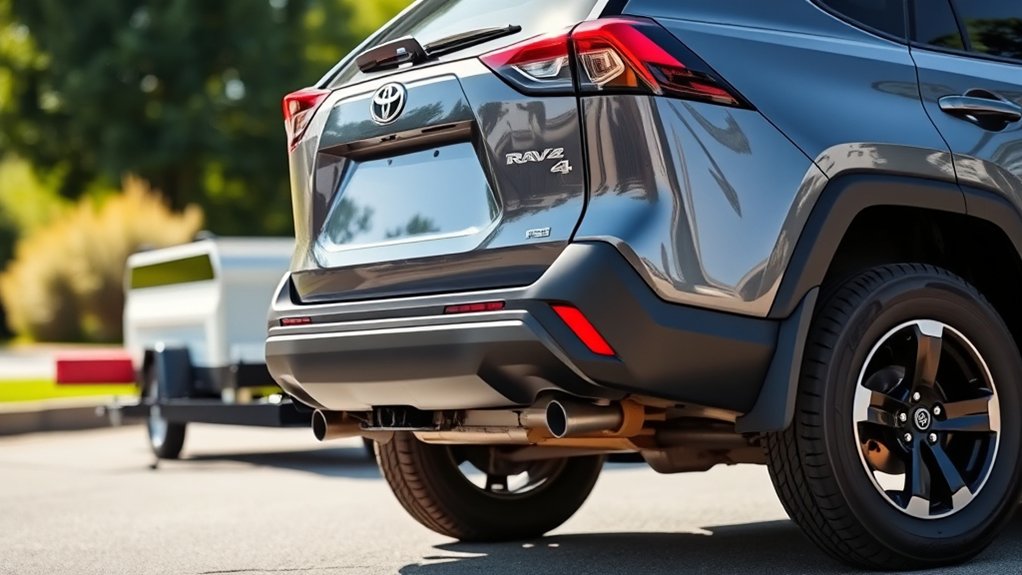
Yes, your Toyota RAV4 can tow, but towing capacity depends on the model and equipment. Most RAV4s tow between 1,500 and 3,500 pounds, with the Adventure trim offering the highest capacity. Proper preparation, including using a manufacturer-approved hitch and maintaining tires and fluids, is essential.
Keep in mind that towing affects fuel economy and increases wear on your vehicle. If you want to understand which RAV4 suits your towing needs and how to tow safely, you’ll find valuable insights ahead.
Key Takeaways
- The Toyota RAV4 can tow trailers, with maximum towing capacities ranging from 1,500 to 3,500 pounds depending on model and equipment.
- The Adventure trim offers the highest towing capacity of up to 3,500 pounds, while the RAV4 Prime can tow up to 2,500 pounds.
- Proper towing requires a manufacturer-approved hitch rated for the specific RAV4 model’s towing capacity.
- Towing impacts fuel economy and vehicle wear, so it’s important not to exceed the recommended limits in the owner’s manual.
- Always check tire pressure, load distribution, and towing equipment before towing to ensure safety and optimal performance.
How Much Can a Toyota RAV4 Tow Safely?
How much can a Toyota RAV4 tow safely? Generally, you can expect a maximum towing capacity of around 1,500 to 3,500 pounds, depending on the model and equipment.
To tow safely, you must consider towing legality, ensuring your setup complies with local regulations, including weight limits and necessary permits. Proper hitch installation is critical; using a manufacturer-approved hitch rated for your RAV4’s capacity ensures stability and safety.
Incorrect or substandard hitch installation can lead to accidents or damage. Always check your owner’s manual for specific towing guidelines and avoid exceeding the recommended limits.
Which Toyota RAV4 Models Have the Best Towing Capacity?
Which Toyota RAV4 models deliver the best towing capacity depends largely on their engine options and trim levels. If you’re aiming for maximum towing, the RAV4 Prime and the Adventure trims stand out.
The RAV4 Prime, with its hybrid powertrain, combines fuel efficiency and a respectable towing capacity of up to 2,500 pounds. Meanwhile, the Adventure trim, equipped with a more robust gas engine and enhanced cooling systems, also manages 3,500 pounds, making it the best choice for heavier towing tasks.
Discussing towing capacity alongside unrelated topics or random pairing, like comparing RAV4 towing to unrelated vehicle features, can confuse your assessment. Focus on these specific models to understand which RAV4 suits your towing needs best without distraction.
What Factors Affect Your RAV4’s Towing Performance Most?
Your RAV4’s towing performance depends largely on engine power, which determines how much weight it can handle. You’ll also need to consider the vehicle’s own weight, as it affects stability and control while towing. Lastly, using high-quality towing equipment ensures safety and maximizes your RAV4’s capabilities.
Engine Power Impact
Why does engine power play such a critical role in a RAV4’s towing capabilities? It largely comes down to engine torque, which determines the vehicle’s ability to move heavy loads from a standstill and maintain speed on inclines. Higher torque means your RAV4 can handle heavier trailers more effectively without straining the engine.
Additionally, engine power influences the vehicle’s payload capacity, ensuring it can safely carry the weight of passengers and cargo alongside the trailer. If the engine lacks sufficient power, towing performance will suffer, leading to reduced acceleration, increased fuel consumption, and potential mechanical wear.
Understanding your RAV4’s engine specifications helps you match towing demands to its capabilities, ensuring safety and efficiency during towing tasks.
Vehicle Weight Considerations
How much does weight influence your RAV4’s towing performance? Vehicle weight considerations directly impact your SUV’s ability to tow safely and efficiently. Two key factors, gross vehicle weight rating and payload capacity, determine how much additional weight your RAV4 can handle without compromising control or braking.
You need to balance these with the trailer’s weight and cargo load for optimal towing.
Consider these critical vehicle weight elements:
- Curb weight of the RAV4
- Gross combined weight rating (GCWR)
- Payload capacity limits
- Tongue weight of the trailer
- Distribution of cargo load
Towing Equipment Quality
What truly determines your RAV4’s towing capability goes beyond just engine power and vehicle weight. It’s the quality of the towing equipment that plays a critical role. Using a high-quality hitch, wiring harness, and trailer brake controller ensures safer, more efficient towing.
Proper tire maintenance is essential; underinflated or worn tires reduce stability and increase heat buildup, risking failure under load. Additionally, investing in paint protection prevents damage from road debris and trailer contact, preserving your vehicle’s finish during towing.
Using reliable connectors and regularly inspecting all components minimizes the chance of mechanical failure and enhances performance. In summary, focusing on durable, well-maintained towing equipment directly influences your RAV4’s towing safety and effectiveness, making it crucial for optimal operation.
How to Prepare Your Toyota RAV4 for Towing Tasks
Before you start towing with your Toyota RAV4, make sure to check its towing capacity to avoid overloading. You’ll also need to install the proper hitch designed for your model to ensure secure attachment. Finally, inspect essential vehicle fluids like transmission and brake fluids to keep your RAV4 running smoothly during towing tasks.
Check Towing Capacity
Where do you start when preparing your Toyota RAV4 for towing tasks? First, you need to check the vehicle’s towing capacity to ensure safe and efficient performance. Exceeding this limit risks damage and safety hazards.
Consult your owner’s manual or manufacturer’s website for exact figures. Additionally, consider these key aspects:
- Verify tire maintenance to handle extra load and maintain traction.
- Review insurance considerations to cover potential towing liabilities.
- Assess engine and transmission health for sustained towing.
- Check brake system condition to manage increased stopping power.
- Confirm suspension readiness to support towing weight.
Install Proper Hitch
How do you guarantee your Toyota RAV4 is properly equipped for towing? First, focus on hitch installation. Choosing the right hitch is crucial. It must match your RAV4’s towing capacity and frame design to ensure safety and performance.
Improper hitch installation can compromise towing legality, leading to fines or insurance issues. You should either install a manufacturer-recommended hitch yourself, following precise instructions, or have a professional do it to meet legal and safety standards.
Confirm the hitch’s weight rating aligns with your towing needs. Properly securing the hitch prevents damage to your vehicle and trailer, maintaining control during transit.
Inspect Vehicle Fluids
Why is inspecting your Toyota RAV4’s fluids essential before towing? Proper fluid levels ensure your engine, transmission, and braking systems operate efficiently under added stress. Neglecting this step can lead to overheating, reduced performance, or mechanical failure.
Before towing, focus on these critical fluid checks:
- Engine oil: Verify levels and quality to prevent engine wear.
- Transmission fluid: Ensure it’s at the right level for smooth gear shifts.
- Coolant: Check to avoid overheating during heavy loads.
- Brake fluid: Confirm adequate levels for reliable stopping power.
- Power steering fluid: Maintain to ensure responsive handling, especially with a trailer attached.
Also, inspect your tire tread for sufficient grip and even wear, as it affects stability when towing. These steps help safeguard your RAV4’s performance and safety.
Recommended Trailers and Loads for the Toyota RAV4
What types of trailers and loads can the Toyota RAV4 handle safely? The RAV4 typically tows light trailers such as small utility trailers, bike racks, or compact campers, with maximum towing capacities ranging between 1,500 to 3,500 pounds depending on the model and drivetrain. You should avoid exceeding these limits to maintain vehicle stability and safety.
When loading, distribute weight evenly to prevent strain on the suspension and avoid compromising the car interior’s comfort and controls. Proper tire inflation is critical; underinflated tires can reduce towing efficiency and increase wear.
Always check your owner’s manual for exact specifications. Sticking to recommended loads ensures your RAV4 performs optimally without risking damage or unsafe driving conditions.
How Towing Affects Toyota RAV4 Fuel Economy and Wear
Wondering how towing impacts your Toyota RAV4’s fuel economy and wear? When you tow near the maximum tow weight, your RAV4’s engine works harder, reducing fuel economy noticeably. The extra strain affects various components, increasing maintenance needs over time. Here’s what to consider:
Towing near your RAV4’s max weight reduces fuel economy and increases wear, raising maintenance needs.
- Increased fuel consumption due to added load
- Greater brake wear from handling heavier weight
- Accelerated transmission and engine stress
- Possible tire wear from added pressure and heat
- Suspension wear from carrying heavier trailers
Best Towing Accessories for Your Toyota RAV4
How can you optimize your Toyota RAV4 for safer and more efficient towing? Start by investing in essential towing accessories like a high-quality trailer hitch receiver, which securely connects your trailer.
A weight distribution hitch helps balance the load, improving stability and reducing sway. Don’t overlook trailer brake controllers; they enhance braking performance, which is crucial for safety.
While some consider other add-ons an irrelevant topic or engage in random debate about their necessity, focusing on these essentials ensures reliability. Additionally, towing mirrors extend your view for better awareness.
Prioritize accessories that directly impact control and safety, avoiding distractions from less critical items. By equipping your RAV4 appropriately, you’ll maintain towing efficiency and protect your vehicle’s longevity.
When to Consider a Bigger SUV Than the RAV4 for Towing
Equipping your Toyota RAV4 with the right towing accessories improves safety and control, but there are limits to what this compact SUV can handle. You should consider a bigger SUV when your towing needs exceed the RAV4’s capabilities or when maintenance demands become frequent due to heavy loads. Signs include:
- Frequent tire rotation from excessive wear due to heavy towing
- Overheating issues linked to limited coolant capacity under strain
- Towing trailers near or above the RAV4’s maximum towing weight
- Need for enhanced stability and power on steep or rough terrain
- Regular long-distance towing that stresses the drivetrain and suspension
Assess these factors objectively to decide if upgrading to a larger SUV offers better performance, safety, and durability for your towing tasks.
How to Tow Responsibly With Your Toyota RAV4
What steps should you take to ensure safe towing with your Toyota RAV4? First, always verify the vehicle’s tow capacity in the owner’s manual and never exceed it. Overloading can compromise handling and safety.
Next, distribute the trailer’s weight evenly to maintain stability. Check that your hitch and towing equipment meet specified standards. Monitor tire pressure, as proper inflation supports towing demands and improves fuel efficiency.
While towing, drive smoothly, avoiding sudden accelerations or sharp turns to reduce strain and maintain control. Keep an eye on your mirrors and increase following distance to accommodate longer stopping times.
Finally, be mindful that towing reduces fuel efficiency, so plan for extra fuel stops. Following these steps ensures responsible towing and protects your RAV4’s performance and safety.
Frequently Asked Questions
Does Towing Void the Toyota RAV4 Warranty?
Towing won’t automatically void your Toyota RAV4 warranty, but improper use or exceeding limits can. You should follow manufacturer guidelines to avoid issues.
Also, check insurance implications since towing might affect coverage or claims.
Can a RAV4 Tow a Boat on a Steep Hill?
When it comes to towing a boat on a steep hill, you’ll need to mind the towing capacity and hill maneuvering skills. The RAV4 can handle it, but don’t bite off more than it can chew.
Is a Trailer Brake Required for Towing With a RAV4?
You’ll need a trailer brake when towing heavier loads with your RAV4, as it improves tire grip and reduces braking distance. This ensures safer stops and better control, especially on steep or wet roads.
How Does Towing Impact RAV4 Insurance Premiums?
Towing insurance can increase your premiums since towing raises risk. Also, check warranty implications; improper towing might void coverage.
You should inform your insurer about towing to ensure proper protection and avoid surprises on claims or repairs.
Can the RAV4 Tow in Snowy or Icy Conditions Safely?
Towing in snowy or icy conditions is like walking a tightrope. You can tow safely if you equip your RAV4 with proper winter equipment and prioritize snow safety by driving cautiously and monitoring road conditions at all times.
Conclusion
When it comes to towing with your Toyota RAV4, knowing its limits is key to keeping everything running smoothly. While it can handle moderate loads, pushing beyond its capacity is like asking a marathon runner to sprint—possible but risky.
By choosing the right model, preparing your vehicle properly, and using the best accessories, you’ll tow safely and efficiently.
Remember, sometimes the smartest move is opting for a bigger SUV when your towing needs grow. If you’re unsure about how much a RAV4 can tow, always check the specific towing capacity for your model to ensure safe towing.