How Do I Adjust the New Fuel Pressure Regulator
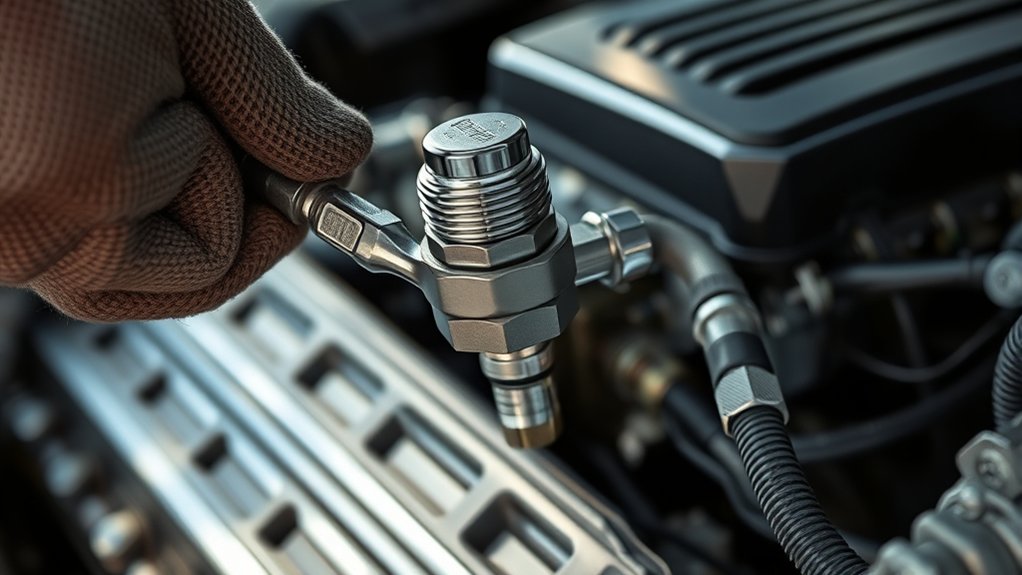
To adjust your new fuel pressure regulator, first identify its type and locate it—usually on the fuel rail or near the tank.
Adjusting the new fuel pressure regulator properly is essential for optimal engine performance.
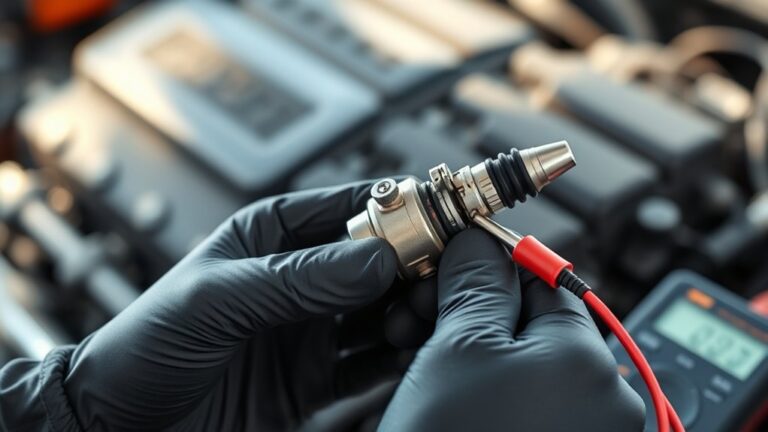
Use a fuel pressure gauge to measure the current pressure safely while wearing protective gear.
Turn the regulator’s adjustment screw clockwise to increase pressure or counterclockwise to decrease it, matching your engine’s specifications.
Once adjusted, secure the screw tightly.
Check for any fuel leaks and verify that the pressure remains stable.
Following these precise steps ensures optimal fuel delivery to your engine.
Explore further for detailed guidance and troubleshooting tips to maintain your fuel system’s efficiency.
Identify Your Fuel Pressure Regulator Type
How can you quickly identify the type of fuel pressure regulator you have? First, examine the regulator’s design and materials, as different fuel types require specific compatibility. For example, regulators for gasoline systems differ from those meant for diesel, which often handle varied oil viscosity.
Check the inlet and outlet ports for size and configuration, matching them to fuel system specifications. Look for manufacturer labels or part numbers stamped on the body to cross-reference with technical manuals.
Additionally, note if the regulator includes a vacuum line connection, indicating a vacuum-referenced type, or if it’s mechanical-only. Identifying the correct regulator type ensures you adjust it properly and maintain optimal fuel flow and pressure, preventing damage due to incompatible fuel types or incorrect handling of fuel with varying oil viscosity.
Locate Your Fuel Pressure Regulator
You’ll usually find the fuel pressure regulator mounted on the fuel rail or near the fuel tank, depending on your vehicle’s design. Different regulator types require specific identification to ensure proper adjustment. Gather basic hand tools like wrenches and screwdrivers to access and remove the regulator safely.
Common Regulator Locations
Where exactly is your fuel pressure regulator located? Typically, you’ll find it near the fuel rail on fuel-injected engines, attached directly to the rail or mounted on the intake manifold. In carbureted systems, it’s often integrated into the carburetor or positioned along the fuel line before the carburetor.
Knowing this helps you avoid wasting time. No need to rely on gasoline trivia or humorous memes for hints. Some regulators are housed inside the fuel tank, especially in modern vehicles, requiring you to access the fuel pump assembly.
Always consult your vehicle’s service manual for exact placement. Understanding these common regulator locations streamlines troubleshooting and adjustment tasks, ensuring precise fuel pressure control without guesswork or unnecessary disassembly.
Identifying Regulator Types
Which type of fuel pressure regulator does your vehicle use? Identifying regulator types is crucial before making adjustments. Typically, you’ll encounter two main types: diaphragm-type and canister-style regulators.
Diaphragm-type regulators mount directly on the fuel rail or intake manifold, using a vacuum line to modulate pressure. Canister-style regulators are usually separate units connected by fuel lines and often feature an external adjustment screw.
Locating regulator varies by make and model; consult your service manual for precise locations. When locating regulator, focus on areas near the fuel injectors or fuel pump.
Proper identification ensures you adjust the correct component, preventing damage and maintaining optimal fuel pressure. Accurately identifying regulator types streamlines your repair process and guarantees effective fuel system performance.
Tools Needed for Access
How do you gain proper access to your vehicle’s fuel pressure regulator? First, identify its location based on your engine type, commonly near the fuel rail or carburetor. You’ll need specific tools: a set of wrenches (often metric), a fuel line disconnect tool, and possibly a screwdriver.
Safety gear like gloves and eye protection is essential due to fuel exposure. Before proceeding, review any legal considerations regarding fuel system modifications to comply with regulations. Understanding marketing strategies behind aftermarket regulators can help you select compatible tools and parts for efficient access.
Prepare a clean workspace and disconnect the battery to prevent sparks. With the right tools and precautions, you’ll efficiently locate and access the regulator, enabling precise adjustments without damage or safety risks.
Tools for Adjusting Your Fuel Pressure Regulator
You’ll need specific tools to adjust your fuel pressure regulator accurately. This includes calibration equipment like a fuel pressure gauge and a precise adjustment wrench, along with essential safety gear such as gloves and eye protection. Having the right tools ensures you can make precise adjustments while maintaining safety throughout the process.
Essential Tools Overview
What tools do you need to effectively adjust your fuel pressure regulator? First, a reliable fuel pressure gauge is essential to measure pressure accurately, ensuring optimal engine performance.
You’ll also need a set of wrenches or adjustable spanners to loosen and tighten fittings without damaging components. A screwdriver may be necessary for regulators with adjustment screws.
To maintain fuel system safety, use protective gloves and safety glasses to guard against fuel exposure. Additionally, a clean rag helps manage spills and keep the workspace tidy.
Avoid makeshift tools that can compromise precision or cause leaks. Using the right tools not only guarantees accurate adjustments but also protects the fuel system from damage, ensuring consistent engine performance and operational safety throughout the process.
Calibration Equipment Needed
Accurate calibration depends on having the right equipment to measure and adjust fuel pressure precisely. You’ll need a reliable fuel gauge to monitor pressure levels in real time. Choose one compatible with your regulator’s range for exact readings.
Additionally, a calibrated pressure tester helps you verify adjustments accurately. Don’t overlook tools for detecting air leaks, such as a smoke machine or soapy water spray, since air leaks can skew your pressure readings and cause faulty calibration.
A wrench set with appropriate sizes ensures secure fittings without damage. Finally, a vacuum gauge assists in diagnosing regulator response under varying engine loads.
Using these tools together ensures you achieve precise fuel pressure adjustments, optimizing engine performance and preventing fuel system issues.
Safety Gear Recommendations
Proper safety gear is essential when adjusting your fuel pressure regulator to protect you from potential hazards like fuel sprays, sharp edges, and high pressures. Selecting the right PPE ensures you stay safe throughout the process. Focus on PPE selection that guards against chemical exposure, impact, and punctures.
Key safety gear includes:
- Safety goggles or face shield to protect eyes from fuel splashes
- Chemical-resistant gloves to prevent skin contact with fuel
- Long-sleeve, flame-resistant clothing to minimize burn risk
- Closed-toe, non-slip footwear for secure footing and protection
Always inspect your safety gear before use and replace any damaged items immediately. Prioritize PPE selection to maintain a safe working environment when adjusting your fuel pressure regulator.
How to Measure Fuel Pressure Safely
When measuring fuel pressure, how can you guarantee safety throughout the process? First, relieve the system pressure by disconnecting the fuel pump fuse and running the engine until it stalls. Always wear protective gloves and eyewear to prevent injury from pressurized fuel spray.
Relieve system pressure by removing the fuel pump fuse and wearing protective gear to prevent injury from fuel spray.
Use a calibrated fuel pressure gauge compatible with your vehicle’s specifications, especially for turbocharged engines where pressure ranges are higher. Connect the gauge securely to the fuel rail’s Schrader valve or test port without leaks.
Work in a well-ventilated area, away from ignition sources, to reduce fire risk. Accurate pressure measurement is critical; improper readings can harm fuel economy and engine performance.
Finally, after testing, reinstall all fittings tightly and clear any fuel spills promptly to maintain safety and system integrity.
Correct Fuel Pressure Settings for Your Engine
Where should you set the fuel pressure for best engine performance? Correct fuel pressure settings depend on your engine type and tuning goals. Setting pressure too high or too low can compromise fuel efficiency and negatively affect car aesthetics by causing poor engine response or increased emissions.
To optimize fuel pressure, consider these key points:
- Follow manufacturer specifications for your engine model.
- Adjust pressure to maintain consistent fuel delivery without flooding.
- Monitor fuel efficiency changes after adjustments.
- Ensure pressure aligns with your vehicle’s fuel injection system requirements.
Precise pressure control ensures optimal combustion, enhancing power output and maintaining your car’s aesthetic appeal by minimizing engine issues. Always verify settings with accurate gauges before finalizing.
Adjust Your New Fuel Pressure Regulator Step-by-Step
Adjusting your new fuel pressure regulator starts with verifying that your fuel pressure matches the specifications outlined for your engine. Begin by connecting a reliable fuel pressure gauge to the fuel rail.
Start adjusting your fuel pressure regulator by confirming your engine’s specified fuel pressure with a reliable gauge.
Gradually turn the regulator’s adjustment screw clockwise to increase pressure or counterclockwise to decrease it, checking the gauge after each minor turn. Remember, precision is key—small tweaks make a big difference.
A funny anecdote: one enthusiast treated this like his unrelated hobby of birdwatching, patiently observing changes and noting results carefully.
After reaching the target pressure, secure the adjustment screw with the lock nut to prevent drifting. Finally, double-check for leaks or pressure drops to ensure stability. This methodical approach guarantees your regulator performs optimally.
Test Engine Performance After Fuel Pressure Adjustment
How can you confirm that your fuel pressure adjustment has optimized engine performance? Start by conducting a systematic test drive under varied load conditions. Monitor engine response, noting changes in acceleration and idle stability. Use a diagnostic scanner to check for error codes and fuel trim data.
Pay close attention to these factors during testing:
- Consistent idle speed without surging or stalling
- Smooth acceleration with no hesitation or knocking
- Stable fuel trim values within manufacturer specifications
- Compatibility with the recommended gasoline octane and any fuel additives used
Proper pressure ensures efficient fuel atomization, preventing pre-ignition or detonation. If performance issues persist, revisit adjustment steps or evaluate fuel quality and additives, as these directly influence combustion efficiency.
Common Mistakes When Adjusting Your Fuel Pressure Regulator
Once you’ve tested engine performance and confirmed your fuel pressure adjustment’s impact, be aware that common mistakes can still undermine your efforts. First, avoid rushing the adjustment process; improper tightening or loosening can cause inaccurate pressure readings.
Don’t rely solely on guesswork. Use a calibrated fuel pressure gauge for precision. Another error is engaging in unrelated topic conversations during the adjustment, which leads to distraction and off topic discussion, increasing the risk of errors.
Also, never ignore manufacturer specifications or attempt to exceed recommended pressure ranges. Skipping system leak checks or neglecting to re-secure fittings after adjustment compromises fuel system integrity.
Know When to Call a Pro for Fuel Pressure Problems
When should you consider calling a professional for fuel pressure issues? If you’ve tried creative writing to troubleshoot or even applied gardening tips like patience and precision without success, it’s time to bring in an expert. Fuel pressure problems can be complex and hazardous, requiring specialized tools and knowledge.
Call a pro if you encounter:
- Persistent fuel leaks despite regulator adjustment
- Inconsistent fuel pressure readings that defy standard fixes
- Engine performance issues linked to fuel delivery
- Difficulty diagnosing electronic fuel injection systems
Attempting DIY fixes beyond basic adjustments risks damage or safety hazards. Professionals possess diagnostic equipment and technical skills to accurately pinpoint and resolve fuel pressure irregularities, ensuring your vehicle runs efficiently and safely. Don’t hesitate to seek expert help when your efforts stall.
Frequently Asked Questions
Can a Faulty Fuel Pressure Regulator Cause Poor Fuel Economy?
Yes, a faulty fuel pressure regulator can cause poor fuel economy by disrupting fuel delivery.
Ensuring universal compatibility and following your maintenance schedule helps prevent issues and keeps your engine running efficiently.
How Often Should I Replace My Fuel Pressure Regulator?
Don’t worry about frequent replacement; typically, you replace your fuel pressure regulator only if testing methods reveal faults.
Follow the adjustment procedure during inspections, usually every 50,000 miles or when you notice performance issues.
Will Adjusting Fuel Pressure Affect My Vehicle’s Emissions?
Yes, your adjustment procedure directly impacts emissions. Incorrect fuel pressure alters the air-fuel ratio, causing increased pollutants.
You must calibrate precisely to maintain optimal combustion and comply with emission standards, avoiding engine inefficiency and regulatory issues.
Can I Use a Universal Fuel Pressure Regulator on Any Car?
You can use a universal fuel pressure regulator on many vehicles, but universal compatibility isn’t guaranteed. Always verify specifications to ensure proper regulator replacement, avoiding issues with fuel pressure and engine performance.
What Are Signs of a Failing Fuel Pressure Regulator?
You’ll notice a noisy regulator, engine misfires, or poor acceleration when your fuel pressure regulator fails.
Bad gas contamination can worsen symptoms, causing pressure fluctuations and fuel leaks. Check for black smoke or strong fuel odors too.
Conclusion
Adjusting your fuel pressure regulator correctly is essential for peak engine performance. Studies show that improper fuel pressure can reduce fuel efficiency by up to 15%. By identifying your regulator type, using the right tools, and following precise adjustment steps, you guarantee your engine runs smoothly and safely.
Always double-check your settings with a fuel pressure gauge and avoid common mistakes. If unsure, don’t hesitate to call a professional to prevent costly damage. Properly adjusting the fuel pressure regulator ensures optimal engine function and longevity.
Remember, mastering how to adjust the new fuel pressure regulator is key to maintaining your vehicle’s performance and reliability.