Can Clogged Mustang Fuel Filter Create Loss of Pressure
Yes, a clogged fuel filter in your Mustang can create a loss of pressure by restricting the flow of fuel. This restriction forces the fuel pump to work harder than usual, which can lead to engine hesitation and reduced power.
In some cases, a clogged filter may even cause the engine to stall. Low fuel pressure also disrupts proper combustion, resulting in misfires and poor acceleration.
To address this issue, you should test the fuel pressure with a gauge and replace the filter promptly. Doing so helps prevent further strain on the fuel system and maintains your Mustang’s performance and reliability.
What Happens to Your Mustang’s Fuel Pressure When the Fuel Filter Is Clogged
How does a clogged fuel filter affect your Mustang’s fuel pressure? When debris accumulates in the fuel filter, it restricts fuel flow, causing a measurable drop in fuel pressure. This pressure loss means your fuel pump has to work harder, and the engine receives less fuel, which can lead to hesitation or stalling.
It’s important not to confuse this with an irrelevant topic like electrical issues or the unrelated concept of air intake restrictions. These don’t directly influence fuel pressure caused by filter blockage.
Monitoring fuel pressure with a gauge after suspecting a clogged filter provides clear evidence of this mechanical bottleneck. Ignoring this leads to poor engine performance and potential damage, so addressing the clogged filter promptly ensures consistent fuel delivery.
Why Fuel Pressure Is Key to Your Mustang’s Performance
Why does fuel pressure matter so much for your Mustang’s performance? Proper fuel pressure ensures the engine gets the right amount of fuel, ensuring combustion and power output. If pressure drops, your Mustang can lose efficiency and responsiveness.
Here’s a quick look at how fuel pressure affects key performance areas:
| Performance Aspect | Impact of Proper Pressure | Result of Low Pressure |
|---|---|---|
| Engine Power | Optimal combustion | Reduced horsepower |
| Fuel Efficiency | Balanced fuel delivery | Increased consumption |
| Engine Longevity | Stable operation | Potential damage |
Don’t get caught in unrelated topic or off topic discussion about sensors or ECU tuning here; focus on fuel pressure itself to understand your Mustang’s true performance potential.
Common Signs a Clogged Fuel Filter Is Dropping Your Mustang’s Fuel Pressure
You’ll notice engine performance issues when a clogged fuel filter restricts flow and lowers fuel pressure. Your fuel pump may strain harder to compensate, risking premature failure. Irregular idle behavior is another clear sign that fuel delivery isn’t consistent.
Engine Performance Issues
What happens when your Mustang’s fuel pressure drops unexpectedly? You’ll likely experience engine performance issues such as hesitation, rough idling, and reduced acceleration.
A clogged fuel filter restricts fuel flow, forcing the fuel pump to work harder, which can cause inconsistent fuel delivery. This fluctuation affects ignition timing, leading to misfires or delayed combustion.
Your engine might stall under load because it’s not receiving the precise fuel volume needed for optimal air-fuel mixture. You may also notice decreased fuel efficiency and an overall lack of power.
Monitoring these signs is crucial since poor fuel pressure disrupts the engine’s ability to maintain proper ignition timing and combustion stability, directly impacting performance. Addressing a clogged filter promptly helps maintain consistent fuel flow and protects the fuel pump from undue stress.
Fuel Pump Strain
How can a clogged fuel filter strain your Mustang’s fuel pump? When the filter restricts fuel flow, the pump must work harder to push fuel through the fuel system. This extra effort increases electrical load and mechanical wear, potentially leading to premature pump failure.
You might notice the pump running louder or cycling more frequently, both signs of strain. To prevent this, adhere to regular maintenance tips such as replacing the fuel filter at recommended intervals and inspecting the fuel system for contamination.
Keeping the filter clean ensures consistent fuel pressure, reducing pump stress and extending its lifespan. Ignoring filter maintenance risks costly repairs, so prioritize this task to maintain optimal fuel system performance in your Mustang.
Irregular Idle Behavior
Why does your Mustang idle irregularly when the fuel filter clogs? A clogged fuel filter restricts fuel flow, causing inconsistent pressure to the fuel injectors. This uneven supply disrupts the precise fuel-air mixture needed for smooth engine operation, leading to rough or irregular idle behavior.
If you’ve installed drivetrain upgrades that demand higher fuel flow, a clogged filter becomes even more problematic, as the system can’t keep up with increased fuel delivery requirements. Your Mustang’s fuel injectors rely on steady pressure to maintain optimal spray patterns; any drop or fluctuation directly affects combustion efficiency.
How to Test Fuel Pressure to Diagnose a Clogged Fuel Filter
When should you check your Mustang’s fuel pressure to pinpoint a clogged fuel filter? Test it when you notice symptoms like engine hesitation or irregular idle behavior, not when dealing with irrelevant topics or unrelated concepts. Use a fuel pressure gauge connected to the fuel rail’s Schrader valve. Start the engine and observe the pressure reading.
| Step | Tool Needed | Expected Result |
|---|---|---|
| Connect gauge | Fuel pressure gauge | Tight seal, no leaks |
| Start engine | Key or starter | 40-60 psi pressure |
| Observe gauge | Gauge display | Steady pressure |
| Compare reading | Manufacturer specs | Within spec range |
Low or fluctuating pressure confirms a clogged fuel filter.
How to Replace a Clogged Fuel Filter on Your Mustang
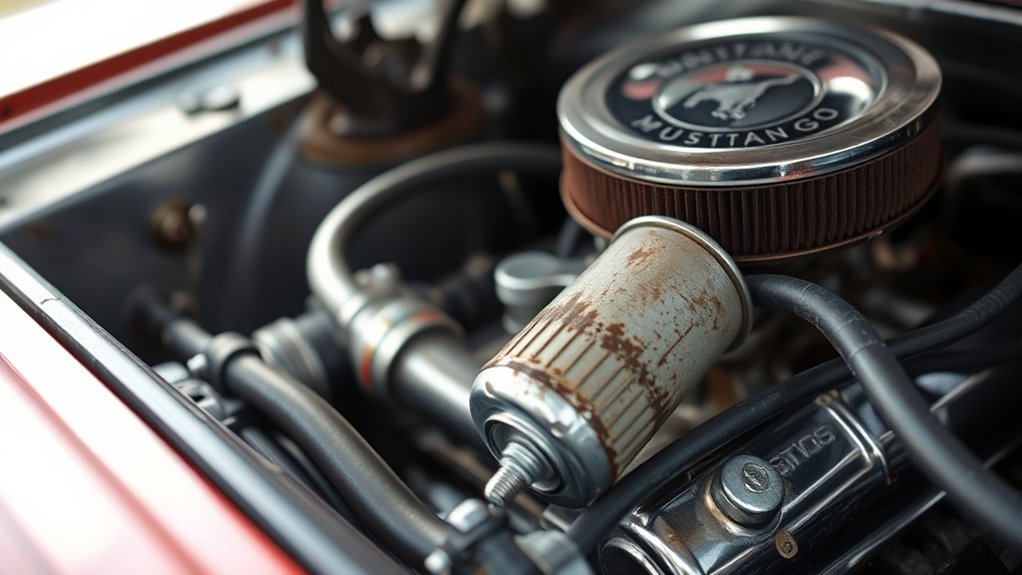
You’ll first need to locate the fuel filter, typically found along the fuel line under the Mustang or near the fuel tank. Follow a step-by-step process: relieve fuel pressure, disconnect the battery, remove the old filter, and install the new one in the correct flow direction. Make sure to check for leaks and restore power once the replacement is complete.
Identifying Fuel Filter Location
Where exactly is the fuel filter located on your Mustang? Knowing this is vital before tackling replacement. Avoid off topic ideas or irrelevant topic details about unrelated car parts—they won’t help you find the filter.
Typically, fuel filters on Mustangs sit in one of these locations:
- Along the fuel line underneath the vehicle, near the fuel tank
- Inside the engine bay, mounted on the firewall or near the throttle body
- Integrated within the fuel pump assembly inside the tank (for newer models)
- Behind the passenger-side kick panel or under the car’s chassis
Identifying the exact spot depends on your Mustang’s model year and engine type. Pinpointing the location first saves time and ensures you don’t waste effort searching irrelevant or off topic areas.
This step is essential before moving on to replacing a clogged fuel filter.
Step-by-Step Replacement Guide
Replacing a clogged fuel filter on your Mustang involves a few precise steps that ensure safety and efficiency. First, relieve fuel system pressure by disconnecting the battery and locating the fuel pump fuse; start the engine and let it stall.
Next, identify the fuel filter location, typically along the frame rail or near the fuel tank. Use proper wrenches to disconnect fuel lines, being cautious of residual fuel.
Remove the old filter and install the new one, observing correct flow direction. Tighten fittings securely to prevent leaks.
Due to recent fuel system redesigns, some models may require specialized tools or procedures. Plan for disruptive maintenance by working in a well-ventilated area and disposing of fuel-soaked materials safely.
Finally, reconnect the battery and test for leaks and proper fuel pressure.
Tips to Prevent Fuel Filter Clogging and Keep Fuel Pressure Steady
Regular maintenance routines play an essential role in preventing fuel filter clogging and maintaining steady fuel pressure in your Mustang. Ignoring this can lead to irrelevant topic discussions or random chatter about engine issues that actually stem from poor fuel flow.
To keep your fuel system in top shape, follow these practical tips:
Replace the fuel filter at manufacturer-recommended intervals to avoid buildup. Use high-quality fuel to minimize contaminants entering the system. Regularly inspect fuel lines and connections for leaks or damage. Keep the fuel tank clean and avoid running it near empty to reduce sediment pickup.
Frequently Asked Questions
Can a Clogged Fuel Filter Affect Mustang Fuel Economy?
Yes, a clogged fuel filter can reduce your Mustang’s fuel economy by restricting fuel flow, causing inefficient combustion.
You won’t get optimal performance, so replacing the filter promptly keeps your engine running smoothly and saves fuel.
How Often Should Mustang Fuel Filters Be Replaced?
Think of your Mustang’s fuel filter like a coffee filter; replace it every 30,000 miles to avoid clogs. This routine won’t void your warranty, debunking maintenance myths about unnecessary replacements. Stay proactive.
Are There Aftermarket Fuel Filters Better Than OEM for Mustangs?
Yes, some aftermarket fuel filters outperform OEM by offering better filtration and durability. Avoid irrelevant topics or unrelated discussions; focus on specifications, flow rates, and materials to select the best option for your Mustang’s performance needs.
Can a Clogged Fuel Filter Cause Engine Stalling in a Mustang?
Think of your Mustang’s fuel system as a river: a clogged filter acts like a dam, restricting flow. You’ll notice engine stalling, hesitation, or misfires.
In your two word discussion ideas, focus on fuel delivery and pressure drop.
Does Fuel Filter Clogging Impact Mustang Emissions?
Yes, a clogged fuel filter can reduce catalyst efficiency, causing incomplete combustion and higher emissions. You’ll likely fail emission testing due to increased pollutants, so maintaining a clean fuel filter is essential for peak Mustang emissions performance.
Conclusion
If your Mustang’s fuel pressure drops, a clogged fuel filter might be the root cause, slowing performance like a wrench in the gears. Don’t ignore signs like hesitation or stalling—test your fuel pressure promptly to catch issues early.
Replacing the filter is straightforward and keeps your engine running smoothly. Regular maintenance is the key to avoiding surprises and ensuring your Mustang delivers power without a hitch every time you hit the road.
In conclusion, a clogged Mustang fuel filter can create loss of pressure, so staying on top of filter health is essential for optimal performance.