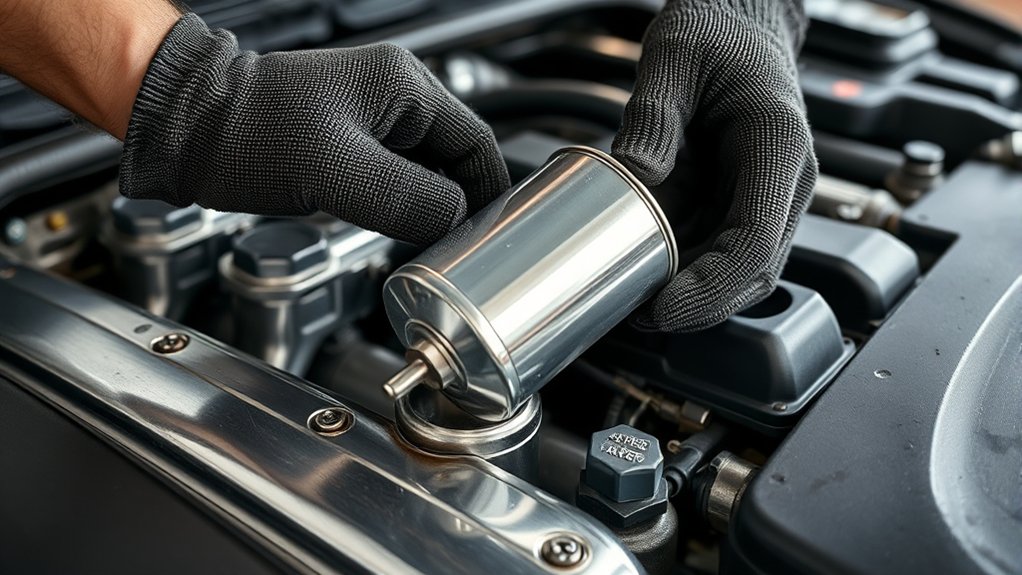
How Often to Change Fuel Filter
You should change your fuel filter every 20,000 to 50,000 miles, depending on your vehicle type, driving conditions, and fuel quality. Changing the fuel filter regularly is essential for maintaining optimal engine performance and fuel system health. Sedans typically follow longer intervals, while trucks need more frequent changes.
Neglecting this can cause clogged injectors, reduced fuel flow, and poor engine performance. Harsh environments and low-quality fuel accelerate filter wear. Using the correct, high-quality filter and maintaining regular inspections helps protect your engine and fuel system.
Learn how to optimize replacement timing and filter choice for the best results. Proper care ensures your vehicle runs smoothly and efficiently over time.
How a Fuel Filter Affects Your Engine’s Performance
A fuel filter consistently plays a crucial role in maintaining your engine’s performance by trapping contaminants before they reach the fuel injectors. When your fuel filter effectively removes dirt, rust, and debris, it guarantees a clean fuel supply, which directly impacts fuel efficiency and engine responsiveness.
If contaminants bypass this filter, they can clog injectors, reducing fuel flow and causing uneven combustion. This not only decreases fuel efficiency but also compromises driving safety by increasing the risk of engine stalling or failure during operation.
Signs Your Fuel Filter Needs Changing
You’ll notice your engine’s performance drops when the fuel filter clogs, causing reduced power and hesitation. If you’re struggling to start your vehicle, a blocked fuel filter could be restricting fuel flow. Recognizing these signs early helps prevent more serious engine issues.
Reduced Engine Performance
How can you tell if your fuel filter is compromising engine performance? When the filter clogs, fuel flow decreases, causing your engine to lose power, especially under load or acceleration. You might notice hesitation or stalling, as the engine receives inconsistent fuel pressure.
Unlike an irrelevant topic or a random pairing of symptoms that don’t relate to fuel delivery, reduced engine performance directly signals fuel restriction. This condition forces the engine to work harder, reducing efficiency and potentially causing misfires.
Monitoring this symptom helps you avoid further damage. If your engine’s power drops without other apparent causes, inspect the fuel filter promptly. Replacing a clogged filter restores optimal fuel flow, ensuring your engine runs smoothly and maintains its designed performance levels.
Difficulty Starting Vehicle
Why does your vehicle struggle to start despite a fully charged battery? A clogged fuel filter restricts fuel flow, causing insufficient fuel delivery to the engine during ignition. This results in difficulty starting your vehicle or extended cranking times. Recognizing this sign early helps prevent further engine issues.
| Quick Trivia | Fuel Trivia |
|---|---|
| Dirty fuel filters reduce fuel flow by up to 50%. | Fuel filters trap contaminants as small as 10 microns. |
| Replacing the filter improves starting reliability. | Fuel filter lifespan varies by vehicle and fuel quality. |
| A clogged filter causes inconsistent fuel pressure. | Modern vehicles rely heavily on clean fuel for sensors. |
Monitoring these signs ensures timely fuel filter changes, maintaining optimal engine start-up and performance.
How Often to Change Your Fuel Filter by Vehicle Type
You’ll find that fuel filter replacement intervals vary depending on your vehicle type. Sedans typically require changes every 30,000 to 40,000 miles, while SUVs often have a slightly longer schedule. Trucks, due to heavier usage, usually need fuel filter maintenance more frequently to ensure effective performance.
Sedans Fuel Filter Interval
To guarantee peak engine performance, when should you replace the fuel filter in your sedan? Typically, sedans require a fuel filter change every 30,000 to 50,000 miles, but this interval depends heavily on fuel quality.
Poor fuel quality accelerates filter clogging, restricting fuel flow and causing inefficient combustion. If contaminants block the filter, your engine may misfire due to inconsistent ignition sparks, leading to reduced power and increased emissions.
To ensure optimal operation, inspect the fuel filter regularly and replace it as recommended by your vehicle’s manufacturer. Staying proactive prevents debris from reaching the fuel injectors and ignition system, safeguarding engine components.
SUVs Fuel Filter Schedule
While sedans typically require a fuel filter replacement every 30,000 to 50,000 miles, SUVs often have different maintenance schedules due to variations in engine size, fuel system design, and driving conditions. You should consider these factors when determining the optimal time to change your SUV’s fuel filter:
- Larger engine size in SUVs demands a more robust fuel system, potentially shortening filter lifespan.
- Off-road or heavy-load driving accelerates fuel filter clogging due to contaminants.
- Use of fuel additives can help maintain fuel system cleanliness, extending filter service intervals.
- Manufacturer recommendations vary; always consult your SUV’s service manual for specific mileage guidelines.
Regularly inspecting and replacing your SUV’s fuel filter ensures optimal fuel flow and engine performance, preventing costly fuel system damage.
Trucks Fuel Filter Timing
How often should you change the fuel filter in your truck? Typically, manufacturers recommend replacing it every 20,000 to 30,000 miles, but this can vary based on your truck’s make, model, and driving conditions.
The fuel filter plays a critical role in maintaining a clean fuel system by trapping contaminants that could impair fuel efficiency and engine performance. Neglecting timely replacement can lead to clogged filters, causing reduced fuel flow and increased strain on the fuel pump.
For trucks used in harsh environments or heavy-duty applications, more frequent changes may be necessary to preserve optimal fuel system function. Always consult your owner’s manual for specific intervals, and consider fuel quality and operating conditions to adjust your maintenance schedule accordingly.
How Driving Conditions Affect Your Fuel Filter
Why do driving conditions play a pivotal role in determining your fuel filter’s lifespan? Your vehicle’s fuel filter works harder under certain conditions, affecting how quickly it clogs or degrades. Factors like dust, moisture, and fuel type influence filter performance, impacting unleaded compatibility and diesel efficiency.
Consider these key conditions:
- Dusty or off-road environments accelerate particulate buildup, reducing filter life.
- Frequent short trips prevent complete fuel system cleansing, increasing contamination.
- Using low-quality or contaminated fuel strains the filter’s ability to maintain diesel efficiency.
- Extreme temperatures can cause fuel condensation, promoting clogging and corrosion.
How to Replace Your Fuel Filter
When should you replace your fuel filter to maintain best engine performance? Begin by conducting an impact assessment to determine the filter’s condition and potential effects on fuel flow.
Replace your fuel filter after assessing its condition and impact on fuel flow for optimal engine performance.
Locate the fuel filter, usually along the fuel line or near the fuel tank, and relieve fuel system pressure to avoid spills. Use proper tools to disconnect the filter, noting the flow direction for correct reinstallation.
Install the new filter securely, ensuring seals and clamps are tight to prevent leaks. Consider cost considerations: while OEM filters may cost more, they often ensure optimal performance and longevity.
After replacement, start the engine and check for leaks. Regular replacement based on manufacturer guidelines and operating conditions minimizes engine strain and maintains fuel efficiency.
What Happens If You Don’t Change Your Fuel Filter
Neglecting to change your fuel filter regularly often leads to clogged fuel lines and reduced fuel flow, which can severely impair engine performance. If you don’t replace the filter, you risk:
- Engine misfires or hesitation due to inconsistent fuel delivery.
- Increased strain on the fuel pump, potentially causing premature failure.
- Contaminants reaching injectors, leading to wear and costly repairs.
- Reduced fuel efficiency and higher emissions.
It’s important to avoid random speculation about unrelated topics like air filters or spark plugs here; the fuel filter’s role is distinct. Staying on schedule ensures your engine receives clean fuel, maintaining optimal operation and preventing damage.
Ignoring this maintenance task compromises your vehicle’s reliability and can lead to expensive, avoidable repairs down the line.
Choosing the Right Fuel Filter for Your Car
How do you guarantee your vehicle gets the best protection from contaminants in the fuel system? Choosing the right fuel filter is critical for maintaining fuel efficiency and emissions compliance.
Select a filter designed specifically for your car’s make and model, ensuring compatibility with fuel type and pressure requirements. High-quality filters trap finer particles, preserving engine performance and reducing harmful emissions.
| Feature | Benefit | Emotional Impact |
|---|---|---|
| Precision Fit | Optimal filtration | Confidence in reliability |
| High Filtration | Better fuel efficiency | Satisfaction in savings |
| OEM Approved | Emissions compliance | Peace of mind |
| Durable Materials | Long-lasting protection | Trust in durability |
Tips to Extend Your Fuel Filter’s Lifespan
Selecting the right fuel filter sets the foundation for protecting your engine from contaminants, but maintaining its effectiveness requires proper care. To extend your fuel filter’s lifespan and sustain fuel efficiency, follow these key tips:
- Use high-quality fuel additives designed to clean the fuel system and reduce sediment buildup in the filter.
- Avoid running your vehicle on low fuel levels frequently, as sediment accumulates at the tank bottom and clogs the filter faster.
- Schedule regular inspections and replace the fuel filter according to manufacturer recommendations to prevent clogging and maintain optimal flow.
- Keep your fuel tank clean by refueling at reputable stations to minimize contaminants entering the filter.
Frequently Asked Questions
Can a Clogged Fuel Filter Cause Poor Fuel Economy?
Yes, a clogged fuel filter restricts nutrient flow to your engine, reducing energy efficiency. This forces your system to work harder, causing poor fuel economy.
You’ll notice decreased performance and increased fuel consumption as a result.
Does Fuel Filter Replacement Affect Emissions Testing?
Yes, fuel filter replacement directly affects emissions testing by ensuring optimal fuel flow and combustion. If your fuel filter’s clogged, emissions rise, causing test failure.
Regular replacement helps maintain proper engine efficiency and lower emissions output.
Are Fuel Filters the Same for Gasoline and Diesel Engines?
You’ll find fuel filters differ between gasoline and diesel engines due to variations in fuel system design and contaminants.
Proper engine maintenance requires using the correct filter type to ensure efficient fuel flow and protect your engine components.
Can I Use Additives to Clean My Fuel Filter?
You might think can fuel additives clean your fuel filter, but they can’t. Additives improve fuel quality and injector performance, yet fuel filter cleaning requires physical replacement.
Filters trap contaminants that additives can’t dissolve or remove effectively.
How Long Does a Fuel Filter Replacement Take?
Replacing your fuel filter typically takes 30-60 minutes, depending on your vehicle. Don’t confuse two word ideas like “quick fix” with proper maintenance. Fuel filter misconceptions can lead you to overlook necessary replacement intervals and damage your engine.
Conclusion
By regularly updating your fuel filter, you’re giving your engine the cleanest fuel possible, ensuring peak performance and longevity. Neglecting this small but essential component may quietly invite inefficiencies and costly repairs down the road.
Stay ahead by choosing the right filter and adapting to your driving conditions. With proper care, your fuel system will continue to run smoothly, saving you from the subtle inconveniences that come with an overburdened filter.
Understanding how often to change fuel filter is key to maintaining your vehicle’s health and avoiding unnecessary expenses.