How to Seal Tonneau Cover
To seal your tonneau cover properly, start by cleaning and drying your truck bed and cover to remove dirt and debris. This initial step ensures the sealant adheres well to the surfaces.
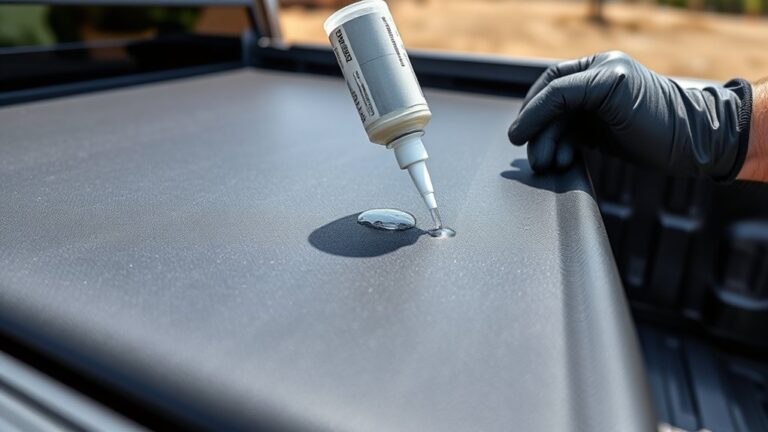
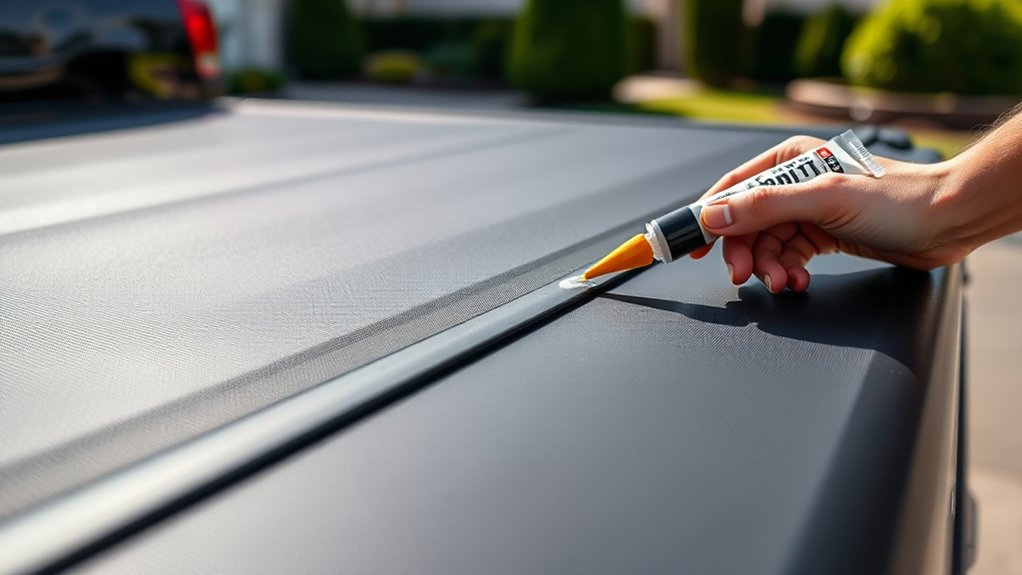
Next, inspect all edges and seams for any damage or wear that could compromise the seal. Apply a suitable sealant or weatherstripping with a caulking gun, making sure to create an even, continuous bead without gaps.
Press firmly to ensure good adhesion and adjust the cover for a snug fit. Finally, allow the seal to cure completely before using your truck. Following these steps prevents leaks and protects your truck bed—additional details will help you perfect the process.
Why Seal Your Tonneau Cover Properly?
Why should you seal your tonneau cover properly? Proper sealing ensures a secure barrier against moisture, dust, and debris, preserving your truck bed’s integrity. You’ll maintain optimal sealing aesthetics, preventing unsightly gaps or uneven edges that can degrade the cover’s appearance.
Additionally, a precise seal minimizes wind noise and improves aerodynamics, enhancing driving comfort and fuel efficiency. Beyond functionality, improper sealing can void your cover’s warranty. Manufacturers often specify sealing guidelines to uphold warranty validity, so following these ensures you don’t risk losing coverage.
Tools and Materials Needed for Sealing
To seal your tonneau cover effectively, you’ll need specific tools and sealant materials designed for durability and weather resistance. Gather items like a utility knife, cleaning cloths, and a caulking gun to apply the sealant precisely. Choosing the right sealant—typically silicone or polyurethane—ensures a strong, flexible bond that prevents leaks.
Essential Sealing Tools
Which tools and materials do you need to ensure a proper seal on your tonneau cover? Essential sealing requires precise tools usage to achieve an airtight fit. Below is a list of fundamental tools to have on hand for effective sealing:
| Tool | Purpose |
|---|---|
| Caulking gun | Applies sealant evenly |
| Utility knife | Trims excess material |
| Cleaning cloth | Removes dirt for better adhesion |
| Measuring tape | Ensures accurate seal placement |
Using these tools methodically will help you prepare the surface, apply the sealant uniformly, and trim any surplus material without damaging the cover. Proper usage of these essential sealing tools guarantees a durable, leak-proof finish on your tonneau cover.
Recommended Sealant Materials
Having the right tools ready, the next step focuses on selecting sealant materials that complement your tonneau cover and vehicle conditions. You’ll want to prioritize sealant compatibility, ensuring the material bonds effectively with your cover’s fabric or vinyl and the truck bed’s metal or plastic surfaces.
Common choices include polyurethane, silicone, and butyl-based sealants, each offering specific adhesion properties and weather resistance. Conduct price comparisons to balance cost with durability; silicone sealants typically offer superior flexibility but at a higher price, while polyurethane provides strong adhesion at a moderate cost.
Avoid general-purpose sealants that may degrade the cover or fail under UV exposure. By methodically evaluating these factors, you’ll select a sealant that ensures a long-lasting, watertight seal for your tonneau cover.
Cleaning and Preparing Your Truck Bed and Cover
How do you ensure a secure seal when installing a tonneau cover? Start by thoroughly cleaning and preparing both your truck bed and the cover. Proper preparation eliminates washing scratches and minimizes debris that can compromise rust prevention and sealing effectiveness.
Follow these essential steps:
- Remove all dirt, dust, and grime using a mild detergent and water.
- Inspect for and carefully wash scratches to prevent rust formation.
- Dry surfaces completely to avoid moisture trapping.
- Use a rust-inhibitor spray on exposed metal areas.
- Clean the tonneau cover’s sealing edges with a soft cloth.
This methodical preparation creates a smooth, contaminant-free surface, optimizing adhesion and extending the lifespan of your sealant. Skipping these steps risks leaks and premature rust damage.
Inspecting Your Tonneau Cover for Damage
Why is inspecting your tonneau cover for damage essential before sealing it? Identifying any tears, cracks, or worn seams ensures the seal adheres properly and functions effectively. Start by thoroughly examining the cover surface and edges under good lighting.
Use inspection tips like running your fingers along seams to detect subtle splits or weak spots. Check the frame and mounting points for rust or deformation that might affect alignment. Document any damage to address it before sealing.
This methodical inspection prevents common issues during post install troubleshooting, such as leaks or improper adhesion. By proactively spotting and resolving flaws, you maintain your cover’s integrity and maximize the sealing process’s success. Skipping this step could result in persistent water intrusion or premature seal failure.
Applying Weatherstripping or Seal Tape
After confirming your tonneau cover is free of damage, you can proceed to apply weatherstripping or seal tape to enhance its waterproofing and durability. Selecting the right seal tape or weatherstripping is critical. Consider material compatibility, adhesive strength, and thickness.
Follow these weatherstripping tips for an effective seal:
- Clean the application surface thoroughly to ensure adhesion.
- Measure and cut the weatherstripping or seal tape precisely to fit edges.
- Apply pressure evenly along the strip to eliminate air bubbles.
- Use weatherstripping designed for outdoor use to resist UV and moisture.
- Allow adhesive to cure fully before closing the tonneau cover.
Adjusting Your Tonneau Cover for a Leak-Free Fit
Where should you start when adjusting your tonneau cover to ensure a leak-free fit? Begin by inspecting all mounting points and tensioning mechanisms. Loosen the clamps or bolts slightly to allow precise cover adjustments.
Gradually tighten the cover, ensuring it aligns evenly along the truck bed rails without gaps or sagging. Focus on achieving uniform tension; uneven pressure can compromise leak prevention.
Check the seals and weatherstripping for consistent contact with the truck bed surface. If the cover has adjustable tensioners or straps, fine-tune them to eliminate slack while avoiding excessive tightness that could damage components.
Perform incremental cover adjustments, reassessing alignment and seal contact after each change. This methodical approach ensures the cover forms a tight, secure barrier, essential for effective leak prevention and long-term durability.
Testing Your Tonneau Cover Seal for Leaks
How can you confirm that your tonneau cover is properly sealed against leaks? Begin by performing a systematic inspection to identify any possible leaks or weak points. Use tools with good ergonomics to avoid fatigue and maintain precision during testing.
Simulate wind tunnels by running a strong fan around the cover’s edges to check for air infiltration, which indicates compromised seals. Inspect the cover after rain or use a hose to spray water uniformly, monitoring for water intrusion that could cause potential damages.
Document all findings and address any detected issues immediately.
- Check all seams and edges for gaps
- Use a flashlight inside the bed to spot light leaks
- Apply water spray uniformly around the cover
- Test under simulated wind pressure with a fan
- Use ergonomic tools for thorough inspection
Maintaining and Re-Sealing Your Tonneau Cover
Although a properly sealed tonneau cover protects your truck bed effectively, regular maintenance and timely re-sealing are essential to preserve its integrity and prevent leaks. Conduct a maintenance check at least twice a year, inspecting seals and fabric for wear.
Always consult warranty considerations before applying new sealants to avoid voiding coverage. Use manufacturer-approved products for re-sealing, following specific instructions precisely.
| Step | Action |
|---|---|
| 1. Inspection | Check seals for cracks or gaps |
| 2. Cleaning | Remove dirt and debris from the surface |
| 3. Product Selection | Choose sealant compatible with material |
| 4. Application | Apply sealant evenly along seams |
| 5. Drying | Allow full curing before use |
Maintain this routine to ensure optimal performance and longevity.
Frequently Asked Questions
Can Sealing a Tonneau Cover Improve Fuel Efficiency?
Yes, sealing methods reduce air drag by minimizing gaps on your tonneau cover, which can improve fuel economy. Properly sealed covers streamline airflow, lowering resistance and enhancing your truck’s fuel efficiency during drives, especially at highway speeds.
What Types of Tonneau Covers Work Best With Seals?
You’ll find soft roll-up and folding tonneau covers work best with seal material, thanks to their flexible mounting method. This combo ensures a tight, precise fit that minimizes gaps and maximizes protection from elements.
How Long Does a Properly Sealed Tonneau Cover Typically Last?
A properly sealed tonneau cover typically lasts 3 to 5 years, depending on seal longevity and adherence to a strict maintenance schedule.
Regular inspection and cleaning extend the seal’s effectiveness, ensuring optimal protection and durability.
Are There Any Weather Conditions That Damage Seals Faster?
While gentle breezes pose little threat, high winds and heavy rainfall accelerate seal deterioration by forcing water into seams and stressing materials.
You should regularly inspect and maintain seals to prevent accelerated wear and maintain protection.
Can I Seal a Tonneau Cover Myself or Should I Hire a Professional?
You can seal a tonneau cover yourself using DIY sealing tips like cleaning surfaces and applying weatherproof sealant carefully.
However, consider professional installation if you want guaranteed precision or face complex cover designs requiring expert tools.
Conclusion
Properly sealing your tonneau cover can reduce water intrusion by up to 90%, protecting your cargo and truck bed from damage. By following precise steps—cleaning, inspecting, applying seal tape, and adjusting—you ensure a tight, durable fit.
Regularly testing and maintaining the seal guarantees long-term performance. Taking these methodical actions not only preserves your vehicle’s integrity but also maximizes the functionality and lifespan of your tonneau cover.
In conclusion, mastering how to seal tonneau cover correctly is essential for protecting your truck and enhancing the cover’s durability, saving you time and repair costs in the long run.