Which Is More Reliable Honda Cr-V or Toyota rav4
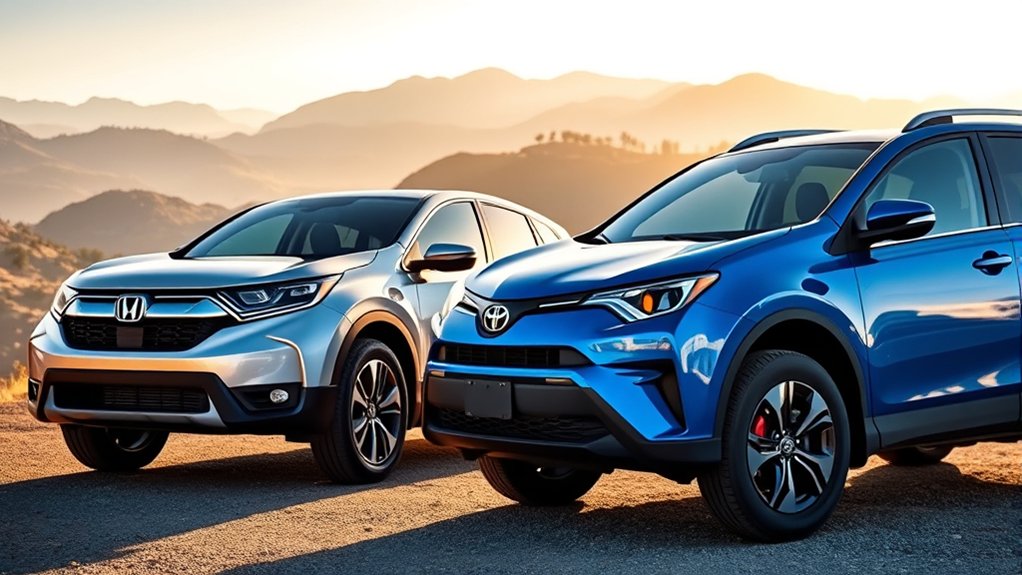
If you’re deciding between the Honda CR-V and Toyota RAV4, the question of which is more reliable often comes up. The Toyota RAV4 slightly edges out in overall reliability with its robust build, hybrid options, and higher resale value.
However, the CR-V offers lower maintenance costs, a smoother ride, and widely available parts. Both deliver strong safety features and long lifespans, but your choice may hinge on whether you prefer affordability and comfort or fuel economy and ruggedness.
Exploring these factors further can help clarify which fits your needs best.
Key Takeaways
- Both Honda CR-V and Toyota RAV4 have strong reliability, with CR-V owners noting fewer unexpected repairs and RAV4 praised for rugged durability.
- The CR-V generally incurs lower annual maintenance and parts costs due to widespread availability and affordability.
- Toyota RAV4 offers superior fuel efficiency, especially in hybrid models, enhancing long-term running cost reliability.
- Both SUVs have excellent safety ratings and advanced driver assistance systems that contribute to overall reliability perception.
- Resale value and longevity slightly favor RAV4, with average lifespan over 210,000 miles and lower depreciation rates.
How We Measure Reliability for the CR-V and RAV4
How do we determine which SUV stands out in reliability between the Honda CR-V and Toyota RAV4? You start by analyzing comprehensive data from consumer reports, manufacturer recalls, and long-term owner feedback.
Reliability isn’t just about mechanical soundness; it includes how well the vehicle aligns with your budget for repairs and upkeep over time. While styling perceptions influence your initial choice, they don’t impact the core reliability metrics.
Reliability encompasses repair costs and maintenance, beyond just mechanical performance and style preferences.
You focus on failure rates, frequency of repairs, and durability under various driving conditions. Comparing these factors objectively helps you gauge which SUV minimizes unexpected costs and downtime.
Ultimately, your decision balances practical reliability data with personal preferences, ensuring that the chosen model fits your expectations both financially and stylistically.
Maintenance Cost Comparison: CR-V vs RAV4
When comparing the Honda CR-V and Toyota RAV4, you’ll want to contemplate annual service expenses and parts replacement costs, as these directly affect long-term ownership. Fuel efficiency also plays a key role in overall maintenance costs, influencing how much you spend at the pump. Understanding these factors helps you make a well-informed decision between the two models.
Annual Service Expenses
What should you expect to pay annually for maintaining a Honda CR-V compared to a Toyota RAV4? Both vehicles have competitive annual maintenance costs, but slight differences exist. The CR-V generally incurs a modestly lower annual maintenance expense due to fewer reported minor repairs.
Meanwhile, the RAV4 benefits from slightly better fuel economy, potentially reducing your overall running costs. Here’s a quick comparison of annual service expenses:
- Honda CR-V: Typically $400-$500 for regular servicing and minor upkeep
- Toyota RAV4: Around $450-$550, factoring in scheduled maintenance
- Fuel economy: RAV4 averages about 28-30 mpg, CR-V around 27-29 mpg
- Routine tasks: Oil changes, brake inspections, tire rotations for both
You’ll find both offer reasonable annual maintenance costs, but the CR-V might edge out in service affordability.
Parts Replacement Costs
Replacing parts on your Honda CR-V or Toyota RAV4 involves varying costs that can influence your overall maintenance budget. Generally, the CR-V’s replacement parts tend to be slightly less expensive due to Honda’s widespread availability and competitive aftermarket options.
The RAV4, while reliable, may have higher parts prices for certain components, especially in hybrid models. When comparing these costs, avoid getting distracted by unknown topics or unrelated subjects that don’t directly affect parts pricing. Focus on specific components like brakes, suspension, and engine parts to get a clear picture.
Both vehicles maintain solid reputations for durability, but understanding these replacement expenses helps you prepare better. Considering parts costs alongside routine maintenance offers a comprehensive view of long-term ownership expenses.
Fuel Efficiency Impact
Understanding parts replacement costs offers valuable insight into the overall maintenance expenses of the Honda CR-V and Toyota RAV4, but fuel efficiency also plays a significant role in your long-term ownership budget. Both vehicles deliver competitive fuel economy, but slight differences can impact your annual fuel spending.
Additionally, cabin noise affects driving comfort, influencing your experience during longer trips, which indirectly relates to efficiency as quieter cabins reduce fatigue.
Consider these factors when comparing fuel efficiency impact:
- Honda CR-V averages around 28 MPG city and 34 MPG highway.
- Toyota RAV4 offers approximately 27 MPG city and 35 MPG highway.
- RAV4’s hybrid variant improves fuel economy significantly.
- CR-V cabin noise is generally lower, enhancing driver comfort on extended drives.
Balancing fuel economy with comfort can help you minimize overall maintenance and operating costs.
CR-V vs RAV4: Engine Performance Over Time
When comparing the CR-V and RAV4, you’ll want to focus on engine durability, how their fuel efficiency holds up over time, and the typical maintenance or repairs each requires. Both models offer reliable engines, but their long-term performance can vary based on design and usage. Understanding these factors helps you make an informed choice about which SUV will serve you best in the long run.
Engine Durability Comparison
How do the engines of the Honda CR-V and Toyota RAV4 hold up over time? Both models are known for durability, but subtle differences emerge as mileage climbs. The CR-V’s engine tends to maintain smooth operation with minimal engine noise, while some owners report occasional transmission quirks after extended use.
Conversely, the RAV4’s engine remains robust but can develop minor engine noise linked to timing chain wear in high-mileage units.
Consider these points for durability insight:
- Honda CR-V engines often exceed 200,000 miles with routine maintenance.
- Toyota RAV4 engines show strong longevity but may need timing chain attention.
- Transmission quirks are more common in older CR-Vs.
- Both vehicles require timely oil changes to prevent premature wear.
You’ll find each engine reliable, but maintenance habits heavily influence lifespan.
Fuel Efficiency Trends
Why does fuel efficiency often change as the Honda CR-V and Toyota RAV4 age? Over time, factors like engine wear and evolving fuel economy standards influence performance. Both models feature advancements in design aesthetics that enhance aerodynamics, directly impacting fuel economy.
The CR-V’s turbocharged engines tend to maintain consistent efficiency, while the RAV4’s hybrid variants offer superior fuel economy, especially in urban settings. However, as mileage increases, slight declines in fuel efficiency can occur due to natural engine component degradation affecting combustion and fuel delivery.
Additionally, software updates in newer models optimize engine performance better than older versions. Understanding these trends helps you anticipate changes in fuel economy, allowing more informed decisions when choosing between these two reliable SUVs over their lifespan.
Maintenance and Repairs
Fuel efficiency changes often signal the condition of your vehicle’s engine and its underlying maintenance needs. When comparing the Honda CR-V and Toyota RAV4, the differences in engine design and hardware sourcing play a pivotal role in long-term reliability and repair frequency. You’ll notice that:
- Honda’s engine design emphasizes simplicity, reducing potential failure points.
- Toyota sources high-quality hardware, contributing to consistent engine performance.
- Both models demand regular oil changes and timely part replacements to prevent wear.
- Repair costs tend to be moderate, but the CR-V may require more frequent minor repairs.
Fuel Efficiency and Long-Term Reliability
When comparing the Honda CR-V and Toyota RAV4, you’ll find that both models deliver competitive fuel efficiency figures, but subtle differences can impact your long-term ownership costs. If you have budget constraints, fuel economy directly influences your expenses, while interior aesthetics may affect your satisfaction over time.
The CR-V tends to offer slightly better mileage in city driving, whereas the RAV4 excels on highways. Both vehicles maintain solid long-term reliability, though minor variations in parts longevity and maintenance frequency exist.
| Model | City MPG | Highway MPG | Expected Longevity (miles) |
|---|---|---|---|
| Honda CR-V | 28 | 34 | 200,000+ |
| Toyota RAV4 | 27 | 35 | 210,000+ |
| Emotion | Balanced | Efficient | Confidence |
CR-V vs RAV4 Safety Features Affecting Reliability
When comparing the CR-V and RAV4, you should consider their advanced driver assistance systems and how frequently each updates safety technology. Both models have strong crash test ratings, but subtle differences in features could impact long-term reliability. Understanding these safety elements helps you make an informed choice between the two SUVs.
Advanced Driver Assistance
How do advanced driver assistance systems influence the reliability of the Honda CR-V and Toyota RAV4? These features directly affect your driving experience and vehicle longevity by reducing accident risks and wear.
Focusing on unrelated topics like infotainment similarities or irrelevant angles such as brand image won’t clarify reliability differences tied to safety tech. Both models offer robust systems, but subtle distinctions matter:
- Honda Sensing vs. Toyota Safety Sense suites, each with adaptive cruise control and lane-keeping assist
- Collision mitigation braking systems’ responsiveness under varied conditions
- Driver alertness monitoring effectiveness in preventing fatigue-related incidents
- Integration and user interface intuitiveness impacting consistent use and maintenance
Understanding these details lets you assess how advanced assistance systems contribute to overall reliability effectively.
Crash Test Ratings
Why do crash test ratings play a pivotal role in evaluating the reliability of the Honda CR-V and Toyota RAV4? These ratings provide objective comparison data on how well each vehicle protects occupants during collisions, directly influencing consumer perception of safety and dependability.
Both the CR-V and RAV4 consistently earn high scores from agencies like the IIHS and NHTSA, reflecting robust structural design and effective restraint systems. However, subtle differences in frontal and side-impact performance might sway your choice, depending on your priorities.
Safety Technology Updates
What differentiates the Honda CR-V and Toyota RAV4 regarding reliability often comes down to their safety technology updates. Both models have advanced driver-assist systems that contribute to long term ownership satisfaction by preventing accidents and reducing repair needs.
However, subtle differences can impact your experience, especially once engine noise and wear factors come into play.
Honda Sensing Suite offers adaptive cruise control, lane-keeping assist, and collision mitigation. Toyota Safety Sense includes pedestrian detection and road sign recognition.
CR-V’s safety tech integrates seamlessly with its quieter engine, enhancing comfort over time. RAV4’s robust sensor calibration tends to maintain accuracy despite engine noise fluctuations during extended use.
You’ll find these updates influence reliability by minimizing mechanical strain and improving overall vehicle longevity.
Common Mechanical Issues in CR-V and RAV4
When comparing the Honda CR-V and Toyota RAV4, you’ll notice both models have their own set of common mechanical issues that can affect reliability over time. For the CR-V, some owners report early transmission problems and occasional issues with the battery color indicator, which can mislead you about battery health.
Meanwhile, the RAV4 sometimes experiences oil leaks and complications with the all-wheel-drive system. Both vehicles require regular tire tread inspections, as uneven wear can signal suspension or alignment problems.
Paying attention to these mechanical nuances helps you anticipate maintenance needs and avoid unexpected repairs. Understanding these typical concerns allows you to make a more informed choice based on long-term reliability rather than just initial appeal.
Owner Satisfaction: CR-V vs RAV4 Reliability
How do owners feel about the reliability of their Honda CR-V or Toyota RAV4 over time? Owner satisfaction often hinges on consistent performance, driver comfort, and interior design quality. Both SUVs earn praise, but subtle differences influence your experience. Consider these points:
Honda CR-V owners appreciate its smooth ride and ergonomic interior design that enhances driver comfort on long drives.
Honda CR-V owners value its smooth ride and ergonomic interior for comfortable long-distance driving.
Toyota RAV4 users highlight its robust build and user-friendly infotainment system, contributing to overall satisfaction.
Some CR-V drivers report fewer unexpected repairs, reinforcing confidence in reliability.
RAV4 owners often mention the vehicle’s capability in varying terrains, adding to their trust in long-term durability.
Your choice depends on which factors, comfort or ruggedness, matter most in everyday reliability.
Resale Value as a Reliability Indicator: CR-V vs RAV4
Why does resale value matter when comparing the reliability of the Honda CR-V and Toyota RAV4? Resale value reflects market confidence in a vehicle’s long-term durability and maintenance costs. When you evaluate resale values, you gain insight into how reliable these SUVs remain over time, beyond just initial reviews or owner satisfaction.
Here’s a focused comparison to avoid irrelevant topics and guide your discussion ideas:
| Model | 3-Year Depreciation | 5-Year Depreciation | Market Demand |
|---|---|---|---|
| Honda CR-V | 38% | 55% | High |
| Toyota RAV4 | 35% | 50% | Very High |
The RAV4’s slightly higher resale value suggests stronger perceived reliability, but both models retain value well, indicating solid reliability overall.
Warranty and Service Programs Supporting Reliability
What role do warranty and service programs play in reinforcing the reliability of the Honda CR-V and Toyota RAV4? These programs not only provide peace of mind but also ensure that critical components like battery technology and tire aging are properly maintained.
Both manufacturers offer comprehensive coverage that supports long-term dependability.
Comprehensive coverage from both brands ensures lasting reliability and peace of mind for owners.
Key features include:
- Honda’s 3-year/36,000-mile limited warranty with hybrid battery coverage extending to 8 years/100,000 miles
- Toyota’s 3-year/36,000-mile basic warranty plus a hybrid system warranty of 8 years/100,000 miles
- Scheduled maintenance plans addressing wear factors such as tire aging and battery performance
- Roadside assistance programs enhancing owner confidence and vehicle uptime
Which Lasts Longer: Honda CR-V or Toyota RAV4?
Longevity considerably influences your decision when choosing between the Honda CR-V and Toyota RAV4. Both vehicles are engineered for durability, but subtle differences affect how long they last under regular use.
The Toyota RAV4’s hybrid options appeal with eco friendly technology, potentially extending engine life and reducing wear. Meanwhile, the Honda CR-V is lauded for its robust build and reliability in diverse conditions, from city streets to remote lunar mining analog sites.
Here’s a quick comparison:
| Feature | Honda CR-V | Toyota RAV4 |
|---|---|---|
| Average Lifespan | 200,000+ miles | 210,000+ miles |
| Eco Friendly Tech | Moderate | Advanced hybrid models |
| Durability in Harsh Conditions | High | Very High |
Choosing between them depends on your priority for eco friendly tech or rugged longevity.
Frequently Asked Questions
How Do CR-V and RAV4 Handle in Snowy Conditions?
You’ll find both CR-V and RAV4 handle snowy conditions well, but snow traction heavily depends on tire choices. Opt for quality winter tires to maximize grip, as both SUVs’ all-wheel-drive systems assist but can’t replace proper tires.
What Are the Interior Comfort Differences Between CR-V and RAV4?
You’ll find the CR-V offers a quieter interior ambience and more supportive seat comfort, while the RAV4 features a sportier design with firmer seats.
Both provide quality materials, but the CR-V leans toward coziness.
Which Model Has Better Infotainment System Usability?
You’ll find Honda infotainment easier to navigate with its straightforward layout, while Toyota connectivity offers more advanced features but a steeper learning curve.
Both systems support Apple CarPlay and Android Auto seamlessly for smart device integration.
Are There Significant Differences in Cargo Space?
You’ll find the Honda CR-V offers about 39.2 cubic feet of cargo space behind the rear seats, slightly more than the Toyota RAV4’s 37.6 cubic feet.
How Do CR-V and RAV4 Compare in Off-Road Capability?
You’ll find the RAV4 offers better off-road grip and higher ground clearance, making it more capable on rough terrain.
The CR-V handles light off-roading well but lacks the RAV4’s ruggedness and clearance advantages.
Conclusion
When weighing reliability between the Honda CR-V and Toyota RAV4, you’ll find both deliver dependable durability and diligent design. The CR-V consistently combines cost-conscious care with commendable comfort, while the RAV4 radiates robust reliability and refined resilience. Your choice should consider maintenance, mileage, and market value.
Ultimately, both boast balanced benefits, but by blending your budget and driving demands, you can confidently choose the compact crossover that best suits your long-term lifestyle needs. When it comes to reliability, the Toyota RAV4 often edges out slightly ahead, making it a top contender for those prioritizing dependability.