How Hard Is It to Install a Tonneau Cover
Installing a tonneau cover is generally manageable with basic tools like screwdrivers and wrenches, especially if you choose a soft roll-up or snap-on model, which require minimal hardware and simple alignment.
More complex covers like retractable or hinged types need precise fitting and patience. You’ll want to check clamps, seals, and fasteners for a secure, weatherproof fit.
If you plan carefully and follow instructions, you’ll reduce common challenges and improve your results—explore further to master key steps and tips.
What Is a Tonneau Cover and Why Install One
What exactly is a tonneau cover, and why might you consider installing one on your truck? A tonneau cover is a protective lid designed to shield your truck bed from weather, theft, and debris.
By installing one, you enhance your vehicle’s security and improve aerodynamics, which can boost fuel efficiency. These are important factors when you’re involved in careers guidance roles requiring frequent travel planning.
Installing a tonneau cover boosts security and aerodynamics, key for efficient travel in careers guidance roles.
It also keeps cargo organized and protected, making your trips smoother and more efficient. Understanding these benefits helps you evaluate whether a tonneau cover aligns with your practical needs, especially if your job demands transporting equipment or documents securely.
This precise insight can guide your decision, ensuring your truck setup supports both your professional and travel objectives effectively.
Easiest Tonneau Covers to Install
Choosing the right tonneau cover includes considering how straightforward it is to install. Soft roll-up and snap-on covers often rank as the easiest to install due to minimal hardware and clear alignment requirements.
When selecting, factor in installation psychology. Your confidence and comfort during assembly impact success. Covers designed with intuitive mechanisms reduce frustration and speed up the process.
Tool ergonomics also play a crucial role. Choose covers that require basic tools with comfortable grips to minimize strain.
For example, snap-on covers typically need only a screwdriver or wrench, and their components fit snugly without force. By prioritizing these aspects, you’ll streamline installation, reduce errors, and enhance satisfaction with your tonneau cover setup.
Is Tonneau Cover Installation Hard?
How difficult you find installing a tonneau cover largely depends on the type of cover and your familiarity with basic tools. Some designs, like roll-up or snap-on covers, offer straightforward installation with minimal adjustments, while others, such as retractable or hinged covers, require precise alignment and securing mechanisms.
Avoid getting sidetracked by irrelevant topics or unrelated discussions that don’t address the specific installation steps or challenges. Focus on the manufacturer’s instructions and the cover’s compatibility with your truck model.
Basic Tools Needed for Installation
You’ll need a few essential tools like a screwdriver, a tape measure, and a wrench to get started with your tonneau cover installation. Some optional tools, such as clamps or a power drill, can make the process faster and more secure but aren’t always necessary. Having the right tools ready ensures a smoother, more accurate setup.
Essential Installation Tools
What tools are essential for installing a tonneau cover efficiently? You’ll need a few basic yet precise instruments to ensure a secure fit without compromising the cover’s innovative finishes or voiding warranty implications. Proper tools prevent damage and guarantee alignment.
| Tool | Purpose | Notes |
|---|---|---|
| Socket Wrench | Tightens clamps and bolts | Use correct size to avoid stripping |
| Screwdriver | Adjusts screws and trim | Phillips or flathead depending on model |
| Tape Measure | Ensures accurate placement | Vital for aligning cover precisely |
Using these tools correctly will help you achieve a professional installation, preserving both functionality and aesthetics. Avoid substituting or over-tightening, which can affect the innovative finishes and warranty coverage.
Optional Tools For Ease
Beyond the basic tools required for installing a tonneau cover, several optional tools can simplify the process and improve accuracy. These tools enhance your two word idea 1 and two word idea 2 by ensuring precise alignment and efficient handling.
Consider using:
- Magnetic tray to keep screws and small parts organized.
- Power drill with adjustable torque for faster fastening.
- Measuring tape for exact positioning.
- Rubber mallet to gently adjust fittings without damage.
- Clamp set to hold components steady during installation.
Using these optional tools won’t replace the essential ones but will make the installation smoother and less time-consuming. They help you maintain precision, avoid errors, and reduce fatigue, making the overall two word idea 1 and two word idea 2 much easier.
How to Install a Soft Roll-Up Tonneau Cover
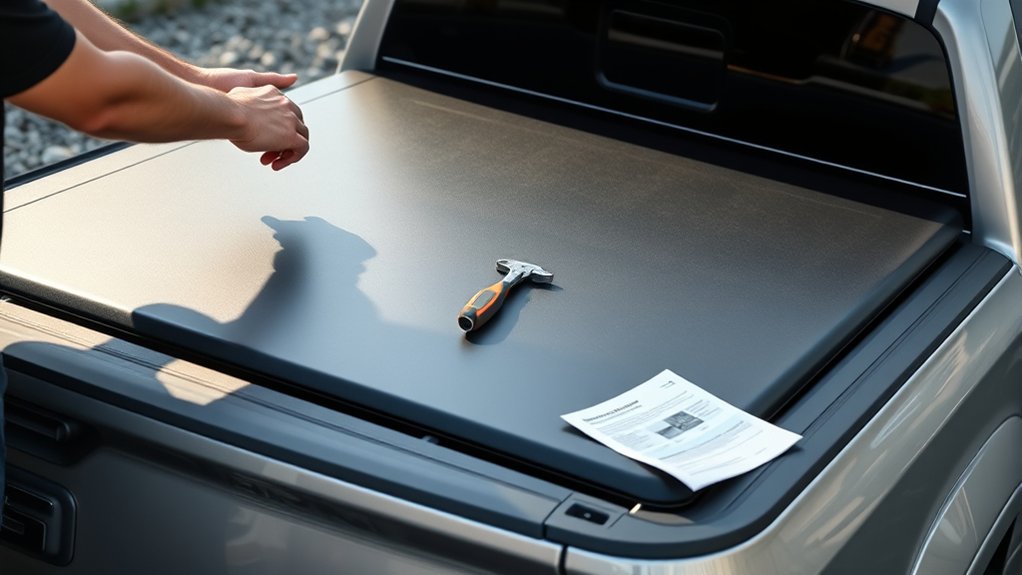
A soft roll-up tonneau cover offers a straightforward installation process that typically requires no special tools. First, position the cover’s rails along the truck bed’s side rails, ensuring they line up flush. Secure the rails using the provided clamps, tightening them evenly to prevent gaps.
Next, unroll the cover from the cab toward the tailgate, aligning it carefully. Attach the cover’s snaps or Velcro strips to the rails to lock it in place. This setup provides soft privacy by concealing your cargo without rigid panels.
Additionally, by reducing aerodynamic drag, the cover contributes to improved fuel efficiency. Finally, check all clamps and fasteners for tightness, and test the cover’s roll-up function to confirm smooth operation before hitting the road.
How to Install a Hard Folding Tonneau Cover
Start by thoroughly cleaning and inspecting your truck bed to ensure a secure fit for the hard folding tonneau cover. Next, position the cover panels carefully, aligning them with the bed rails to prevent gaps or misalignment. Finally, fasten the clamps or hinges tightly to secure the panels and maintain structural integrity during use.
Preparing the Truck Bed
How do you guarantee your truck bed is properly prepared for installing a hard folding tonneau cover? First, focus strictly on relevant steps. Avoid irrelevant topic distractions or off-topic ideas that don’t contribute to preparation. Effective preparation ensures a secure, flush fit.
Follow these essential steps:
- Thoroughly clean the truck bed to remove dirt, debris, and moisture
- Inspect the rails and bed for damage or rust; repair as needed
- Remove any existing bed liners or accessories interfering with installation
- Verify the truck bed dimensions match cover specifications
- Ensure all mounting surfaces are dry and free from grease or oil
Securing the Cover Panels
Once your truck bed is clean, inspected, and properly prepped, you can move on to securing the hard folding tonneau cover panels. Start by aligning the first panel at the front of the bed, ensuring it fits snugly against the bulkhead.
Use the provided clamps or mounting brackets to fasten the panel securely; double-check each attachment point to prevent gaps or misalignment. Proceed by folding out subsequent panels, locking them in place according to the manufacturer’s instructions.
Take care to apply even pressure and verify that all hinges operate smoothly. If you experience subtopic anxiety over panel placement or tension, consult the installation guide’s two word ideas sections for clear, stepwise guidance.
Properly securing the panels guarantees a tight, weather-resistant seal and optimal functionality.
How to Check If Your Tonneau Cover Is Secure
Why is it essential to verify your tonneau cover’s security after installation? Ensuring proper security maintenance not only protects your cargo but also upholds warranty implications. Neglecting this step can lead to premature wear or voided warranty coverage.
Verifying your tonneau cover’s security protects your cargo and preserves warranty coverage.
To check if your tonneau cover is secure, focus on these critical points:
- Inspect all latches and locks for firm engagement and smooth operation.
- Confirm the cover’s alignment with the truck bed rails, ensuring no gaps.
- Test the tension of straps or clamps to verify they hold firmly without slack.
- Examine seals and weatherstripping for proper compression to prevent water intrusion.
- Shake the cover gently to detect any looseness or unusual movement.
Performing these checks regularly will maintain optimal cover security and extend its service life.
Common Installation Challenges and How to Avoid Them
After confirming your tonneau cover is secure, you’ll likely encounter some common installation challenges that can impact both fit and function. Misaligned clamps or rails often cause gaps, compromising weatherproofing considerations and allowing water ingress.
Ensure all mounting points are properly aligned and tightened to manufacturer specifications. Incorrect tensioning can lead to premature wear or void warranty implications, so adjust straps or latches carefully.
Additionally, overlooking frame compatibility with your truck bed can result in poor sealing and reduced durability. Pay close attention to instructions regarding trim removal or bed liner interference to avoid damage.
Tips to Speed Up Your Tonneau Cover Installation
How can you streamline the process of installing your tonneau cover without sacrificing accuracy? Focus on avoiding common installation pitfalls and enhancing tool ergonomics to save time and reduce errors. Start by organizing your workspace and laying out all components clearly.
Use ergonomic tools that fit comfortably in your hands to maintain steady control and speed. Follow the manufacturer’s instructions closely but anticipate adjustments as you go.
Here are five tips to expedite your installation:
- Pre-fit clamps and brackets before final assembly
- Use a torque wrench to apply consistent pressure
- Keep all screws and small parts in a magnetic tray
- Test the cover’s alignment frequently during installation
- Work with a partner to handle larger covers efficiently
These steps minimize delays and improve precision throughout your installation.
When to Call a Pro Instead of DIY
If your tonneau cover installation involves complex steps or requires specialized tools you don’t have, it’s wise to contemplate professional help. You may also want to call a pro if you’re pressed for time and need the job done efficiently. Assess your skills and schedule carefully before deciding to tackle the installation yourself.
Complex Installation Steps
When should you consider calling a professional to install your tonneau cover instead of tackling it yourself? Complex installation steps can quickly become overwhelming, especially if you need to ensure optimal material durability and weather resistance.
If you encounter any of the following, it’s wise to seek expert help:
- Aligning intricate frame components precisely
- Ensuring watertight seals for weather resistance
- Handling heavy or bulky covers safely
- Adjusting tension mechanisms for proper fit
- Integrating with existing truck features or accessories
Professionals have the experience and tools to address these challenges efficiently. Attempting these steps without expertise may compromise your cover’s durability and protection against the elements, negating your investment in a high-quality tonneau cover.
Specialized Tools Required
Why do some tonneau cover installations demand specialized tools beyond basic hand equipment? Certain models require torque wrenches, rivet guns, or power drills with precise bits to ensure secure fittings and avoid damaging the truck bed.
If you find yourself searching for unrelated topic information or off-topic ideas during installation, it’s a sign the tools or instructions might be too complex for a DIY approach. When specialized tools are necessary, improper use can lead to poor alignment or void warranties.
If you don’t own these tools or lack experience, it’s wise to call a pro. Professionals have the right equipment and expertise to handle tricky installations efficiently, preventing costly mistakes or damage that may arise from attempting it yourself without proper tools.
Time Constraints Consideration
Installing a tonneau cover can take anywhere from 30 minutes to several hours, depending on the model and your experience level. When considering time management, you must evaluate your schedule and how much time you can realistically dedicate.
If you’re short on time or lack mechanical skills, calling a pro may be the best route. Budgeting flexibility also plays a role. Professional installation comes at a cost but can save time and prevent errors.
Consider these points to decide:
- Available free time for installation
- Complexity of the tonneau cover model
- Your mechanical skill level
- Cost comparison between DIY and professional help
- Potential downtime if installation errors occur
Balancing time and budget ensures an efficient, hassle-free installation.
Frequently Asked Questions
Can a Tonneau Cover Improve My Truck’s Fuel Efficiency?
Yes, a tonneau cover can improve your truck’s fuel efficiency by reducing aerodynamic drag.
Wind tunnel tests debunk fuel economy myths, showing smoother airflow over the bed, which helps you save fuel during highway driving.
Are Tonneau Covers Weatherproof and UV Resistant?
Yes, tonneau covers undergo rigorous weatherproof testing and meet UV resistance standards. You’ll find they effectively protect your truck bed from rain, dust, and sun damage, ensuring durability and reliable performance over time.
Will a Tonneau Cover Fit Any Truck Model?
You won’t find a tonneau cover that fits every truck model perfectly. Fit compatibility varies, so you’ll need to check specific measurements.
Installation challenges arise if your truck’s bed has unique dimensions or accessories.
How Does a Tonneau Cover Affect Truck Bed Storage Capacity?
A tonneau cover reduces your truck bed’s tidal volume, limiting vertical storage space but improving fuel economy by minimizing air drag.
You’ll gain aerodynamic efficiency while compromising some cargo capacity due to the cover’s low profile design.
What Maintenance Is Required to Keep a Tonneau Cover in Good Condition?
Think of your tonneau cover as a shield. Regular maintenance like cleaning, checking seals, and ensuring fit compatibility keeps it strong.
Tighten bolts and lubricate moving parts to maintain protection and functionality over time.
Conclusion
Installing a tonneau cover isn’t rocket science, especially with the right tools and clear instructions. While some challenges may pop up, staying organized and following steps carefully will have you covered in no time.
Remember, it’s better to measure twice and cut once—double-check fit and security before hitting the road. If things get tricky, don’t hesitate to call a pro.
With patience and care, you’ll protect your truck bed efficiently and confidently. Installing a tonneau cover is a manageable task that enhances your vehicle’s functionality and style.