How to Jump a Car With a Battery Charger
To jump a car with a battery charger, start by ensuring the charger is off.
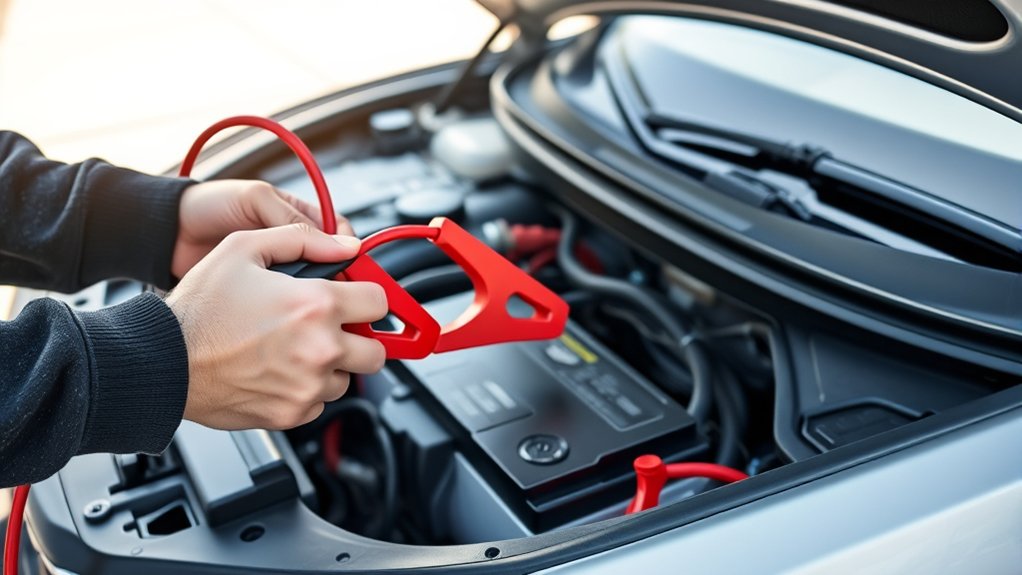
Connect the red clamp to the positive battery terminal and the black clamp to a grounded metal surface away from the battery.
Set the charger to 12 volts and the appropriate amperage, then power it on.
Watch for steady voltage near 12.6 volts and dashboard signals indicating readiness before starting your car.
Follow these steps carefully, and exploring further will help you master safe battery care and maintenance.
Tools You Need to Jump-Start Your Car Battery
What tools do you need to jump-start your car battery safely and effectively? First, you’ll require a reliable car battery charger designed for automotive use. Ensure the charger’s voltage matches your vehicle’s battery specifications, typically 12 volts.
Next, gather insulated jumper cables with sturdy clamps to prevent accidental short circuits. You should also have safety gloves and eye protection to guard against sparks or acid exposure from a dead battery.
A multimeter can help verify the battery’s voltage before and after charging. Finally, a clean cloth or wire brush is useful for removing corrosion on battery terminals, ensuring optimal electrical contact.
With these tools, you’re prepared to address a dead battery efficiently and minimize risks during the jump-start process.
How to Connect a Battery Charger Safely
A secure connection is ensured when attaching a battery charger to your car to prevent sparks, damage, or injury. Begin by turning off the charger and your vehicle’s ignition.
Identify the positive (+) terminal on the battery and clamp the charger’s red lead firmly to it. Next, attach the black lead to the negative (–) terminal.
For enhanced battery safety and safe charging, if the battery is accessible, connect the negative clamp to a metal ground point away from the battery to avoid sparks near flammable gases.
Ensure clamps are clean and free of corrosion for optimal contact. Double-check that the cables are routed safely to prevent accidental disconnection or contact with engine components.
Only after securing all connections should you power on the charger to begin charging safely.
Step-by-Step Guide to Jump-Starting Your Car Battery
When should you begin jump-starting your car battery with a charger? Start only after confirming the battery’s condition and following proper charging etiquette.
First, verify the charger is unplugged. Connect the positive clamp to the positive terminal, then the negative clamp to a grounded metal surface away from the battery to prevent sparks.
Ensure the charger is unplugged before connecting positive clamp to battery and negative clamp to grounded metal away from sparks.
Review the car battery history to understand its age and prior issues; older batteries may require gentler charging.
Set the charger to the appropriate voltage and amperage according to your vehicle’s specifications. Plug in and turn on the charger, allowing it to deliver a slow, steady current.
Avoid rapid charging, as it can damage the battery. Always monitor the process carefully to maintain safety and battery integrity.
How to Tell When Your Car Is Ready to Start
How can you accurately determine that your car’s battery has received sufficient charge to start the engine? First, observe the start indicators on your vehicle’s dashboard. If the battery warning light dims or disappears, that’s a strong sign of ignition readiness.
Next, listen for the sound of the fuel pump priming when you turn the key to the “ON” position without starting the engine. This indicates the electrical system is active and the battery holds enough charge to engage the starter motor.
Additionally, check the battery charger’s output meter; a steady or increasing voltage reading near 12.6 volts signals adequate charge. Only when these start indicators confirm ignition readiness should you attempt to start the engine, ensuring a smooth and safe ignition process without risking damage to the electrical system.
Battery Maintenance Tips to Avoid Future Jump-Starts
Confirming your car’s readiness to start is only part of the process; maintaining the battery properly helps prevent frequent jump-starts. First, regularly inspect the battery terminals for corrosion and clean them with a baking soda solution to ensure optimal electrical contact.
Proper battery maintenance, including regular terminal cleaning, is key to avoiding frequent jump-starts.
Avoid common car battery myths such as fully discharging the battery to prolong life; this actually causes damage. Use a quality battery charger following manufacturer guidelines, steering clear of charging myths like overcharging, which can reduce battery lifespan.
Keep the battery securely mounted to minimize vibrations that accelerate wear. Test the battery voltage monthly with a multimeter; it should read around 12.6 volts when fully charged.
Finally, minimize short trips that prevent full charging and store the vehicle in moderate temperatures to reduce battery stress. These steps will help you avoid unnecessary jump-starts.
Frequently Asked Questions
Can I Use a Battery Charger on Any Car Battery Type?
You can’t use a battery charger on every battery type indiscriminately. Always check compatibility since lead-acid, AGM, or lithium batteries require different charging settings.
Using the wrong approach risks damage or inefficient charging.
How Long Does It Take to Fully Charge a Car Battery?
It typically takes 4 to 24 hours to fully charge a car battery, depending on its size and charger output.
Don’t fall for battery charging myths or charging safety myths; always follow manufacturer guidelines precisely.
Is It Safe to Jump-Start a Car in Cold Weather?
Like lighting a lantern in a frosty night, yes, you can jump-start in cold weather. Cold weather slows battery behavior, reducing power, so guarantee connections are tight and charger settings match your battery to avoid damage or hazards.
Can a Battery Charger Damage My Car’s Electrical System?
No, a battery charger won’t damage your car’s electrical system if used properly. Ignore unrelated warnings and battery myths.
Follow the manufacturer’s instructions carefully to avoid overcharging or connecting cables incorrectly, ensuring safe, effective charging.
What Should I Do if the Car Still Won’T Start After Charging?
If your car still won’t start after car battery charging, double-check your connections and wait a few minutes to ensure full charge. Maintain jump start safety, then test the starter.
If it fails, seek professional diagnostics immediately.