
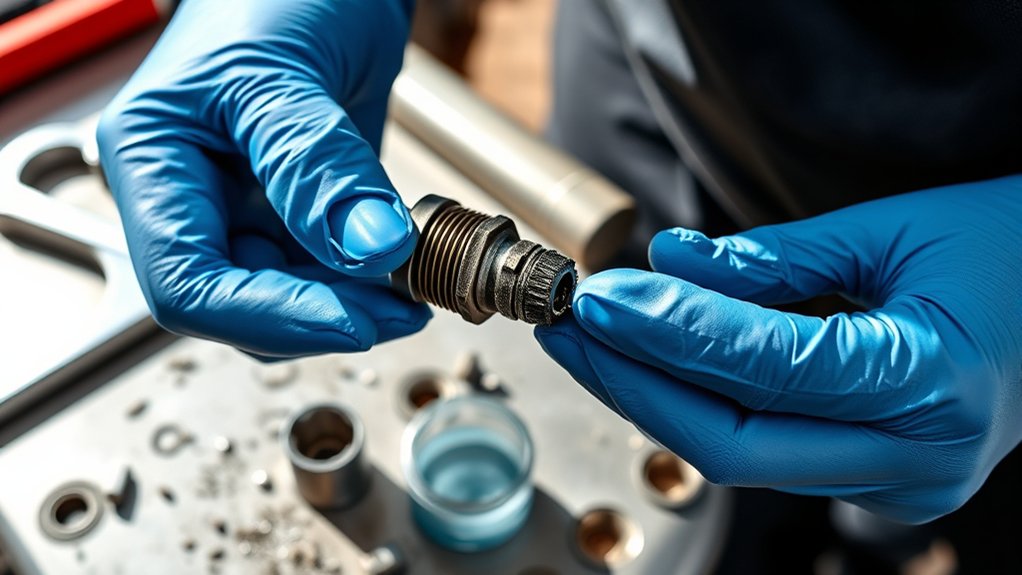
How to Fix Black Spark Plugs
To fix black spark plugs, start by identifying the causes of carbon buildup, such as incomplete combustion or oil contamination. Black spark plugs typically indicate fouling, which affects engine performance and efficiency.
Use proper tools like a wire brush and spark plug cleaner to carefully remove deposits without damaging the electrode. Be gentle to avoid harming the spark plug components.
Next, check and adjust the electrode gap according to the manufacturer’s specifications. Afterward, test spark consistency with a spark tester to ensure reliable ignition.
If fouling recurs or the plugs show signs of damage, replacement is necessary. Understanding maintenance and diagnostics helps keep your engine running efficiently and prevents future fouling issues.
Key Takeaways
- Clean blackened plugs gently using a wire brush or spark plug cleaner to remove dry, sooty carbon deposits without damaging electrodes.
- Check and adjust the spark plug gap to manufacturer specifications using a gap gauge after cleaning or before replacement.
- Address underlying causes like rich fuel mixtures, faulty oxygen sensors, or excessive idling to prevent carbon buildup recurrence.
- Replace spark plugs if electrodes show erosion, melting, or oily deposits persist despite cleaning, indicating mechanical issues like oil leaks.
- Test spark consistency and cold-start ignition performance with a spark tester to ensure proper function after cleaning or replacement.
How to Spot Black Spark Plugs and Why It Matters
How can you tell if your spark plugs are blackened, and why should you care? Blackened spark plugs typically have a dry, sooty coating on the electrode and insulator tip, indicating carbon buildup. This condition can cause misfiring symptoms like rough idling, hesitation during acceleration, and difficulty starting your engine.
When plugs are fouled, combustion efficiency drops, directly impacting fuel economy by causing incomplete fuel burn. You might notice increased fuel consumption and reduced power output as a result.
Identifying blackened spark plugs early helps you address underlying issues before they escalate, ensuring optimal engine performance. Regular inspection is essential because black deposits signal combustion irregularities that interfere with spark delivery, affecting ignition timing and overall vehicle reliability.
Addressing these signs promptly will save you from costly repairs and poor fuel efficiency.
Why Black Spark Plugs Get Fouled
You’ll find black spark plugs get fouled primarily due to carbon buildup caused by incomplete combustion. Oil contamination can also coat the plugs, disrupting the spark and engine performance. Understanding these causes helps you target the right fix for reliable ignition.
Causes Of Carbon Buildup
Why do spark plugs turn black and foul over time? Carbon buildup occurs primarily due to incomplete combustion. When the air-fuel mixture isn’t optimized, unburned fuel deposits accumulate on the spark plug’s electrode, causing the black, sooty appearance that diminishes spark plug aesthetics.
Additionally, excessive idling or frequent short trips prevent the engine from reaching optimal temperature, exacerbating carbon deposits. Poor engine bay cleanliness can also contribute by allowing dirt and debris to enter combustion chambers, worsening fouling.
Fuel additives, rich fuel mixtures, and malfunctioning sensors like oxygen sensors further increase carbon buildup. Understanding these causes helps you maintain cleaner spark plugs, ensuring optimal engine performance and extending spark plug life while preserving overall engine bay cleanliness and component efficiency.
Impact Of Oil Contamination
What causes oil contamination to foul spark plugs and turn them black? When engine oil leaks into the combustion chamber, it coats the spark plug electrodes, leading to oil contamination. This contamination disrupts the normal spark generation, causing misfires and incomplete combustion.
Over time, oil residues accumulate on the spark plug surface, accelerating spark plug degradation. You’ll notice the black, oily deposits that impair the plug’s ability to ignite the air-fuel mixture efficiently.
Oil contamination often results from worn piston rings, valve seals, or cylinder walls, allowing oil to bypass into the combustion chamber. Addressing these mechanical issues is essential to prevent repeated spark plug fouling.
Tools and Materials Needed to Fix Black Spark Plugs
You’ll need specific diagnostic tools like a spark plug socket and gap gauge to assess the condition accurately. Gather cleaning supplies such as a wire brush and carburetor cleaner to remove deposits effectively. If the plugs are beyond repair, having the correct replacement spark plugs on hand is essential for a proper fix.
Essential Diagnostic Tools
How can you accurately diagnose and fix black spark plugs without the right tools? Start with a spark inspection tool, such as a spark tester, to verify ignition strength and ensure proper spark delivery.
A multimeter is essential for measuring resistance and continuity in spark plug wires, confirming electrical integrity. Use a compression gauge to assess engine cylinder pressure, helping identify issues causing carbon buildup on plugs.
Additionally, a fuel pressure gauge helps evaluate fuel delivery, directly impacting fuel efficiency and combustion quality. A gap gauge or feeler tool is necessary to measure and adjust spark plug gaps precisely, optimizing performance.
These diagnostic tools enable you to pinpoint the root causes of blackened plugs, facilitating targeted repairs that restore engine efficiency and prevent recurring fouling.
Cleaning Supplies Overview
Proper cleaning supplies are essential for effectively restoring black spark plugs and preventing further fouling. You’ll need specific tools and materials designed for spark plug cleaning to ensure thorough removal of carbon deposits without damaging the electrode or porcelain insulator.
| Cleaning Supply | Purpose |
|---|---|
| Wire Brush | Removes carbon buildup from the electrode |
| Spark Plug Cleaner | Abrasive tool for deep cleaning |
| Carburetor or Brake Cleaner | Dissolves oily residues and deposits |
Use the wire brush gently to avoid wear. The spark plug cleaner, often a sandblasting-type tool, helps clean hard-to-reach areas. Finally, apply carburetor or brake cleaner to dissolve stubborn grime.
These cleaning supplies will restore spark plug functionality and extend service life. Always wear safety goggles and gloves during spark plug cleaning for protection.
Replacement Spark Plug Options
After cleaning your spark plugs with the right supplies, you might find that replacement is necessary when wear or damage is evident. When selecting replacement options, focus on plug materials that match your engine’s specifications. Common materials include copper, platinum, and iridium.
Copper plugs provide excellent conductivity but wear faster, while platinum offers longer life and better resistance to fouling. Iridium plugs, though more expensive, deliver superior durability and performance under high-stress conditions.
Additionally, check the heat range and electrode design to ensure compatibility. Use a spark plug gap tool to verify or adjust the gap to manufacturer standards.
Having a quality spark plug socket, ratchet, and torque wrench will aid in proper installation. Choosing the correct replacement options ensures optimal ignition and engine efficiency.
How to Clean Black Spark Plugs Step-by-Step
Why do black spark plugs need thorough cleaning rather than just a quick wipe? Carbon deposits from incomplete combustion embed deeply, reducing efficiency. Proper cleaning methods remove these stubborn residues, restoring optimal performance.
You’ll need to soak the plugs in a fuel additive solution to loosen deposits, then use a wire brush or specialized spark plug cleaner for deeper cleaning.
| Step | Action | Purpose |
|---|---|---|
| 1 | Remove plug | Access and inspect spark plug |
| 2 | Soak in fuel additive | Loosen carbon deposits |
| 3 | Brush electrode | Remove stubborn buildup |
| 4 | Inspect gap | Ensure proper spark gap |
| 5 | Reinstall | Confirm correct torque and fit |
Follow these steps precisely to maintain spark plug function and engine efficiency.
When to Replace Black Spark Plugs Instead of Cleaning
How do you determine when black spark plugs need replacement rather than cleaning? First, inspect the spark plug materials. If the electrode shows significant erosion, melting, or damage to the ceramic insulator, cleaning won’t restore proper function.
Such wear alters the spark gap and compromises ignition timing, leading to misfires or poor engine performance. Additionally, if the black deposits are oily or carbon-rich due to underlying engine issues, cleaning is only a temporary fix.
Persistent fouling after multiple cleanings signals that replacement is necessary. Finally, consider the spark plug’s age and mileage; manufacturers recommend replacement intervals based on these factors.
How to Test Black Spark Plug Performance After Cleaning
Where should you begin when evaluating black spark plug performance after cleaning? Start by examining the spark plug’s electrode gap with a feeler gauge, ensuring it aligns with manufacturer specifications.
Next, assess the spark plug under engine conditions, particularly in northern climate environments where cold starts test ignition. Use a spark tester to confirm a robust, consistent spark.
Diesel engines don’t use spark plugs, but evaluating ignition in gasoline engines adapted for cold regions remains essential.
| Test Step | Tool Needed | Expected Result |
|---|---|---|
| Electrode Gap Check | Feeler Gauge | Correct gap per specs |
| Spark Consistency | Spark Tester | Strong, steady spark |
| Cold Start Function | Engine Start | Quick ignition, no misfire |
Following these steps confirms the plug’s readiness post-cleaning.
How Tune-Ups Prevent Black Spark Plug Fouling
Preventing black spark plug fouling starts with regular tune-ups that maintain optimal engine conditions. During a tune-up, you’ll inspect and replace worn components like spark plugs, air filters, and fuel injectors, all critical for balanced combustion.
Properly gapped and clean spark plugs ensure efficient ignition, reducing carbon buildup that causes fouling. Additionally, adjusting the air-fuel mixture and checking ignition timing optimize combustion, preventing excessive fuel residues that blacken plugs.
Regular car maintenance during tune-ups also addresses issues like oil leaks or faulty sensors that contribute to fouling. By keeping your engine finely tuned, you sustain fuel efficiency and reduce emissions.
Ultimately, consistent tune-ups act as a preventative measure, minimizing black spark plug fouling and maintaining your engine’s performance.
When to Call a Pro for Engine Issues
While regular tune-ups help reduce black spark plug fouling, some engine problems require professional diagnosis and repair. You should call a pro when symptoms extend beyond blackened plugs, such as persistent misfires, rough idling, or abnormal exhaust smoke.
Complex issues like fuel injector malfunctions or advanced ignition timing errors involve intricate diagnostics that demand specialized tools and expertise. Avoid attempting repairs that merge unrelated topic pairs like electrical system faults and fuel delivery problems without proper training, as this can worsen damage.
In two word discussion ideas like “compression testing” or “sensor diagnostics,” professionals apply precise methods to pinpoint root causes. Trusting a mechanic guarantees accurate evaluation and effective solutions, preventing recurring fouling and safeguarding your engine’s performance.
Tips to Prevent Black Spark Plug Fouling for Good
How can you effectively stop black spark plug fouling from recurring? You need to address both the engine’s combustion efficiency and external factors. Regular maintenance ensures optimal spark plug performance and reduces fouling risk. Consider these strategies:
- Use high-quality fuel and the correct spark plug heat range.
- Maintain proper air-fuel mixture; avoid overly rich mixtures.
- Check for malfunctioning ignition components.
- Ensure auxiliary systems like irrigation systems and solar panels powering engine components don’t cause electrical fluctuations.
- Perform routine engine diagnostics and timely oil changes to prevent excessive carbon deposits.
Frequently Asked Questions
Can Black Spark Plugs Affect Fuel Efficiency Significantly?
Yes, black fouling on spark plugs can significantly reduce your fuel efficiency by causing incomplete combustion.
You’ll notice increased fuel consumption and engine misfires, so maintaining clean plugs is vital for optimal engine performance and efficiency.
Are Black Spark Plugs More Common in Certain Vehicle Types?
You’ll find black spark plugs more common in vehicles with rich fuel mixtures or frequent short trips.
Coincidentally, engines running colder or with faulty sensors often cause carbon buildup, making black spark plugs a typical symptom in those types.
How Long Do Cleaned Spark Plugs Typically Last?
You can expect cleaned spark plugs to last around 10,000 to 15,000 miles, depending on cleaning longevity and engine conditions.
Monitor performance closely, and plan replacement timing if you notice misfires or reduced efficiency.
Can Using the Wrong Spark Plug Cause Black Fouling?
Yes, using the wrong plug misfit can cause black fouling. Incorrect heat range or gap leads to incomplete combustion, increasing carbon deposits.
Identifying fouling causes helps you select the right spark plug, preventing performance issues and damage.
Is Black Spark Plug Fouling Linked to Specific Fuel Types?
Yes, black spark plug fouling often links to specific fuel types, especially rich mixtures. When you perform fouling diagnosis, check ignition timing carefully, as incorrect timing can worsen carbon buildup and affect combustion efficiency.
Conclusion
By keeping your spark plugs clear of that pesky black coating, you’re ensuring your engine breathes smoothly and performs at its peak. Regular checks and timely tune-ups act like a gentle spring cleaning for your ignition system, preventing buildup before it clouds your engine’s spark.
This maintenance helps avoid misfires and keeps fuel efficiency high, saving you money in the long run. Ignoring black spark plugs can lead to rough idling and decreased power, making your drive less enjoyable.
Remember, when in doubt, replacing or consulting a pro keeps your ride running sharp and efficient. Addressing black spark plugs promptly transforms rough idling into a symphony of power and precision.