Can You Use Jumper Cables in the Rain
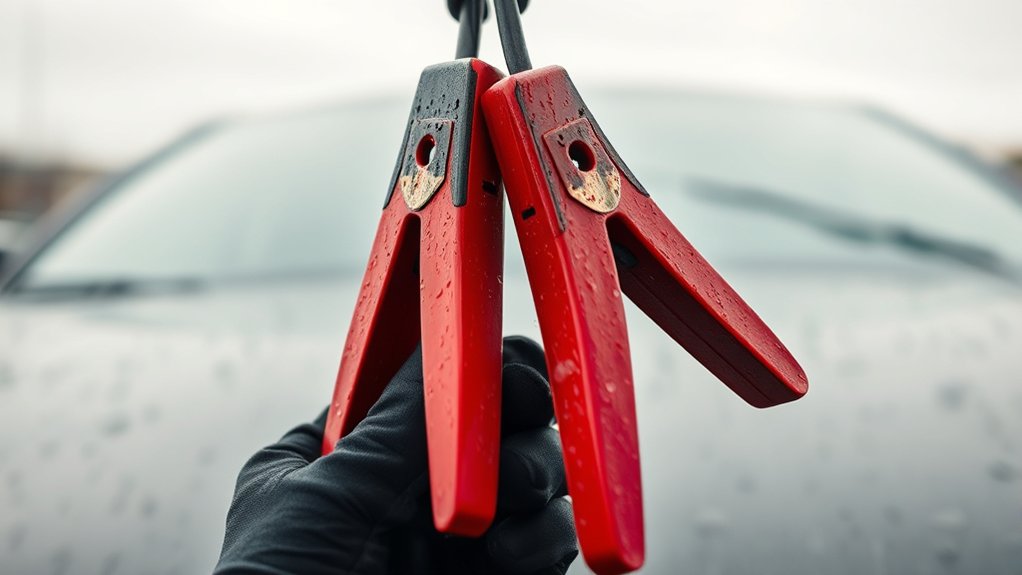
You can use jumper cables in the rain if you take proper safety precautions. Make sure your cables are insulated, dry, and rated for automotive use. Always keep your hands dry, avoid standing in water, and connect cables in the correct sequence, grounding the negative clamp to a metal surface away from the battery.
Position both vehicles on stable, dry ground to reduce risk. Following these steps helps minimize electrical hazards and equipment damage. To optimize safety and effectiveness, learn the expert techniques involved.
Is It Safe to Use Jumper Cables in the Rain?
In rain, safety when using jumper cables largely depends on proper technique and equipment condition. You need to verify the cables’ insulation is intact, without cracks or exposed wires, to prevent electrical shorts or shocks.
Avoid standing in puddles or wet areas to reduce the risk of electric conduction through your body. It’s essential to maintain firm, dry connections between the clamps and battery terminals, as moisture can cause slipping or corrosion, impacting jumper cables safety.
In technical discussions, focus on using cables rated for automotive use with proper thickness to handle current flow efficiently. These discussion ideas emphasize that while rain adds risk, controlled conditions and quality equipment allow safe operation without compromising jumper cables safety.
Essential Safety Tips for Jump-Starting in Wet Conditions
How can you ensure safety while jump-starting a vehicle in wet conditions? First, assess weather patterns carefully. Avoid jump-starting during heavy rain or thunderstorms to minimize risk. Position both vehicles on stable, dry ground to prevent slipping.
Use jumper cables with insulated covers to reduce electrical hazards. Connect cables in the correct sequence: positive terminal of the dead battery first, then the positive of the donor battery; negative terminal of the donor battery next, and finally the negative terminal on a grounded metal surface away from the battery.
Maintain lighting safety by avoiding jump-starting near flammable vapors or open flames. Keep your hands and the cable clamps dry throughout the process to reduce shock risk. Always double-check connections before turning on the donor vehicle to ensure a safe, effective jump-start.
Protective Gear for Jump-Starting in Rain
Why should you prioritize wearing protective gear while jump-starting in the rain? Wet conditions increase the risk of electric shock and exposure to cold. Proper storm gear, including waterproof gloves and a jacket hood, minimizes these risks by keeping you dry and insulated.
Your gear must also provide grip and dexterity for handling cables safely.
| Gear Item | Purpose | Key Feature |
|---|---|---|
| Waterproof Gloves | Insulation & grip | Non-slip surface |
| Jacket with Hood | Protects head & torso | Water-resistant |
| Rubber Boots | Electrical insulation | Thick soles |
| Safety Glasses | Eye protection | Impact-resistant |
| Reflective Vest | Visibility in poor weather | High reflectivity |
Equip yourself properly to ensure safety and efficiency during rain-soaked jump-starts.
How to Use Jumper Cables in the Rain
Before you start, make sure you follow key safety precautions to prevent electric shock or damage. Connect the jumper cables in the correct order—positive terminals first, then negative—while keeping the clamps away from wet surfaces. Always avoid letting the cables or clamps touch water to maintain a safe and effective jump-start.
Safety Precautions First
When dealing with jumper cables in wet conditions, what precautions should you take to stay safe? Understanding rain physics clears up common electrical myths: water itself doesn’t conduct electricity well unless mixed with impurities.
Still, wet surfaces increase slip and short-circuit risks. Always wear insulated gloves, avoid standing water, and keep cables dry when possible. Use a flashlight if visibility is low.
| Precaution | Reason | Action Tip |
|---|---|---|
| Insulated Gloves | Prevent electrical shock | Wear before handling cables |
| Avoid Standing Water | Reduces slip and shock risk | Move to dry ground |
| Keep Cables Dry | Minimizes conductivity risks | Wipe cables, cover if needed |
| Use Flashlight | Enhances visibility | Inspect connections clearly |
| Work Slowly | Avoid accidental contact | Double-check before connecting |
Proper Cable Connection
A correct cable connection is essential for safely jump-starting a vehicle in the rain. To ensure rain safety while using jumper cables, follow these precise steps:
- Connect the red (positive) clamp to the positive terminal on the dead battery first.
- Attach the other red clamp to the positive terminal on the donor battery.
- Connect the black (negative) clamp to the negative terminal on the donor battery.
- Finally, attach the remaining black clamp to an unpainted metal surface on the dead vehicle, away from the battery, to minimize spark risk.
This sequence reduces the chance of electrical shorts or sparks, crucial in wet conditions. Keep your hands dry and secure each clamp firmly to maintain proper electrical contact during the jump-start process.
Avoid Water Contact
How can you safely use jumper cables in the rain without risking electrical hazards? Prioritize water safety by keeping cables, connectors, and battery terminals dry. Wear rubber gloves to prevent direct contact with wet surfaces and reduce shock risk.
Avoid puddles and ensure the ground beneath you is dry. If possible, use a waterproof cover over the battery area.
| Step | Action | Purpose |
|---|---|---|
| 1 | Wear rubber gloves | Insulate hands from moisture |
| 2 | Inspect cables for damage | Prevent electrical shorts |
| 3 | Keep connectors dry | Avoid current leakage |
| 4 | Avoid standing in water | Prevent electrical conduction |
Following these steps ensures safe jumper cable use in wet conditions.
How Rain Can Affect Your Jumper Cables
Rain can affect the conductivity of your jumper cables by causing moisture to interfere with the electrical connection. You need to take specific safety precautions to prevent short circuits and avoid electric shocks in wet conditions. Understanding how water impacts your cables helps you use them more effectively and safely.
Water’s Impact on Conductivity
Why does water influence the effectiveness of jumper cables? Water’s inherent conductivity alters the electrical pathways, creating moisture interference that can reduce current flow. When jumper cables get wet, water conductivity may cause unintended resistance or short circuits, impacting performance.
Consider these effects:
- Water forms a conductive bridge, potentially diverting current away from the cable’s core.
- Moisture interference increases overall resistance, lowering power delivery.
- Wet connectors may corrode faster, degrading connection quality.
- Water droplets can cause arcing, risking cable damage.
Understanding these factors helps you appreciate how rain and moisture directly affect jumper cable conductivity and efficiency during use.
Safety Precautions in Wet Conditions
When working with jumper cables in wet conditions, what safety measures should you prioritize to minimize risk? First, ensure both vehicles are parked on a dry, stable surface to reduce electrical hazards. Avoid standing in puddles or on wet ground while connecting cables.
Inspect your jumper cables for any exposed wires or damaged insulation, as moisture can increase the risk of short circuits. Always wear insulated gloves to protect yourself from accidental shocks.
Keep cable clamps dry and handle them by their insulated grips only. Disconnect the cables in reverse order of connection to prevent sparks.
Prioritizing these electrical safety steps during car maintenance in the rain helps prevent injury and damage to vehicle electronics, ensuring a safer jump-start process under wet conditions.
Common Mistakes to Avoid When Jump-Starting in the Rain
How can you guarantee safety and effectiveness while jump-starting your vehicle in wet conditions? Avoiding common mistakes related to jump starting hazards and rain specific setup is crucial. Here are four key errors to steer clear of:
- Connecting cables in the wrong order. Always attach positive terminals first, then negative to a grounded metal surface away from the battery.
- Overlooking insulation. Use insulated gloves and ensure cables are dry to prevent electric shocks.
- Ignoring vehicle placement. Keep both cars on stable, non-slippery ground to avoid accidents.
- Jump-starting with wet hands or standing in water. This increases risk of electrocution significantly.
Following these practices minimizes risks and ensures a safe, efficient jump-start in rainy conditions.
Frequently Asked Questions
Can Jumper Cables Get Damaged From Rain Exposure Over Time?
Yes, jumper cables can wear from moisture over time, increasing corrosion risk. You should choose cables with rust resistance and store them dry to prevent damage.
This ensures safe and reliable performance during use in wet conditions.
Are There Specific Jumper Cables Designed for Wet Weather Use?
Just like rain boots and waterproof jackets shield you, some jumper cables feature insulated, weather-resistant coatings to handle wet conditions safely. These cables prevent short circuits and corrosion, ensuring reliable performance even when the rain pours hard.
How Does Humidity Differ From Rain in Affecting Jumper Cables?
You’ll notice rain causes direct wetness, increasing risk of electrical shorts, while humidity impact is subtle, mainly causing condensation over time. Rain vs humidity differs because rain poses immediate hazards; humidity affects jumper cables more gradually.
Can Rainwater Cause Electrical Shorts in Jumper Cables?
Yes, rainwater can cause electrical shorts in jumper cables. You should avoid rain hazards by minimizing water exposure, as moisture can create unintended connections, leading to short circuits or corrosion.
This can compromise jumper cable performance and safety.
Should Jumper Cables Be Cleaned After Use in Rainy Conditions?
You should definitely clean jumper cables after use in rainy conditions. Avoid irrelevant topics in your discussion ideas; focus on removing moisture and corrosion to ensure reliable conductivity and prevent future electrical issues. Think of it like maintaining a trusty Victorian telegraph.