Can Diesel Oil Be Used in Gas Engines
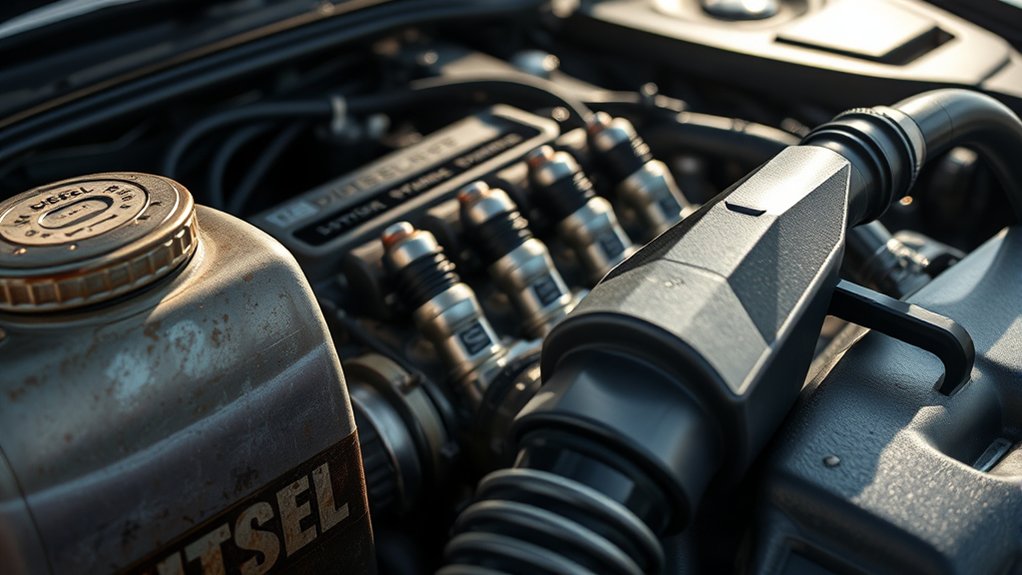
You can’t use diesel oil in gas engines without risking serious issues. Diesel’s higher viscosity and chemical makeup prevent proper vaporization and spark ignition, causing misfires, rough idling, and carbon buildup.
Gas engines rely on precise ignition timing and fuel-air mixtures, which diesel oil disrupts, leading to power loss and potential damage. Using diesel oil compromises engine efficiency and longevity.
Understanding these differences clarifies why diesel isn’t a viable substitute and explains how misfueling impacts engine performance.
Can Diesel Oil Be Used in a Gas Engine?
How does diesel oil interact with a gas engine when used as fuel? Diesel oil’s chemical properties and combustion characteristics differ significantly from gasoline, hindering efficient gas engine collaboration.
Diesel oil’s distinct chemical and combustion traits prevent effective use in gasoline engines.
When you introduce diesel oil into a gas engine, its higher viscosity and lower volatility cause incomplete vaporization and combustion. This leads to inefficient fuel-air mixing, resulting in poor ignition and increased emissions.
Diesel oil’s cetane rating, suited for compression ignition, doesn’t align with the spark ignition system in gas engines, causing misfires and engine knocking. Furthermore, diesel’s heavier molecular structure can clog fuel injectors designed for gasoline, reducing engine performance and longevity.
In short, diesel oil and gas engine collaboration is fundamentally incompatible, risking damage and operational failure when diesel substitutes gasoline in these engines.
What’s the Difference Between Diesel and Gasoline Engines?
You’ll notice diesel and gasoline engines operate on fundamentally different combustion processes—diesel relies on compression ignition, while gasoline uses spark ignition. Their engine designs reflect these differences, affecting components like compression ratios and fuel injection systems. Understanding these distinctions is key to grasping why diesel oil isn’t suitable for gas engines.
Combustion Process Differences
Why do diesel and gasoline engines operate so differently despite both powering vehicles? The core difference lies in their engine combustion processes. You need to understand these three key distinctions:
- Ignition Method: Gasoline engines use spark plugs to ignite a pre-mixed air-fuel mixture, while diesel engines rely on compression to heat air, causing fuel injected by fuel injectors to auto-ignite.
- Fuel Injection Timing: Gasoline engines mix fuel and air before intake, but diesel engines inject fuel directly into highly compressed air in the combustion chamber.
- Combustion Control: Diesel combustion is controlled by the amount and timing of fuel injected, whereas gasoline combustion depends on spark timing and mixture ratio.
These combustion process differences critically affect performance, efficiency, and emissions, making diesel oil unsuitable for gasoline engines.
Engine Design Variations
The distinct combustion processes between diesel and gasoline engines stem from fundamental differences in their designs. Diesel engines feature a robust construction, with higher compression ratios to withstand intense pressures, directly impacting engine efficiency by maximizing thermal energy extraction.
Gasoline engines, however, incorporate lighter components optimized for faster revving and smoother operation. You’ll notice diesel engines use heavier pistons and reinforced cylinder heads, contributing to increased noise levels; thus, noise suppression mechanisms are more critical in diesel designs.
Gasoline engines employ advanced ignition timing and valve configurations to enhance combustion control and reduce mechanical noise. These structural and material variations not only influence durability but also directly affect performance characteristics, making diesel engines more efficient under load, while gasoline engines prioritize smoother, quieter operation.
Understanding these design nuances clarifies why diesel oil isn’t ideal for typical gasoline engines.
Fuel Ignition Methods
Although diesel and gasoline engines both convert fuel into mechanical energy, they rely on fundamentally different ignition methods that define their operation and performance. When you examine these differences, consider:
- Ignition Timing: Gasoline engines use spark plugs to initiate combustion at a precise moment controlled by the ignition timing. Diesel engines rely on compression-induced auto-ignition without external spark.
- Fuel Mapping: Gasoline engines employ complex fuel mapping to optimize spark timing and air-fuel mixture, enhancing efficiency and emissions control. Diesel engines adjust fuel injection timing and quantity instead.
- Combustion Process: Gasoline combustion occurs in a homogeneous air-fuel mix, while diesel combustion happens via direct injection into highly compressed air, causing spontaneous ignition.
Understanding these distinctions helps you grasp why diesel oil isn’t compatible with gasoline engines due to their divergent ignition and combustion mechanisms.
What Happens If You Put Diesel in a Gas Engine?
What occurs when you accidentally fill a gas engine with diesel fuel? Diesel propulsion relies on compression ignition, unlike gas engines that use spark plugs. Diesel fuel’s higher viscosity and different combustion properties disrupt the gas engine’s fuel-air mixture, causing incomplete combustion or failure to ignite.
Since gas engines lack the compression ratios required for diesel ignition, the engine may stall or misfire immediately. Additionally, diesel lubricants, designed for diesel engines, differ chemically and won’t properly lubricate components in a gas engine, potentially causing wear or damage.
Diesel’s slower evaporation rate also leads to carbon deposits, fouling spark plugs and injectors. Overall, diesel fuel in a gas engine compromises performance and risks mechanical damage, making prompt fuel system drainage essential to prevent operational failure.
What Are the Signs of Diesel Fuel Contamination in a Gas Engine?
Identifying diesel fuel contamination in a gas engine starts with recognizing changes in engine behavior and performance. Diesel contamination from fuel misfueling disrupts combustion characteristics, causing specific symptoms you should monitor closely:
- Engine Misfires and Rough Idling: Diesel’s higher ignition temperature leads to incomplete combustion, resulting in misfires and unstable idle speeds.
- Excessive Smoke Emission: Look for thick, black smoke from the exhaust, indicating improper fuel burn caused by diesel’s different chemical properties.
- Loss of Power and Poor Acceleration: Diesel contamination reduces fuel volatility, impairing engine responsiveness and leading to noticeable power drops.
These signs are critical indicators that diesel contamination has occurred. Prompt diagnosis can prevent further mechanical damage and help maintain engine integrity after fuel misfueling.
How Do You Repair a Gas Engine After Diesel Contamination?
How should you approach repairing a gas engine after diesel contamination? First, immediately drain the contaminated fuel from the fuel system to prevent further damage.
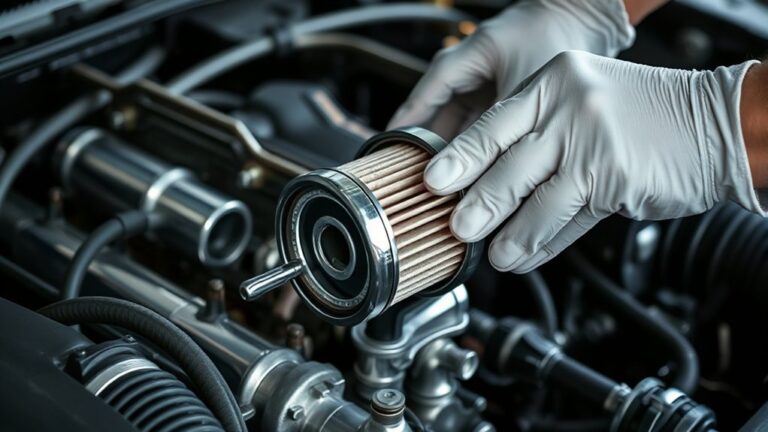
Flush the entire fuel system thoroughly, including fuel lines, filters, and injectors, to remove diesel residues. Next, replace fuel filters to ensure no diesel remnants remain.
Inspect the engine lubrication system closely, as diesel contamination can degrade oil quality and reduce lubrication efficiency. Change the engine oil and oil filter to restore proper lubrication and prevent wear.
After reassembling, prime the fuel system with fresh gasoline and monitor engine performance carefully. Conduct a diagnostic check to verify fuel system integrity and engine lubrication effectiveness.
Addressing both fuel system and lubrication contamination swiftly limits damage and restores optimal engine function.
How Can You Prevent Fuel Mix-Ups When Refueling?
Preventing fuel mix-ups during refueling demands a systematic approach focused on clear identification and handling protocols. You must follow strict gas station etiquette and ensure every fuel container is properly labeled to avoid costly errors.
Here’s how to keep fuel mishaps at bay:
- Verify Pump and Container Labels: Always double-check the pump type before fueling and ensure your fuel container labeling clearly differentiates gas from diesel.
- Use Dedicated Containers: Assign separate, color-coded containers for gasoline and diesel. This minimizes confusion during transport and refilling.
- Stay Attentive and Follow Procedures: Avoid distractions at the pump, adhere to gas station etiquette, and confirm fuel type before starting refueling.
Is Using Diesel Oil in a Gas Engine Ever Safe?
When weighing whether diesel oil can be used in a gas engine, you need to understand the fundamental differences in engine design and fuel requirements. Gas engines rely on spark ignition with precise ignition timing, whereas diesel engines use compression ignition.
Diesel oil’s chemical properties lead to possible fuel compatibility issues in gas engines, including incomplete combustion and deposit formation. Using diesel oil can disrupt ignition timing effects critical for optimum performance, causing misfires and reduced efficiency.
While minor contamination might not cause immediate failure, intentionally running a gas engine on diesel oil is unsafe and can cause long-term damage. Consequently, despite occasional tolerance, it’s technically unsound to consider diesel oil as a viable fuel substitute for gas engines under normal operating conditions.
Frequently Asked Questions
What Additives Are in Diesel Oil Compared to Gasoline?
Diesel oil additives include detergents, anti-wear agents, and pour point depressants, enhancing heavy-duty engine performance.
You’ll find these differ from gasoline compatibility additives, which focus on volatility and combustion efficiency for lighter, high-speed engines.
Can Diesel Oil Improve Gas Engine Performance?
You won’t see diesel relevance improving gas engine performance considerably; its formulation targets diesel combustion. Using it may negatively impact valvetrain components due to different additive balances, potentially causing wear rather than enhancement in gasoline engines.
How Does Diesel Oil Affect Engine Emissions?
Diesel oil affects engine emissions by causing emissions tradeoffs: while some pollutants may decrease, others increase due to dilution effects.
You’ll notice incomplete combustion and higher particulate matter, requiring careful balance for optimal emission control.
Is Diesel Oil More Expensive Than Gasoline?
Imagine your wallet doing push-ups every time you buy diesel. Yes, diesel cost usually surpasses gasoline due to complex refining and fuel pricing structures.
You’ll notice diesel’s premium, reflecting higher energy content and production expenses.
Can Diesel Oil Be Used in Hybrid Engines?
You shouldn’t use diesel oil in hybrid engines, since hybrid engine lubrication demands specific oils. Avoid diesel engine misconceptions; diesel oil’s additives differ from those in hybrid engines, potentially harming performance and longevity if misapplied.
Conclusion
Think of your gas engine as a finely tuned orchestra—each fuel type plays its own distinct instrument. Using diesel oil in a gas engine is like introducing a trombone into a violin quartet: it disrupts harmony, causing misfires and damage.
To keep your engine performing at its best, stick to the right fuel and avoid contamination. Precision in fueling ensures your engine’s symphony remains flawless, efficient, and long-lasting.
In conclusion, using diesel oil in a gas engine is not advisable as it can lead to serious mechanical issues and reduce engine performance.