Can Car Oil Freeze
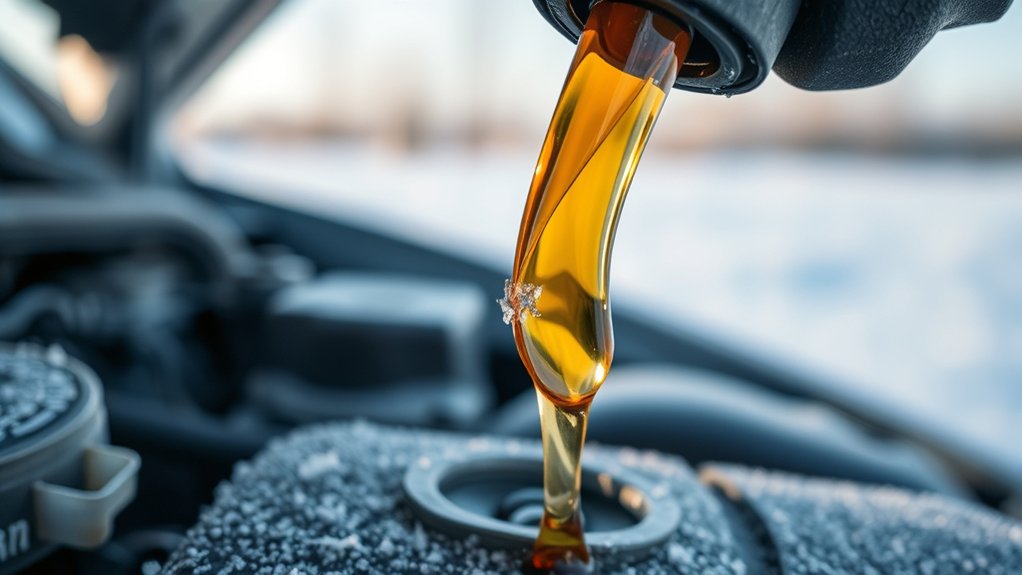
You can’t expect car oil to freeze like water, but in extreme cold, car oil thickens notably, reducing flow and impairing engine lubrication during startup. This viscosity increase raises friction, causes harder cranking, and may trigger oil pressure warnings.
Synthetic oils resist thickening better than conventional types, maintaining fluidity at lower temperatures. Using the correct multi-grade oil is essential to guarantee reliable cold starts and protect engine components.
Understanding these effects can help you prepare your vehicle for winter challenges.
How Freezing Weather Affects Your Car’s Oil
How does freezing weather impact your car’s oil performance? When temperatures drop, your engine oil thickens, increasing its viscosity and reducing flow efficiency. This change challenges your engine’s ability to lubricate moving parts promptly during startup, potentially causing increased wear.
Addressing irrelevant topic or unrelated discussion, don’t confuse oil thickening with oil freezing; the two are distinct phenomena with different consequences. In freezing conditions, selecting oil with the appropriate viscosity rating, such as 5W-30 instead of 10W-40, is essential to maintain optimal lubrication.
You must understand that oil additives also play a critical role in preventing viscosity loss at low temperatures. By considering these factors, you ensure your engine oil performs reliably despite cold weather stresses, avoiding damage and maintaining engine longevity.
Can Car Oil Actually Freeze Like Water?
Can car oil actually freeze like water under cold conditions? The answer is no. Unlike water, engine oil doesn’t freeze solid because of its chemical composition and viscosity modifiers.
Instead, oil thickens considerably as temperatures drop, which impairs its flow and lubrication properties. When oil becomes too viscous during cold starts, your engine experiences increased friction, reducing fuel efficiency and potentially causing premature wear.
Although it won’t freeze, the thickened oil behaves similarly by restricting movement within the engine. Modern synthetic oils are formulated to maintain optimal viscosity in low temperatures, ensuring smoother cold starts and preserving fuel efficiency.
At What Temperature Does Car Oil Freeze?
You need to understand that car oil doesn’t have a single freezing point like water; instead, its solidification depends on its chemical composition and additives. Factors such as viscosity grade, base oil type, and temperature all influence when oil begins to gel or freeze. Comparing synthetic and conventional oils reveals significant differences in their low-temperature performance and freeze thresholds.
Freezing Point Of Oil
At what temperature does car oil actually freeze? Engine oil doesn’t freeze in a traditional sense like water; instead, it thickens significantly at low temperatures. Most conventional motor oils begin to solidify or lose fluidity around -30°C (-22°F), but synthetic oils can remain fluid below -50°C (-58°F).
This thickening impacts cold start lubrication crucial for minimizing engine wear during startup. When oil viscosity increases, it struggles to flow quickly through the engine, delaying lubrication and increasing mechanical friction. This delay exacerbates engine wear, especially in extreme cold.
Understanding the precise freezing point isn’t as straightforward as pinpointing a single temperature. It depends on the oil’s formulation. However, ensuring your oil maintains fluidity at low temperatures directly supports reliable cold start lubrication and reduces premature engine wear.
Factors Affecting Oil Freeze
Although engine oil doesn’t freeze like water, several factors influence the temperature at which it thickens and loses flowability. You’ll notice that oil color can indicate degradation, which affects viscosity and freezing tendencies.
Darker oil often signals contamination or oxidation, altering its low-temperature performance. Additionally, oil aroma reflects chemical changes; a burnt or sour scent suggests breakdown, impacting flow properties under cold conditions.
You must also consider the oil’s additive package, which modifies freezing behavior by preventing wax crystal formation. Temperature alone isn’t the sole determinant; mechanical stress and oil age contribute as well.
Understanding these variables helps you predict when oil will thicken, ensuring proper engine lubrication and avoiding cold-start issues in harsh environments.
Comparing Oil Types
How do different types of car oil respond to extreme cold? Conventional oils tend to thicken at higher temperatures compared to synthetic oils, which maintain fluidity down to around -40°F (-40°C). This difference is critical because thickened oil impedes engine lubrication, increasing wear during startup.
When choosing oil, you should consider the climate; synthetic oils offer better protection in freezing conditions and can improve fuel economy by reducing engine drag. Additionally, multi-grade oils, like 5W-30, are formulated to remain fluid at low temperatures, facilitating easier oil changes and consistent lubrication.
Using the correct oil type ensures efficient engine performance and longevity, especially in cold climates where oil freeze risks are higher. Regular oil changes with proper viscosity oils help maintain optimal fuel economy and engine reliability.
Why Engine Oil Viscosity Matters in Winter
Why does engine oil viscosity become critical during winter months? Because viscosity determines how easily oil flows at low temperatures, directly affecting lubrication and engine startup.
If oil is too thick, it resists flow, delaying critical lubrication when your engine needs it most. Using a winter alcohol free additive helps maintain oil fluidity without compromising chemical stability, unlike alcohol-based solutions that can affect oil visualization and clarity.
You want oil that remains sufficiently thin to circulate quickly but still provides a protective film. Proper viscosity ensures oil penetrates tight engine tolerances, minimizing wear during cold starts.
Risks of Using Incorrect Engine Oil in Cold Weather
What happens when you use the wrong engine oil in cold weather? The oil’s viscosity may become too thick, impairing its flow and delaying lubrication during startup. This leads to increased engine wear and potential damage.
Additionally, incorrect oil can exacerbate irreversible oxidation, accelerating oil breakdown and reducing its protective properties. Fuel dilution becomes a risk, as thinner or inappropriate oils fail to maintain proper film strength, allowing fuel to mix with the oil more easily.
This further lowers its viscosity and compromises lubrication. You risk increased friction, wear, and eventual engine component failure. Using unsuitable oil in cold conditions disrupts the delicate balance necessary for effective thermal management and protection, potentially shortening engine life and increasing maintenance costs.
How to Choose the Best Car Oil for Winter Driving
You need to select an oil with the right viscosity rating to ensure proper flow at low temperatures. Choosing between synthetic and conventional oils depends on their cold-weather performance and stability. Also, consider additives that improve lubrication and protect engine components during harsh winter conditions.
Oil Viscosity for Cold
How does oil viscosity impact your engine’s performance during freezing temperatures? Oil viscosity determines how easily your engine oil flows at low temperatures. If the viscosity is too high, the oil thickens, making it harder for the engine to start and circulate lubrication effectively.
This affects fuel efficiency by increasing engine strain and fuel consumption. Conversely, oil that’s too thin won’t protect engine parts adequately.
To optimize performance in cold weather, consider these factors:
- Choose oils with lower winter viscosity ratings (e.g., 0W-30) for better cold flow.
- Verify that the oil meets manufacturer specifications for cold climates.
- Monitor fuel efficiency changes related to oil viscosity shifts.
- Ensure oil maintains adequate film strength despite low temperatures.
Selecting the right viscosity balances protection and efficiency during winter starts.
Synthetic Vs. Conventional Oils
For winter driving, choosing between synthetic and conventional oils requires an understanding of their chemical properties and performance differences. Synthetic oils sustain fluidity at lower temperatures, ensuring quicker lubrication during cold starts. Conventional oils tend to thicken, risking sluggish engine response.
The synthetic benefits include enhanced stability, longer intervals between oil changes, and superior cold-flow characteristics.
| Property | Synthetic Oil | Conventional Oil |
|---|---|---|
| Cold Temperature | Remains fluid, low pour point | Thickens, higher pour point |
| Oil Change Interval | Longer (up to 10,000 miles) | Shorter (3,000-5,000 miles) |
| Cost | Higher upfront cost | Lower upfront cost |
For winter driving, synthetic oils’ low-temperature performance and extended oil change intervals make them the optimal choice.
Additives Enhancing Winter Performance
Why do certain oils perform better in freezing temperatures? It’s all about additives designed to maintain fluidity and protect engine components during cold starts. When choosing oil for winter driving, you want formulas that resist thickening and prevent metal wear caused by low temperatures.
Key additives include:
- Viscosity modifiers: Keep oil flowing smoothly in extreme cold.
- Pour point depressants: Lower the temperature at which oil solidifies.
- Anti-wear agents: Protect engine parts against friction during cold starts.
- Detergents and dispersants: Prevent sludge buildup during winter storage.
These additives ensure your oil doesn’t freeze or degrade, reducing engine strain. Remember, proper oil disposal after winter storage is essential to avoid environmental damage and maintain system efficiency. Selecting oil with these additives guarantees reliable performance when temperatures plunge.
How Synthetic Car Oil Performs Better in Cold Weather
What makes synthetic car oil excel in cold weather is its engineered molecular structure, which maintains fluidity at lower temperatures compared to conventional oils. You’ll notice synthetic oils resist thickening, ensuring faster engine lubrication during cold starts.
This contrasts sharply with unrelated topic discussions like additives enhancing winter performance, which is a completely separate discussion.
| Property | Synthetic Oil | Conventional Oil |
|---|---|---|
| Molecular Uniformity | High | Variable |
| Low-Temperature Flow | Maintains fluidity | Thickens |
| Viscosity Index | Higher, stable viscosity | Lower, inconsistent |
This table highlights why synthetic oils are preferred for cold climates, giving you reliable engine protection when temperatures drop.
Practical Tips to Prevent Your Car Oil From Freezing
To prevent your car oil from freezing, you need to select the correct oil grade designed for low temperatures. Using oils with proper viscosity guarantees fluidity even in extreme cold. Additionally, storing your vehicle indoors minimizes exposure to freezing conditions, maintaining optimal oil performance.
Use Suitable Oil Grades
How do you guarantee your car oil remains fluid in freezing temperatures? Selecting the right oil grade is essential to maintaining engine performance during winter. Oil viscosity affects flow; thicker oils can gel, hindering lubrication.
Use manufacturer-recommended multi-grade oils designed for low temperatures, ensuring suitable viscosity. Consider these points:
- Choose synthetic oils with low pour points for better cold flow.
- Verify oil grade compatibility alongside components like winter tires and cabin air filters to maintain overall winter readiness.
- Regularly check oil viscosity ratings (e.g., 0W-30) to match expected temperature ranges.
- Avoid single-grade oils that lack flexibility in extreme cold.
Applying the correct oil grade reduces freezing risk, protects engine parts, and complements other winter preparations like upgrading winter tires and replacing cabin air filters for efficient vehicle operation.
Store Vehicle Indoors
Where you store your vehicle plays a critical role in preventing your car oil from thickening or freezing during cold weather. Opting for indoor storage significantly reduces exposure to subzero temperatures, maintaining a more stable thermal environment around your engine components.
Indoor storage facilities or garages provide vehicle insulation, which minimizes temperature fluctuations that can increase oil viscosity. Without adequate insulation, oils with marginal cold-flow properties risk solidifying or becoming overly viscous, impairing lubrication.
By storing your vehicle indoors, you effectively preserve the oil’s fluidity, ensuring consistent engine performance during startups. Additionally, vehicle insulation within indoor storage mitigates moisture accumulation, reducing the risk of oil contamination and degradation.
Prioritizing indoor storage is a practical, preventive measure that directly enhances your engine oil’s resilience against freezing conditions.
How to Spot When Car Oil Struggles in Cold Weather
Although car oil doesn’t freeze like water, it can thicken substantially in cold weather, which impairs its ability to lubricate engine components effectively. When oil thickens, you might notice symptoms indicating it’s struggling, which you shouldn’t confuse with irrelevant topics like unrelated discussion about fuel types or battery issues.
Car oil thickens in cold weather, hindering effective engine lubrication and causing noticeable performance issues.
To accurately spot cold-weather oil performance issues, watch for:
- Engine resistance during startup, requiring longer cranking time
- Unusual engine noises, such as ticking or knocking, due to insufficient lubrication
- Oil pressure warning lights activating more frequently
- Reduced fuel efficiency from increased engine friction
When to Change Your Car Oil for Winter Conditions
Recognizing the signs of oil thickening in cold weather is only part of maintaining your engine’s performance. You should change your car oil before winter sets in, ideally when temperatures start consistently dropping below freezing. Using oil with the correct viscosity for cold conditions ensures easier cold starting and prevents sluggish engine response.
Synthetic oils with lower pour points maintain fluidity at reduced temperatures, directly enhancing fuel efficiency by reducing engine drag. Monitor your vehicle’s manufacturer recommendations and consider shortening oil change intervals if you frequently drive in extreme cold.
Neglecting timely oil changes can lead to increased engine wear and compromised lubrication, especially during cold starts when oil circulation is critical. Proactive oil maintenance helps preserve engine integrity and optimizes performance throughout winter’s harsh conditions.
Frequently Asked Questions
Can Freezing Oil Damage Other Car Parts Besides the Engine?
Yes, freezing oil can compromise oil cooling efficiency and harm exterior sealing components by causing contraction or brittleness.
You’ll want to guarantee proper oil viscosity to protect both engine and surrounding parts from cold-induced damage.
Does Engine Oil Freezing Affect Fuel Efficiency?
Imagine thick molasses struggling through cold pipes. That’s how increased engine oil viscosity feels.
When your oil thickens, it raises friction inside the engine, directly reducing fuel efficiency by forcing your car to work harder and consume more fuel.
Can Additives Prevent Car Oil From Freezing?
Yes, additives can improve oil viscosity at low temperatures, reducing cold start impact. By maintaining fluidity, they ensure proper lubrication during startup, preventing engine wear and enhancing performance in freezing conditions.
How Does Car Oil Freezing Impact Oil Pressure?
Wonder how freezing oil affects pressure? When oil viscosity spikes near its freezing point during a cold start, your engine temperature struggles to increase. This causes low oil pressure and inadequate lubrication, risking engine wear and damage.
Is Synthetic Oil More Expensive Than Regular Oil?
Yes, synthetic oil generally costs more than regular oil. You’ll find the synthetic cost higher due to advanced additives and manufacturing.
The regular oil price remains lower, reflecting simpler refining and base stock quality.
Conclusion
While car oil doesn’t freeze like water, extremely low temperatures can thicken it, impairing engine performance. You might think oil freezing is a real threat, but it’s actually viscosity changes that matter most.
Using the right synthetic oil with proper winter ratings reduces flow resistance, ensuring optimal lubrication. This helps your engine start and run smoothly even in the coldest conditions.
So, don’t just worry about freezing; focus on oil viscosity and timely changes to keep your engine running smoothly in cold conditions. Understanding that car oil can thicken but not freeze is key to proper winter maintenance.