How Long Does a Fuel Filter Last
You should replace your fuel filter every 20,000 to 40,000 miles to keep your engine running efficiently and avoid fuel flow restrictions caused by contaminants. How long does a fuel filter last depends on various factors including fuel quality, driving conditions, and vehicle usage, which can all shorten its lifespan.
Watch for signs such as hesitation, poor acceleration, or hard starts, which indicate clogging. Regular replacement prevents strain on your fuel system and potential engine damage. Understanding the replacement process and maintenance tips can further optimize your vehicle’s performance.
How Long Does a Fuel Filter Last and When to Replace It
How often should you replace your fuel filter to keep your engine running smoothly? The lifespan of a fuel filter depends largely on maintaining ideal fuel purity and the use of fuel additives.
A fuel filter’s primary role is to trap contaminants, guaranteeing only clean fuel reaches the engine. Over time, impurities accumulate, reducing flow and engine efficiency.
While fuel additives can help maintain fuel system cleanliness, they don’t eliminate the need for filter replacement. You should replace the fuel filter when you notice decreased fuel purity or performance issues such as rough idling or difficulty starting.
Regular inspection is essential because a clogged filter compromises fuel delivery, affecting engine operation. Staying proactive with replacement ensures consistent fuel filtration and engine protection.
When to Replace Your Fuel Filter Based on Mileage
You should replace your fuel filter according to your vehicle manufacturer’s recommended mileage, usually between 20,000 and 40,000 miles. Pay close attention to signs of fuel filter wear, such as engine misfires, reduced power, or difficulty starting. Replacing the filter on schedule helps maintain optimal fuel flow and engine performance.
Recommended Replacement Intervals
When should you replace your fuel filter to maintain superior engine performance? Generally, manufacturers recommend replacing the fuel filter every 20,000 to 40,000 miles, but this interval varies based on vehicle type and fuel quality.
If you use diesel additives to improve combustion and reduce injector deposits, you might extend filter life slightly. However, fluctuations in fuel pricing often lead to variability in fuel quality, which can accelerate filter clogging.
For gasoline engines, a replacement interval around 30,000 miles is typical, while diesel engines might require more frequent changes due to higher particulate content. Always consult your vehicle’s service manual for precise guidelines.
Adhering to recommended intervals prevents contaminants from impairing fuel flow, ensuring optimal engine efficiency and longevity.
Signs of Fuel Filter Wear
Why pay attention to mileage indicators for your fuel filter? Monitoring mileage is critical because fuel filters degrade predictably with use, affecting engine performance. Ignoring these signs leads to clogged filters restricting fuel flow, causing symptoms like engine misfires, hesitation, or difficulty starting.
When your vehicle approaches the manufacturer’s recommended mileage, often between 20,000 to 40,000 miles, inspect the filter promptly. Don’t get distracted by insignificant topics or unrelated themes such as aesthetic upgrades or unrelated maintenance; focus on fuel system health.
Recognizing these signs early prevents costly repairs and maintains engine efficiency. Replacing your fuel filter based on mileage ensures optimal fuel flow and protects your fuel injectors from contaminants, ultimately extending your vehicle’s lifespan and performance reliability.
Key Factors That Affect Fuel Filter Lifespan
How do various conditions influence the lifespan of a fuel filter? Understanding these factors is essential for effective fuel filtration and adhering to maintenance basics. Several elements directly impact how long your fuel filter performs best:
- Fuel Quality Contaminants and impurities in fuel accelerate clogging, shortening filter life.
- Driving Environment Dusty, off-road, or urban stop-and-go conditions increase particulate exposure, challenging the filter’s capacity.
- Vehicle Usage Patterns Frequent short trips prevent complete fuel system flushing, causing residue buildup and quicker filter degradation.
Signs Your Fuel Filter Needs Replacing
You’ll notice your engine’s performance drop when the fuel filter clogs, causing reduced power and acceleration. If your vehicle struggles to start or takes longer to ignite, the filter may be restricting fuel flow. Additionally, unusual engine noises can indicate that contaminants are affecting fuel delivery, signaling the need for replacement.
Decreased Engine Performance
Experiencing a noticeable drop in engine power often indicates a clogged fuel filter restricting fuel flow. When your engine struggles to perform at its best, it’s rarely an irrelevant topic or unrelated discussion. Fuel delivery plays a critical role.
A blocked filter limits the amount of fuel reaching the combustion chamber, causing reduced acceleration and power output. Watch for these signs:
- Hesitation or sputtering during acceleration, showing inconsistent fuel supply.
- Reduced fuel efficiency, as the engine compensates for poor fuel flow.
- Engine misfires or rough idling, indicating uneven fuel delivery.
If you notice these symptoms, don’t dismiss them as an unrelated discussion. A failing fuel filter directly impacts engine performance, and timely replacement can restore your vehicle’s responsiveness and efficiency.
Difficulty Starting Vehicle
When does your vehicle hesitate or fail to start smoothly? One common cause is a clogged fuel filter restricting fuel flow. Over time, contaminants from fuel chemistry, such as varnish, rust, and particulates, accumulate and reduce fuel delivery efficiency.
Ethanol impact worsens this process; ethanol attracts moisture, accelerating corrosion and sediment buildup inside the filter. This contamination impedes proper fuel pressure, making it harder for the engine to ignite.
If your vehicle struggles to start, especially after sitting idle, the fuel filter may be compromised. Replacing the filter restores consistent fuel flow, improving ignition reliability. Monitoring these symptoms ensures you address fuel delivery issues before they lead to more severe engine problems related to poor fuel chemistry and ethanol-induced degradation.
Unusual Engine Noises
How can you tell if your fuel filter is causing unusual engine noises? When your fuel filter clogs, it disrupts fuel flow, leading to irregular engine sounds that stand apart from unrelated topic noises or random chatter from other components. Pay attention to:
- Sputtering or coughing sounds: These often occur during acceleration when fuel delivery is inconsistent.
- Knocking or pinging: An obstructed filter can cause incomplete combustion, producing these distinct noises.
- Engine misfires: Erratic firing cycles from fuel starvation create irregular mechanical sounds.
These symptoms signal your fuel filter’s compromised condition. Ignoring these noises risks engine damage and decreased performance. If you detect these specific audio cues, have your fuel filter inspected and replaced promptly to maintain optimal engine function.
What Happens When Your Fuel Filter Gets Clogged
What signals indicate your fuel filter is clogged? You might notice reduced fuel efficiency as contaminants restrict fuel flow, forcing your engine to work harder. Your vehicle could hesitate during acceleration or stall unexpectedly due to inconsistent fuel delivery.
A clogged filter increases strain on the fuel pump, potentially causing premature failure. Additionally, fuel additives designed to clean and protect your system become less effective, as they can’t circulate properly through blocked passages.
Over time, deposits accumulate, further worsening performance and risking engine damage. Recognizing these signs early is essential, as a clogged fuel filter disrupts optimal combustion, reduces power output, and elevates emissions.
Addressing this promptly helps maintain your vehicle’s reliability and efficiency while preventing costly repairs down the line.
How to Check and Inspect Your Fuel Filter
Recognizing the signs of a clogged fuel filter is just the first step; inspecting the filter itself allows you to confirm its condition and determine if replacement is necessary. To check your fuel filter, follow these steps precisely:
Identifying a clogged fuel filter starts with signs, but inspection confirms if replacement is truly needed.
- Locate the fuel filter by consulting your vehicle’s manual. This step beats guessing like a funny anecdote about unrelated technology, such as trying to fix a computer with a wrench.
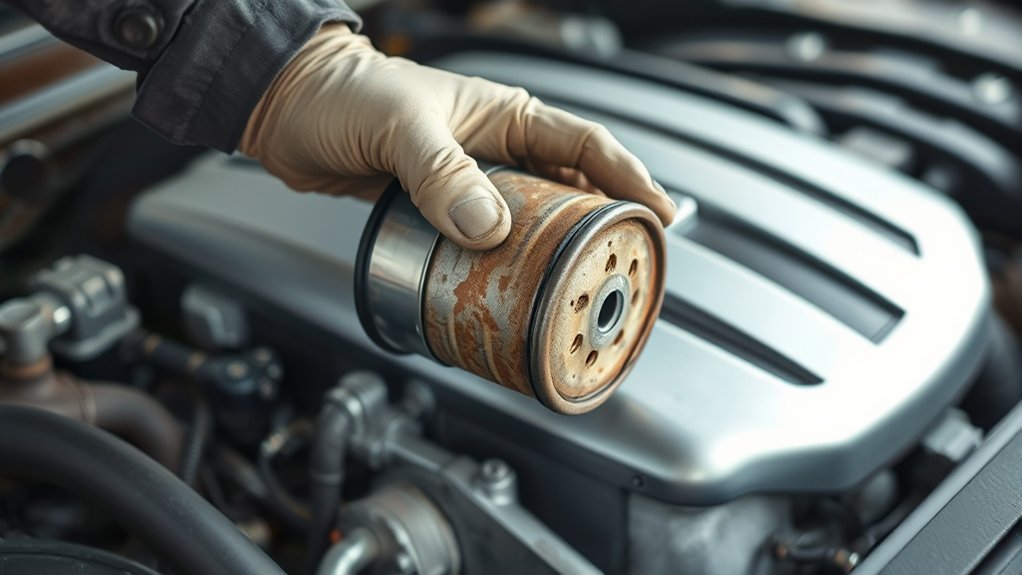
- Visually inspect the filter for cracks, rust, or deformation that indicate deterioration.
- Detach the filter carefully (pressure relief may be needed), then examine the fuel flow by blowing through it; resistance or blockage confirms clogging.
Performing these actions with care ensures you accurately assess the filter’s status without unnecessary replacements or damage.
How to Safely Replace a Fuel Filter
When replacing a fuel filter, safety must take priority to prevent injury and avoid damage to your vehicle’s fuel system. First, relieve fuel pressure by disconnecting the fuel pump fuse and running the engine until it stalls.
Disconnect the battery to eliminate electrical hazards. Use proper tools to detach the fuel lines carefully, as residual fuel can spray. Have rags or a container ready to catch any spills, reinforcing fuel safety.
Remove the old filter, noting its orientation for correct installation. Install the new filter firmly, ensuring all connections are secure and free from leaks.
Finally, reconnect the battery and fuel pump fuse, then test the system for proper operation. Following these two word ideas, fuel safety minimizes risk and ensures a successful replacement.
Practical Tips to Extend Your Fuel Filter’s Lifespan
How can you maximize the lifespan of your fuel filter to maintain ideal engine performance? By adopting a few strategic practices, you can effectively extend its service life and prevent premature clogging.
- Regularly inspect and replace obsolete fuel caps, which can allow contaminants and moisture into the fuel system, accelerating filter degradation.
- Utilize fuel from reputable sources and consider leveraging gas station rewards programs to access higher-quality gasoline, reducing impurities that burden the filter.
- Maintain a consistent maintenance schedule, including periodic fuel system cleanings, to prevent sediment buildup and ensure optimal fuel flow through the filter.
Implementing these measures helps preserve your fuel filter’s efficiency, safeguards the fuel system, and enhances overall engine reliability without unnecessary replacements.
How to Choose the Right Fuel Filter for Your Vehicle
Why does choosing the right fuel filter matter for your vehicle’s performance and longevity? A properly matched fuel filter ensures optimal fuel flow and contaminant removal, protecting your engine’s internal components from wear, similar to how clean engine oil preserves moving parts.
When selecting a fuel filter, consult your vehicle’s manual for specifications, considering fuel type, flow rate, and micron rating. Avoid generic filters, as they may not meet precise filtration needs, risking clogs or reduced efficiency.
Just as tire tread must suit driving conditions for safety and performance, your fuel filter should align with your engine’s demands. Choosing the correct filter maintains engine health, prevents fuel system damage, and supports consistent power delivery, ultimately extending your vehicle’s operational life.
Frequently Asked Questions
Can a Dirty Fuel Filter Affect Fuel Efficiency?
Yes, a dirty filter and clogged fuel can reduce your fuel efficiency. You’ll notice poor acceleration and even sudden stall issues because the engine struggles to get enough fuel, making your vehicle less efficient overall.
What Tools Are Needed to Replace a Fuel Filter?
You’ll need a wrench or fuel line disconnect tool, gloves, and safety glasses because poor fuel quality demands precision.
Stick to your service interval, or you’ll be replacing more than just the filter.
Are Fuel Filters the Same for All Car Models?
Fuel filters aren’t universal; you need to check fuel filter compatibility carefully. Each vehicle requires specific designs, and the model-specific lifespan affects performance.
Always use filters matching your car’s make and model for optimal efficacy and safety.
Can Using Premium Fuel Extend Fuel Filter Life?
Using premium fuel can extend your fuel filter life by reducing contaminants and deposits that clog the filter. It maintains cleaner fuel flow, improving efficiency and longevity.
However, the impact varies with fuel quality and vehicle design.
How Does Fuel Filter Maintenance Impact Engine Performance?
You might not realize it, but neglecting cleaning vs replacement lets contamination sources infiltrate your engine, increasing risk dramatically. Proper fuel filter maintenance ensures flow, prevents clogging, and maintains peak engine performance without costly damage.
Conclusion
Imagine your engine breathing smoothly, fuel flowing cleanly without interruption. By knowing when to replace your fuel filter—typically every 20,000 to 40,000 miles—and recognizing signs of clogging, you guarantee optimal performance and avoid costly repairs.
Regular inspections and choosing the right filter keep contaminants at bay. With careful maintenance, your fuel system stays efficient, extending your vehicle’s life and keeping every journey running flawlessly.
Stay proactive, and your engine will thank you. Understanding how long a fuel filter lasts is key to maintaining your vehicle’s health and performance.