How Long Is a Honda Civic
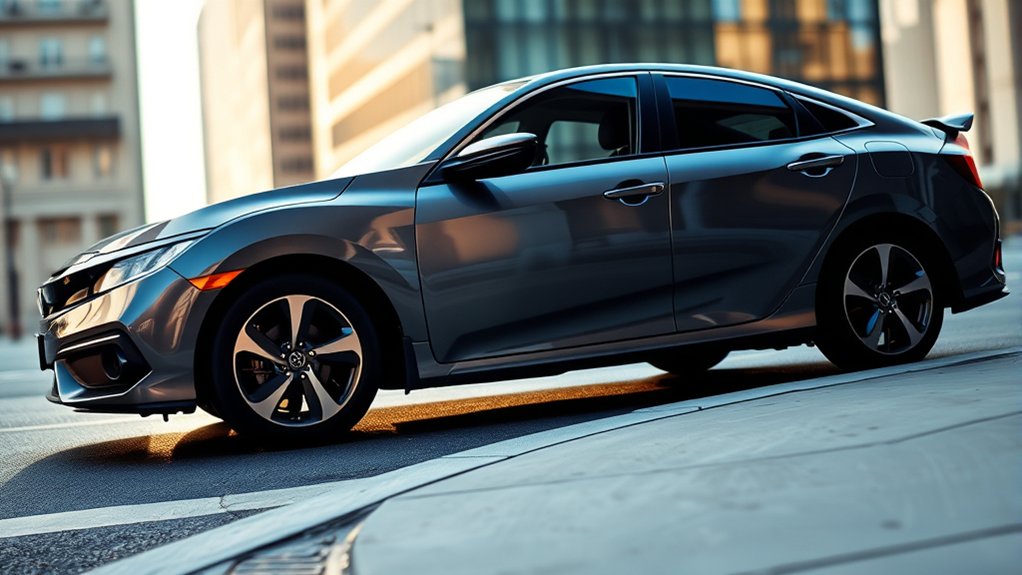
A Honda Civic typically measures between 176 and 184 inches in length, depending on the model year, body style, and trim. Hatchbacks tend to be shorter, around 177 inches, while sedans range from about 182 to 184 inches. Touring trims are usually the longest.
This length affects interior space, fuel efficiency, and how easily it fits in parking spots or garages. If you want to understand how these factors influence your choice, there’s more to explore.
Key Takeaways
- Honda Civic length ranges from about 176 inches for hatchbacks to around 182-184 inches for sedan trims.
- Earlier 1970s Civic models were roughly 4,000 mm (157 inches) long, with modern versions nearing 4,500 mm (177 inches).
- The longest Civic trim is the Touring sedan, slightly longer due to added features compared to LX or EX trims.
- Body styles affect length: sedans are typically longest, hatchbacks and coupes are shorter due to design differences.
- Civic length impacts parking fit, garage space, and interior comfort, balancing compact size with cabin roominess.
How Long Is a Honda Civic Across Different Model Years?
How long has the Honda Civic changed over the years? When you look at the Civic side by side across different model years, you’ll notice subtle yet consistent variations in length.
Model year trends reveal that earlier Civics, like those from the 1970s, were generally shorter, around 4,000 mm. Over time, Honda gradually extended the Civic’s length to improve interior space and safety, with modern models reaching close to 4,500 mm.
These changes aren’t drastic year to year, but when you compare several model years side by side, the incremental growth becomes clear. Understanding these model year trends helps you appreciate how the Honda Civic evolved to meet changing market demands, balancing compact size with enhanced comfort and functionality.
Comparing Lengths: Honda Civic Sedans vs. Hatchbacks
Where do the Honda Civic sedan and hatchback differ most when it comes to length? Primarily, the hatchback tends to be slightly shorter in overall length but offers more cargo versatility. This two word discussion ideas subtopic not relevant to other H2s highlights key differences:
- Sedan length generally ranges from 182 to 184 inches.
- Hatchback length varies between 176 and 178 inches.
- Hatchbacks feature a rear liftgate, enhancing cargo access.
- Sedans provide a traditional trunk with a fixed rear window.
- Both maintain similar wheelbases, affecting interior space minimally.
Understanding these distinctions helps you decide which body style suits your needs best, focusing on length and utility without overlapping with other subtopics like specific trim lengths.
Which Honda Civic Trim Is the Longest?
Which Honda Civic trim stretches the farthest? Among the available trims, the Touring trim of the Honda Civic sedan generally boasts the longest overall length. This trim includes additional features and enhancements that slightly extend the vehicle’s dimensions compared to lower trims like the LX or EX.
If you’re evaluating length for parking or garage space, focusing on the trim level helps you avoid confusion. It’s important to stay on topic here, as discussing unrelated topics such as engine performance or interior features would be off topic when your focus is length.
How Body Style Affects Honda Civic Length
You’ll notice that the Honda Civic’s length varies depending on its body style. The sedan, hatchback, and coupe each have distinct dimensions that affect overall length. Understanding these differences helps you choose the right model for your needs.
Sedan Versus Hatchback Length
How does the body style impact the overall length of a Honda Civic? When comparing the sedan and hatchback, the differences in length reflect changes in interior layout and cargo space, which can influence fuel economy.
- The sedan typically measures around 182 inches long.
- The hatchback is slightly shorter, about 177 inches.
- Hatchbacks offer a more versatile interior layout with fold-flat rear seats.
- Sedans provide a traditional trunk, impacting cargo capacity differently.
- The hatchback’s compact rear contributes to marginally better fuel economy.
Choosing between these two depends on your priorities. If you want more flexible cargo space and a slightly smaller footprint, the hatchback suits you. If you prefer a conventional trunk and a bit more rear legroom, the sedan fits better. Both maintain efficient fuel economy despite length variations.
Coupe Dimensions Comparison
The coupe body style impacts the Honda Civic’s overall length by offering a sportier, more compact design compared to the sedan and hatchback. When you examine Civic dimensions, the coupe typically measures shorter in length, enhancing agility and visual appeal. This coupe comparison highlights how body style influences size without compromising performance.
| Model | Length (inches) | Width (inches) |
|---|---|---|
| Civic Coupe | 176.9 | 70.9 |
| Civic Sedan | 182.7 | 70.9 |
| Civic Hatchback | 175.7 | 70.9 |
You’ll notice the coupe’s length sits between the hatchback and sedan, reflecting its balance between compactness and road presence in the Civic lineup.
Impact Of Body Design
Examining the differences in coupe, sedan, and hatchback lengths reveals how Honda designs each body style to meet varying needs. You’ll notice the length variations directly impact performance and practicality. The aerodynamics nuance in each design optimizes fuel efficiency and handling.
Additionally, paint durability varies slightly due to differences in surface exposure and panel shape.
Consider these points when comparing body styles:
- Coupe: Shorter length, sportier profile, enhanced aerodynamics nuance
- Sedan: Longer length, balanced comfort, improved rear passenger space
- Hatchback: Compact length, versatile cargo area, practical urban use
- Paint durability: Slightly better on sedan due to fewer sharp panel edges
- Overall length affects parking ease and highway stability
Understanding these factors helps you choose the Honda Civic that fits your lifestyle best.
How to Measure Your Honda Civic’s Length Accurately
To measure your Honda Civic’s length accurately, you’ll need a tape measure and a flat surface to park on. Start by aligning the tape at the front bumper and extend it straight to the rear bumper. Following this step-by-step process ensures you get a precise measurement every time.
Tools Needed
How can you ensure an accurate measurement of your Honda Civic’s length? Using the right tools is essential to avoid errors and maintain a distraction free environment. Proper tools also help with budget planning by preventing costly mistakes or the need for repeated measurements.
Here’s what you’ll need:
- A reliable measuring tape, preferably steel, for precision
- A flat, level surface where you can park the vehicle
- Markers or chalk to note start and end points clearly
- A notebook or digital device to record measurements immediately
- A helper to hold the tape steady and ensure consistent readings
With these tools, you’ll set yourself up for accuracy and efficiency before moving on to the measuring process itself.
Step-By-Step Process
Once you have gathered all the necessary tools and prepared a suitable space, you can begin measuring your Honda Civic’s length. Start by parking the car on a flat surface and ensuring it’s stationary.
Place the measuring tape at the front bumper’s outer edge, then extend it straight to the rear bumper’s outer edge. Record the measurement carefully.
This precise length helps you understand how the Civic compares to SUVs, which typically have a longer body but lower fuel efficiency. Knowing your Civic’s exact length also highlights its compact design, contributing to better hybrid efficiency compared to larger vehicles.
Accurate measurement allows for informed decisions regarding parking space, garage fit, and vehicle comparisons, especially when considering trade-offs between size and fuel economy.
How Honda Civic Length Compares to Other Compact Cars
Wondering how the Honda Civic stacks up against other compact cars regarding length? The Civic typically measures around 182 to 184 inches, placing it comfortably within the standard range for this segment. When comparing, consider these two word discussion ideas to focus on relevant metrics and avoid irrelevant subtopic distractions.
- Toyota Corolla: approximately 182 inches
- Mazda3: about 183 inches
- Hyundai Elantra: roughly 184 inches
- Volkswagen Golf: near 168 inches
- Ford Focus: around 176 inches
As you see, the Civic’s length is competitive, neither the longest nor shortest. This balance offers practical benefits without compromising maneuverability. Such comparisons help you understand how the Civic fits into the compact category, guiding your decision without veering into irrelevant subtopic territory.
Why Honda Civic Length Matters for Parking and Garages
Why does the length of a Honda Civic matter when it comes to parking and garages? Knowing the exact length helps you develop an effective parking strategy, especially in tight spaces.
The Civic’s length directly affects how easily you can maneuver into standard parking spots or fit inside your garage. When your garage dimensions are limited, understanding your car’s size prevents damage to both the vehicle and the garage walls.
This knowledge also helps you assess whether you need to adjust your parking angle or reposition other stored items to accommodate the car comfortably. By factoring in the Honda Civic’s length, you optimize space usage, reduce the risk of scraping, and ensure a smoother parking experience every time you park or store your vehicle.
How Honda Civic Length Influences Interior Space and Comfort
You’ll find that the Honda Civic’s length plays a key role in optimizing cabin space, allowing for better legroom and seating comfort. This balance helps guarantee passengers have enough room without compromising the car’s compact design. Understanding this relationship can help you evaluate how the Civic meets your comfort needs.
Cabin Space Optimization
How does the length of a Honda Civic directly impact its cabin space and overall comfort? The vehicle’s length plays a crucial role in optimizing the interior layout without resorting to irrelevant comparison with larger cars.
This theme pairing between length and cabin design ensures efficient use of space for your comfort.
When you consider cabin space optimization, keep in mind:
- Smart arrangement of storage compartments
- Streamlined dashboard for maximum legroom
- Adjustable seating configurations to match your needs
- Enhanced headroom through roof contouring
- Use of lightweight materials to reduce bulkiness
Legroom and Seating Comfort
Where does the length of a Honda Civic make the most noticeable difference inside the cabin? It primarily affects legroom and seating comfort.
As the Civic’s exterior length increases, you gain additional space that directly translates into more legroom for both front and rear passengers. This improvement enhances overall comfort, especially on longer trips.
You’ll find that the seats accommodate a wider range of body types without compromising posture or support. While exterior aesthetics and paint durability focus on the Civic’s outward appeal and longevity, the interior benefits subtly reflect the vehicle’s extended dimensions.
What Changes in Length Mean for Fuel Efficiency
Why does the length of a Honda Civic impact its fuel efficiency? Changes in length affect aerodynamics, weight, and design, which in turn influence fuel consumption. When you look at model year comparisons, even slight variations in length can lead to noticeable differences in fuel efficiency.
Consider these factors:
- Increased length often means added weight, reducing fuel efficiency.
- Longer body designs can improve aerodynamics, potentially enhancing fuel economy.
- Changes in length may alter engine performance dynamics.
- Newer models may use lightweight materials to offset length-related weight gains.
- Modifications in length can impact rolling resistance and drivetrain efficiency.
Fitting Your Honda Civic in Your Garage and Driveway
Wondering if your Honda Civic will fit comfortably in your garage or driveway? The Civic’s length typically ranges between 182 and 184 inches, depending on the model year and trim.
To ensure a proper garage fit, measure your garage’s interior length, allowing at least a few extra inches beyond the Civic’s length to accommodate door clearance and easy maneuvering. For driveway clearance, consider both the vehicle’s length and surrounding space, ensuring you have enough room to park without obstructing walkways or landscaping.
Keep in mind that tight driveway spaces may require precise positioning. By measuring accurately and comparing those dimensions with your garage and driveway, you can confidently determine if your Honda Civic will fit without issue.
Tips for Choosing the Right Honda Civic Model Based on Size
How do you determine which Honda Civic model fits your size preferences and spatial needs? Start by assessing how much interior space and cargo room you require. Consider these factors to choose wisely:
Evaluate the cabin flexibility to ensure comfortable seating and adaptable storage. Compare model lengths to fit your parking and garage space.
Check fuel economy ratings, as smaller models often offer better mileage. Think about passenger capacity, especially if you frequently drive with others.
Review trunk space for your typical cargo, balancing size with daily practicality.
Frequently Asked Questions
What Is the Engine Size of a Honda Civic?
You’ll find the Honda Civic offers engine sizes ranging from 2.0L to 1.5L turbocharged, balancing strong engine performance with efficient fuel use. Its interior materials complement this with quality, ensuring a comfortable, refined driving experience.
How Reliable Is the Honda Civic Over Time?
You’ll find the Honda Civic’s reliability over time impressive, with longevity indicators like consistent maintenance and durable engine components. It’s known for minimal breakdowns and strong resale value, making it a dependable choice for long-term ownership.
What Safety Features Come Standard in the Honda Civic?
You get standard features like Honda Sensing safety tech, including collision mitigation braking, road departure mitigation, adaptive cruise control, and lane keeping assist. These enhance your driving safety and provide reliable, advanced protection every time you hit the road.
How Much Does a Honda Civic Typically Cost?
You’ll find Honda Civic pricing trends typically range between $22,000 and $28,000. You’ll manage ownership costs well, thanks to fuel efficiency, low maintenance, and strong resale value, making it a smart, affordable choice overall.
What Are the Best Color Options Available for the Honda Civic?
You’ll find popular color options like Cosmic Blue, Rallye Red, and Modern Steel Metallic. Honda pairs these with quality interior materials, including cloth or leather upholstery, ensuring a stylish, comfortable driving experience tailored to your preferences.
Conclusion
Navigating the Honda Civic’s length is like charting a map of evolving design—each model year and trim adds a new contour to its profile. Whether you opt for a sleek sedan or a sporty hatchback, understanding these dimensions helps you fit your ride perfectly in your space and lifestyle.
By measuring wisely and considering how size affects comfort and efficiency, you’re steering toward the Civic that truly drives your needs home. Knowing how long a Honda Civic is ensures you choose the right model that matches your parking, driving, and living requirements.