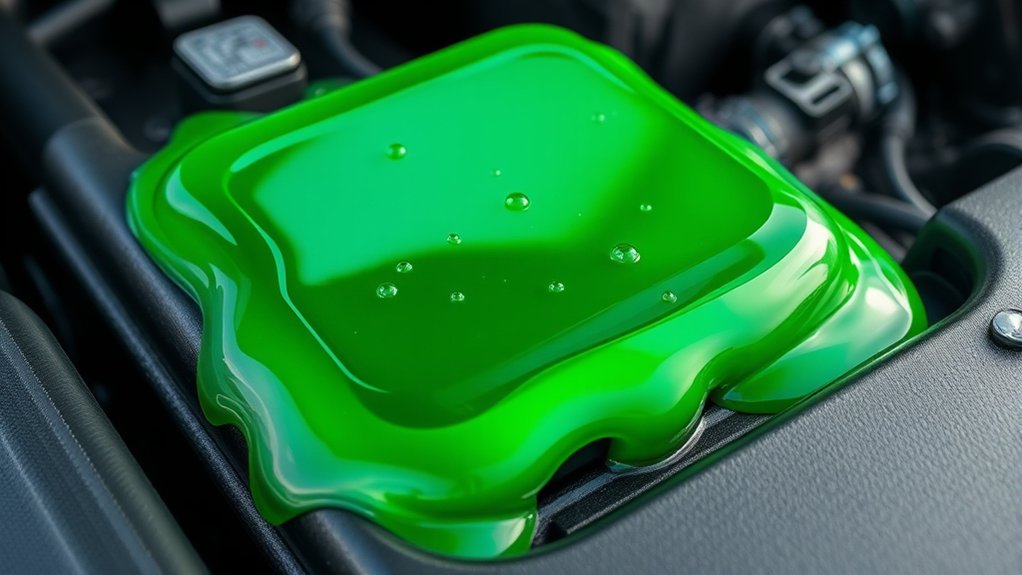
What Happens if You Overfill Coolant
If you overfill your coolant, you’ll increase the system’s internal pressure, which stresses hoses, seals, and the radiator cap, risking leaks and failure. This excess volume can disrupt coolant flow, causing inefficient heat transfer and potential engine overheating. You might notice bubbling in the overflow tank or erratic temperature gauge readings.
Overfilling also accelerates corrosion and premature wear, shortening engine lifespan. Understanding proper levels and how to address overfill can help you maintain optimal cooling system performance.
What Coolant Does and Why the Right Level Matters
Why does coolant matter so much in your vehicle’s engine? Coolant regulates the engine’s temperature, preventing overheating and freezing, which ensures optimal performance. If you want to understand this clearly, think of it as a carefully balanced system. Too little or too much disrupts the process.
Using storytelling techniques, imagine the engine as a character in a plot where coolant acts as the protagonist maintaining stability. This analogy helps improve audience engagement by making technical concepts relatable.
The right coolant level ensures efficient heat transfer, protects against corrosion, and maintains pressure within the cooling system. When you keep coolant at the precise level, you avoid mechanical failures and extend the engine’s lifespan, demonstrating why accurate coolant management is crucial for vehicle health.
Symptoms of Overfilled Coolant You Should Watch For
How can you tell if your vehicle’s coolant is overfilled? Watch for symptoms related to hydraulic expansion and altered coolant viscosity. Overfilled coolant can cause erratic temperature readings, fluid leaks, and radiator cap issues.
| Symptom | Cause |
|---|---|
| Erratic temperature gauge | Hydraulic expansion affects flow |
| Coolant leakage | Excess volume forces seals |
| Radiator cap bulging | Pressure from overfilled fluid |
| Engine overheating | Increased coolant viscosity |
| Bubbling in overflow tank | Air trapped due to fluid excess |
Each symptom signals coolant system stress. Overfilling changes coolant viscosity, impairing circulation and heat transfer. By recognizing these signs early, you can avoid costly damage and maintain optimal engine performance.
How Overfilled Coolant Raises System Pressure
When you overfill your coolant, the excess fluid causes pressure to build beyond the system’s design limits. This increased pressure strains components like hoses and the radiator, raising the risk of leaks or cracks. Understanding how this pressure affects your cooling system helps you prevent costly damage.
Pressure Build-Up Effects
What occurs inside your cooling system when you add too much coolant? Overfilling causes coolant misdirection, forcing excess fluid into places not designed to handle it. This elevates the internal pressure beyond optimal levels, triggering pressure build-up effects that can disrupt normal coolant flow and system balance.
The overfill consequences include increased strain on hoses, seals, and the radiator cap, which may fail prematurely.
| Pressure Factor | Effect on System | Possible Outcome |
|---|---|---|
| Excess Coolant Volume | Raised system pressure | Hose bulging or rupture |
| Restricted Expansion | Reduced coolant flow | Engine overheating |
| Elevated Cap Pressure | Cap seal wear | Coolant leakage |
| Misguided Coolant | Improper circulation | Hot spots in engine |
| Increased Stress | Premature component wear | System inefficiency |
Understanding pressure build-up helps you avoid overfill consequences effectively.
Cooling System Damage Risks
Excess coolant in your system directly increases internal pressure beyond design limits, placing critical components under strain. This elevated pressure can cause hoses to bulge, clamps to loosen, and seals to fail, leading to leaks or catastrophic coolant loss.
The radiator and water pump, designed to operate within specific pressure ranges, may suffer accelerated wear or cracks. Ignoring these risks wastes resources, unlike creative budgeting in maintenance, which prioritizes proper coolant levels to extend component life.
Additionally, social media trends often highlight quick fixes but rarely emphasize the technical consequences of overfilling coolant. By understanding how excess coolant raises system pressure, you can prevent damage, avoid costly repairs, and maintain optimal engine performance through precise coolant management aligned with manufacturer specifications.
Risks of Radiator Damage From Too Much Coolant
How does too much coolant jeopardize your radiator’s integrity? Overfilling causes excessive pressure inside the cooling system, leading to several risks that compromise your radiator’s function. Understanding these overfilling consequences helps you implement effective prevention strategies.
- Pressure build-up: Excess coolant increases system pressure, stressing radiator seams and joints.
- Coolant expansion issues: Overfilled coolant has less room to expand when heated, risking overflow and damage.
- Seal deterioration: Continuous pressure harms radiator and hose seals, causing leaks.
- Corrosion acceleration: Overfilled coolant can trap contaminants, promoting corrosion inside the radiator.
To avoid these risks, always maintain coolant levels within manufacturer specifications and regularly inspect your cooling system. Proper maintenance prevents costly radiator damage and ensures optimal engine cooling performance.
How Overfilled Coolant Can Cause Engine Overheating
When you overfill your coolant, the resulting pressure and restricted expansion space don’t just threaten the radiator. They also disrupt the engine’s ability to regulate temperature effectively.
Excess coolant limits the reservoir’s capacity to accommodate thermal expansion, causing elevated system pressure that stresses seals and hoses. This pressure imbalance leads to inefficient coolant circulation, reducing heat dissipation from engine components.
The engine’s thermostat may receive incorrect signals due to altered fluid dynamics, resulting in overheating. Avoid confusing this with a definition mismatch of coolant volume. Overfilling specifically impacts thermal regulation rather than unrelated topics like coolant type or concentration.
Understanding how excess coolant volume impairs pressure balance and flow helps you prevent overheating and maintain engine longevity by adhering to recommended fill levels.
Why Overfilled Coolant Leads to Leaks and Spills
Why does overfilling coolant often result in leaks and spills? When you add too much coolant, the system pressure increases beyond design limits, forcing excess fluid out. This leads to:
- Expansion Tank Overflow: Excess pressure pushes coolant through the overflow valve, causing spills.
- Damaged Seals and Hoses: High pressure strains seals and hoses, risking cracks or bursts that leak fluid.
- Compromised Pressure Cap: The cap may fail to regulate pressure effectively, intensifying leaks.
- Increased Risk of Irreversible Damage: Persistent leaks can degrade components, complicating service logistics and increasing repair costs.
Effects of Overfilled Coolant on the Reservoir
Excess coolant directly impacts the reservoir’s function and structural integrity. When you overfill the reservoir, the excess fluid can cause increased pressure, risking cracks or deformation in the plastic. This structural compromise leads to leaks and reduces the reservoir’s lifespan.
Additionally, overfilled coolant disturbs the coolant chemistry balance, diluting additives that control corrosion and overheating. You might also encounter a phenomenon akin to “overheating guitars,” where localized hotspots develop due to improper coolant flow and gas entrapment.
These hotspots can cause thermal stress on the reservoir walls, accelerating wear. Maintaining proper coolant volume ensures the reservoir operates within designed thermal and pressure limits, preserving its integrity and preventing premature failure caused by excessive internal strain or degraded coolant chemistry.
How to Check and Measure Coolant Levels Correctly
You’ll first need to locate the coolant reservoir, which is usually a translucent plastic tank near the radiator. Use a clean dipstick or the built-in level indicators to measure the coolant accurately. Make sure to read the “FULL” and “LOW” marks carefully to avoid errors in interpretation.
Locating Coolant Reservoir
Where exactly do you find the coolant reservoir in your vehicle? Identifying it can be tricky due to localization challenges across different car models. Typically, the coolant reservoir is a translucent plastic tank near the radiator or engine bay, designed for easy level checks without opening the radiator cap.
To locate it precisely:
- Open your vehicle’s hood and look near the radiator.
- Identify a semi-transparent container marked with “coolant” or temperature symbols.
- Check your owner’s manual for exact localization if unsure.
- Avoid confusing it with windshield washer fluid reservoirs, often nearby.
Accurate localization ensures you monitor coolant levels properly, a crucial detail frequently overlooked in generic marketing copy. Correct identification prevents errors when checking or refilling coolant, maintaining engine health efficiently.
Using Proper Measurement Tools
How do you accurately check and measure coolant levels to ensure optimal engine performance? Start by using calibrated measurement tools designed for automotive fluids. Accurate readings depend on precise calibration procedures to avoid errors caused by temperature fluctuations or sensor drift.
Use a clean dipstick or a dedicated coolant level gauge, ensuring it’s compatible with your vehicle’s coolant chemistry to prevent contamination or corrosion. When measuring, always check the coolant when the engine is cold to get a true reading, as fluid expands when hot.
Follow manufacturer specifications for coolant type and concentration, since incorrect chemistry affects measurement accuracy and engine protection. Properly calibrated tools and adherence to coolant chemistry guidelines help maintain optimal levels and prevent overfilling, which can lead to system pressure issues and potential damage.
Interpreting Level Indicators
Why is correctly interpreting coolant level indicators essential for engine health? Misreading these indicators can lead to overfill consequences, such as increased pressure and coolant system damage. Understanding coolant chemistry also helps you evaluate the fluid’s condition.
To check and measure coolant levels correctly:
- Always inspect the reservoir when the engine is cold to avoid inaccurate readings caused by expansion.
- Locate the “MIN” and “MAX” marks on the translucent reservoir and ensure the coolant level sits between them.
- Consider coolant chemistry; improper mixtures can affect expansion rates and pressure, skewing level accuracy.
- Use a dipstick or tester if available, especially when reservoir markings are unclear or absent.
Steps to Safely Fix an Overfilled Coolant System
Although overfilling your coolant system can cause issues, you can safely correct the problem by carefully draining the excess fluid. First, allow the engine to cool completely to avoid burns. Then, use a clean container to drain coolant slowly, maintaining correct coolant chemistry to prevent corrosion or overheating myths from misleading you. Check the level frequently to ensure accuracy.
| Step | Action |
|---|---|
| 1. Cool engine | Wait until temperature is safe |
| 2. Prepare tools | Gather container, gloves, and rags |
| 3. Drain coolant | Open drain valve or remove overflow cap |
| 4. Monitor level | Use dipstick or reservoir markings |
| 5. Dispose properly | Follow local guidelines for coolant waste |
This method ensures you restore proper coolant volume without compromising system integrity.
Tips to Prevent Overfilling Your Coolant in the Future
When topping off your coolant, paying close attention to the recommended levels is critical to avoid overfilling. Overfilling may lead to pressure issues and engine damage, so precise measurement is key. Here are four tips to help you prevent future mistakes, with a touch of quirky humor to keep things light, unlike fashion trends that constantly change:
- Always use a calibrated measuring container to add coolant slowly, ensuring you don’t exceed the max fill line.
- Consult your vehicle’s manual for exact coolant capacity—don’t guess, even if your mechanic’s advice feels like a trendy style.
- Mark the reservoir level before adding fluid to track your progress visually.
- Use a funnel with a narrow spout for controlled pouring, avoiding spills and overfill mishaps.
Stick to these tips, and your coolant system will stay perfectly balanced.
Frequently Asked Questions
Can Overfilled Coolant Affect My Car’s Fuel Efficiency?
Like Icarus flew too close to the sun, overfilling coolant can disrupt heated sensors, causing inaccurate data. This affects combustion effects, reducing your car’s fuel efficiency by forcing the engine to compensate improperly.
Does Overfilled Coolant Impact the Heater’s Performance Inside the Car?
Yes, overfilled coolant can reduce your heater performance by causing coolant aeration. Air bubbles disrupt heat transfer, leading to inconsistent cabin warmth and potential heater core damage. This affects your vehicle’s comfort and system efficiency.
Is It Safe to Drive Immediately After Fixing Overfilled Coolant?
You can drive immediately after fixing overfilled coolant, but ensure the system’s pressure stabilizes first. Overfill risks include increased pressure and coolant behavior changes, so monitor for leaks or overheating before normal use.
Can Overfilled Coolant Cause Damage to the Water Pump?
Yes, overfilled coolant can cause damage to the water pump by increasing overheating risks and promoting coolant aeration. This reduces lubrication, leading to premature wear and potential pump failure.
How Does Overfilled Coolant Affect Hybrid or Electric Vehicles?
You might unintentionally disrupt your hybrid systems by coolant mismanagement; overfilled coolant can cause pressure imbalances, leading to leaks or component stress.
Staying precise with coolant levels guarantees your electric vehicle’s efficiency and longevity remain uncompromised.