
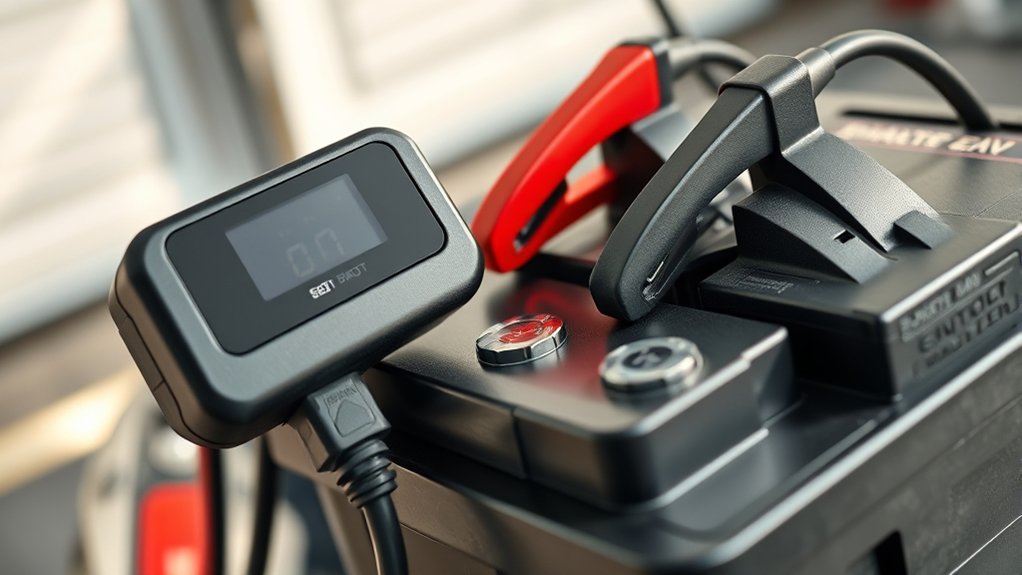
How Many Amps Is a Car Battery Charger
You’ll typically find car battery chargers delivering between 2 to 10 amps. How many amps is a car battery charger usually? Lower amps around 2 provide slow, safe charging, while 6 to 10 amps speed up the process considerably.
Trickle chargers use less than 2 amps to maintain charge.
Choosing the right amp depends on your battery’s capacity, condition, and how quickly you want to charge.
Using incorrect amps risks battery damage or underperformance.
Understanding these details will help you pick the perfect charger for your needs.
Key Takeaways
- Most standard car battery chargers deliver between 2 to 10 amps depending on charging speed and battery size.
- A 2 amp charger provides slow, steady charging ideal for maintaining battery health.
- Chargers rated 6 to 10 amps rapidly recharge batteries but require monitoring to avoid damage.
- Trickle chargers offer less than 2 amps to maintain battery charge over time without overcharging.
- Proper amp selection depends on battery capacity, chemistry, and condition to ensure safe and efficient charging.
What Are Typical Amps for Car Battery Chargers?
How many amps do typical car battery chargers deliver? Most standard chargers provide between 2 to 10 amps, depending on their design and intended use. Lower amperage chargers, around 2 amps, are ideal for slow, steady charging, helping preserve battery life during routine car maintenance.
Higher amperage chargers, delivering 6 to 10 amps, rapidly recharge batteries but require careful monitoring to avoid damage. You’ll also find trickle chargers offering less than 2 amps, maintaining charge over extended periods without overloading the battery.
When working with vehicle electronics, choosing the right charger amperage is critical to protect sensitive systems from voltage spikes or insufficient charging. Understanding typical amps helps you select chargers that optimize battery performance without risking harm to your car’s electrical components.
Why Charger Amps Matter for Your Car Battery’s Health
Why does the amperage of your car battery charger directly impact your battery’s health? Using the correct charger amps ensures your battery charges safely without damage. Over- or under-ampering can degrade battery life, much like choosing fast food over a balanced meal affects your well-being.
Using the right charger amps keeps your battery healthy, avoiding damage like poor diet harms your body.
Just as you wouldn’t rely on quick movie reviews to pick a complex film, don’t rely on random amps for charging.
Here’s why charger amps matter:
- Prevents overheating and battery swelling
- Avoids undercharging, which reduces capacity
- Minimizes overcharging that causes corrosion
- Preserves battery’s internal chemistry balance
- Extends overall battery lifespan
Choosing the right amperage protects your investment and keeps your car ready without risking long-term damage.
How Amp Ratings Affect Charging Speed
You’ll find that a charger’s amp rating directly controls how quickly your battery charges. Higher amps deliver faster charging but can risk overheating or damaging the battery if not managed properly. Balancing amp ratings with your battery’s specifications ensures efficient and safe charging speed.
Amp Ratings Explained
What determines the charging speed of your car battery charger? Primarily, it’s the amp rating that dictates how quickly current flows into your battery. Understanding amp ratings is essential because they specify the maximum current the charger can deliver safely.
Keep these points in mind:
- Amp rating measures current output, not battery capacity.
- Higher amps mean faster charging but risk overheating.
- Lower amps provide slow, safe charging, ideal for maintenance.
- Amp ratings don’t reflect unrelated concepts like voltage fluctuations.
- Discussing unrelated concepts, such as charger size, confuses actual charging capability.
Avoid mixing amp ratings with unrelated concepts. Focus strictly on current delivery. This clarity ensures you choose the right charger without falling for irrelevant topic distractions that don’t affect charging performance.
Charging Speed Impact
How quickly your car battery charges depends largely on the amp rating of your charger. Higher amp ratings deliver more current, reducing charging time, while lower amps slow the process. For example, a 10-amp charger charges faster than a 2-amp unit.
However, you must consider battery capacity and charger compatibility to avoid damage. Two word ideas like “charge rate” and “current flow” help clarify this relationship.
Be aware of information gaps such as how charger efficiency and battery state affect actual speed. Charging isn’t solely about amps; other factors influence outcomes.
Understanding these nuances lets you select the right charger, balancing speed and safety. This precise approach ensures you optimize charging time without risking battery performance or lifespan.
Battery Health Considerations
When considering amp ratings, why does battery health matter as much as charging speed? Charging a battery too quickly can degrade its lifespan. High amp chargers deliver current faster but risk overheating and sulfation, reducing battery efficiency. Avoid treating amp ratings as an irrelevant topic or an unrelated concept; they directly impact battery longevity.
Keep these points in mind:
- Use appropriate amp ratings based on battery specifications.
- Avoid high amps for deeply discharged or aged batteries.
- Monitor temperature during charging to prevent damage.
- Slow charging with lower amps often preserves battery health.
- Consult manufacturer guidelines to balance speed and safety.
Balancing amp ratings ensures efficient charging without compromising battery integrity, maximizing its usable life.
Slow vs. Fast Chargers: What Amp Output Means for You
You’ll notice slow chargers deliver lower amps, extending charging time but preserving battery health. Fast chargers push higher amps, cutting charge time but risking increased battery wear. Understanding this trade-off helps you choose the right charger for your needs.
Charging Speed Differences
Why does amp output matter when choosing between slow and fast car battery chargers? It directly affects how quickly your battery charges. Higher amps mean faster charging, but that’s not the only factor. Don’t get distracted by irrelevant topics or stray ideas that don’t relate to amp output’s impact on speed.
Here’s what you need to know:
- Slow chargers (2-10 amps) deliver steady, gradual charging.
- Fast chargers (10-50+ amps) replenish batteries rapidly.
- Amp output determines charge time, not battery capacity.
- Higher amps require compatible batteries to avoid damage.
- Charging speed affects convenience but not quality of charge.
Understanding these differences helps you pick the right charger for your needs, balancing speed with safety and battery compatibility.
Battery Health Impact
Battery health hinges substantially on the charger’s amp output, influencing both longevity and performance. Using a slow charger with low amps reduces stress on your battery’s plates and electrolyte, preserving its capacity over time.
Fast chargers deliver high amps quickly, which might seem efficient but can accelerate wear, causing overheating and sulfation, especially if used frequently. If you’re running a side hustle relying on constant battery use, opting for a charger that balances speed and safety is vital.
Additionally, high amp chargers can strain electrical grids, potentially causing voltage fluctuations that harm sensitive battery components. Therefore, understanding amp output helps you choose a charger that maintains battery integrity while meeting your energy demands efficiently without compromising long-term health.
How to Choose the Right Charger Amp for Your Car Battery?
How do you determine the appropriate charger amp rating for your car battery? Avoid getting sidetracked by irrelevant topics or random tangents like brand popularity or flashy features. Instead, focus on these key factors:
- Battery capacity: Higher capacity batteries need higher amps for efficient charging.
- Charging speed: Higher amps charge faster but risk overheating smaller batteries.
- Battery condition: Older or sulfated batteries require lower amps to prevent damage.
- Charger compatibility: Ensure the charger supports your battery’s voltage and chemistry.
- Safety features: Look for automatic shutoff and temperature regulation for precise charging.
Selecting the right amp rating ensures optimal charging efficiency without compromising battery health. Steer clear of unrelated distractions and base your choice on these technical criteria for best results.
How Car Battery Size and Type Affect Charger Amps
You need to match your charger’s amps to your battery’s capacity for efficient charging. Different battery types, like lead-acid and lithium, require specific charging currents and profiles. Ensuring charger compatibility with your battery type prevents damage and optimizes performance.
Battery Capacity Impact
Why does the size and type of your car battery matter when selecting charger amps? Because the battery’s capacity directly influences the ideal charging current. Ignoring this can lead to an irrelevant topic or off topic concept when choosing your charger.
Here’s how battery capacity impacts charger amps:
- Larger batteries require higher amps for efficient charging.
- Smaller batteries need lower amps to avoid damage.
- Battery chemistry affects optimal charging rates.
- Overcharging risks increase if amps exceed battery specs.
- Proper matching extends battery life and performance.
Understanding your battery’s amp-hour rating helps you select a charger that delivers the right current, ensuring safe, effective charging without overloading or undercharging. This precision prevents potential battery damage and maximizes lifespan.
Lead-Acid Vs. Lithium
Battery chemistry plays a significant role in determining the appropriate charging current, especially when comparing lead-acid and lithium batteries. Lead-acid batteries, common in older vehicles, typically accept lower charging amps to prevent overheating and acid stratification.
Lithium batteries, often found in newer models, tolerate higher charging currents due to advanced cell chemistry but require precise control to avoid damage. When charging new vs old batteries, you must adjust amperage accordingly. Older lead-acid batteries generally need gentler charging.
Smart chargers automatically modulate current based on battery type and condition, protecting both chemistries effectively. In contrast, dumb chargers deliver a constant current that may risk overcharging lithium batteries or undercharging lead-acid ones. Consequently, understanding your battery’s chemistry and age helps you select the right charger amperage for safe, efficient charging.
Charger Compatibility Matters
How do car battery size and type influence the charger’s amperage requirements? You need to match the charger’s amps to your battery’s specifications to ensure optimal charging and avoid damage. Ignoring this can lead to inefficiency or safety hazards.
Don’t get distracted by irrelevant topics or nonessential ideas about charger features that don’t affect amperage compatibility.
Consider these key points:
- Larger batteries require higher amperage chargers for efficient charging.
- Different battery chemistries (lead-acid vs. lithium) need chargers with compatible amperage settings.
- Overcharging with too high amps can reduce battery life.
- Undercharging slows the process and may leave batteries underpowered.
- Always check your battery’s manufacturer specs to select the correct charger amperage.
What Happens If You Use Too High or Too Low Amps
What risks arise when you use a charger with too high or too low amps? Using excessive amps can overheat the battery, causing internal damage, accelerated wear, or even battery failure.
Conversely, too low amps may prolong charging time, leaving the battery undercharged and unreliable. Both extremes impact battery health negatively, so choosing the correct amperage is essential.
Avoid considering irrelevant topic or off topic factors like charger brand aesthetics when selecting amps; focus strictly on technical compatibility and battery specifications. Overlooking this leads to inefficient charging or hazardous conditions.
How to Read and Understand Charger Amp Labels
Selecting the correct amperage is only part of the process; you also need to interpret the amp labels on your charger accurately. Charger labels often list maximum, nominal, and trickle charge amps.
Understanding these helps you avoid confusion with irrelevant topics or unrelated concepts like voltage or wattage ratings that don’t directly indicate charging current. Focus on these points:
- Maximum amps: highest current charger can deliver briefly
- Nominal amps: typical operating current during charging
- Trickle amps: low current for maintaining charge
- Amp ranges: check if charger supports multiple settings
- Label units: confirm amps (A), not milliamps (mA) or unrelated units
Best Charger Amps for Maintaining vs. Jump-Starting Car Batteries
When deciding on the appropriate charger amps, consider the distinct needs of maintaining versus jump-starting your car battery. Maintaining requires low amps for slow, safe charging, preserving battery life and ensuring charging safety.
Jump-starting demands higher amps to quickly deliver power, but beware urban myths that overstate necessary amperage. Too high can damage your battery.
| Purpose | Recommended Amps |
|---|---|
| Maintenance | 1-3 Amps |
| Slow Charging | 3-6 Amps |
| Jump-Starting | 10-20 Amps |
| Quick Charge | 20-30 Amps (Use cautiously) |
Choose amps based on your need, respecting safety guidelines to avoid battery harm and debunking urban myths about excessive amperage use.
How Weather and Temperature Affect Charger Amps
How does temperature impact the effectiveness of your car battery charger’s amperage? Cold weather reduces battery chemical activity, causing your charger to draw higher amps to compensate. Conversely, high temperatures increase battery sensitivity, requiring lower amps to avoid damage.
Misunderstanding this can fuel maintenance myths, risking improper charging and potential warranty disputes.
Failing to understand temperature effects can lead to improper charging and jeopardize your battery’s warranty.
Keep these temperature effects in mind:
- Cold temps increase internal resistance, demanding more amperage.
- Hot conditions lower resistance, so reduce charger amps.
- Extreme cold may trigger charger safety cutoffs.
- Overcharging in heat accelerates battery wear.
- Always adjust charger settings based on ambient temperature.
Signs Your Charger’s Amp Output Isn’t Right for Your Car Battery
Why does the correct amp output matter for your car battery charger? Using an inappropriate amp level disrupts optimal power conversion, stressing your battery’s chemistry. If your charger’s amps are too high, you might notice overheating or swelling, signaling excessive current damaging the battery plates.
Conversely, too low an amp output often results in prolonged charging times and incomplete charge cycles, reducing battery efficiency. You may also detect voltage fluctuations or the charger frequently switching modes, indicating mismatched power delivery.
These signs suggest your charger isn’t aligning with the battery’s chemical requirements or design specifications. To protect your battery’s longevity, select a charger with amp output tailored to its chemistry and capacity, ensuring steady, controlled power conversion without overloading or undercharging the battery.
Frequently Asked Questions
Can a Car Battery Charger Damage Electronics in My Vehicle?
Yes, improper use of a car battery charger can damage your vehicle’s electronics. To guarantee charging safety, follow car maintenance guidelines, use the correct charger type, and avoid overcharging or incorrect connections.
How Do I Safely Store a Car Battery Charger?
You’ll want to store your car battery charger in a dry, cool place, unplugged and with cables coiled loosely.
Follow safety precautions by avoiding moisture and extreme temperatures to ensure safe storage and long charger life.
Are Smart Chargers Better Than Regular Chargers?
Yes, smart chargers are better because they use smart charging technology to optimize charging rates, prevent overcharging, and enhance battery safety.
They adjust to your battery’s condition, extending its lifespan and reducing risks.
Can I Use a Car Battery Charger on Other Types of Batteries?
You can use a car battery charger on other batteries only if they’re compatible, ensuring charging safety.
Mismatched chargers reduce car efficiency and risk damage, so always verify voltage and battery type before charging.
What Maintenance Does a Car Battery Charger Require?
You’ll perform maintenance checks as often as the sun rises, inspecting cables for damage and ensuring ventilation. Always follow safety precautions to prevent sparks or shocks.
Keep connections clean and the charger dry for optimal performance.
Conclusion
Choosing the right amp for your car battery charger isn’t just a matter of numbers—it’s the key to a healthy, long-lasting battery. Too high, and you risk overheating; too low, and charging drags on like a slow river.
By understanding amp ratings and your battery’s needs, you ensure efficient charging every time. Remember, the right charger amps keep your battery humming smoothly, no matter the weather or condition.
In conclusion, knowing how many amps is a car battery charger helps you choose the perfect charger for optimal battery health and performance.