How to Get Car Seat Stains Out
To get car seat stains out, start by identifying the type of stain and the material of your seat—whether it’s leather, vinyl, or cloth. This will help you select the right cleaner for the job.
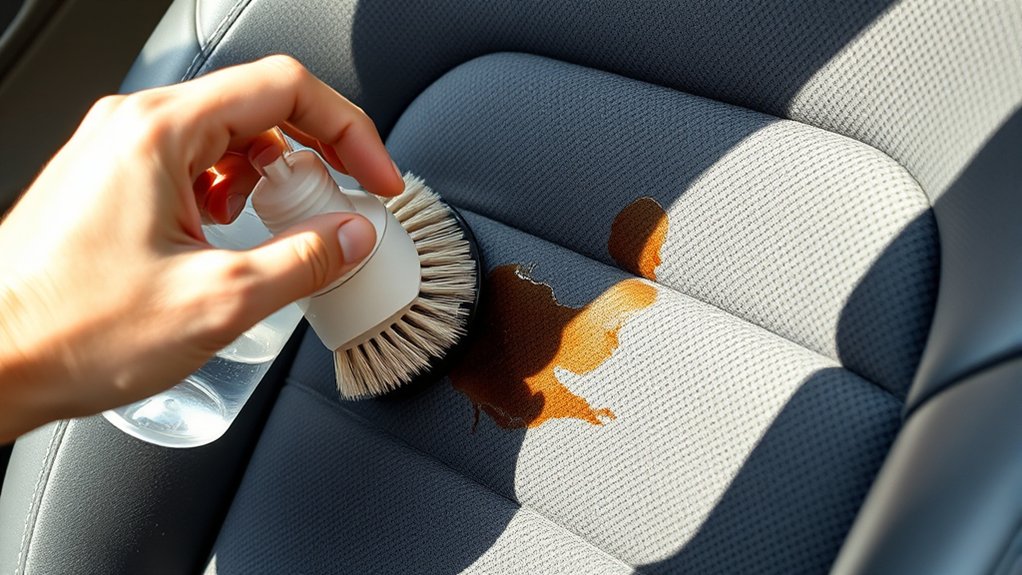
Blot fresh spills quickly with a microfiber cloth to prevent them from setting. Then, apply a fabric-safe cleaner using a soft brush, working in circular motions. Avoid soaking the fabric to prevent any damage.
Finish by drying the area thoroughly. Using the proper tools and tailored methods helps preserve your seats and prevents lasting stains.
Keep reading to discover effective tips for tackling tougher stains and maintaining your car seats.
Types of Car Seat Stains and Fabric Materials
What kinds of stains are you dealing with on your car seats? Identifying the types of stains is essential for effective fabric care. Common stains include food and drink spills, grease, ink, mud, and bodily fluids.
Each type demands a tailored cleaning approach to avoid fabric damage. Next, consider your car seat’s material, whether it’s leather, vinyl, or cloth. Leather requires gentle, pH-balanced cleaners, while vinyl can tolerate stronger solutions.
Cloth seats vary widely, so check manufacturer guidelines to prevent color fading or shrinkage. Understanding the intersection of stain types and fabric materials helps you select the right cleaning method, ensuring you protect your seats while removing stains efficiently.
This knowledge sets the foundation before you gather your cleaning supplies.
What You Need to Clean Car Seat Stains
Which tools and products should you gather before tackling car seat stains? First, identify your car seat materials to choose appropriate fabric safe cleaners. Next, assemble essential stain removal tools that allow effective before after techniques.
| Item | Purpose |
|---|---|
| Microfiber cloths | Gentle wiping and blotting |
| Soft-bristle brush | Agitating fabric safely |
| Fabric safe cleaner | Removing stains without damage |
| Spray bottle | Even cleaner application |
| Vacuum cleaner | Removing loose debris before cleaning |
Having these stain removal tools ready ensures you approach the task methodically. Always test fabric safe cleaners on a hidden area to protect car seat materials. With proper preparation, you’ll execute precise before after techniques, restoring your seats efficiently and safely.
How to Clean Common Car Seat Stains
Now that you’ve gathered the right tools and products, you can tackle common car seat stains with confidence. Start by blotting fresh spills immediately with a clean cloth to prevent stains from setting.
For food or drink stains, gently apply a fabric-safe cleaner using a soft brush, working in circular motions to lift the stain without damaging the upholstery. Avoid oversaturating the fabric, as excess moisture can cause mold or discoloration.
After cleaning, use a dry cloth to absorb remaining moisture and allow the seat to air dry completely. Regular fabric care, including vacuuming and spot cleaning, supports stains prevention and maintains your car’s interior.
Removing Tough or Set-In Car Seat Stains
Tackle tough or set-in car seat stains by first identifying the stain type and fabric material to choose the most effective treatment. Understanding stain chemistry is essential. Protein-based stains like blood require enzymes, while oil-based stains respond to solvents.
Test fabric-safe cleaners on a hidden area to prevent damage. Apply the cleaner directly to the stain, allowing it to penetrate deeply without oversaturating the fabric. Use a soft brush or microfiber cloth to gently agitate the stain, breaking down residues.
Always test cleaners on a hidden spot; gently apply and agitate without oversaturating the fabric.
Avoid harsh scrubbing that can embed stains further. After treatment, blot with a clean, damp cloth to lift loosened particles. Repeat if necessary, guaranteeing the fabric dries completely to prevent mold or odor.
This methodical approach ensures effective removal of stubborn car seat stains.
Protecting and Maintaining Clean Car Seat Stains
How can you keep your car seats looking fresh and stain-free after cleaning? Start by applying a fabric protector specifically designed for your seat material. This creates a barrier that aids in stain prevention, making future spills easier to wipe away.
Regularly vacuum your seats to remove dirt and debris that can wear down fibers over time. Address spills immediately with a clean cloth and mild cleaner to prevent stains from setting.
For fabric maintenance, avoid harsh chemicals and excessive water, which can damage upholstery and promote mold growth. Additionally, park in shaded areas or use sunshades to reduce fading and deterioration caused by UV exposure.
Frequently Asked Questions
Can Professional Cleaning Damage My Car Seat Fabric?
Think of your car seat fabric as a delicate canvas; professional cleaning won’t damage it if done right. You can trust experts to prioritize fabric safety, using precise methods that protect and preserve without causing professional damage.
How Long Should I Wait Before Using the Car After Cleaning?
You should wait at least 2 to 4 hours during the waiting period to allow thorough air drying. This prevents moisture buildup, protects the fabric, and ensures your car seat is completely dry before you use it again.
Are Natural or Homemade Cleaners Safe for Car Seats?
Wondering if natural cleaners and homemade solutions are safe alternatives? They usually are, but you should test first.
Their cleaning effectiveness varies, so use them methodically to protect your car seats without risking damage or residue buildup.
Can I Use a Steam Cleaner on All Car Seat Materials?
You can’t use a steam cleaner on all car seat materials. Check fabric compatibility first, as steam cleaner cautions include damaging delicate fabrics like leather or suede.
Always test a small area to avoid permanent harm.
What Should I Do if My Car Seat Has a Strong Odor?
Like Sherlock solving a mystery, start by identifying the source of car seat odors. Use odor removal techniques like baking soda, vinegar sprays, or activated charcoal.
Ventilate your car thoroughly to eliminate stubborn, lingering smells effectively.