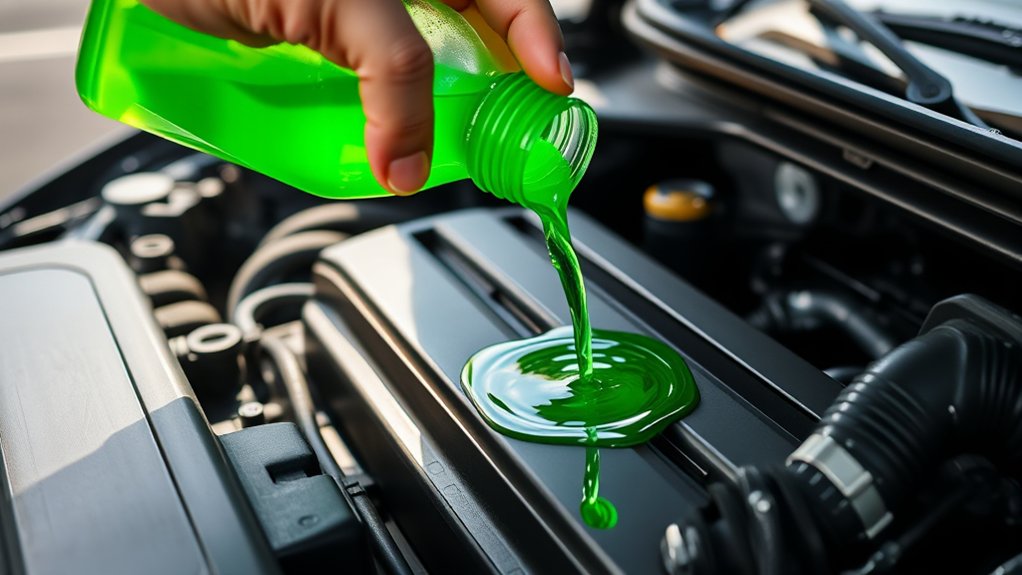
How to Pour Coolant Into Car
Before pouring coolant into your car, make sure your engine is completely cool—wait at least 30 minutes after driving. This is important to prevent burns or injury. Locate the translucent coolant reservoir near the radiator and verify levels against the marked minimum and maximum lines.
Use a funnel to slowly add the correct coolant mixture, typically 50:50 with distilled water, checking levels frequently to avoid overfilling. Never open the radiator cap when the engine is hot. Always wear gloves and eye protection to ensure safety.
Store old coolant properly and dispose of it according to local regulations. Following these steps ensures safe, effective coolant addition and maintains engine health. For best results, refer to your vehicle’s manual and use recommended coolant types.
Check Your Car’s Coolant Level Safely
How do you safely check your car’s coolant level without risking injury? First, ensure the engine is completely cool before opening the radiator cap or coolant reservoir. Hot coolant can cause severe burns, so waiting at least 30 minutes after driving is crucial for fun safety.
Locate the coolant reservoir, usually a translucent plastic tank with minimum and maximum level markings. Check the fluid level visually through the reservoir wall. If the level is below the minimum mark, you’ll need to add coolant.
When storing coolant, keep containers tightly sealed and stored in a cool, dry place away from direct sunlight. Follow storage tips to maintain coolant effectiveness and prevent contamination.
Always wear gloves and eye protection during inspection to further reduce injury risk.
Pick the Right Coolant for Your Car
Why does choosing the right coolant matter for your car’s performance and longevity? Using the correct coolant ensures optimal engine temperature regulation, preventing overheating and corrosion.
Different vehicles require specific coolant formulations, such as organic acid technology (OAT), inorganic acid technology (IAT), or hybrid organic acid technology (HOAT), based on their engine materials and design. Selecting the wrong type can degrade seals, reduce cooling efficiency, and negatively affect your driving impressions by causing inconsistent engine temperatures.
Moreover, proper coolant maintains thermal stability, indirectly supporting fuel efficiency by keeping the engine within its ideal operating range. Always consult your owner’s manual or manufacturer recommendations to pick a coolant compatible with your engine and climate conditions.
This precise selection safeguards your engine’s components and preserves overall vehicle performance.
Prepare Your Car: Safety and Cooling Checks
Before adding coolant, make sure your engine is completely cool to prevent burns or pressure-related accidents. Locate the coolant reservoir, usually a translucent plastic tank near the radiator, and check its markings to identify the fill level. These safety and preparation steps ensure accurate and safe coolant addition.
Ensure Engine Is Cool
When can you safely open your car’s radiator cap without risking injury? Only when the engine is completely cool, typically after at least 30 minutes of inactivity. Hot engines maintain coolant under high pressure, and opening the cap prematurely can cause scalding steam to eject, leading to serious burns.
Waiting not only protects you but also prevents irreversible damage to the cooling system components caused by sudden pressure changes. Additionally, a cool engine reduces the risk of coolant spills, which pose environmental risks due to their toxic antifreeze content.
Always verify the engine temperature gauge reads low before proceeding. Taking these precautions ensures your safety and prevents harm to your vehicle and the environment during coolant maintenance.
Locate Coolant Reservoir
Locating the coolant reservoir is essential for safely adding coolant to your car. Open the hood and look for a translucent plastic container near the radiator or engine bay’s side. This reservoir is typically marked with clear reservoir labeling, such as “coolant” or “engine coolant,” and often features minimum and maximum level indicators.
Avoid confusing it with the radiator cap, as the reservoir usually has floating coolant caps that move slightly with fluid level changes, helping you identify it visually. If your vehicle manual is available, consult it to confirm the reservoir’s exact location.
Find the Coolant Reservoir and Radiator Cap
How do you identify the coolant reservoir and radiator cap in your vehicle? First, open the hood and locate the translucent plastic tank marked with “coolant” or “engine coolant.” This is the coolant reservoir, designed to hold excess coolant and allow for thermal expansion.
The radiator cap, usually metal with warning labels, sits atop the radiator itself or on the reservoir in some models. Recognizing these components accurately is essential for maintenance scheduling, ensuring you add coolant at the correct intervals to maintain optimal cool systems chemistry.
Pay attention to color-coded markings on the reservoir indicating minimum and maximum levels, which help prevent overfilling or underfilling. Proper identification keeps your cooling system functioning efficiently and prevents engine overheating.
Remove the Radiator Cap Safely
Why must you never remove the radiator cap while the engine is hot? Doing so can cause pressurized coolant to spray, resulting in severe burns. Always wait until the engine cools completely.
To remove the cap safely, use a thick cloth for grip and turn it slowly to the first stop, allowing residual pressure to release gradually before fully removing it.
| Step | Detail |
|---|---|
| Wait for Cool Engine | Prevents pressurized coolant release |
| Use Protective Cloth | Enhances grip and protects hands |
| Remove Slowly | Releases pressure gradually |
After removal, store old coolant safely in a sealed container. Follow local disposal methods to prevent environmental harm. Avoid spills during handling and store coolant away from children and pets.
How to Pour Coolant Into Your Car Step-by-Step
First, make sure you’ve prepared the coolant by mixing it according to the manufacturer’s instructions. Next, locate the coolant reservoir and check its current level. Then, carefully pour the coolant into the reservoir until it reaches the recommended fill line.
Preparing The Coolant
Preparing the coolant correctly is essential to ensure your engine maintains optimum temperature and prevents overheating. Before mixing or pouring, check your vehicle’s maintenance schedule to confirm the recommended coolant type and mixture ratio. Improper preparation can cause engine damage or inefficient cooling.
Follow these steps to prepare coolant:
- Use distilled water when diluting concentrated coolant to avoid mineral deposits.
- Always mix coolant and water in the correct ratio, typically 50:50, unless otherwise specified.
- Consult troubleshooting tips in your owner’s manual for signs of coolant contamination or degradation.
Filling The Reservoir
Carefully filling the coolant reservoir requires attention to detail to guarantee proper engine cooling and avoid spills. Begin by locating the reservoir, usually a translucent plastic tank with minimum and maximum level markers.
Slowly pour the prepared coolant into the reservoir, stopping frequently to check the level against these markers. Avoid overfilling, as expansion during engine operation can cause overflow. Use a funnel to minimize spills and ensure precise pouring.
Safety reminders include wearing gloves and eye protection to prevent contact with toxic coolant. Avoid opening the reservoir cap when the engine is hot to prevent burns.
Discussion ideas with a mechanic or expert can clarify the correct coolant type and mixture ratio for your vehicle. Following these steps ensures optimal cooling system performance and engine longevity.
How Much Coolant Should You Add?
How much coolant should you add to your car’s radiator? The correct amount depends on your vehicle’s specifications, usually found in the owner’s manual. Overfilling can cause pressure build-up, while underfilling risks overheating. Avoid using coolant from incorrect packaging, as it may contain the wrong formulation, compromising engine protection.
To determine the right quantity, consider these factors:
- Manufacturer’s recommended coolant capacity for your radiator system
- Current coolant level indicated by reservoir marks or radiator fill line
- Price comparison among trusted brands to ensure quality without overspending
Always add coolant gradually, checking levels frequently. Using the correct amount ensures optimal engine temperature regulation and prevents costly damage.
Flush Old Coolant Before Refilling (Optional Maintenance)
Although flushing old coolant isn’t always necessary, doing so can improve your cooling system’s efficiency and prevent contamination. Over time, coolant degrades and accumulates debris, which can hinder heat transfer and cause corrosion.
To flush, drain the radiator completely, then refill with distilled water, run the engine until it reaches operating temperature, and drain again. This process removes residual buildup, ensuring fresh coolant circulates optimally.
While flushing, check related maintenance items like ignition timing and tire pressure, as these factors influence overall engine performance and cooling demands. Proper ignition timing ensures efficient combustion, reducing excess heat generation, whereas correct tire pressure affects vehicle handling and load distribution, indirectly impacting engine stress.
Performing a coolant flush periodically, especially if your coolant is old or contaminated, helps maintain system integrity and prolongs radiator, water pump, and thermostat life.
Common Mistakes to Avoid When Adding Coolant
When adding coolant, don’t overfill the reservoir, as it can cause pressure issues and leaks. Make sure you use the correct coolant type specified for your vehicle to prevent corrosion or system damage. Also, never fill the coolant when the engine is hot to avoid burns and inaccurate level readings.
Overfilling The Reservoir
Overfilling the coolant reservoir can lead to increased pressure within the cooling system, potentially causing leaks or damage to hoses and seals. When you add too much coolant, you elevate overheating risks because the system cannot properly regulate temperature.
Excess coolant may spill, complicating environmental disposal since coolant contains toxic substances harmful to wildlife and soil.
To avoid overfilling:
- Always fill coolant to the reservoir’s max fill line, never beyond.
- Use a funnel to control flow and prevent spills.
- Regularly check the reservoir when the engine is cold to ensure accurate levels.
Maintaining proper coolant volume ensures system efficiency, reduces wear, and supports safe, responsible coolant management.
Using Incorrect Coolant Type
Maintaining the correct coolant level is only part of proper engine care; selecting the right coolant type plays a critical role in system performance and longevity. Using an incorrect coolant color often signals a mismatch with your vehicle’s specifications, which can lead to corrosion, reduced heat transfer, and potential engine damage.
Avoid mixing brands because different formulations may contain incompatible additives, causing chemical reactions that degrade the coolant’s protective properties. Always consult your owner’s manual or manufacturer recommendations to identify the appropriate coolant type, whether it’s ethylene glycol-based, propylene glycol-based, or a specific hybrid.
When topping off, use the exact type specified and never substitute one coolant color for another without verifying compatibility. This discipline ensures your cooling system operates efficiently and prolongs engine life.
Filling When Engine Hot
We should never add coolant to a hot engine. When the engine is hot, the coolant inside is under high pressure and temperature, creating a risk of severe burns or injury if released suddenly.
For proper car maintenance and DIY safety, always wait until the engine cools down before opening the radiator cap.
Adding coolant to a hot engine can cause:
- Sudden steam release, leading to burns
- Damage to the radiator or cooling system components
- Inaccurate coolant level readings, affecting system performance
To ensure safe and effective coolant filling, perform this task only when the engine temperature is near ambient. This precaution preserves your vehicle’s cooling system integrity and protects you from avoidable hazards.
Monitor Your Engine After Adding Coolant
How often should you check your engine after adding coolant? Initially, monitor it closely for the first 24 to 48 hours, especially during the first few drive cycles. Pay attention to engine diagnostics via your vehicle’s onboard system or a diagnostic scanner to detect any abnormal temperature readings or error codes.
Ensure the coolant compatibility was correct, as incompatible fluids can cause corrosion or inefficient heat transfer, impacting engine performance. Visually inspect for leaks and check the coolant reservoir level regularly.
If the engine temperature gauge rises above normal or warning lights activate, stop driving and reassess. Routine monitoring post-coolant addition helps verify system integrity and prevents overheating or damage, ensuring your engine remains within optimal operating conditions.
Frequently Asked Questions
Can I Mix Different Brands of Coolant Safely?
Think brand mixing safety doesn’t matter? You should avoid mixing different coolant types unless they’re confirmed compatible. Improper mixing compatibility can cause chemical reactions, reducing performance and causing corrosion.
Always check manufacturer specs to ensure safe blending.
How Often Should I Change My Car’s Coolant?
You should change your car’s coolant according to the manufacturer’s replacement interval, typically every 2-5 years or 30,000-60,000 miles.
Regularly replacing old coolant prevents corrosion, overheating, and maintains prime engine performance.
What Are the Symptoms of Coolant Poisoning in Pets?
You’ll notice coolant poisoning symptoms like vomiting, lethargy, and seizures shortly after ingestion. Pet ingestion risks demand quick symptom timing awareness.
Prompt veterinary treatment considerations are essential to prevent severe organ damage or fatality.
Can I Use Water Instead of Coolant in an Emergency?
In an emergency, using water as an emergency substitution is somewhat safe but short-term. You shouldn’t rely on it long; always check brand compatibility when refilling with proper coolant to avoid corrosion or engine damage.
Does Coolant Affect Car Warranty Coverage?
Yes, using the wrong coolant can void your warranty. Ensure your coolant matches brand compatibility and manufacturer specifications to maintain your coolant warranty.
Always check your owner’s manual to avoid coverage issues and engine damage.