Is a Honda Accord All Wheel Drive
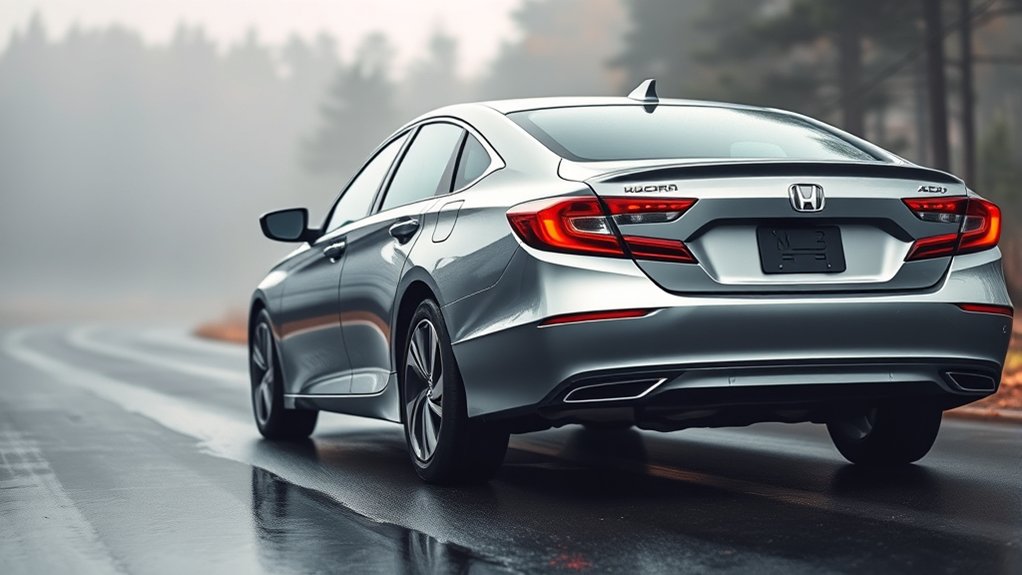
You won’t find all-wheel drive (AWD) as an option on any Honda Accord, since every model comes with front-wheel drive (FWD) only. This setup focuses on efficiency, simplicity, and lower maintenance. While FWD handles well on dry and light wet roads, it lacks the traction advantages AWD offers for snowy or slippery conditions.
If you’re considering AWD for tougher weather, exploring other Honda models or aftermarket options may help. There’s more to understand about how this affects performance and your choices.
Key Takeaways
- The Honda Accord does not offer an all-wheel drive (AWD) option in any trim or engine configuration.
- All Honda Accord models come standard with front-wheel drive (FWD) only, focusing on efficiency and simplicity.
- AWD is available on other Honda models like the CR-V, Passport, and Pilot, but not the Accord.
- Aftermarket AWD conversions for the Accord are costly, complex, and generally not recommended due to reliability concerns.
- For drivers needing AWD capability, Honda’s SUVs provide better traction and stability in slippery or harsh conditions.
Does the Honda Accord Offer All-Wheel Drive?
Does the Honda Accord offer all-wheel drive? The straightforward answer is no; Honda has not equipped the Accord with an all-wheel-drive (AWD) system. This fact makes discussions about AWD in the Accord an irrelevant topic if you’re considering options for enhanced traction.
The Accord focuses on front-wheel drive, which suits most driving conditions efficiently. Introducing AWD to the Accord remains an unused concept, as Honda reserves this drivetrain for other models like the CR-V or Passport.
Which Accord Models Have Front-Wheel Drive?
If you’re looking at base and standard trims of the Honda Accord, you’ll find they come with front-wheel drive as the default setup. These models typically offer a range of engine options, including efficient four-cylinder variants paired with a front-wheel-drive drivetrain. Understanding which trims use front-wheel drive helps you make an informed choice based on performance and handling preferences.
Base And Standard Trims
Which Honda Accord models come with front-wheel drive? Typically, the base and standard trims of the Accord feature front-wheel drive as their default setup. When you opt for the LX or Sport trims, you’re getting models designed with front-wheel drive to maximize efficiency and affordability.
This two word discussion idea “Base Trims” helps clarify that AWD is not an option at these levels. These trims prioritize simplicity and cost-effectiveness, so you won’t find all-wheel drive hardware here.
Understanding this subtopic not relevant to other H2s is important since it focuses solely on the drivetrain layout in entry-level Accords, without delving into engine specifics or advanced features. If you want front-wheel drive, the base and standard trims are where you’ll find it.
Engine Options And Drivetrain
How do engine options influence the drivetrain layout in Honda Accord models? The Accord primarily offers front-wheel drive across its lineup, regardless of engine choice.
You’ll find that the standard 1.5-liter turbocharged inline-4 and the more powerful 2.0-liter turbocharged inline-4 both use a front-wheel-drive drivetrain setup. This configuration optimizes fuel efficiency and interior space while maintaining responsive handling.
Hybrid variants also maintain front-wheel drive, pairing the gasoline engine with electric motors for improved economy without altering the drivetrain layout.
Currently, Honda does not offer an all-wheel-drive option in the Accord, so if you’re looking for AWD, this model won’t meet that need.
How Does Front-Wheel Drive Affect Honda Accord Performance?
You’ll notice that front-wheel drive in the Honda Accord influences traction and handling, especially in wet or slippery conditions. It also tends to improve fuel efficiency by reducing drivetrain weight compared to all-wheel drive systems. Understanding these effects helps you weigh the performance trade-offs when choosing your Accord.
Traction and Handling
What impact does front-wheel drive have on the Honda Accord’s traction and handling? Front-wheel drive channels power to the front wheels, which directly influences how the car grips the road and maneuvers, especially in varied conditions.
Understanding weather insights helps dispel traction myths, like assuming front-wheel drive is inadequate in rain or snow. In reality, it offers distinct advantages:
- Improved traction during acceleration on slippery surfaces, as the engine’s weight rests over the driven wheels
- Predictable understeer tendencies that enhance stability in cornering for everyday driving
- Simplified drivetrain layout reducing mechanical losses, contributing to consistent handling feel
While front-wheel drive may limit extreme performance dynamics, it provides balanced traction and control suited to typical driving environments.
Fuel Efficiency Impact
Beyond traction and handling, the choice of front-wheel drive also plays a significant role in the Honda Accord’s fuel efficiency. By powering the front wheels only, the system reduces mechanical complexity and weight compared to all-wheel drive, leading to better gas mileage.
This non technical overview shows that less drivetrain friction means your Accord uses less energy, improving overall efficiency. When you pick your Accord, you’ll notice that fuel economy varies slightly among trim levels, but front-wheel drive models typically offer the best numbers.
Additionally, while color options don’t affect performance, choosing a lighter exterior shade can reduce heat absorption, potentially easing air conditioner use and marginally enhancing fuel efficiency. So, front-wheel drive helps you save fuel without sacrificing everyday performance.
Why Honda Accord Drivers Look for AWD
Why do many Honda Accord drivers seek all-wheel drive (AWD) options despite the model traditionally offering front-wheel drive? You might find that your driving conditions prompt a search for improved traction and stability. While AWD isn’t standard on the Accord, drivers often consider it for specific benefits unrelated to the typical front-wheel drive setup.
This interest isn’t an unrelated topic; rather, it provides insight into the diverse needs of drivers.
You might look for AWD because:
- You frequently encounter slippery roads, such as snow or heavy rain.
- You want enhanced vehicle control during cornering or sudden maneuvers.
- You value increased confidence in varied driving environments.
These considerations reflect practical reasons behind the demand for AWD in a traditionally front-wheel-drive model.
Comparing Honda’s Front-Wheel Drive to AWD
You’ll find that Honda’s front-wheel drive offers solid fuel efficiency and predictable handling for everyday driving. However, all-wheel drive provides enhanced traction and stability, especially in slippery or uneven conditions. Understanding these differences helps you decide which setup suits your driving needs best.
Front-Wheel Drive Benefits
How does front-wheel drive stack up against all-wheel drive in everyday driving? Front-wheel drive (FWD) offers several practical benefits that might suit your daily needs better than AWD. It’s generally lighter and simpler, which improves fuel efficiency and reduces maintenance complexity.
Since FWD is common, driver training often focuses on handling this setup, making it easier for most drivers to adapt. Additionally, insurance costs tend to be lower with FWD vehicles due to their simpler mechanics and lower repair expenses.
Here are key benefits to consider:
- Enhanced fuel economy thanks to lighter drivetrain components
- Lower insurance premiums reflecting reduced repair risks
- Easier driver training and familiarity among most motorists
These factors make FWD a sensible choice if your driving conditions don’t demand the extra traction AWD provides.
AWD Performance Differences
What sets Honda’s all-wheel drive apart from its front-wheel drive models lies mainly in traction and handling capabilities. When you choose AWD, you gain enhanced control in slippery conditions, debunking myths that it always drains fuel economy drastically.
While AWD does consume slightly more fuel due to added drivetrain components, modern systems optimize efficiency well. Here’s a clear comparison:
| Feature | Front-Wheel Drive (FWD) | All-Wheel Drive (AWD) |
|---|---|---|
| Traction | Adequate for dry roads | Superior in rain/snow |
| Handling | Responsive, less weight | Better stability, grip |
| Fuel Economy | Better, lighter system | Slightly reduced, trade-off |
Understanding these differences helps you decide which drivetrain fits your driving needs best.
AWD Honda Models to Consider If You Need More Traction
Wondering which Honda models offer all-wheel drive for enhanced traction? If you need better control to prevent rear end collisions or avoid traffic fines caused by loss of control, consider these AWD options.
These models provide improved grip in adverse conditions, helping you maintain stability and confidence on the road.
- Honda CR-V: Known for its reliable AWD system, it enhances traction on slippery surfaces and uneven terrain.
- Honda Passport: Offers a robust AWD setup ideal for off-road adventures and challenging weather.
- Honda Pilot: Equipped with an intelligent AWD system that adjusts torque distribution for optimal handling.
Choosing any of these models can significantly reduce the risk of accidents and related traffic fines by improving your vehicle’s traction and overall safety.
How AWD Benefits Compare to the Accord’s Strengths
When you weigh the benefits of all-wheel drive against the Honda Accord’s well-known strengths, it’s clear each offers distinct advantages tailored to different driving needs. AWD provides enhanced traction and stability, especially on slippery or uneven surfaces. However, some AWD misconceptions suggest it dramatically improves handling in all conditions, which isn’t always the case.
The Accord, with its front-wheel-drive setup, excels in fuel economy, often surpassing AWD vehicles due to reduced drivetrain losses. If you prioritize efficient daily commuting and responsive handling on paved roads, the Accord’s strengths align well with those needs.
On the other hand, AWD systems add weight and complexity, which can impact maintenance and fuel consumption. Understanding these trade-offs helps you decide which drivetrain suits your driving priorities best.
What Weather and Road Conditions Suit the Accord Best?
How well does the Honda Accord handle different weather and road conditions? While the Accord isn’t equipped with all-wheel drive, it performs reliably in many everyday situations. You’ll find it best suited for:
- Dry pavement and light rain, where its front-wheel-drive system provides efficient traction and control.
- Well-maintained roads without heavy snow or ice, as it lacks AWD’s enhanced grip on slippery surfaces.
- Urban and suburban environments, where handling and fuel efficiency matter more than off-road capability.
If you’re considering an unrelated topic like random concept comparisons, the Accord’s capabilities align with moderate climates rather than extreme weather. This ensures you get dependable performance without needing AWD’s added complexity. For harsh winters or rugged terrain, you might want to explore other options better tailored for those conditions.
Considering Aftermarket AWD for the Accord?
While the Honda Accord’s front-wheel-drive system handles everyday driving well, you might find its performance limited in challenging conditions like snow or off-road terrain. Considering aftermarket AWD for the Accord could seem like a solution, but it’s important to weigh the complexities.
Most aftermarket AWD conversions are expensive, mechanically complex, and may compromise reliability or fuel efficiency. Additionally, many kits focus on on-road traction improvements, offering limited benefits for true off-road traction.
You should also consider warranty implications and potential resale issues. For many, the idea of installing AWD on an Accord can become an irrelevant topic once you realize the significant investment and technical challenges involved. Before deciding, thoroughly research and evaluate if aftermarket AWD truly meets your specific driving needs.
Choosing Between the Accord and AWD-Equipped Competitors
Why might you choose the Honda Accord over AWD-equipped competitors, or vice versa? It often depends on your driving needs and priorities. The Accord excels with its fuel efficiency, spacious interior, and smooth handling, making it a strong choice for everyday commuting.
However, if you frequently drive in slippery conditions, AWD models can offer better traction and confidence.
Consider these factors in your decision:
- Driving conditions: AWD is beneficial in snow or rain, while the Accord suits mild climates.
- Fuel economy: The Accord typically uses less fuel than AWD rivals.
- Cost and maintenance: AWD systems may increase purchase price and upkeep expenses.
Understanding these points in clear, non technical jargon helps you engage with your options and make an informed choice.
Frequently Asked Questions
What Is the Fuel Efficiency Difference Between AWD and FWD Honda Accords?
You’ll notice AWD Honda Accords have slightly lower fuel economy than FWD models due to added drivetrain weight. This difference also impacts maintenance costs since AWD systems require more upkeep, which you should consider when choosing.
How Does AWD Impact the Honda Accord’s Maintenance Costs?
Think of AWD as a sturdy bridge. Wheel drive technology adds complexity, so your maintenance costs might climb slightly. Yet, this investment often boosts reliability, balancing out expenses with enhanced traction and fewer unexpected repairs over time.
Are There Any Honda Accord Trims With Optional AWD in the Future?
You won’t find confirmed future AWD availability for the Honda Accord yet, but trim level rumors suggest Honda might introduce optional AWD on higher trims.
Keep an eye on official updates for precise details and timings.
Does AWD Affect the Resale Value of a Honda Accord?
You know what they say: “A stitch in time saves nine.” AWD can boost your Honda Accord’s resale value by appealing to buyers in snowy areas, but it might slightly reduce fuel efficiency, affecting overall long-term savings.
Can AWD Improve the Honda Accord’s Towing Capacity?
You won’t see significant towing implications from AWD performance on a Honda Accord because its design prioritizes handling over towing. AWD enhances traction but doesn’t notably boost the Accord’s towing capacity or capability.
Conclusion
So, you’re wondering if the Honda Accord comes with all-wheel drive? Ironically, it doesn’t—Honda sticks with front-wheel drive for this model. While AWD might sound like the perfect answer for every road condition, the Accord’s FWD setup actually handles well in most situations you’ll face.
If you crave AWD, you’ll need to look elsewhere or consider aftermarket options. Either way, the Accord remains a reliable choice without the extra traction drama.
In conclusion, the Honda Accord is not all-wheel drive, but it still offers solid performance and reliability.