
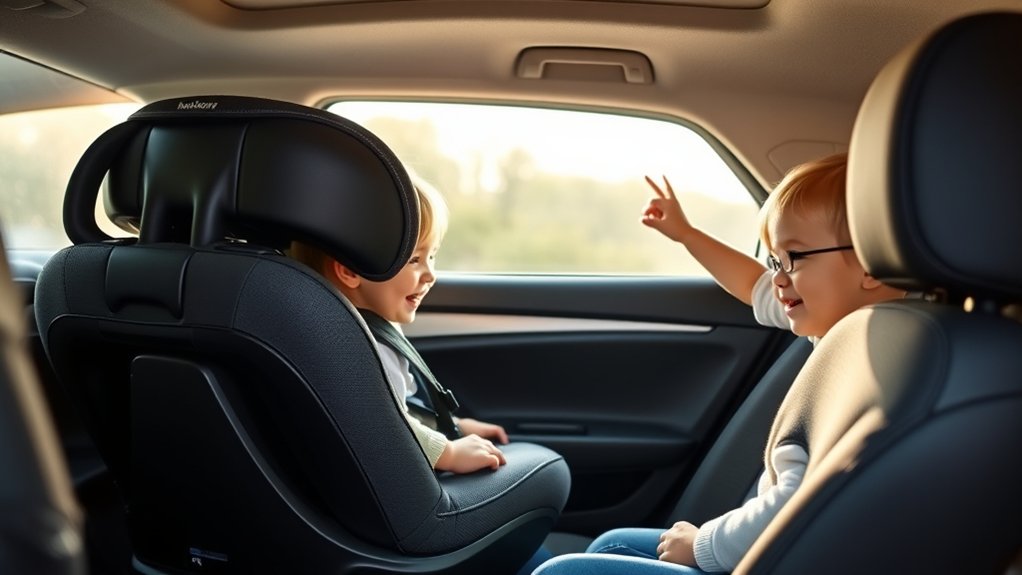
When to Forward Face Car Seat
You should forward face your car seat only after your child meets the height and weight limits set by the manufacturer and can sit upright unassisted for extended periods.
Forward facing a car seat too early can compromise safety, so it’s important to watch for signs like their head nearing the top of the rear-facing seat and growing independence.
Also, transition only when you follow up-to-date safety guidelines and confirm your car seat and vehicle compatibility.
Making this switch at the right time helps balance safety and comfort.
Understanding proper installation and next steps can further protect your child.
How to Know When to Forward Face Your Car Seat?
How do you determine the right moment to forward face your child’s car seat? Start by reviewing state laws, as discussing legality implications ensures you comply with minimum age or weight requirements.
Safety experts generally recommend keeping your child rear-facing as long as possible. You might also find yourself debating brand preferences. Some brands offer extended rear-facing options, while others transition earlier.
Focus on your child’s comfort and safety rather than marketing claims. Check your car seat manual carefully; manufacturers provide specific guidelines on when to switch based on height and weight limits.
Don’t rush this decision. Forward-facing too soon can increase injury risk in crashes. Stay informed, follow legal standards, and prioritize evidence-based recommendations for your child’s safety.
Checking Your Child’s Height and Weight Limits
Before making the switch to a forward-facing car seat, you need to verify that your child meets the specific height and weight limits set by the car seat manufacturer. These limits are critical for ensuring optimal child safety, as vehicle seats are engineered to provide maximum protection within these parameters.
Check your car seat’s manual or labels for exact measurements. Often, rear-facing seats support up to 40 pounds and a certain height, which varies by model. If your child exceeds those limits, it’s time to transition forward-facing.
Always measure your child accurately and regularly, because improper fit compromises safety during travel. Following the manufacturer’s guidelines helps you maintain compliance with safety standards and ensures your child is securely positioned in the vehicle seat designed to protect them best.
Why Staying Rear-Facing Longer Keeps Your Child Safer
Why does keeping your child rear-facing longer significantly enhance their safety? Rear-facing seats better support your child’s head, neck, and spine in a crash by distributing crash forces across the entire body. This positioning reduces injury risk compared to forward-facing seats, which place more strain on vulnerable areas.
Despite common safety myths suggesting early forward-facing is acceptable, research consistently shows rear-facing is safest for toddlers until they reach the car seat’s maximum height or weight limits. By adhering to these limits, you maximize your car seat’s longevity and protective benefits.
Don’t rush to switch forward-facing; your child remains best protected in a rear-facing seat as long as they fit the manufacturer’s recommended size range. This approach prioritizes safety over convenience or misconceptions.
Physical and Behavioral Signs Your Child Is Ready to Switch
When should you consider switching your child from a rear-facing to a forward-facing car seat? Watch for clear physical and behavioral signs that indicate your child is ready. While child independence grows, safety remains paramount, beyond any fashion trends influencing car seat choices.
Look for these signs:
- Your child’s head is within 1 inch of the top of the rear-facing seat.
- They can sit upright unassisted for extended periods.
- Your child shows interest in turning forward, indicating growing independence.
- They reach the maximum weight or height limit recommended by the car seat manufacturer.
Recognizing these signs ensures a timely switch that balances your child’s comfort, developmental needs, and safety without rushing based on style or trends.
How to Choose the Right Forward-Facing Car Seat
Choosing the right forward-facing car seat requires careful evaluation of your child’s size, safety features, and ease of installation. First, check the seat’s height and weight limits to ensure it fits your child comfortably and securely.
Prioritize models with advanced side-impact protection and a five-point harness system, as these enhance travel safety significantly. Look for seats that offer easy adjustments for straps and headrests, which grow with your child and simplify child proofing.
Also, confirm compatibility with your vehicle’s seat belt or LATCH system to guarantee a secure fit. Selecting a car seat that meets or exceeds current safety standards ensures you’re making a responsible choice in child proofing and travel safety, providing peace of mind every time you hit the road.
Installing Your Forward-Facing Car Seat the Right Way
How do you guarantee your forward-facing car seat is installed securely and correctly? Proper installation is essential for safe driving and maintaining your vehicle’s safety standards. Follow these steps precisely:
- Position the car seat in the back seat, facing forward, and lock the vehicle’s seat belt or latch system tightly.
- Adjust the harness straps so they sit at or above your child’s shoulders and ensure they’re snug without slack.
- Check the car seat’s angle to keep your child’s head from falling forward, using the built-in recline indicators.
- Confirm the seat doesn’t move more than an inch side-to-side or front-to-back once installed.
Regularly inspect your installation during vehicle maintenance to uphold safety and protect your child on every trip.
Tips to Help Your Child Adjust to Forward-Facing
Why might your child resist the switch to a forward-facing car seat? This change can challenge their sense of security and disrupt familiar routines. To ease the transition, support your child’s growing independence while minimizing travel fatigue.
| Tip | Benefit |
|---|---|
| Involve your child in choosing | Boosts child independence |
| Use familiar toys or blankets | Provides comfort, reduces anxiety |
| Start with short trips | Limits travel fatigue |
| Praise and reward cooperation | Encourages positive behavior |
Gradually introducing the forward-facing seat helps your child adapt more comfortably. Consistent reassurance and positive reinforcement will make the new seating arrangement feel safe and empowering.
Common Forward-Facing Mistakes to Avoid
What are some common mistakes parents make when moving their child to a forward-facing car seat? Often, parents fall for forward facing myths or seat belt myths that compromise safety. Avoid these pitfalls to protect your child effectively.
- Switching too early, ignoring height and weight limits.
- Misusing the harness by leaving it too loose or too tight.
- Incorrectly installing the seat, causing instability.
- Using the vehicle’s seat belt instead of the car seat’s harness prematurely.
Don’t believe that forward-facing is automatically safer once your child turns two; follow manufacturer guidelines. Also, avoid relying solely on seat belts without proper harness use. Staying informed and precise with installation ensures your child’s safety in every ride.
When Should You Switch From a Forward-Facing Car Seat to a Booster Seat?
After mastering the proper use of a forward-facing car seat, the next step involves knowing when to move your child to a booster seat. You should switch when your child outgrows the forward-facing seat’s height or weight limits, ensuring care safety.
Keep updated on policy updates, as regulations can change. Booster seats help position the seat belt correctly on your child’s body.
| Criteria | Forward-Facing Seat Limits | Booster Seat Requirements |
|---|---|---|
| Height | Up to 49 inches | Typically 40-57 inches |
| Weight | Up to 65 pounds | Usually 40-100 pounds |
| Age | At least 2 years | Usually 4 years and older |
| Seat Belt Fit | Use harness straps | Seat belt fits properly |
| Safety Regulation | Check current policy updates | Follow latest care safety guidelines |
Frequently Asked Questions
Can I Use a Second-Hand Forward-Facing Car Seat?
You can use a second-hand forward-facing car seat only if you verify its second hand safety, confirm it hasn’t been in an accident, check expiration dates, and follow precise seat installation instructions to guarantee proper protection.
Are There Legal Age Requirements for Forward-Facing Car Seats?
Yes, legal age requirements vary by region, so you should check local laws before using a forward-facing seat.
Also, prioritize second-hand seat safety by ensuring it hasn’t expired, been in an accident, or has missing parts.
How Long Can a Child Stay in a Forward-Facing Car Seat?
You should keep your child in a forward-facing car seat until they reach the maximum height or weight limit specified by the manufacturer.
Prioritize transition timing and safety considerations to ensure proper restraint and protection during travel.
What Are the Best Brands for Forward-Facing Car Seats?
When it comes to the best brands, you can’t go wrong with Graco, Britax, and Chicco car seats. They combine safety, comfort, and durability, giving you peace of mind every mile, rain or shine.
Can Forward-Facing Car Seats Be Used on Airplanes?
Yes, you can use forward-facing car seats on airplanes, but you must follow air travel constraints and airline policies. Use car seat installation tips to guarantee a secure fit, like locking the seatbelt tightly and checking the seat’s size compatibility.