
How Do You Jump a Car Without Jumper Cables
You can jump a car without jumper cables by using a portable jump starter with built-in clamps, ensuring it matches your battery voltage and is fully charged.
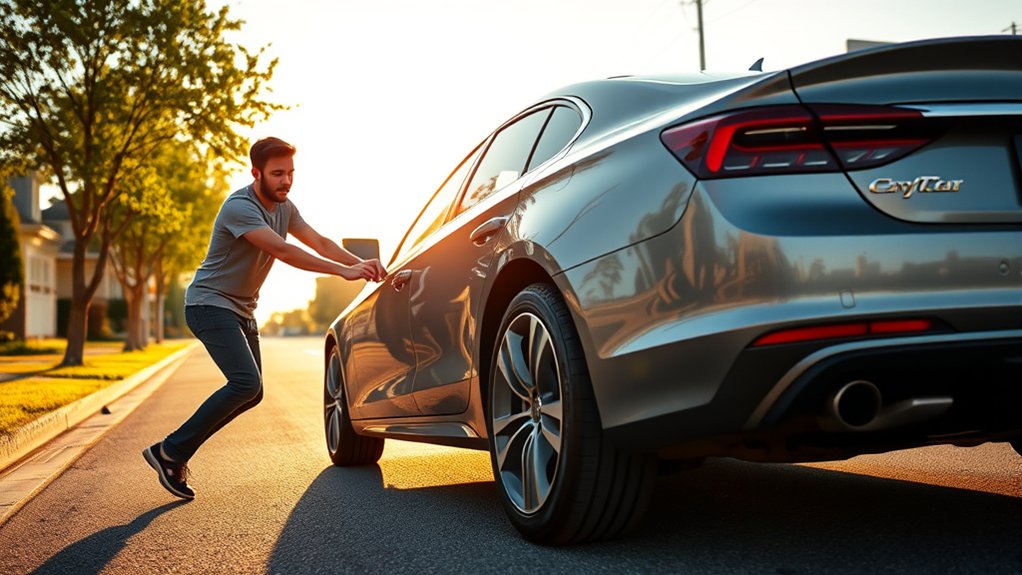
For manual cars, try push-starting by turning the ignition on, engaging second gear, and releasing the clutch once pushed to 5–10 mph.
Alternatively, you can use household items like thick copper wire or steel wool carefully as conductors.
Always check battery health and ignition status first.
Explore more to master safe, effective methods and precautions.
How to Jump-Start a Car Without Jumper Cables
How can you jump-start a car without jumper cables when you’re stranded? First, assess the battery health by checking for corrosion or damage. Ensure the ignition is off before proceeding.
If you have access to a manual transmission vehicle, you can perform a push start: turn the key to the “on” position and put the car in second gear. Push the car to 5-10 mph, then release the clutch quickly to engage the engine.
Monitor your dashboard charging indicators; a rising voltage suggests the alternator is charging the battery. Avoid repeated attempts if charging indicators don’t respond, as it could damage your electrical system.
This method requires a healthy battery and a functioning starter system to be effective and safe.
Using a Portable Jump Starter Without Jumper Cables
Where can you find a reliable solution to jump-start your car without relying on traditional jumper cables? A portable jump starter is a compact, battery-powered device designed specifically for this purpose.
It connects directly to your car’s battery via built-in clamps, delivering the necessary power surge to start the engine without external assistance. This method avoids the irrelevant topic of using other vehicles or off topic ideas like makeshift tools, ensuring safety and efficiency.
Before use, confirm the jump starter’s charge level and compatibility with your vehicle’s battery voltage. Attach the positive clamp to the positive terminal and the negative clamp to a grounded metal surface on the car, not the battery’s negative terminal, to prevent sparks.
Once connected, turn on the jump starter and start your engine promptly.
How to Push-Start a Manual Car Without Jumper Cables
To push-start your manual car without jumper cables, first ensure the vehicle is in a safe, clear area and prepare by turning the ignition to the “on” position. You’ll need to engage the clutch, shift into second gear, and coordinate the push until the car gains enough momentum to start. Keep safety top of mind by having helpers push carefully and avoiding steep inclines or busy roads.
Preparing The Vehicle
When preparing to push-start a manual car without jumper cables, you’ll need to guarantee the ignition is turned on and the car is in second gear. This ensures the engine engages properly during the jump start.
First, confirm the car battery is the issue by checking for dim lights or no electrical response. Next, depress the clutch fully to disengage the engine from the wheels, allowing the transmission to transmit power effectively.
Position the parking brake off to enable smooth movement. Make sure the wheels are straight to maintain control during the push.
Finally, communicate clearly with any helpers involved, so they know when to start pushing. Proper preparation minimizes risks and maximizes the chance of a successful push start without jumper cables.
Executing The Push-Start
With the vehicle properly prepared, you’re ready to execute the push-start. First, assure the ignition is on and the key is in the “start” position. Depress the clutch fully and shift into second gear.
As your helpers push the car to gain momentum, keep the clutch depressed until you reach about 5 to 10 mph. Then, quickly release the clutch to engage the engine and turn it over. The engine should start if the battery’s condition allows; this method bypasses some battery maintenance issues but doesn’t fix underlying electrical problems.
If the engine struggles to start, consider a thorough electrical diagnosis afterwards, checking alternator output and battery health. Proper battery maintenance prevents frequent need for push-starts and ensures reliable vehicle operation.
Safety Tips And Precautions
Why must you prioritize safety before attempting a push-start? Because improper technique can cause injury or vehicle damage. First, ensure the area is clear of obstacles and bystanders.
Engage the parking brake once the car is moving to avoid unintended rolling. Check your battery maintenance status; a severely degraded battery may not accept a charge even with a push-start.
Observe charging indicators on your dashboard to confirm the alternator is functioning post-start. Never push-start an automatic transmission vehicle, as it can cause transmission damage.
Wear gloves and proper footwear to maintain grip and protect yourself. Communicate clearly with helpers to coordinate the push.
Finally, inspect the ignition and starter system beforehand to avoid repeated attempts, which can strain the electrical components and compromise battery health.
How to Jump-Start Using Another Car Without Jumper Cables
How can you jump-start a car without jumper cables? First, assess battery health and perform voltage testing to confirm a dead battery.
Without jumper cables, you can exploit the electrical connection between two vehicles by carefully touching the battery terminals of the donor car to the dead battery. Use insulated tools or gloves to avoid short circuits.
Connect the positive terminal of the donor battery to the positive terminal of the dead battery, then connect the negative terminal of the donor battery to a metal ground on the dead car (not the negative battery terminal). Start the donor car, allowing current to flow.
After a few minutes, attempt to start the dead car. This method demands precision and caution to prevent damage or injury.
Using a Car Battery Charger Instead of Jumper Cables
You’ll start by preparing your battery charger according to the manufacturer’s instructions. Next, connect the charger clamps securely to the correct battery terminals, ensuring a proper connection. Finally, set the charger to the appropriate voltage and monitor the charging time closely while following all safety precautions.
Preparing The Battery Charger
When preparing a car battery charger, start by ensuring the charger is compatible with your battery type and voltage. This step is crucial for maintaining battery health and preventing electrical damage. Follow these precise actions:
- Inspect the charger for visible damage or exposed wires to ensure electrical safety.
- Verify the charger’s voltage matches your car battery’s specifications, typically 12 volts.
- Select the appropriate charging mode, standard or trickle, based on your battery’s condition.
- Confirm the charger’s power source is stable and grounded to avoid electrical hazards.
Connecting Charger To Battery
After confirming the charger’s compatibility and safety, the next step involves connecting the charger directly to your car battery. Begin by identifying the positive (+) and negative (–) terminals on the battery.
Attach the charger’s positive clamp to the positive terminal first, ensuring a secure connection. Next, connect the negative clamp to the negative terminal. This sequence prevents sparks and safeguards battery health.
Always ensure clamps are firmly attached to avoid interruptions during charging, which is crucial for effective car maintenance.
| Step | Action | Reason |
|---|---|---|
| 1 | Identify terminals | Correct connection points |
| 2 | Connect positive clamp | Prevent sparks |
| 3 | Connect negative clamp | Complete circuit safely |
| 4 | Secure clamps | Ensure consistent charging |
| 5 | Verify connections | Maintain battery health |
Charging Time And Safety
How long should you charge your car battery to ensure optimal performance and safety? The answer depends on your battery’s condition and charger specifications. To maintain battery health and maximize charging safety, follow these guidelines:
- Assess battery status: Use a voltmeter to determine if a full charge or a quick boost is needed.
- Set charger correctly: Select an appropriate amperage, higher for faster charging, lower to preserve battery life.
- Monitor charging time: Typically, 4-6 hours for a slow charge; avoid overcharging to prevent damage.
- Ensure ventilation: Charge in a well-ventilated area to dissipate harmful gases and reduce fire risk.
Using a Power Bank to Jump-Start Safely Without Cables
Why rely on traditional jumper cables when you can use a power bank designed for jump-starting vehicles? These specialized power banks deliver a controlled surge of power, protecting your car battery and ensuring electrical safety.
When using one, connect the clamps securely to your battery terminals: positive to positive, negative to negative, and activate the device. The built-in protections prevent reverse polarity and short circuits, reducing risk.
This method supports battery longevity by providing consistent, regulated current without stressing the battery cells. Plus, it eliminates the need for a second vehicle, making it convenient and portable.
Always follow the manufacturer’s instructions precisely to avoid damage. Using a power bank is a practical, safe alternative for jump-starting your car without traditional cables.
Tools to Use as Makeshift Jumper Cables
If you don’t have jumper cables, certain household metal items can serve as makeshift conductors to transfer power between batteries. You’ll need to guarantee the metal objects are clean, solid, and capable of handling high current without overheating. Always prioritize safety by avoiding materials that could cause sparks or short circuits during the process.
Household Items for Jumping
Where can you find reliable substitutes for jumper cables when you’re in a pinch? Household items can serve as effective tools to jump-start your car if you understand their conductive properties and limitations. Your driving habits and battery maintenance routines affect how quickly you may need these alternatives.
Here are four practical household items you can use:
- Copper wire, thick gauge with stripped ends for solid connection
- Steel wool, tightly packed to improve conductivity
- Aluminum foil, folded multiple layers to create a sturdy conductor
- Paper clips, straightened and linked for a makeshift cable
Using Metal Objects Safely
Household items like copper wire or aluminum foil can substitute for jumper cables, but using metal objects safely requires careful attention to connection points and current flow. You need to ensure the metal is thick enough to handle the amperage without overheating or melting.
Always connect the positive terminal of the dead battery to the positive terminal of the charged battery, and negative to a grounded metal part of the dead car, never directly to the negative terminal to avoid sparks. Avoid using thin or brittle metals, which risk breaking or causing shorts.
Signs You Need to Jump-Start Your Car Without Cables
Recognize the key indicators that signal your car’s battery is too weak to start the engine without assistance. A dead battery won’t deliver enough power to turn the engine over, so you need to act quickly. Don’t fall for jump start myths suggesting the battery might recover on its own.
Know the signs of a weak car battery and act fast—don’t rely on myths of self-recovery.
Here are four signs you need to jump-start your car without cables:
- The engine cranks slowly or not at all when you turn the key.
- Dashboard lights dim or flicker inconsistently.
- Electrical components like radio or headlights fail to power up.
- You hear clicking sounds without engine turnover.
These practical signs confirm your battery’s condition, prompting immediate action to restore functionality without jumper cables.
Common Mistakes When Jump-Starting Without Cables
Once you identify the signs that your battery needs a jump-start without cables, it’s important to avoid common errors that can worsen the situation or cause injury. First, don’t get distracted by irrelevant topics or unproven offbeat methods circulating online; stick to reliable, tested techniques.
Avoid attempting to push-start an automatic transmission car, as this can damage the vehicle. Never confuse electrical systems or overlook safety protocols. Misconnecting components or ignoring grounding can cause sparks or battery damage.
Also, don’t try to jump-start with insufficient vehicle weight or unstable surfaces, as this compromises momentum and control. By steering clear of these mistakes, you’ll jump-start your car safely and effectively without cables, minimizing risks and maximizing success.
How to Check Your Battery and Electrical System First
Before attempting any jump-start, you should verify the condition of your battery and electrical system to ensure they’re the actual source of the problem. Checking battery health and charging indicators will prevent unnecessary efforts and potential damage.
Follow these steps:
- Inspect the battery terminals for corrosion or loose connections that can impair power flow.
- Use a multimeter to measure the battery voltage; a healthy battery should read around 12.6 volts when the engine is off.
- Turn the ignition to the accessory position and observe dashboard charging indicators for warning lights.
- Test the alternator output by starting the engine and checking voltage; it should rise to approximately 13.7 to 14.7 volts, confirming the charging system functions correctly.
These checks ensure you address the real issue before proceeding.
How to Prepare Your Car to Prevent Battery Failures
How can you minimize the risk of battery failures and guarantee your car starts reliably every time? Begin with consistent battery maintenance: check terminals for corrosion, clean them with a wire brush, and ensure tight connections.
Monitor the battery’s voltage regularly using a multimeter to detect early signs of discharge. Schedule routine electrical diagnosis to identify issues like parasitic drains or alternator faults before they impact performance.
Keep the battery securely mounted to prevent vibrations that can damage internal components. Avoid leaving electrical accessories on when the engine is off, which can drain power.
Finally, replace your battery proactively based on manufacturer recommendations or if voltage drops below 12.4 volts consistently. By following these steps, you’ll reduce unexpected failures and maintain a dependable start every time.
Frequently Asked Questions
How Long Does a Car Battery Typically Last Before Needing Replacement?
You’ll typically need to replace your car battery every 3 to 5 years. Regular heartbeat maintenance and tire rotation help ensure overall vehicle health but won’t extend battery life substantially beyond that timeframe.
What Are the Best Battery Brands for Cold Weather Performance?
Think of cold weather battery brands as your car’s winter armor. Opt for brands like Optima, Bosch, and DieHard. They provide extended life performance and reliable cranking power, ensuring your vehicle starts smoothly in freezing conditions.
Can Extreme Temperatures Affect My Car Battery’s Lifespan?
Yes, extreme temperatures markedly reduce your battery lifespan by accelerating chemical reactions and electrolyte evaporation. Protect your battery from heat and cold to maintain optimal performance and extend its usable life effectively.
How Often Should I Have My Car’s Electrical System Inspected?
You’ll want to ensure a routine check-up, inspecting electrical components every 12 months or 12,000 miles. This proactive battery maintenance helps prevent unexpected failures and assures your vehicle’s system operates efficiently and reliably.
What Safety Precautions Should I Take When Handling Car Batteries?
You should wear protective gloves and goggles to guarantee bypass safety, avoid sparks near the battery, and never short-circuit terminals.
Dispose of old batteries properly at designated recycling centers to prevent environmental harm and follow local battery disposal regulations.