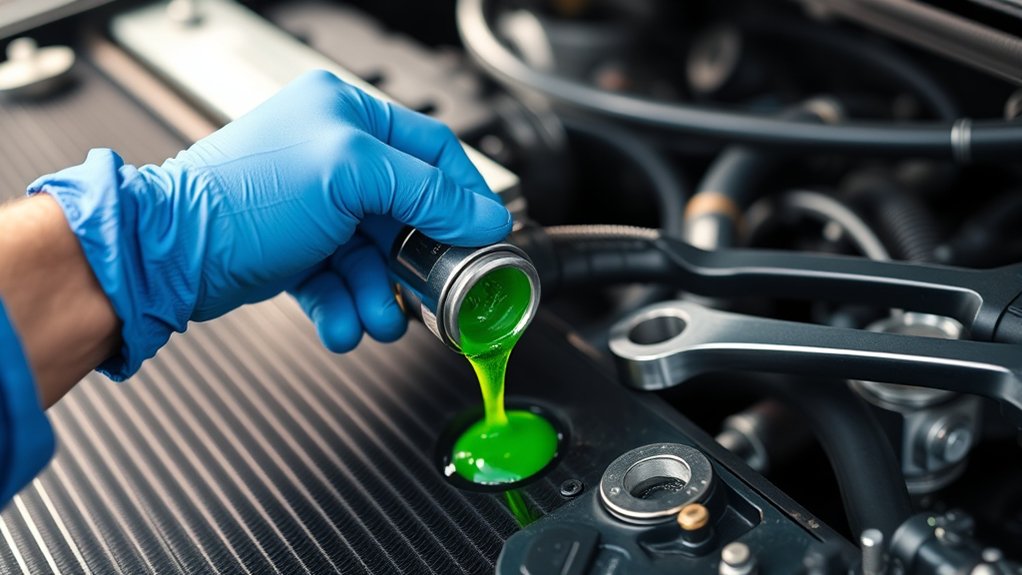
How to Fix a Coolant Leak
To fix a coolant leak, start by locating the source—check hoses, radiator, and water pump for cracks, loose clamps, or damage. Use a pressure tester and UV flashlight with dye to find leaks accurately. Drain the coolant before performing these inspections.
Next, tighten or replace faulty clamps and carefully seal minor radiator cracks. Replace compromised parts like a failing water pump to ensure the leak is fully repaired.
After completing repairs, refill the coolant and monitor the system for any new leaks or signs of overheating. Keep exploring to get detailed repair steps and tips for ensuring a lasting fix.
How to Spot Coolant Leaks Early
Although coolant leaks can start small and go unnoticed, catching them early prevents major engine damage. You should focus on spotting leaks by regularly inspecting the radiator, hoses, and undercarriage for puddles or damp spots.
Early warning signs include a sweet smell, overheating, or a low coolant reservoir. Don’t rely on coolant system myths like assuming discoloration always means a leak; perform pressure tests for precise detection.
Addressing minor leaks promptly by repairing seals or replacing faulty components stops fluid loss and protects your engine. Use a clean cloth to check for residue or crusty buildup around connections, which signals slow leaks.
Common Coolant Leak Causes to Check
Where should you begin when diagnosing a coolant leak? Start by examining the most common causes that directly impact engine temperature regulation. Identifying these areas helps you pinpoint the source efficiently and prevent engine overheating.
| Common Cause | Effect on Engine Temperature |
|---|---|
| Radiator Leak | Loss of coolant reduces cooling |
| Hose Deterioration | Coolant escapes, causing hotspots |
| Water Pump Failure | Circulation stops, raising temp |
| Thermostat Malfunction | Irregular flow disrupts temp control |
Check hoses for cracks or loose clamps, inspect the radiator for corrosion or damage, assess the water pump’s condition, and verify thermostat operation. Addressing these common causes ensures your engine temperature stays within safe limits and prevents long-term damage.
Tools You’ll Need to Fix a Coolant Leak
What tools do you need to effectively fix a coolant leak? First, ensure your tools are compatible with the specific coolant types in your system to avoid damage or contamination. You’ll require equipment that supports precise pressure testing to identify leaks accurately. Leak detection tools will help pinpoint even minor leaks that aren’t visible to the naked eye.
Essential tools include:
- Cooling system pressure tester for accurate leak detection
- Compatible coolant refill kit tailored to your vehicle’s coolant types
- Hose clamp pliers for securing or replacing faulty hoses
- Digital UV flashlight with dye for pinpointing leaks under pressure testing
Using these tools ensures you handle the repair efficiently while maintaining system integrity and preventing future leaks.
Step-by-Step Coolant Leak Repair
First, you’ll need to locate the exact source of the coolant leak by inspecting common trouble spots like hoses, the radiator, and the water pump. Once identified, you can follow targeted repair steps specific to each area to ensure a proper fix. This approach helps you address the problem efficiently and prevent further damage.
Identifying Leak Sources
How can you accurately pinpoint the source of a coolant leak in your vehicle? Start by visually inspecting all accessible components for obvious signs of coolant residue or corrosion.
Next, perform a coolant system pressure test to pressurize the system and reveal hidden leaks. This test is critical when identifying leak sources that are not visible during a standard inspection. Pay close attention to common leak points such as hoses, clamps, and the radiator.
Key steps include:
- Conducting a thorough visual examination under the hood and beneath the vehicle
- Using a coolant system pressure test to detect slow or concealed leaks
- Checking hose connections and radiator seams for wetness or crusty deposits
- Observing puddles or stains on the ground after the vehicle rests
These methods ensure precise leak source identification before repair.
Repairing Common Leak Areas
Where should you begin when repairing common coolant leak areas? Start by inspecting the radiator, hoses, and water pump; these are frequent leak points. First, drain the coolant to reduce engine stress during repairs.
Next, examine hose clamps and replace any that are loose or damaged. For radiator leaks, use a pressure tester to pinpoint failures. Minor cracks can be sealed with a specialized epoxy, but larger damage requires radiator replacement.
Check the water pump for bearing wear or gasket failure; replace the pump if leaking. Follow a strict repair timeline to prevent prolonged engine stress, which can cause overheating or further damage.
After repairs, refill with coolant and run the engine, monitoring for leaks to ensure a successful fix.
How to Make Sure Your Coolant Leak Is Fixed
Why is it essential to verify that your coolant leak is truly fixed? Ensuring a successful repair prevents engine overheating and costly damage. To confirm how to verify repair, follow a systematic approach focusing on cooling system maintenance.
After repairing, inspect these key areas:
- Monitor coolant levels over several days for consistent readings.
- Check for new or residual wet spots around repaired sections.
- Run the engine to operating temperature and observe the radiator and hoses closely.
- Use a pressure tester on the cooling system to identify hidden leaks.
When It’s Time to Call a Mechanic
Even if you’ve attempted to fix the leak yourself, you should call a mechanic when the problem persists or worsens despite your efforts. Persistent leaks, overheating, or unexplained coolant loss indicate underlying issues requiring professional diagnostic tips. Mechanics can perform pressure tests and thorough inspections beyond basic repairs.
Also, if your vehicle approaches seasonal maintenance, it’s wise to have a mechanic evaluate the cooling system to prevent future leaks.
| Situation | Action Required |
|---|---|
| Leak persists after repair | Schedule professional diagnostic |
| Engine overheats frequently | Immediate mechanic intervention |
| Seasonal maintenance due | Comprehensive cooling system check |
Knowing when to seek expert help preserves engine health and prevents costly damage.
Frequently Asked Questions
Can Coolant Leaks Cause Engine Overheating?
Like a river running dry, coolant leaks disrupt coolant flow, causing engine overheating. You’ll also face thermostat failure risks, as insufficient coolant compromises temperature regulation.
You must address leaks promptly to prevent severe engine damage.
Is It Safe to Drive With a Small Coolant Leak?
It’s unsafe driving with even a small coolant leak because it can cause engine wear from overheating.
You should address the leak promptly to avoid costly damage and maintain proper engine temperature and performance.
How Often Should Coolant Be Replaced?
Think of your coolant as the lifeblood of your engine’s heart. You should replace coolant every 2-5 years or 30,000-50,000 miles.
Knowing how often coolant needs changing guarantees your engine runs smoothly and avoids overheating.
What Type of Coolant Is Best for My Vehicle?
Check your vehicle’s technical specs to find the recommended coolant type. Follow the maintenance schedule to guarantee proper performance and avoid damage.
Using the specified coolant keeps your engine running efficiently and prevents leaks or corrosion.
Can Using the Wrong Coolant Damage My Engine?
You risk engine damage since 30% of coolant failures stem from misleading labeling. Using the wrong coolant causes混合 cooling issues, reducing efficiency and causing corrosion.
Always verify compatibility to protect your engine’s performance and longevity.