How Long Should I Leave Jumper Cables on
You should leave jumper cables connected for about three to five minutes while keeping the donor vehicle running when jump-starting a car.
This timing allows your dead battery to gather enough charge without overheating the cables or damaging either vehicle.
Watch for the engine to start smoothly before disconnecting, and always follow the proper connection and disconnection sequence for safety.
Understanding these steps helps you jump-start reliably and avoid common issues that may arise during the process.
How Long Should Jumper Cables Stay Connected?
How long should you leave jumper cables connected when jump-starting a vehicle? The ideal jump start timing is typically between 3 to 5 minutes. This duration allows the dead battery to accumulate enough charge to start the engine without overloading either battery or cable.
You should keep the donor vehicle running during this time to maintain voltage stability. Safety reminders are crucial: avoid touching cable clamps together and ensure cables are connected in the correct order, positive to positive, negative to an unpainted metal surface on the dead vehicle.
Prolonged connection beyond 5 minutes increases the risk of overheating cables and battery damage. Always monitor the process closely to ensure optimal charging while minimizing potential hazards.
How Do You Know When to Remove Jumper Cables?
When should you remove jumper cables to ensure a safe and effective jump start? You should disconnect them once the dead vehicle’s engine runs smoothly, usually after 3–5 minutes of charging. Avoid removing cables prematurely, as it risks stalling. Don’t rely on unused topic ideas or irrelevant questions like “How long can cables stay connected?” Focus on monitoring engine status and electrical indicators.
| Signal | Meaning | Action Required |
|---|---|---|
| Engine starts smoothly | Battery sufficiently charged | Remove cables carefully |
| Engine stalls | Insufficient charge | Continue charging |
| Dashboard warning lights | Electrical issues | Diagnose before removal |
| Sparks or smoke | Faulty connection or damage | Stop and check connections |
| Cables overheating | Risk of damage | Disconnect immediately |
Remove cables in reverse connection order, ensuring safety and effectiveness.
Step-by-Step Guide to Using Jumper Cables Safely
Why start with a clear procedure? Following a precise step-by-step guide ensures jump start safety and protects battery health.
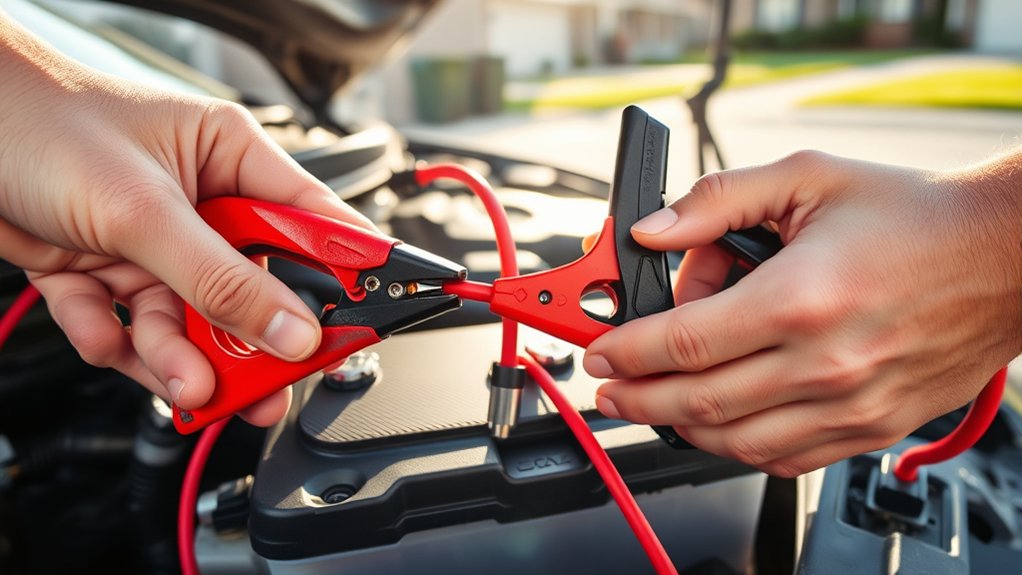
First, park the booster vehicle close without touching the dead car. Turn off both engines. Connect the red jumper cable clamp to the positive terminal of the dead battery, then attach the other red clamp to the positive terminal of the booster battery.
Next, connect the black clamp to the booster battery’s negative terminal. Finally, attach the remaining black clamp to an unpainted metal surface on the dead car’s engine block, never the negative terminal.
Start the booster vehicle and let it run for a few minutes to transfer charge. Only then, start the dead vehicle.
This method minimizes sparks and prevents damage to electrical systems, ensuring a safe and effective jump start.
What Affects How Fast Your Battery Charges?
What determines the speed at which your battery regains charge? Several key factors influence how quickly your battery charges when using jumper cables. Understanding these fast charging considerations helps you optimize the process without compromising battery integrity.
Key factors affect how quickly your battery charges with jumper cables—know them to charge efficiently and safely.
- Battery Health Factors: A well-maintained battery with minimal sulfation charges faster. Damaged or old batteries have reduced capacity, slowing charge acceptance.
- Charging Voltage and Current: Higher voltage and current levels speed up charging but must stay within safe limits to prevent overheating or damage.
- Temperature Conditions: Cold temperatures slow chemical reactions inside the battery, reducing charge speed; warmer environments facilitate faster charging.
Common Mistakes That Damage Your Battery When Jump-Starting
Although jump-starting seems straightforward, improper techniques can cause serious damage to your battery and electrical system. One common mistake is reversing the cable polarity, which can lead to battery damage and electrical shorts.
Another is leaving the jumper cables connected too long, risking overcharging and overheating. You should also avoid relying on dead battery myths, like the idea that a jump-start will fully recharge a deeply drained battery instantly; this misconception often leads to repeated unsuccessful attempts and battery stress.
Additionally, connecting cables in the wrong order increases safety hazards, such as sparks or acid leaks. Always connect in the recommended sequence and ensure cables are secure.
Frequently Asked Questions
Can I Use Jumper Cables on Any Type of Vehicle?
You can generally use jumper cables across many vehicle types, but vehicle compatibility varies. Two-word discussion ideas like “voltage differences” and “battery size” matter, so check specifications to ensure safe, effective jumper cable use and avoid damage.
Are There Alternatives to Jumper Cables for Dead Batteries?
You can use portable jump starters or battery chargers as alternatives to jumper cables.
For persistent issues, focus on alternator troubleshooting or consider battery replacement to ensure reliable vehicle starting without relying solely on jump-starting methods.
How Often Should I Check My Car Battery Health?
Think of your battery as a heartbeat; you should check its health every three to six months.
Regular checks help you learn how to maintain battery health and avoid risks of jump starting, like damaging electrical components.
Can Jump-Starting a Car Damage the Electrical System?
Yes, improper jumper cable basics can cause electrical system risks like voltage spikes or short circuits. You should connect cables correctly and avoid prolonged use to protect your car’s sensitive electronics from damage during jump-starting.
What Safety Gear Should I Wear When Using Jumper Cables?
You’d better wear superhero-level safety gloves and eye protection when using jumper cables! These essentials shield you from sparks or acid splashes, ensuring precise, safe connections without risking burns or blindness during your jump-start procedure.