How Long to Leave Jumper Cables on Dead Battery
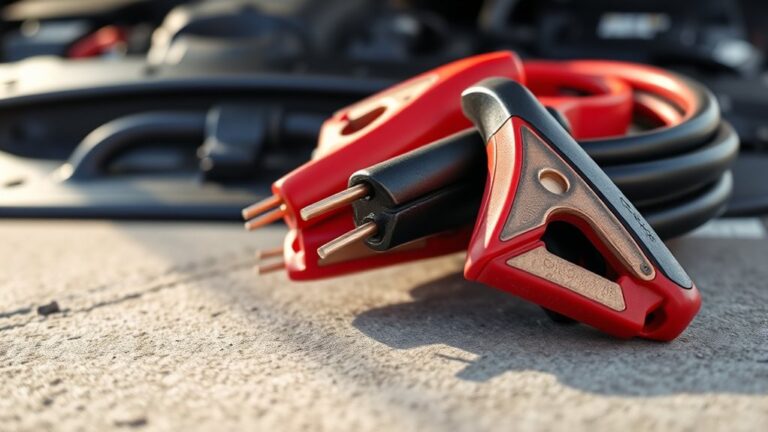
You should leave jumper cables on a dead battery for about 5 to 10 minutes after starting the donor vehicle to safely recharge it. This time frame provides enough current to restart the chemical reactions inside the battery without causing damage.
Leaving the cables connected too long may increase the risk of short circuits or corrosion. Once the engine is running, disconnect the cables promptly in reverse order.
Afterward, keep your engine running to ensure the battery receives a proper recharge. Following these steps helps you jump-start effectively while protecting your battery and vehicle systems.
How Long to Keep Jumper Cables Connected Safely
How long should you keep jumper cables connected to a dead battery? You should maintain the connection for about 5 to 10 minutes after starting the donor vehicle. This duration allows the dead battery to recharge without risking damage.
Leaving cables connected too long increases the risk of a short circuit due to cable wear or poor connections. Additionally, prolonged connection can accelerate battery corrosion, especially around terminals, reducing battery life.
Always connect cables in the correct order and avoid touching clamps together to prevent sparks or short circuits. After this period, disconnect the cables in reverse order promptly.
Following these steps ensures safe charging while minimizing hazards related to electrical faults and corrosion buildup during the jump-start process.
How Jumper Cables Revive a Dead Battery
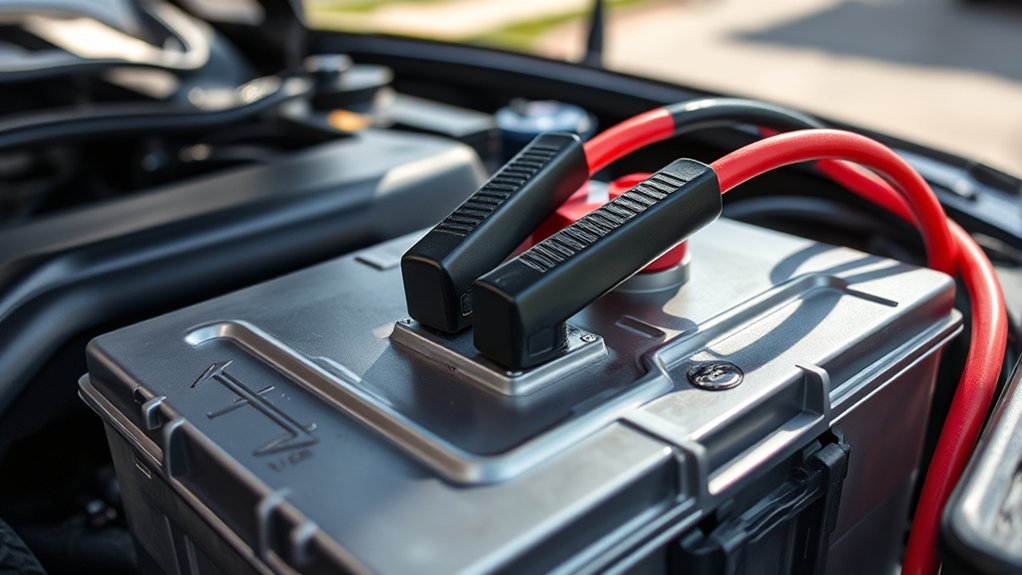
Connecting jumper cables transfers electrical current from the donor vehicle’s battery to the dead battery, providing the necessary voltage to restart the engine. This process re-energizes the dead battery’s cells, enabling them to generate power temporarily. To understand this better, focus on these key points:
- Voltage Equalization: The cables equalize voltage between the donor and dead battery, allowing current flow.
- Chemical Reaction Restart: Electrical current restarts the chemical reactions inside the dead battery’s cells, restoring charge capacity.
- Engine Cranking Support: The transferred current supplies enough energy to crank the engine and recharge the dead battery.
Avoid unrelated topic or irrelevant discussion about battery maintenance or unrelated car systems here, as they do not affect how jumper cables revive a dead battery.
Does Your Engine Type Change Jumper Cable Connection Time?
Your engine type directly affects how long you should keep jumper cables connected. Gas engines generally require less time than diesel engines, which need more power to start. For hybrids, you’ll need to contemplate the condition of both the 12-volt and high-voltage batteries before deciding.
Gas vs. Diesel Differences
Does the type of engine, gasoline or diesel, affect how long you should leave jumper cables attached? Yes, it does, due to differences in battery capacity and engine demands. Gasoline engines typically have smaller batteries and lower compression, so they require less time to charge.
Diesel engines, with higher compression ratios and larger batteries, need more energy to start, affecting jump-start duration.
Consider these points:
- Gasoline engines usually require 3-5 minutes of charging with cables connected.
- Diesel engines often need 5-10 minutes to build sufficient charge for starting.
- Diesel batteries are larger and may demand more robust jumper cables to handle higher cranking amps.
Adjust jumper cable time accordingly to ensure a successful start based on your engine type.
Hybrid Battery Considerations
How should you approach jumper cable connection times when dealing with hybrid vehicles? Unlike traditional gas or diesel engines, hybrids have a complex electrical system involving a high-voltage battery and a 12-volt auxiliary battery. The two word idea here is “battery management.”
You need to focus on the 12-volt battery, as it powers the vehicle’s control systems. When jump-starting, connect the cables to the 12-volt battery terminals, then allow a connection time similar to conventional cars, about 5 to 10 minutes.
Avoid prolonged cable connection to prevent damage to the hybrid’s sensitive electronics. Remember, the hybrid’s high-voltage battery is an unrelated topic and doesn’t affect jumper cable connection time. Always consult the owner’s manual for model-specific precautions and procedures.
Why Leaving Jumper Cables Too Long Can Damage Batteries
Although jumper cables are essential for reviving a dead battery, leaving them connected too long can cause significant damage. You risk irreversible damage to both batteries and electrical systems. Here’s why you should disconnect promptly:
- Overcharging: Excessive current flow heats the battery, degrading internal plates and electrolyte, reducing lifespan.
- Sulfation: Prolonged charging promotes lead sulfate crystal formation, impairing capacity and complicating battery recycling.
- Electrical System Stress: Extended high current strains alternators, fuses, and wiring, potentially causing costly failures.
To prevent costly replacements and environmental harm, disconnect cables soon after the dead battery starts. Proper timing preserves battery integrity and supports efficient battery recycling, avoiding premature disposal due to damage.
How to Recognize a Fully Charged Dead Battery
When can you tell that a dead battery has regained sufficient charge? Typically, you’ll notice the vehicle starts smoothly without hesitation, and the voltage across the battery terminals reads around 12.6 volts or higher using a multimeter.
If you’re using portable chargers, they often have indicator lights or digital displays showing a full charge. Avoid relying solely on jump-start timing; some batteries may never fully recover and require battery disposal to prevent damage or safety hazards.
Continuous monitoring with a voltage meter or observing charger indicators helps confirm charge status accurately. If the battery fails to maintain a charge after a jump-start or portable charger use, consider replacing it promptly to avoid unexpected failures on the road.
What to Do Right After Removing Jumper Cables
After confirming the battery has regained sufficient charge, your next step is to properly remove the jumper cables to avoid damage or injury. Many jump start misconceptions overlook the importance of careful disconnection and subsequent actions. Follow these safety precautions to ensure a smooth process:
- Disconnect cables in reverse order of connection. Start with the negative (black) clamp from the dead battery, then from the donor battery, followed by the positive (red) clamps.
- Avoid letting clamps touch each other or metal surfaces to prevent sparks or short circuits.
- Keep the engine running for at least 20 minutes to allow the alternator to recharge the battery fully, preventing immediate re-discharge.
Adhering to these steps minimizes risks and extends battery life after a jump start.
Tips for Jump-Starting a Deeply Discharged Battery With Jumper Cables
How can you effectively jump-start a battery that’s deeply discharged? First, ensure you follow proper jump starting etiquette: connect positive terminals first, then negative to a grounded metal surface away from the battery. This prevents sparks and damage.
Before attempting the jump, perform battery testing on both vehicles to confirm the donor battery’s charge and the dead battery’s condition. For deeply discharged batteries, allow the donor vehicle to run for several minutes after connecting cables to build charge gradually.
Start the dead vehicle while keeping cables attached for at least 3 to 5 minutes, ensuring a stable connection. Avoid prolonged cranking, which strains the starter. Once started, remove cables in reverse order, maintaining safety. These precise steps maximize your chance of reviving a heavily drained battery efficiently.
Common Mistakes That Reduce Jumper Cable Effectiveness
You can’t skip the proper cable connection order, or you risk sparks and poor current flow. Don’t unplug too soon—insufficient charging time won’t restore the battery effectively. Also, using damaged cables can block power transfer and jeopardize the jump-start.
Incorrect Cable Connection Order
Why does the order of connecting jumper cables matter? Incorrect cable connection order can cause order mistakes that reduce effectiveness and pose serious safety concerns. If you connect cables in the wrong sequence, you risk incorrect polarity, damaging the battery or electrical system.
Follow this precise connection order to avoid errors:
- Attach the red cable clamp to the positive (+) terminal of the dead battery.
- Connect the other end of the red cable to the positive (+) terminal of the donor battery.
- Connect the black cable clamp to the negative (–) terminal of the donor battery, then attach the other end to an unpainted metal surface on the dead vehicle away from the battery.
Adhering to this sequence prevents sparks, incorrect polarity, and ensures safe, effective charging.
Insufficient Charging Time
When should you disconnect jumper cables to guarantee the dead battery receives enough charge? Disconnecting too soon causes insufficient charging, leaving the battery unable to start the engine independently.
Typically, you should leave the cables connected for at least 5 minutes after the donor vehicle is running. This period allows the alternator to replenish the dead battery adequately. Rushing this process increases jump start risks, such as battery damage or repeated failure to start.
Additionally, avoid revving the donor vehicle excessively; a steady engine speed delivers consistent charging current. If you disconnect cables prematurely, you risk stalling the vehicle or draining the donor battery.
Always monitor the charging time carefully to ensure the dead battery attains sufficient voltage, reducing jump start risks and improving overall effectiveness.
Using Damaged Cables
How can damaged jumper cables undermine the entire jump-start process? Using damaged cables can prevent sufficient current flow to the dead battery, leading to a failed or incomplete jump-start. Here’s why damaged cables compromise effectiveness:
- Increased Resistance: Frayed or corroded wires elevate resistance, reducing amperage delivered to the dead battery.
- Intermittent Connection: Exposed or broken wires cause unstable electrical contact, interrupting power transfer.
- Safety Hazards: Damaged insulation risks short circuits or sparks, potentially damaging vehicle electronics or causing injury.
Always inspect your cables for visible wear before use. Damaged cables won’t provide the reliable, continuous current essential to revive a dead battery efficiently. Replacing or repairing compromised cables ensures optimal performance and safety during jump-start procedures.
How to Maintain Your Battery After a Jump Start
What steps do you take to keep your battery reliable after a jump start? First, avoid irrelevant discussion and off topic ideas like unrelated maintenance tips. Focus on monitoring the battery and electrical system promptly.
Drive your vehicle for at least 30 minutes to allow the alternator to recharge the battery fully. Check battery terminals for corrosion and ensure tight connections. Use a multimeter to verify voltage stability (12.6 volts or higher).
| Task | Action |
|---|---|
| Drive time | At least 30 minutes after jump |
| Terminal inspection | Clean corrosion, tighten clamps |
| Voltage check | Confirm ≥12.6 volts with multimeter |
| Load test | Optional, to assess battery health |
| Avoid quick starts | Prevents excessive strain |
Stick to these steps to maintain battery health effectively.
When to Call a Professional Instead of Using Jumper Cables?
Maintaining your battery after a jump start helps prevent future issues, but certain situations demand professional assistance instead of relying on jumper cables. If you encounter these scenarios, avoid treating the problem as an irrelevant topic or unrelated concept and call a professional promptly:
Proper battery care after a jump start is crucial, but some issues require immediate professional attention.
- Repeated Dead Battery: If your battery frequently dies despite successful jump starts, it indicates deeper electrical or battery health issues requiring expert diagnostics.
- Damaged Battery or Cables: Visible corrosion, leakage, or damaged cables pose safety risks and need professional handling.
- Complex Electrical Systems: Modern vehicles with advanced electronics may suffer from faults that jumper cables can’t fix, risking further damage.
In these cases, calling a professional ensures accurate diagnosis and safe repair, preventing damage and saving you time.
Frequently Asked Questions
Can Jumper Cables Be Used on Electric Vehicles?
You can’t use jumper cables on electric vehicles due to electric vehicle compatibility issues and safety concerns. Their high-voltage systems require specialized equipment to avoid damage or injury.
Always follow manufacturer guidelines for jump-starting EVs.
What Gauge Jumper Cables Are Best for My Car?
Think of your cables like a sword. Choose 4 to 6-gauge for optimal battery compatibility and minimal insulation wear. Thicker cables handle higher currents safely, ensuring efficient jumps without overheating or damage to your car’s electrical system.
Are There Safety Risks When Storing Jumper Cables in a Car?
Yes, improper safety storage can damage jumper cables, reducing cable lifespan. Keep them dry and away from extreme heat or sharp edges.
Coil them neatly to prevent insulation wear and maintain optimal performance when you need them.
Can Jumper Cables Start a Battery in Extreme Cold Weather?
You can start a battery in extreme cold using jumper cables. Over 50% of cold-weather jump-starts succeed.
Just ensure proper connection to avoid safety risks like sparks or short circuits during freezing conditions.
How Often Should Jumper Cables Be Replaced?
You should replace jumper cables every 3-5 years or if you notice corrosion buildup or frayed wires.
Regular visual inspection and performance testing ensure reliable power transfer and prevent electrical hazards during jump-start procedures.