Where Is the Land Cruiser Made
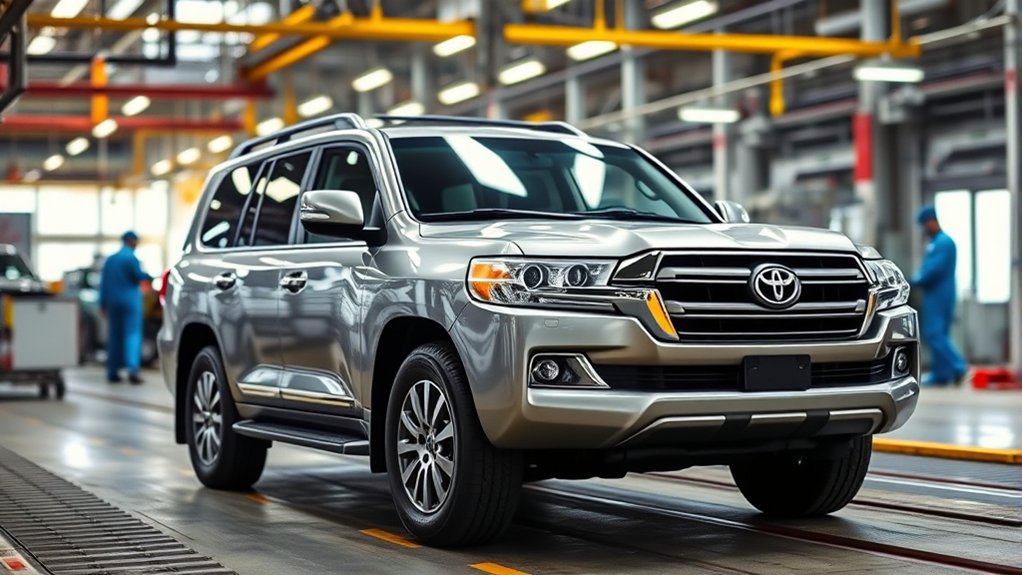
You’ll find the Toyota Land Cruiser primarily assembled in Japan, where advanced automation at the Tahara plant assures quality and consistency. This flagship SUV benefits from meticulous craftsmanship combined with cutting-edge technology.
Key hubs in the Middle East, Australia, and Thailand handle regional production, adapting models to local climates and preferences. These locations help Toyota deliver vehicles suited to diverse environments and customer needs.
This global network balances innovation, cost, and ethical standards, shaping variations in design and pricing. Understanding these manufacturing locations reveals how Toyota meets diverse market needs while maintaining reliability and performance worldwide.
Key Takeaways
- The Land Cruiser is primarily manufactured in Japan, with the Tahara plant serving as the main assembly hub.
- Significant assembly plants for the Land Cruiser exist in the Middle East and Australia to meet regional demand.
- Thailand functions as an important manufacturing center with efficient logistics for Southeast Asian markets.
- Regional production adapts models to local climates, such as enhanced cooling in the Middle East and off-road features in Australia.
- Global production sites operate under brand licensing and quality control to ensure consistency across markets.
Where Is the Toyota Land Cruiser Built Today?
Where is the Toyota Land Cruiser built today? You’ll find that production primarily takes place in Japan, where Toyota’s main manufacturing facilities are located. This centralized production supports the vehicle’s consistency and quality, essential for its global marketing success.
The Land Cruiser’s design also reflects an understanding of urban design trends, blending rugged off-road capability with features suitable for city driving. By focusing manufacturing in Japan, Toyota can efficiently implement technological advancements and maintain strict quality control.
This approach allows you to experience a vehicle that meets diverse consumer needs worldwide without compromising its core attributes. Understanding where the Land Cruiser is built today helps you appreciate the strategic balance between global marketing demands and evolving urban design preferences.
Key Land Cruiser Manufacturing Hubs Around the World
While Japan remains the primary production center for the Toyota Land Cruiser, the vehicle’s manufacturing network extends to several key hubs worldwide. You’ll find significant assembly plants in the Middle East and Australia, where regional demand drives localized production.
These hubs operate under strict brand licensing agreements, ensuring consistent quality across markets. By leveraging regional supply chains, Toyota minimizes logistics costs and adapts to local market requirements efficiently.
This decentralized approach allows you to benefit from timely delivery and tailored features suited to specific environments. Understanding these hubs helps you appreciate how Toyota balances global standards with regional customization, maintaining the Land Cruiser’s reputation for reliability and performance wherever it’s made.
How Toyota’s Global Factories Influence Land Cruiser Production
You’ll find that Toyota’s Land Cruiser production relies heavily on key factories spread across the globe, each specializing in different components and assembly stages. These locations work together through a complex global supply chain that ensures efficiency and consistency in quality. Understanding how these factories connect helps explain the Land Cruiser’s reliable manufacturing process.
Key Manufacturing Locations
How do Toyota’s global factories shape the production of the Land Cruiser? You’ll find that Toyota strategically locates key manufacturing plants in Japan and select international sites to optimize quality and efficiency.
The primary Land Cruiser assembly occurs in Toyota’s Tahara plant in Japan, renowned for advanced automation and strict adherence to global labor practices. This commitment ensures fair working conditions and skilled craftsmanship, which directly impacts the vehicle’s reliability.
Additionally, Toyota’s factories abroad complement production by handling specific components, supporting supply chain ethics through transparent sourcing and responsible supplier partnerships. By managing manufacturing across these locations, Toyota maintains consistent standards worldwide, balancing innovation, cost-effectiveness, and ethical considerations.
Impact of Global Supply Chains
Toyota’s global network of factories doesn’t just assemble the Land Cruiser; it also shapes how components move and integrate through complex supply chains. You’ll see how regional design adaptations guarantee the vehicle meets local demands while maintaining strict quality control across all sites.
This interconnected system allows Toyota to optimize production efficiency and respond swiftly to market changes.
| Factory Location | Component Produced | Role in Supply Chain |
|---|---|---|
| Japan | Engine | Central quality control |
| Thailand | Body Assembly | Regional design input |
| Australia | Final Assembly | Market-specific tuning |
Understanding this global interplay helps you appreciate the precision behind each Land Cruiser, guaranteeing consistent performance worldwide.
The History of Land Cruiser Manufacturing Locations
Where did the Land Cruiser’s journey begin, and how has its production evolved over time? You’ll find its origins in Japan during the early 1950s, where Toyota focused on efficient land use to establish manufacturing plants.
Over the decades, production expanded beyond Japan to meet global demand, reflecting shifts in land use priorities and industrial strategy. Battery sourcing, especially with the rise of hybrid and electric models, has influenced manufacturing locations due to the need for proximity to reliable suppliers.
You’ve seen the Land Cruiser adapt to changing technologies and economic conditions, prompting Toyota to optimize production facilities worldwide. Understanding this history helps you appreciate how manufacturing locations align with resource availability and logistical considerations, shaping the Land Cruiser’s global footprint without losing its foundational roots.
Why Japan Remains a Central Land Cruiser Assembly Hub
You’ll find that Japan’s role as a Land Cruiser assembly hub is rooted in its long manufacturing history and commitment to quality. The country’s factories use advanced production technologies that guarantee precision and efficiency. This combination keeps Japan central to Land Cruiser manufacturing today.
Historical Manufacturing Significance
Why has Japan remained the central hub for assembling the Land Cruiser throughout its history? Its historical significance is rooted in Toyota’s early commitment to quality and innovation, establishing manufacturing standards that shaped the Land Cruiser’s global reputation.
Japan’s factories pioneered assembly techniques tailored to meet diverse market demands. You’ll notice that regional design variations, influenced by different climates and terrains, were developed and tested primarily in Japan before being adapted worldwide.
This centralized approach ensured consistent quality control while allowing flexibility for local preferences. By maintaining production in Japan, Toyota preserved its core manufacturing expertise and heritage, which continues to influence Land Cruiser models globally.
This blend of tradition and adaptability explains why Japan remains the pivotal assembly location for the Land Cruiser series.
Advanced Production Technologies
How does Japan maintain its role as the central assembly hub for the Land Cruiser amid evolving automotive technologies? Japan leverages cutting-edge production technologies like automation, robotics, and precision engineering to ensure consistent quality and efficiency.
These advancements help Toyota meet stringent global standards, reinforcing the Land Cruiser’s reputation in global branding. You’ll find that Japan’s integration of smart manufacturing aligns with consumer psychology, as buyers associate advanced technology with reliability and innovation.
This strategic focus supports Japan’s position not just as a manufacturing site but as a symbol of excellence. By continuously upgrading production methods, Japan ensures the Land Cruiser meets modern demands while preserving its legacy, making it a trusted choice worldwide.
Land Cruiser Production in the Middle East: What Makes It Unique
What sets Land Cruiser production in the Middle East apart is its adaptation to the region’s extreme climate and terrain. You’ll notice regional branding plays a key role, tailoring models to local preferences and market demands.
Export logistics are streamlined to ensure timely delivery across nearby countries, enhancing supply chain efficiency. This localized production also means enhanced durability features to withstand desert heat and rough landscapes.
Here’s a quick overview:
| Aspect | Middle East Production Focus |
|---|---|
| Regional Branding | Customized trims and features |
| Export Logistics | Efficient routes within Gulf region |
| Climate Adaptation | Reinforced cooling and suspension |
How Australia’s Land Cruiser Assembly Adds Distinct Features
Just as Land Cruiser production in the Middle East adjusts to harsh desert conditions, Australia’s assembly line tailors vehicles to meet the demands of its own rugged environment. You’ll notice that Australian-assembled Land Cruisers often include modifications designed for off-road durability and long-distance reliability, reflecting the continent’s unique terrain challenges.
Historical supply chains influence component sourcing, ensuring parts are suited to local conditions while balancing cost efficiency. Additionally, regional labor costs impact assembly methods, encouraging a mix of automation and skilled craftsmanship to optimize production without compromising quality.
Thailand’s Rise as a Major Land Cruiser Manufacturing Center
Why has Thailand emerged as a key hub for Land Cruiser manufacturing? You’ll find that Thailand’s strategic location and manufacturing capabilities make it ideal. The country offers efficient global logistics, ensuring timely distribution to international markets.
Additionally, Thailand adheres to stringent regional safety standards, meeting demands across Southeast Asia and beyond. These factors collectively boost its manufacturing appeal.
Consider these points that highlight Thailand’s rise:
- Proximity to key markets reduces shipping times and costs
- Well-developed infrastructure supports large-scale production
- Skilled workforce experienced in automotive manufacturing
Differences Between Land Cruisers Built in Various Countries
You’ll notice that Land Cruisers made in different countries have distinct characteristics influenced by their manufacturing locations and regional design preferences. These variations can affect features tailored to local markets and the quality control standards each facility follows. Understanding these differences helps you appreciate how production impacts the final vehicle you drive.
Manufacturing Locations Overview
How do Land Cruisers differ depending on where they’re built? The manufacturing locations significantly influence aspects like quality control, component sourcing, and adherence to production ethics.
Each facility taps into a unique global supply network, impacting parts availability and assembly standards. When you examine Land Cruiser manufacturing sites, consider these factors:
- Local regulations shaping production ethics and labor practices
- Variability in component sourcing due to regional global supply chains
- Differences in quality assurance protocols and technological integration
Understanding these distinctions helps you appreciate how manufacturing locations affect the vehicle’s overall reliability and compliance with ethical standards. While the core design remains consistent, the production environment plays a crucial role in the final product’s characteristics, ensuring you get a Land Cruiser that meets both global expectations and regional requirements.
Regional Design Variations
Where do Land Cruisers show the most noticeable differences based on their country of manufacture? You’ll find that regional design plays a key role, tailored to local preferences and conditions.
These variations align closely with regional marketing strategies, ensuring the vehicle suits specific markets. For example, Land Cruisers built in the Middle East often feature enhanced cooling systems for extreme heat, while those in Australia emphasize off-road capabilities.
Japan models might prioritize luxury interiors, reflecting domestic tastes. This regional customization affects features, trims, and sometimes materials to meet local demands efficiently.
| Country | Key Regional Design Feature | Regional Marketing Focus |
|---|---|---|
| Japan | Premium interiors | Luxury and comfort |
| Australia | Off-road enhancements | Adventure and ruggedness |
| Middle East | Enhanced cooling systems | Performance in extreme heat |
| South Africa | Reinforced suspension | Durability on rough terrain |
| USA | Safety tech integration | Family and urban use |
Quality Control Differences
What sets apart Land Cruisers built in different countries often goes beyond design. It extends deeply into quality control processes. When you look closely, variations in land quality and the extent of global sourcing impact how each factory enforces standards.
Some plants may emphasize rigorous testing on rough terrains, while others focus on assembly precision. Key factors influencing quality control differences include:
- Adherence to local manufacturing regulations and standards
- Availability and quality of sourced components globally
- Customization of inspection protocols to suit regional market demands
Understanding these nuances helps you appreciate why Land Cruisers from Japan, Australia, or the Middle East might offer distinct reliability and performance characteristics. Each production site balances global sourcing advantages with regional quality mandates to maintain Toyota’s trusted reputation.
How Manufacturing Location Impacts Land Cruiser Quality and Price
Why does the manufacturing location matter when it comes to the Land Cruiser’s quality and price? The site influences manufacturing logistics, affecting supply chain efficiency and production costs.
Manufacturing location shapes supply chain efficiency and production costs, directly impacting the Land Cruiser’s quality and price.
When you consider locations with well-established supplier diversification, you’ll find they reduce risks related to parts shortages and maintain consistent quality standards. If a plant relies on a narrow supplier base, disruptions can increase costs and delay production, which ultimately impacts the vehicle’s price.
Additionally, labor costs and local regulations vary by location, influencing final pricing. You’ll also notice that proximity to key markets can lower shipping expenses, making the Land Cruiser more competitively priced.
In short, where the Land Cruiser is made plays a critical role in balancing quality control with cost management.
Innovations Toyota Uses to Keep Land Cruiser Production Consistent
Understanding how manufacturing location affects the Land Cruiser’s quality and price highlights why Toyota invests heavily in production innovations. You’ll find Toyota streamlines manufacturing logistics to minimize delays and maintain uniform standards across different plants. They integrate advanced automation with skilled human oversight, ensuring consistency regardless of location.
Additionally, Toyota adapts regional branding strategies that respect local market preferences while preserving the Land Cruiser’s global identity.
Key innovations include:
- Real-time supply chain monitoring to prevent disruptions
- Standardized training programs for all assembly workers
- Modular production systems enabling flexible assembly lines
Frequently Asked Questions
What Is the Average Fuel Efficiency of a Toyota Land Cruiser?
You’ll find the Toyota Land Cruiser averages about 13-17 mpg, balancing fuel efficiency with its impressive off-road capability and rugged aesthetics. It’s designed more for durability and performance than for saving fuel on long drives.
How Often Should a Land Cruiser’s Routine Maintenance Be Performed?
Think of your Land Cruiser’s maintenance cadence as a heartbeat. It should follow the service schedule closely, typically every 5,000 to 10,000 miles, ensuring your vehicle runs smoothly and avoids costly repairs down the road.
What Are the Common Engine Options Available for the Land Cruiser?
You’ll find Land Cruiser engine options typically include V6 and V8 configurations, with displacement sizing ranging from 4.0 to 5.7 liters. These choices balance power and efficiency for various driving needs.
How Does the Land Cruiser Compare to Other Toyota SUVS?
You’ll find the Land Cruiser stands out in Toyota’s SUV lineup for its rugged durability and off-road prowess. Unlike others, it’s produced mainly in Japan, highlighting its premium build quality and global reputation.
What Safety Features Come Standard in the Latest Land Cruiser Models?
Think of the Land Cruiser as a vigilant guardian; its standard features include adaptive cruise control, lane departure alert, and thermal imaging. These ensure you navigate safely through darkness and danger with advanced Land Cruiser safety technologies protecting you constantly.
Conclusion
Think of the Toyota Land Cruiser as a global tapestry, woven with threads from Japan, Thailand, and beyond. Each manufacturing hub adds its unique color and strength, shaping the vehicle’s quality and price. Just like skilled artisans ensuring every stitch is perfect, Toyota’s factories worldwide maintain consistent innovation and craftsmanship.
Understanding where the Land Cruiser is made helps you appreciate the intricate balance of tradition, technology, and geography behind this iconic SUV. The blend of these elements is what makes the Land Cruiser a remarkable vehicle recognized around the world. Knowing the origins of its production deepens your appreciation for the Toyota Land Cruiser.