How Do I Mix 2 Stroke Fuel
To mix 2 stroke fuel, start by checking your engine’s manual for the exact fuel-to-oil ratio, which is usually between 40:1 and 50:1. This ratio is crucial for optimal engine performance and longevity. Using the correct proportions prevents engine damage and ensures smooth operation.
Use a clean, calibrated container to measure the gasoline first. Then, add the correct amount of two-stroke oil to the gasoline. Stir or shake the mixture thoroughly in a sealed, labeled container to ensure proper blending.
Store the mixed fuel in a cool, approved container away from heat sources. Proper storage keeps the fuel stable and safe to use. Getting the mix right protects your engine and boosts its performance.
For tips on adjusting mixtures based on your engine’s needs and safety precautions, keep exploring further.
Understanding the Right Fuel-to-Oil Ratio for 2 Stroke Engines
How do you determine the correct fuel-to-oil ratio for your 2 stroke engine? Start by consulting the manufacturer’s specifications, usually found in the manual or on the engine itself. Most engines require a ratio between 40:1 and 50:1, meaning 40 to 50 parts gasoline to one part oil.
Using the correct ratio is critical; too little oil risks damage, while too much can cause carbon buildup and fouled spark plugs. Properly mixed fuel ensures efficient combustion and supports fuel additive purposes like cleaning carburetor components and reducing deposits.
Tools and Materials Needed for Mixing 2 Stroke Fuel
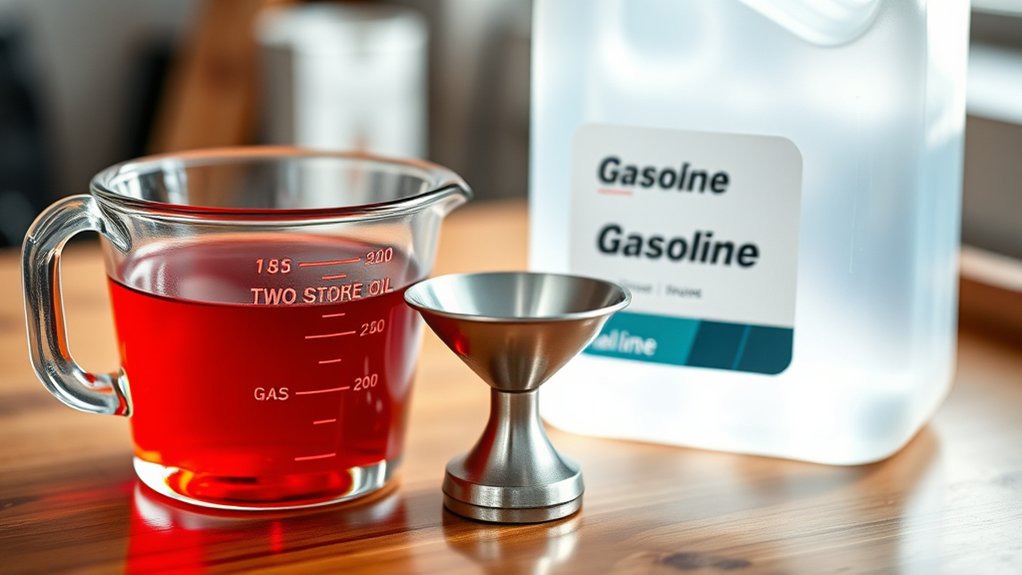
You’ll need precise measuring tools like a graduated container and a funnel to guarantee accurate mixing. Start with high-quality fuel designed for your engine to maintain performance and reduce buildup. Having the right materials in place sets the foundation for a proper 2 stroke fuel mixture.
Essential Mixing Equipment
What tools do you need to mix 2 stroke fuel accurately? First, get a clean, calibrated measuring container for precise oil and fuel ratios. Use a funnel to avoid spills and contamination, especially important if your hatchback maintenance involves storing mixed fuel.
A sturdy, sealable fuel container is essential for safe storage and transport. Consider gloves and safety glasses to protect yourself from fuel additives, which can be hazardous. A stirring stick or a shaking method ensures thorough blending of gasoline and oil.
Avoid using unmarked containers or guesswork. Accuracy prevents engine damage. By assembling this essential mixing equipment, you’ll maintain optimal performance and extend your engine’s life, whether for your hatchback’s small two-stroke engine or other equipment requiring precise fuel mixtures.
Choosing Quality Fuel
Where should you start when selecting fuel for your 2 stroke engine? Begin by focusing on fuel quality to ensure optimal performance and two stroke cleanliness. Choose fresh gasoline with an octane rating recommended by your engine manufacturer.
Avoid old or contaminated fuel to prevent deposits that compromise engine function. Consider fuel additives that enhance lubrication and reduce carbon buildup. When preparing to mix, gather these essentials:
- High-octane unleaded gasoline
- Quality two stroke oil with proven additives
- Clean, airtight mixing container
- Accurate measuring tools
Using the right fuel and additives maintains two stroke cleanliness, extending engine life. Proper selection and handling of these materials form the foundation for effective mixing, ensuring your 2 stroke engine runs smoothly and efficiently.
How to Mix 2 Stroke Fuel Safely: Step-by-Step Guide
How exactly do you mix 2 stroke fuel safely to guarantee peak engine performance and longevity? Start by choosing a well-ventilated area to minimize inhalation risks, emphasizing two stroke safety. Use a clean, approved container designed for fuel handling.
Measure the oil and gasoline precisely according to your engine’s recommended ratio, typically 50:1 or 40:1. Pour the gasoline first, then add the correct amount of 2 stroke oil to prevent splashing and ensure accurate mixing.
Seal the container tightly and shake vigorously to blend the fuel and oil thoroughly. Always wear gloves and eye protection to avoid skin contact and irritation.
Finally, label the container clearly with the mix ratio and date to maintain safe handling and avoid misuse. Follow these steps every time for safe, effective fuel preparation.
How to Store Mixed 2 Stroke Fuel Properly
You should store mixed 2 stroke fuel in approved, airtight containers designed for gasoline. Keep the containers out of direct sunlight to prevent degradation and evaporation. Also, maintain a cool storage temperature to preserve fuel quality and reduce the risk of vapor buildup.
Choose Appropriate Storage Containers
Why does choosing the right storage container matter when handling mixed 2 stroke fuel? Selecting an appropriate fuel vessel ensures the fuel stays uncontaminated and prevents leaks or evaporation.
You want a container that maintains the fuel’s integrity over time. Look for containers designed specifically for fuel storage, with tight container sealants that resist degradation from the fuel’s chemicals.
Avoid repurposed or non-certified vessels, as they can fail or react with the fuel.
Ideal storage containers should have:
- Durable, fuel-resistant material like high-density polyethylene
- Secure, airtight caps with reliable container sealants
- Clear labeling areas to mark fuel type and mix date
- Ergonomic design for safe pouring and transport
Choosing the right container preserves fuel quality and enhances safety during storage.
Keep Fuel Away Sunlight
Where should you store mixed 2 stroke fuel to maintain its quality? Keep it away from direct sunlight exposure. UV rays accelerate fuel degradation by breaking down hydrocarbons and evaporating volatile compounds.
Avoid placing containers near windows or solar powered devices that generate heat, as this can increase fuel temperature and reduce shelf life. Use opaque, airtight containers designed for fuel storage to block light effectively.
Store fuel in a shaded, well-ventilated area to minimize sunlight exposure and prevent pressure buildup. Regularly check containers for damage or leaks, since compromised seals allow light and air in, hastening fuel breakdown.
Maintain Cool Storage Temperature
In addition to shielding mixed 2 stroke fuel from sunlight, controlling storage temperature plays a crucial role in preserving its quality. Excessive heat can degrade the oil viscosity, compromising lubrication and stressing your engine’s coolant systems.
To keep your fuel stable, store it in a cool, dry place away from heat sources. Avoid temperature fluctuations that accelerate chemical breakdown.
Keep these points in mind:
- Store fuel below 25°C (77°F) to maintain oil viscosity
- Use airtight containers to prevent contamination
- Avoid areas near heat-producing equipment or direct sunlight
- Ensure storage spots have stable temperatures to protect coolant system performance
Common Mistakes to Avoid When Mixing 2 Stroke Fuel
What common pitfalls should you watch out for when mixing 2 stroke fuel? First, avoid mixing mistaken ratios. Using too much or too little oil can cause engine damage or poor performance. Always measure precisely according to your engine’s specifications.
Second, steer clear of fuel mislabeling. Clearly mark your fuel containers with the correct oil-to-gas ratio and date mixed to prevent confusion later. Another mistake is mixing fuel in incompatible containers, which can contaminate the blend.
Also, never use old or degraded oil, as it reduces lubrication quality. Finally, don’t mix fuel in unventilated areas to avoid inhaling fumes. By avoiding these common errors, you ensure your two-stroke engine runs efficiently and lasts longer.
How to Troubleshoot Engine Issues Related to Fuel Mixture
Mistakes in mixing your 2 stroke fuel can lead to engine performance problems. To troubleshoot, first consider your engine design and fuel octane requirements. Using the wrong octane can cause knocking or poor combustion.
Check these common issues: engine sputtering or stalling during acceleration, excessive smoke or carbon buildup from incorrect oil ratio, difficulty starting due to fuel degradation or improper mix, and overheating caused by lean fuel mixtures.
Verify that you’re using fresh, properly mixed fuel matching your engine’s specifications. Inspect spark plugs for signs of fouling or damage. Testing different fuel blends while keeping within manufacturer recommendations helps isolate fuel mixture-related problems.
Proper troubleshooting ensures optimal performance and prolongs engine life.
How to Adjust 2 Stroke Fuel Mixtures for Different Engines and Conditions
How should you adjust your 2 stroke fuel mixture to match different engines and operating conditions? Start by consulting the engine manufacturer’s recommended oil-to-fuel ratio, as two stroke lubrication requirements vary by engine design.
High-performance or older engines often need richer mixtures (e.g., 32:1), while modern, efficient engines can run leaner (50:1). Consider fuel quality too—use fresh, high-octane fuel to prevent deposits and ensure optimal combustion.
In extreme conditions like high altitude or temperature, slightly enriching the mixture helps maintain engine cooling and prevents lean running, which can damage components. Always mix thoroughly to ensure consistent two stroke lubrication.
Adjusting your fuel mixture precisely protects the engine, improves performance, and extends its lifespan under varying conditions.
Frequently Asked Questions
Can I Use Any Type of Oil for 2 Stroke Fuel?
You shouldn’t use any oil for 2 stroke fuel. Only recommended 2 stroke oils work. Follow proper oil mix ratios to avoid engine damage.
Check your engine’s manual for specific oil types and topic ideas on fuel blending.
How Long Does Mixed 2 Stroke Fuel Last Before It Goes Bad?
Your mixed 2 stroke fuel won’t survive forever. It usually lasts about 30 days before mixture aging wrecks its performance. Store it cool, dark, and sealed to maximize life and avoid engine troubles or poor combustion.
What Happens if I Use Straight Gasoline in a 2 Stroke Engine?
Using straight gasoline in small engines can cause poor performance due to missing fuel additives and improper octane levels. Ethanol content reduces fuel stability, leading to engine damage.
Always use blenders designed for 2-stroke fuel.
Is Premixed 2 Stroke Fuel Better Than Mixing My Own?
Premixed vs self-mixing is a toss-up, but premixed fuel saves you time and hassle. It offers consistent fuel economy and engine protection, while self-mixing lets you tailor ratios but risks errors affecting performance and longevity.
Can 2 Stroke Fuel Mixtures Damage the Environment?
Yes, improper 2 stroke fuel mixtures increase environmental impact by releasing harmful emissions. You should use fuel stabilization additives to reduce degradation and pollutants, minimizing damage and ensuring safer engine performance for both you and the environment.
Conclusion
Mixing 2 stroke fuel correctly ensures your engine runs smoothly and lasts longer. Remember, “measure twice, cut once” applies here—always use the precise fuel-to-oil ratio recommended for your engine.
Use proper tools, mix carefully, and store fuel safely to avoid common pitfalls. If issues arise, troubleshoot your mixture before blaming the engine. Adjust ratios based on conditions to optimize performance.
With attention to detail, you’ll keep your 2 stroke engine reliable and efficient. Proper mixing of 2 stroke fuel is key to achieving the best results and maintaining engine health.