How Check Fuel Pressure
To check your fuel pressure, first ensure the engine is off and cooled.
Then, disconnect the negative battery terminal to prevent ignition.
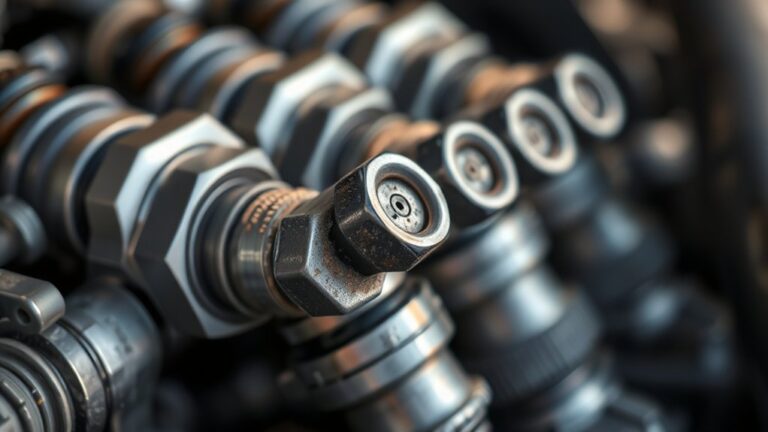
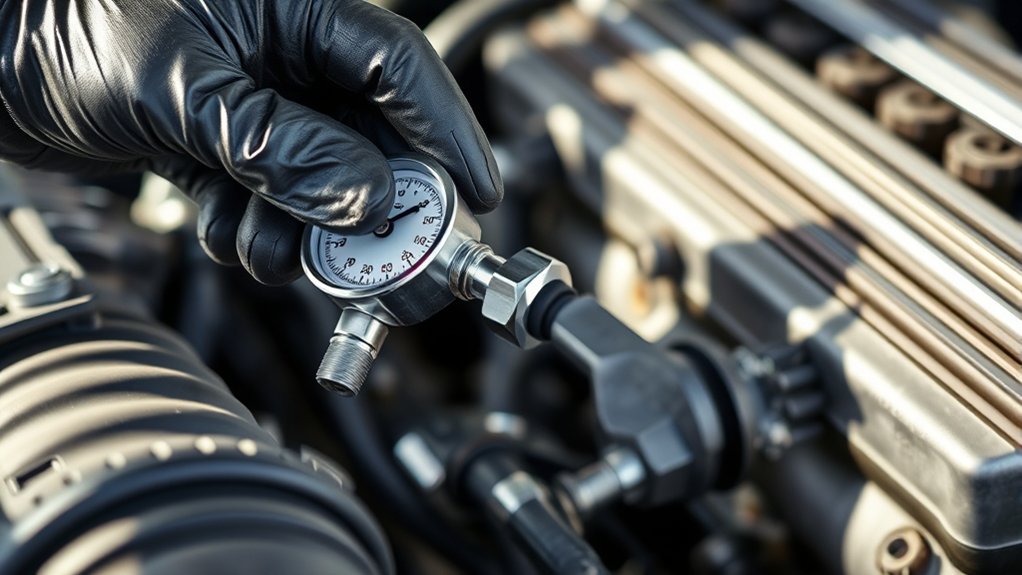
Attach a compatible fuel pressure gauge securely to the fuel rail’s test port.
Turn the ignition to ON without starting the engine to pressurize the system.
Observe the gauge reading carefully.
Start the engine briefly to confirm stable pressure within specifications.
Compare the readings to your vehicle’s manual to identify any issues.
Understanding these steps leads you into more detailed diagnostics and troubleshooting.
Preparing Your Vehicle for a Fuel Pressure Test
Before you begin testing fuel pressure, you need to prepare your vehicle properly to guarantee accurate readings and safety. Start by ensuring the engine is off and cooled to avoid injury. Disconnect the negative battery terminal to prevent accidental ignition.
Check that the ignition timing is at its baseline setting, as altered timing can affect fuel pressure and compromise test reliability. Inspect the fuel system for leaks or damage, since compromised components distort fuel economy data.
Relieve fuel system pressure by carefully following manufacturer guidelines to avoid fuel spray hazards. Remove any components obstructing access to the fuel pressure test port.
Tools You’ll Need to Check Fuel Pressure
With your vehicle properly prepared, the next step is gathering the right tools to accurately measure fuel pressure. You’ll need a fuel pressure gauge compatible with your vehicle’s fuel delivery system, ensuring it can connect to the specific fuel port without causing leaks.
Gather the right fuel pressure gauge that fits your vehicle’s system to ensure accurate, leak-free measurements.
A set of wrenches or pliers may be necessary to access the fuel rail or test port. Additionally, have safety equipment like gloves and eye protection ready, as fuel systems operate under pressure and can spray fuel.
A vacuum gauge can be helpful to check for vacuum leaks that might affect fuel pressure readings. Finally, keep a fire extinguisher nearby for safety.
Using these tools methodically ensures precise measurement and helps diagnose fuel delivery issues accurately.
Measuring Fuel Pressure: A Step-by-Step Guide
How do you accurately measure fuel pressure to diagnose potential issues? First, ensure your engine is off and cool to avoid misreadings that might be influenced by drive belt longevity or oil viscosity concerns.
Follow these steps precisely:
- Locate the fuel rail and attach the fuel pressure gauge securely to the test port.
- Turn the ignition key to the “on” position without starting the engine to pressurize the system.
- Observe and record the gauge reading, noting any fluctuations.
- Start the engine briefly and monitor the gauge for stable pressure within manufacturer specifications.
How to Interpret Fuel Pressure Readings
Once you have recorded the fuel pressure readings, interpreting them accurately is key to diagnosing potential issues. Compare the readings against the manufacturer’s specified range for your vehicle.
If the pressure is consistently low, it may indicate a weak fuel pump or clogged filter, which can reduce fuel efficiency and increase exhaust emissions. Conversely, excessively high pressure might signal a faulty pressure regulator or restricted fuel return line, potentially causing rich fuel mixtures.
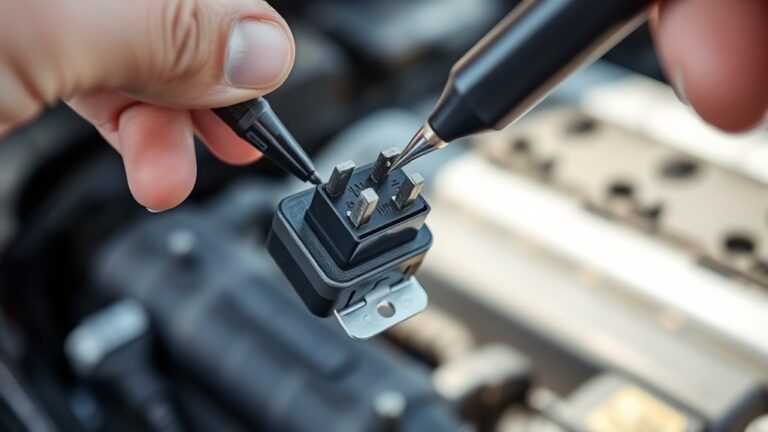
Pay attention to pressure stability; fluctuations suggest issues with the fuel pump relay or wiring. Also, assess the pressure under different operating conditions, such as idle, acceleration, and cruising, to identify inconsistencies.
Accurate interpretation ensures you pinpoint the exact cause, enabling targeted repairs that maintain optimal fuel efficiency and minimize harmful exhaust emissions.
Common Fuel Pressure Issues Explained
You’ll notice specific symptoms when fuel pressure is too low, such as engine hesitation or stalling. Pressure fluctuations often stem from issues like a failing fuel pump or clogged filters. Conversely, consistently high pressure can cause injector damage and poor engine performance.
Symptoms of Low Pressure
Why does your engine hesitate or stall unexpectedly? Low fuel pressure often causes these issues, impacting your fuel economy and overall engine performance. When fuel pressure drops below specifications, your engine might not receive the proper amount of fuel, leading to inefficient combustion and increased engine noise.
Here are key symptoms to watch for:
- Engine hesitation during acceleration due to insufficient fuel delivery.
- Stalling at idle or under load as fuel supply becomes inconsistent.
- Noticeable drop in fuel economy from incomplete combustion cycles.
- Unusual engine noise, such as sputtering or knocking, signaling fuel delivery problems.
Recognizing these symptoms early helps you diagnose low fuel pressure accurately and prevents further engine damage.
Causes of Pressure Fluctuations
Low fuel pressure symptoms often trace back to specific mechanical or electrical issues affecting the fuel delivery system. You should first inspect the fuel pump for wear or failure, which directly causes pressure fluctuations.
A clogged fuel filter can restrict flow, reducing pressure and impacting fuel economy. Faulty fuel pressure regulators may also cause inconsistent pressure by failing to maintain steady output.
Electrical problems, such as wiring issues or a malfunctioning fuel pump relay, can disrupt pump operation, leading to pressure variations. Additionally, improper ignition timing can indirectly affect fuel pressure by altering engine load and demand, causing the system to respond erratically.
Effects of High Pressure
How does excessive fuel pressure impact your vehicle’s performance? High fuel pressure can disrupt optimal combustion, especially at high altitude where air density decreases. This imbalance reduces diesel economy and increases emissions.
When pressure exceeds specifications, it can:
- Cause fuel injector damage due to excessive spray force.
- Lead to rich fuel mixtures, increasing consumption and smoke.
- Trigger sensor errors, compromising engine management.
- Accelerate wear on fuel pump components, risking failure.
You should monitor pressure closely to maintain engine efficiency and avoid costly repairs. Adjusting for altitude variations is crucial since pressure requirements differ.
Troubleshooting Low and High Fuel Pressure
You’ll start by identifying common causes of low fuel pressure, such as clogged filters or failing pumps. Next, recognize symptoms of high fuel pressure, including engine hesitation or leaks. Use diagnostic tools like fuel pressure gauges and scan tools to accurately measure and analyze pressure levels.
Identifying Low Pressure Causes
What factors cause a drop in fuel pressure? When diagnosing low fuel pressure, you must consider several technical elements, especially in novel hybrids and vehicles with aftermarket modifications. These factors can directly impair fuel delivery and engine performance.
- Fuel Pump Failure: A weak or failing pump reduces pressure output.
- Clogged Fuel Filter: Restricts flow, lowering pressure downstream.
- Leaking Fuel Lines or Injectors: Causes pressure loss due to fuel escaping.
- Faulty Fuel Pressure Regulator: Incorrectly adjusts pressure, leading to drops.
In novel hybrids, integrated electric fuel pumps may fail differently than traditional pumps. Aftermarket modifications often alter fuel system components, potentially causing mismatched pressure levels. Always inspect these systematically to pinpoint and resolve low pressure issues accurately.
Symptoms of High Pressure
When does high fuel pressure become a problem, and how can you identify its symptoms? High fuel pressure can cause engine performance issues, such as rough idling and poor acceleration. It’s essential to recognize these symptoms early to avoid damage.
Avoid irrelevant topic distractions; focus on this two word discussion: fuel pressure.
| Symptom | Effect on Engine |
|---|---|
| Hard starting | Excess fuel floods engine |
| Black smoke | Rich fuel mixture |
| Poor acceleration | Fuel delivery imbalance |
| Engine misfire | Spark plug fouling |
If you notice these signs, suspect high fuel pressure. Checking and correcting it promptly ensures optimal engine function and prevents costly repairs.
Diagnostic Tools and Methods
Identifying symptoms of abnormal fuel pressure is only the first step; accurately diagnosing the root cause requires specific tools and methods. To avoid irrelevant topic diversions or random speculation, you must rely on precise diagnostic techniques. Use the following tools and methods systematically:
- Fuel pressure gauge: Connect to the fuel rail to measure static and dynamic pressure.
- Scan tool: Access fuel system data and error codes from the vehicle’s ECU.
- Fuel volume flow tester: Assess fuel pump output over time.
- Leak-down tester: Check for pressure retention and detect leaks in the fuel system.
When It’s Time to Call a Pro for Fuel Pressure Issues
How can you determine if a fuel pressure problem requires professional intervention? If you’ve ruled out irrelevant topics like random concept failures unrelated to the fuel system, and your diagnostic tools still indicate inconsistent or absent pressure readings, it’s time to call a pro.
Complex issues such as internal fuel pump failures, clogged fuel lines, or malfunctioning pressure regulators often demand specialized equipment and expertise beyond typical DIY capabilities. Additionally, if your tests show pressure fluctuations under load or intermittent failures that you cannot replicate consistently, a professional’s methodical approach will pinpoint root causes accurately.
Avoid risking further damage by attempting repairs without advanced diagnostic tools or technical knowledge. Prioritize safety and efficiency by consulting a certified technician when fuel pressure problems persist despite your initial assessments.
Frequently Asked Questions
Can Fuel Pressure Affect My Vehicle’s Fuel Economy?
Yes, incorrect fuel pressure disrupts your fuel system’s efficiency, causing poor atomization and combustion. This leads to wasted fuel and reduced fuel economy.
Maintaining proper fuel pressure ensures optimal engine performance and better mileage.
How Often Should I Check My Fuel Pressure?
You should check fuel pressure every 12,000 miles or during symptoms like rough idling. Ensure correct pressure gauge placement on the Schrader valve for accurate readings.
This helps maintain optimal engine performance and avoid costly repairs.
Does Altitude Impact Fuel Pressure Readings?
Yes, altitude effects can impact fuel pressure readings because lower atmospheric pressure at higher elevations affects pressure stability.
You should account for these variations to guarantee accurate diagnostics and maintain optimal engine performance under varying altitude conditions.
Can Bad Fuel Damage the Fuel Pressure Regulator?
Yes, bad fuel containing contaminants can damage the fuel pressure regulator by clogging its internal components, causing inconsistent pressure.
You’ll need to inspect and replace the bad regulator to restore proper fuel system function effectively.
Are Fuel Pressure Tests Safe for Hybrid Vehicles?
Yes, fuel pressure tests are safe for hybrid vehicles if you follow hybrid safety protocols precisely. You must minimize pressure testing risks by disconnecting the battery and using insulated tools to prevent electrical hazards and guarantee accurate readings.
Conclusion
Checking your fuel pressure is like reading the heartbeat of your vehicle’s fuel system—steady and precise. By preparing your vehicle, gathering the right tools, and following a step-by-step approach, you can accurately measure and interpret fuel pressure. Understanding common issues helps you troubleshoot effectively.
Remember, if readings don’t align with specs, don’t hesitate to call a professional. Your engine’s performance depends on this critical diagnostic check, so treat it with methodical care. Properly checking your fuel pressure ensures your vehicle runs smoothly and efficiently.