How to Choose a Tonneau Cover
To choose a tonneau cover, start by measuring your truck bed precisely, noting the length, width, and depth. This ensures you select a cover that fits perfectly and offers optimal protection.
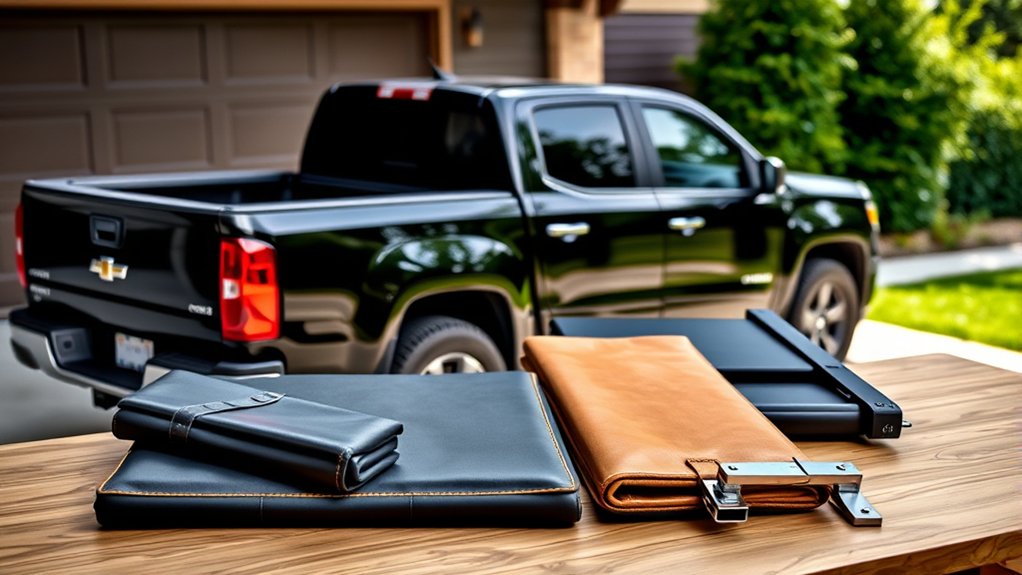
Next, decide between soft covers—lightweight, affordable, and easy to install—or hard covers, which provide superior durability and enhanced security. Consider the installation style as well: clamp-on for convenience, rail-mounted for a stronger attachment, or flush-mount for maximum security and improved aerodynamics.
Finally, factor in your climate, budget, and desired fuel efficiency gains. Understanding these trade-offs will help you select a tonneau cover that fits your priorities and vehicle needs perfectly.
Comparing Tonneau Cover Types: Soft vs. Hard
How do you decide between a soft and hard tonneau cover for your truck? Start by evaluating the soft advantages: they’re lightweight, flexible, and easier to install without tools. Soft covers typically use vinyl or canvas materials, which allow quick access through roll-up or folding designs.
They offer excellent weather resistance but may be less secure against theft or heavy impacts. Conversely, hard covers, often constructed from aluminum or fiberglass, bring durability and superior security, but keep in mind their hard limitations.
They’re heavier, require more complex installation, and can limit bed access depending on the style. While hard covers provide better protection and aesthetics, soft covers excel in convenience and affordability. Your choice hinges on balancing these soft advantages against hard limitations based on your priorities.
What to Consider When Measuring Your Truck Bed
You’ll need to measure your truck bed with precision, starting with the exact length from the bulkhead to the tailgate edge. Next, determine the bed width between the inner walls, accounting for any wheel well intrusions. Don’t forget to check the bed depth to ensure the cover fits flush without interfering with tie-downs or bed accessories.
Measure Length Accurately
Where exactly should you start when measuring your truck bed for a tonneau cover? Begin by identifying the exact points from the inside edge of the bulkhead, the wall closest to the cab, to the inside edge of the tailgate.
Use precise measuring techniques, such as a steel tape measure, to avoid inaccuracies common with fabric tapes. Be sure to measure bed lengths along the bed floor, not the top rails, as tonneau covers sit flush with the bed’s interior.
Record measurements to the nearest eighth of an inch to ensure a snug fit. Remember, slight variations in factory specifications or aftermarket accessories can affect bed lengths, so always measure your specific truck directly instead of relying on generalized dimensions.
Accurate measuring techniques here prevent costly errors during installation.
Determine Bed Width
When measuring your truck bed’s width, which specific points should you focus on to guarantee an accurate fit for your tonneau cover? Ensuring measurement accuracy is critical since an ill-fitting cover compromises protection and aesthetics.
Start by measuring the bed width at the widest points, typically between the inside edges of the bed rails. Follow these steps precisely:
- Measure across the front of the bed, just behind the cab.
- Measure across the midpoint of the bed width.
- Measure near the tailgate end, where the cover will close.
Use a rigid tape measure and record all three measurements for consistency. If discrepancies arise, rely on the smallest width to ensure the cover fits without forcing. This method guarantees you accurately capture your bed width, optimizing your tonneau cover’s fit and function.
Check Bed Depth
After accurately determining your truck bed’s width, the next step involves measuring its depth to guarantee your tonneau cover fits securely and functions properly. Start by assessing the bed depth from the top edge of the truck bed sidewall to the bottom of the bed floor.
This measurement, often referred to as the truck bed height, is critical because it affects how the cover sits and seals against the bed. Use a tape measure for precision, ensuring you measure at multiple points along the bed to account for any variations.
Tonneau Cover Installation Styles: Convenience and Security
How do you balance ease of use with the need for security when choosing a tonneau cover installation style? Understanding installation styles and security features is essential. You want a cover that’s simple to operate yet robust enough to protect your cargo.
Consider these three main styles:
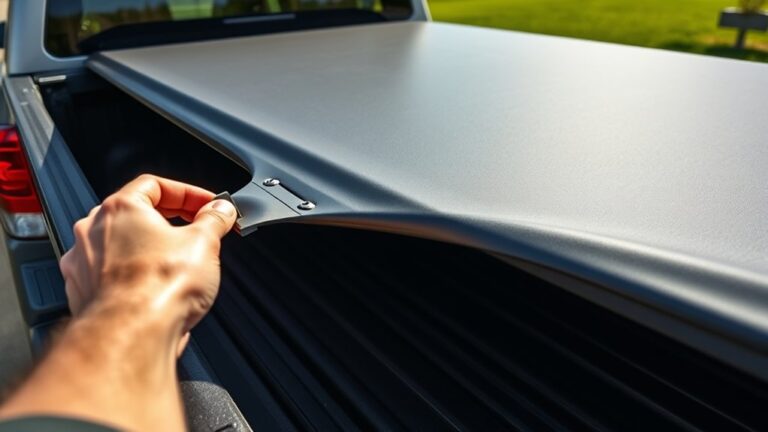
- Clamp-On Installation: Offers quick setup without drilling; good for convenience but moderate security.
- Rail-Mounted Installation: Bolts onto existing rails; provides enhanced security through solid attachment.
- Flush-Mount Installation: Integrates seamlessly with the truck bed; maximizes security and aerodynamic efficiency but requires professional installation.
Each style affects how securely the cover locks and how easily you can access the bed. Match your priorities with the most suitable installation style to guarantee your tonneau cover delivers both convenience and protection.
Soft vs. Hard Tonneau Covers: Durability Comparison
When comparing soft and hard tonneau covers, you need to evaluate the material strength and how each handles weather exposure. Soft covers typically use vinyl or fabric, offering flexibility but less resistance to punctures and UV damage. Hard covers employ aluminum or fiberglass, providing superior impact resistance and better protection against harsh weather conditions.
Material Strength Differences
Why does material strength matter so much when choosing between soft and hard tonneau covers? Understanding the material science behind each type helps you assess their structural integrity and long-term performance.
Soft covers typically use vinyl or fabric materials that offer flexibility but may be prone to tears and UV degradation. Hard covers, often made from aluminum or fiberglass composites, provide superior rigidity and impact resistance.
Consider these key factors:
- Tensile strength: Hard covers resist deformation better under load, enhancing durability.
- Abrasion resistance: Soft covers may wear down faster, affecting lifespan.
- Warranty implications: Manufacturers often offer longer warranties on hard covers due to their robust material properties.
Weather Resistance Factors
Material strength directly influences a tonneau cover’s ability to withstand harsh weather conditions, making weather resistance a key factor in durability. Hard tonneau covers typically excel with robust materials like fiberglass or aluminum, offering superior wind resistance and long-lasting protection.
Their integrated weatherproof seals prevent water infiltration, maintaining cargo dryness even under heavy rain or snow. Soft covers, constructed from vinyl or fabric, rely heavily on tight-fitting weatherproof seals but are generally less resistant to high winds and harsh impacts.
While soft covers can flex under pressure, reducing damage risk, they may degrade faster due to UV exposure and constant weather exposure. When selecting your cover, consider the local climate’s severity. Hard covers provide enhanced wind resistance and sealing, making them ideal for extreme weather, while soft covers suit milder conditions with moderate protection.
How a Tonneau Cover Protects Your Truck Bed
A tonneau cover serves as a robust barrier that shields your truck bed from environmental elements and physical damage. When considering discussion ideas about aftermarket accessories, understanding how this cover functions is essential. It primarily:
- Prevents Water Intrusion: Seals tightly to stop rain, snow, and moisture from corroding the bed.
- Defends Against UV Rays: Blocks harmful sun exposure that deteriorates paint and materials.
- Guards Against Debris and Impacts: Protects from dust, dirt, and accidental dents or scratches during transit.
Fuel Efficiency Benefits of Tonneau Covers
How substantially can a tonneau cover improve your truck’s fuel efficiency? By reducing aerodynamic drag, a properly fitted tonneau cover streamlines airflow over the truck bed, minimizing turbulence and lowering fuel consumption.
Studies show that this can boost fuel efficiency by up to 10%, especially during steady highway driving. If you primarily use your truck for urban commuting, the impact might be less pronounced but still beneficial due to reduced drag at stop-and-go speeds.
Choosing tonneau covers made from eco friendly materials further aligns with sustainable practices, reducing environmental impact without compromising performance. When selecting a cover, focus on models engineered for tight sealing and smooth surfaces to maximize aerodynamic gains and fuel savings, making your driving both economical and environmentally responsible.
Choosing the Best Tonneau Cover Within Your Budget
Maximizing your truck’s fuel efficiency with a quality tonneau cover is just one aspect of the selection process. When choosing the best tonneau cover within your budget, you need to weigh budget options against feature tradeoffs carefully. To optimize your purchase, consider:
- Material durability versus cost: Vinyl covers are budget options but offer limited longevity compared to aluminum or fiberglass.
- Security features relative to price: Lockable hard covers provide enhanced protection but increase costs.
- Installation complexity and maintenance: Manual roll-up covers are affordable and easy to install, while electric retractable models demand a higher investment and upkeep.
Understanding these tradeoffs helps you select a cover that balances performance, security, and affordability without compromising essential functions. Prioritize features that align with your primary needs to ensure maximum value within your financial constraints.
Frequently Asked Questions
Can I Use a Tonneau Cover With a Bed Liner Already Installed?
Yes, you can use a tonneau cover with a bedliner installed. Ensure bedliner compatibility by selecting a cover designed for your liner type.
Then follow precise tonneau installation steps to secure a proper fit without damaging either component.
Do Tonneau Covers Affect My Truck’s Towing Capacity?
Tonneau covers don’t reduce your truck’s towing capacity despite towing capacity myths. However, avoid installation pitfalls like improper fastening, which can cause damage or safety issues.
These issues can indirectly affect towing performance and structural integrity.
How Do Tonneau Covers Handle Extreme Weather Conditions?
Tonneau covers brave extreme weather like seasoned warriors, passing rigorous durability testing to resist rain, snow, and sun. You’ll find advanced materials and seals ensure your cargo stays dry and protected in harsh conditions.
Are Tonneau Covers Compatible With Truck Bed Accessories?
You’ll find tonneau compatibility varies by design; some covers avoid bed accessory interference, while others may require adjustments. Always verify specific models against your truck’s accessories to ensure seamless integration and avoid functional conflicts.
Can Tonneau Covers Be Locked for Added Security?
Yes, you can lock many tonneau covers for added security. They often include integrated locking mechanisms and weatherproofing seals, ensuring both theft protection and defense against harsh weather conditions.
This enhances your truck bed’s overall security features.
Conclusion
Choosing the right tonneau cover isn’t just about looks—it also impacts security, durability, and fuel efficiency. You’ve weighed the options between soft and hard covers, measured your truck bed, and considered different installation styles.
So, why settle for less when your truck deserves the best protection and performance? By focusing on these technical details and balancing your budget, you ensure a smart investment.
This approach enhances your truck’s value and functionality. Ready to make the perfect choice for your tonneau cover?