How to Install Tonneau Cover Clamps
To install tonneau cover clamps, first gather essential tools like a socket wrench, screwdriver, and the specific clamps needed for your cover. Cleaning and drying your truck bed thoroughly is crucial to ensure a secure attachment.
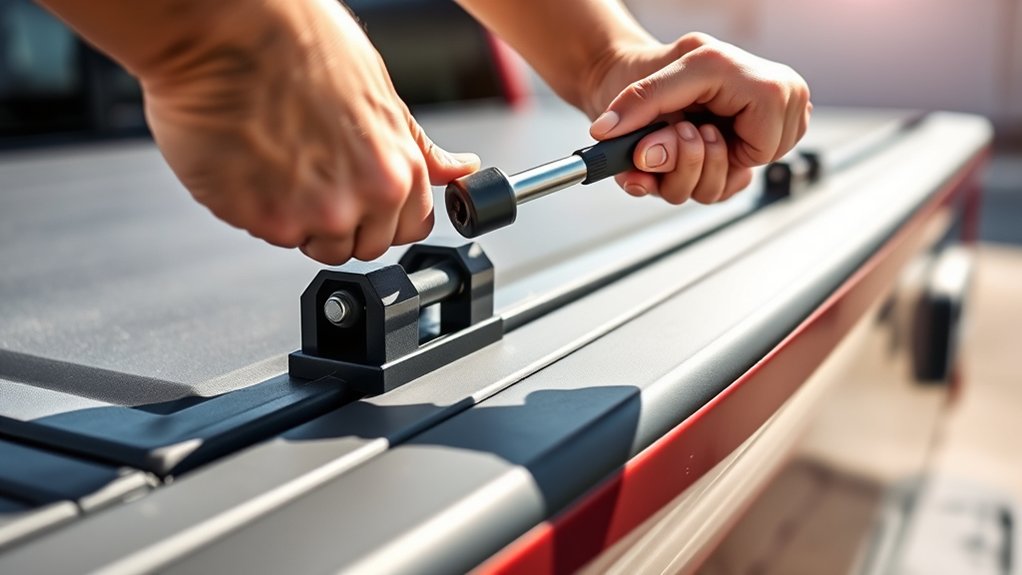
Next, position the clamps evenly along the rails, making sure they grip under the edges without any gaps. Tighten the clamps evenly with firm pressure, being careful to avoid over-tightening.
Finally, test for a tight, weatherproof seal by checking for uniform tension and proper clamp alignment. Explore further to master adjustments and troubleshoot common clamp issues for a perfect fit.
Gather Tools and Materials for Tonneau Cover Clamps
Where do you begin when installing tonneau cover clamps? Start by gathering all necessary tools and materials to ensure a smooth process. Idea one: collect essential hand tools such as a socket wrench, screwdriver, and pliers. These tools will allow you to tighten clamps securely and adjust components as needed.
Idea two: acquire the specific clamps designed for your tonneau cover model, along with any accompanying brackets or rubber seals. Having these materials on hand prevents interruptions during installation. Additionally, keep a measuring tape nearby to verify clamp placement accuracy.
Prepare Your Truck Bed for Installation
Before installing the clamps, thoroughly clean the truck bed surface to remove dirt and debris that could affect the fit. Ensure you have all necessary tools within reach to streamline the process. A clean, organized workspace will help you achieve a secure and accurate installation.
Clean Truck Bed Surface
Why is it essential to clean your truck bed surface thoroughly before installing tonneau cover clamps? A clean surface ensures optimal clamp adhesion and prevents debris from causing misalignment or damage.
Start by removing loose dirt and dust using a soft brush or compressed air, considering your personal preferences for cleaning tools that offer the best ergonomics and control. Next, apply a mild detergent solution with a non-abrasive cloth to eliminate grease or residues.
Rinse thoroughly with water and dry completely using a lint-free towel to avoid moisture trapping under clamps. This precise preparation maximizes clamp stability and extends the lifespan of your tonneau cover.
Skipping this step can compromise installation integrity, making meticulous cleaning a critical component in your installation process.
Gather Necessary Tools
Thoroughly cleaning your truck bed sets the foundation for a smooth installation process. Next, gather the necessary tools to ensure proper clamp attachment. You’ll need a torque wrench to apply precise force, a screwdriver set compatible with the clamp screws, and a rubber mallet for gentle adjustments.
Don’t forget measuring tools like a tape measure or ruler to verify correct mounting orientation, ensuring clamps align accurately with the tonneau cover rails. Additionally, inspect the clamps’ gaskets for compatibility with your truck bed surface to prevent gaps or damage during installation.
Having all these tools ready lets you work efficiently, maintain installation accuracy, and secure the cover firmly without compromising the bed’s integrity or the clamp’s sealing function.
Position and Secure Your Tonneau Cover Clamps
Where exactly should you position your tonneau cover clamps for optimal hold? Begin by aligning the clamps evenly along the truck bed rails, ensuring equal spacing to distribute pressure uniformly. Proper positioning clamps prevent damage and enhance stability.
Position tonneau cover clamps evenly along truck bed rails for uniform pressure and enhanced stability.
Next, slide each clamp onto the rail, making sure the clamp lip grips firmly under the rail edge. When securing clamps, confirm they sit flush without gaps to avoid movement.
Focus on these key points for positioning clamps and securing clamps:
- Place clamps near the cover’s corners and midpoint for balanced tension.
- Avoid positioning clamps over sensitive hardware or structural weak points.
- Ensure clamps are oriented correctly to grip the rail securely without slipping.
This precise positioning and securing clamps approach sets a solid foundation before tightening.
Tighten Clamps for a Weatherproof Fit
Make sure each clamp is perfectly aligned with the tonneau cover edge before tightening. Apply firm, even pressure to achieve a secure fit without over-tightening, which can damage the clamps or cover. Proper tension ensures a weatherproof seal that keeps out moisture and debris.
Ensuring Proper Clamp Alignment
How do you guarantee the clamps align perfectly to create a weatherproof seal? Precise alignment is essential for crack mitigation and corrosion prevention, ensuring the tonneau cover performs optimally under varying conditions.
Start by positioning each clamp evenly along the cover’s edge, avoiding any offset that could cause gaps or stress points. Use these techniques:
- Visually inspect and adjust clamps to maintain uniform spacing and parallelism.
- Confirm the clamp pads sit flush against the truck bed to prevent water ingress.
- Check for any debris or surface irregularities that could compromise the seal.
Achieving Optimal Tightness Levels
Although proper alignment sets the foundation, you’ll need to tighten the clamps to an optimal level to ensure a secure, weatherproof fit. Start by hand-tightening each clamp, then use a torque wrench if available to apply consistent pressure based on the clamp material specifications.
Over-tightening can deform softer materials, compromising seal integrity and weather resistance, while under-tightening may allow water infiltration. Focus on achieving uniform tension across all clamps to maintain even compression of the tonneau cover.
Check manufacturer’s torque guidelines specific to your clamp material, whether aluminum, steel, or plastic composite, as they affect tightening thresholds. Once tightened, inspect the seal for gaps or looseness.
Properly tensioned clamps maximize weather resistance by preventing wind lift and water seepage, ensuring your cover remains secure under varying environmental conditions.
Test Clamp Fit and Adjust for a Tight Seal
Where should you start when testing clamp fit to ensure a tight seal? Begin by inspecting each clamp’s contact points for even pressure distribution. Use these quick tips to avoid common mistakes during adjustment:
Start testing clamp fit by inspecting contact points for even pressure distribution to ensure a tight seal.
- Verify clamps sit flush against the tonneau rails without gaps.
- Apply gradual torque while monitoring clamp movement to prevent overtightening.
- Check for uniform compression on the cover’s edge to secure a waterproof seal.
If you notice any unevenness or looseness, adjust the clamp position incrementally. Tighten clamps just enough to hold the cover firmly without distorting the rails or cover material. Testing fit under realistic conditions, such as applying slight pressure on the cover, helps confirm a reliable seal. This method ensures durability and performance, preventing leaks or wind noise during use.
Fix Common Clamp Installation Problems
Why do some clamps fail to secure your tonneau cover properly? Common issues include misalignment, insufficient tightening, or using clamps incompatible with your truck bed.
To fix these problems, first ensure the clamp’s jaws align perfectly with the bed rail. Adjust the clamp position if necessary to avoid gaps. Next, tighten the clamp firmly but avoid over-tightening, which can damage the cover or bed.
Avoid chasing irrelevant topics like aesthetic modifications that don’t affect clamp performance. Stick to practical ideas such as replacing worn clamps or applying lubricant to threaded parts for smoother operation.
Frequently Asked Questions
Can Tonneau Cover Clamps Damage My Truck Bed Paint?
Yes, tonneau cover clamps can damage your truck bed paint if scrap metal debris gets trapped, increasing bed friction. To prevent scratches, clean the clamps and bed surface regularly, and use protective pads or liners under the clamps.
Are Tonneau Cover Clamps Compatible With All Truck Models?
You won’t find tonneau cover clamps compatible with all truck models due to incompatibility concerns and mounting challenges. Always verify your truck’s specifications to ensure secure fitment and avoid potential damage or ineffective sealing.
How Do I Maintain Tonneau Cover Clamps for Longevity?
You should regularly inspect clamps for wear, tighten bolts to ensure installation safety, and clean debris to prevent corrosion.
Lubricate moving parts lightly and store the cover properly during harsh weather for optimal maintenance.
Can I Install Tonneau Cover Clamps Without Professional Help?
You can install tonneau cover clamps yourself, but don’t rush. Master the installation basics first, follow DIY safety protocols, and use the right tools.
With precision, you’ll secure the clamps effectively without professional help.
What Are the Benefits of Using Tonneau Cover Clamps?
You’ll benefit from clamp durability, ensuring your tonneau cover stays secure under harsh conditions. In a benefit comparison, clamps offer easy installation, strong grip, and cost efficiency, outperforming other fastening methods for truck bed covers.
Conclusion
Installing tonneau cover clamps might seem tricky at first, but with the right tools and steps, it’s straightforward. While a loose clamp invites water and wind, a properly tightened one ensures a secure, weatherproof seal.
You’ll go from uncertainty to confidence, protecting your truck bed effortlessly. By following these precise instructions, you’ll avoid common pitfalls, achieving a snug fit that keeps your cover firmly in place, rain or shine.
In conclusion, mastering how to install tonneau cover clamps will give you a reliable, secure fit that safeguards your truck bed in all weather conditions.