Which Way Does a Fuel Filter Go
You install a fuel filter with its directional arrow pointing from the fuel tank toward the engine, ensuring correct fuel flow. Align the arrow on the casing or use IN/OUT markings if present. Installing it backward can cause leaks, restrict fuel delivery, and damage your engine.
Always confirm compatibility and flow direction before securing fittings. Proper orientation traps contaminants effectively and maintains system reliability. Understanding these details helps you avoid common installation errors and potential fuel system issues.
How to Identify the Correct Direction of a Fuel Filter
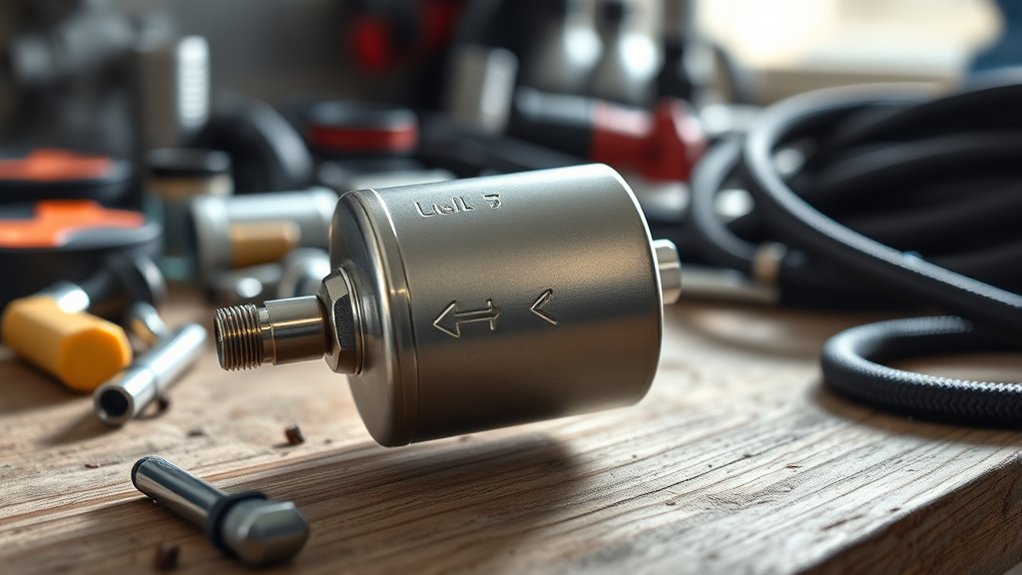
How do you determine the correct direction of a fuel filter? Start by identifying filter orientation, which is essential for proper installation. Most fuel filters have an arrow printed or embossed on their casing; this arrow indicates the filtration flow direction.
Align the arrow with the fuel flow, typically from the fuel tank toward the engine. Pay close attention to inlet and outlet ports. Incorrect connections can disrupt fuel flow and cause engine issues.
If the arrow is missing, consult the vehicle’s service manual for guidance. Additionally, some filters specify “IN” and “OUT” ports explicitly to assist with identifying filter orientation. Always confirm the filtration flow direction before installation to guarantee ideal fuel filtration and engine performance.
Why Does Fuel Filter Direction Matter?
You need to install the fuel filter in the correct direction to maintain proper fuel flow through the system. If installed backward, it can restrict fuel delivery and cause engine damage. Correct orientation also ensures the filter traps contaminants effectively, preserving engine performance.
Proper Fuel Flow
Why does the direction of a fuel filter matter? Proper fuel flow ensures your engine receives clean fuel efficiently, maintaining performance and preventing issues. The filter is designed to work with fuel flowing in one direction; installing it backward can disrupt flow and filtration.
Common safety misconceptions and directions debunked highlight that reversing the filter doesn’t just reduce effectiveness; it may cause leaks or pressure drops.
When installing your fuel filter, remember:
- Fuel must enter the inlet side marked on the filter
- Flow against the filter media ensures maximum contaminant capture
- Incorrect direction can cause fuel starvation or pressure loss
- Safety valves or sensors depend on proper flow orientation
- Ignoring direction risks fuel system damage and reduced reliability
Following correct flow direction is critical for optimal operation and safety.
Preventing Engine Damage
Where can a simple mistake like reversing a fuel filter lead? Installing the fuel filter backward can seriously disrupt your fuel system’s flow, allowing unfiltered fuel to reach the engine. This exposes critical components to contaminants, accelerating wear and potentially causing engine misfires or damage.
Following proper maintenance tips, such as confirming the filter’s flow direction marked by an arrow, ensures contaminants are trapped effectively before fuel reaches injectors. Ignoring this detail compromises fuel pressure and performance, leading to costly repairs.
To prevent engine damage, always prioritize correct fuel filter orientation during servicing. This small step protects your fuel system’s integrity, maintains consistent fuel delivery, and safeguards engine longevity, making it a vital part of your vehicle’s routine maintenance.
Ensuring Filter Efficiency
How does the correct orientation of a fuel filter impact its efficiency? Installing a fuel filter in the proper direction ensures optimal flow through the filter media, protecting your fuel system and extending the filter lifespan.
Incorrect installation can cause fuel bypass or increased resistance, reducing filtration efficiency and potentially allowing contaminants into the engine.
You should always:
- Align the filter’s inlet and outlet with fuel flow direction.
- Verify the arrow or markings on the filter body.
- Avoid reversing connections to prevent flow restriction.
- Maintain correct pressure for consistent filtration.
- Replace the filter at recommended intervals to preserve system integrity.
Proper orientation maximizes contaminant capture, maintains fuel pressure, and prevents premature filter failure, safeguarding overall fuel system performance.
What Do Fuel Filter Markings Mean?
What do the symbols and arrows on your fuel filter actually indicate? Primarily, the arrow shows the correct fuel flow direction through the filter housing. Installing the filter against this flow can cause leaks, reduced filtration efficiency, or engine performance issues.
The arrow on your fuel filter indicates the correct fuel flow direction to prevent leaks and maintain engine performance.
Other markings often specify fuel compatibility, indicating whether the filter suits gasoline, diesel, or alternative fuels. These symbols ensure you use a filter designed for your vehicle’s fuel type, preventing damage to the filter media and fuel system components.
Additionally, you may find pressure ratings or part numbers stamped on the filter housing for identification and replacement purposes. Understanding these markings helps you select and install the correct filter, maintaining optimal filtration and protecting your engine.
Always match these indicators with manufacturer specifications before installation.
Installing a Fuel Filter Step-by-Step
When should you replace your fuel filter to ensure optimal engine performance? Generally, replace it every 20,000 to 30,000 miles or as specified by your vehicle’s service manual. Follow these maintenance tips for proper installation:
- Relieve fuel system pressure before removal to avoid spills.
- Note the fuel flow direction indicated by markings on the filter.
- Disconnect the old filter carefully, avoiding damage to hoses.
- Install the new filter with the arrow pointing in the fuel flow direction.
- Secure all clamps and fittings to prevent leaks.
These topic ideas provide a structured approach to fuel filter replacement. Following this step-by-step method helps maintain engine efficiency and prevents contamination. Always consult your vehicle’s manual for specific instructions to ensure a safe, accurate installation.
Signs You Installed Your Fuel Filter Backwards (And Fixes)
If your engine sputters or stalls after installing a new fuel filter, you might have installed it backwards. You’ll also notice reduced fuel flow and difficulty starting the engine. To fix this, simply reverse the filter, ensuring the flow arrow aligns with the fuel direction.
Common Symptoms Noticed
How can you tell if your fuel filter is installed backward? Recognizing the common symptoms quickly can prevent damage to your fuel system. When installed incorrectly, the fuel flow reverses, causing blockages and restricted delivery. You’ll often notice specific signs indicating trouble.
Watch for these common symptoms:
- Increased fuel system noises, such as whining or sputtering
- Engine hesitation or stalling under load
- Reduced acceleration or power output
- Difficulty starting the engine or prolonged cranking
- Check engine light triggered due to fuel pressure irregularities
These symptoms point to disrupted fuel flow caused by reversed filter installation. Identifying them early helps you avoid further complications and ensures your vehicle runs smoothly.
Correcting Installation Errors
Why does your engine struggle after replacing the fuel filter? It’s often due to incorrect filtration caused by installing the filter backwards. Fuel filters have a specific flow direction marked by an arrow; ignoring this leads to restricted fuel flow, causing poor engine performance.
Don’t fall for fuel system myths that suggest filter orientation doesn’t matter. It does. To fix this, first relieve fuel system pressure, then remove and reinstall the filter following the arrow pointing toward the engine.
Check for leaks and ensure fittings are secure. If symptoms persist, inspect for trapped air or debris. Correcting installation errors eliminates flow restriction, restoring proper fuel delivery and engine function.
Always verify filter orientation during installation to avoid unnecessary troubleshooting and maintain optimal performance.
Choosing the Right Fuel Filter: Key Tips
Where should you start when selecting a fuel filter? Begin by focusing on fueling safety and debunking common filtration myths. Choosing the wrong filter risks engine damage and fuel leaks.
To ensure optimal performance, consider these key tips:
- Verify compatibility with your vehicle’s make and model.
- Choose a filter with the correct micron rating for effective particle removal.
- Select a filter designed for your fuel type (gasoline, diesel, etc.).
- Confirm proper flow direction indicated by arrows on the filter housing.
- Opt for reputable brands to ensure quality and durability.
Preventing Fuel Leaks When Replacing Your Fuel Filter
Once you’ve chosen the correct fuel filter, preventing leaks during replacement becomes your next priority. Start by ensuring fuel compatibility; use a filter designed for your specific fuel type to avoid seal degradation.
Selecting the right filter and ensuring fuel compatibility are key to preventing leaks during replacement.
Before installation, inspect the new filter’s O-rings and replace any damaged seals. When disconnecting old lines, relieve system pressure to minimize spillage.
Position the filter according to the directional arrow for proper flow, and secure fittings tightly but avoid over-tightening, which can damage threads.
After installation, perform filter maintenance by checking for leaks during initial engine start. Tighten fittings if necessary, and monitor periodically, as even compatible filters can develop leaks over time.
Proper attention to these steps ensures a leak-free fuel system and optimal engine performance.
Frequently Asked Questions
How Often Should I Replace My Fuel Filter?
You should replace your fuel filter every 20,000 to 40,000 miles, balancing maintenance timing with potential tradeoffs like reduced engine performance or clogging.
Follow your vehicle’s manual for precise intervals to avoid costly issues.
Can a Clogged Fuel Filter Cause Engine Misfires?
Yes, a clogged fuel filter restricts fuel delivery, causing inconsistent injector cleanliness and fuel flow. This disruption leads to engine misfires, reduced performance, and potential damage.
You should replace it promptly to maintain optimal engine function.
What Tools Are Needed to Replace a Fuel Filter?
You’ll need a wrench or socket set, screwdrivers, fuel line disconnect tools, and safety gloves for fuel filter replacement.
These tools help you disconnect fuel lines safely and remove the old filter efficiently during fuel filter replacement.
Is It Safe to Drive With a Faulty Fuel Filter?
You shouldn’t drive with a faulty fuel filter. It compromises your fuel system’s efficiency and risks engine damage.
Prioritize safety considerations by replacing it promptly to maintain proper fuel flow and avoid potential breakdowns or hazards.
Can I Use Any Fuel Filter Brand for My Vehicle?
You shouldn’t use just any fuel filter brand. Ensure fuel compatibility by selecting filters meeting your vehicle’s specifications.
Brand variation affects performance and durability, so stick to recommended or OEM filters for optimal engine protection and efficiency.
Conclusion
Installing your fuel filter the right way is like aligning the gears of a finely tuned clock—precision matters. Follow the markings carefully to ensure fuel flows smoothly, preventing clogs or leaks that could stall your engine’s heartbeat.
Remember, a backward filter disrupts the fuel’s path, causing performance hiccups. By choosing the right filter and installing it correctly, you keep your vehicle’s lifeblood flowing efficiently, avoiding costly repairs down the road.
Knowing which way does a fuel filter go is essential to maintain your engine’s performance and longevity.