When to Change Fuel Filter Diesel
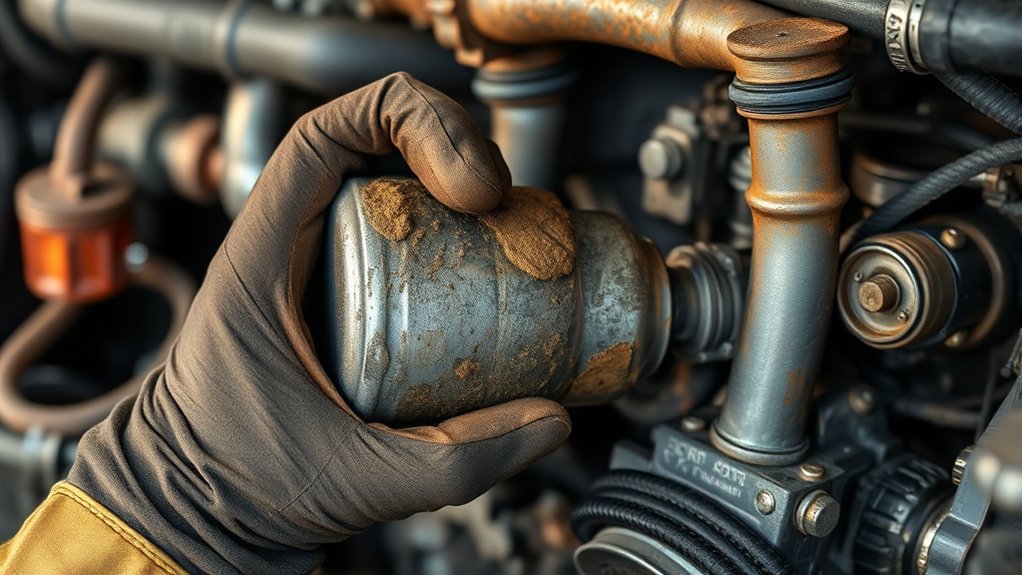
You should change your diesel fuel filter every 15,000 to 25,000 miles to keep your engine running smoothly and avoid damage from dirt, rust, or water contaminants.
Changing the fuel filter regularly is essential to prevent clogging that can lead to fuel flow restriction and reduced engine efficiency.
Delaying replacement can cause fuel flow restriction, reduce efficiency, and increase wear on fuel system components.
Check your manufacturer’s recommendations and consider harsher intervals in dusty or demanding environments.
Regular replacement supports peak performance and longevity.
Keep exploring to understand signs of clogging, replacement steps, and maintenance tips.
Why and When to Change Your Diesel Fuel Filter
Why should you change your diesel fuel filter regularly? Because it ensures optimal engine performance and prevents costly damage caused by contaminants. Diesel fuel filters trap dirt, rust, and water that can clog injectors and reduce efficiency.
You should replace the filter according to the manufacturer’s recommended mileage or sooner if you operate in harsh conditions. Staying updated on cryptocurrency trends can parallel how you monitor maintenance schedules; both require timely actions to avoid losses.
Similarly, just as you wouldn’t delay solar panel installation to maximize energy output, you shouldn’t postpone fuel filter changes. Regular replacement keeps fuel flow steady, minimizes wear, and maintains emissions compliance.
What Are the Common Signs of a Clogged Diesel Fuel Filter?
You’ll notice engine performance issues like reduced power and hesitation when the fuel filter clogs. Starting your diesel may become difficult or require multiple attempts. Additionally, unusual exhaust smoke can indicate restricted fuel flow needing immediate attention.
Engine Performance Issues
Recognizing the signs of a clogged diesel fuel filter is essential for maintaining your engine’s efficiency and longevity. When the filter restricts fuel flow, you’ll notice reduced engine power and hesitation during acceleration.
These performance issues stem from insufficient fuel delivery, which disrupts the precise combustion process fundamental to diesel engine basics. Additionally, rough idling or engine misfires can occur due to inconsistent fuel supply, especially if you’re exploring biodiesel blends that may introduce additional particulates.
A clogged filter forces the fuel pump to work harder, potentially causing premature wear. Monitoring these symptoms promptly helps prevent further damage and ensures your engine runs smoothly, maintaining optimal power output and fuel efficiency.
Regular filter replacement aligns with best practices in diesel engine maintenance, especially when using biodiesel.
Starting Difficulties Noticeable
How can you tell if a clogged diesel fuel filter is causing your engine to struggle with starting? One clear sign is prolonged cranking before ignition, indicating restricted fuel flow.
You might also notice inconsistent upshift timing during initial acceleration due to insufficient fuel delivery. This delay can affect transmission performance and overall drivability.
Additionally, if you’ve recently adjusted fuel additive usage to improve combustion but still experience start-up hesitation, a clogged filter could be the culprit. Fuel additives can help clean injectors but won’t resolve flow restrictions caused by a clogged filter.
Monitoring these symptoms early allows you to replace the filter before more severe engine damage occurs, ensuring reliable starts and maintaining optimal fuel system efficiency.
Unusual Exhaust Smoke
Starting difficulties often signal a restricted fuel flow, but unusual exhaust smoke offers another clear indicator of a clogged diesel fuel filter.
When you notice black, white, or blue smoke, it’s not an unrelated topic. It’s a direct symptom of fuel inefficiency caused by blockage. Ignoring this can lead to engine damage.
Avoid off topic discussion by focusing on these signs to diagnose fuel filter issues promptly.
How Often Should You Change a Diesel Fuel Filter?
When should you replace your diesel fuel filter to maintain contextually relevant engine performance? Typically, you should change it every 15,000 to 25,000 miles, but this varies based on your vehicle’s make and operating conditions.
If you use fuel additives, they can help prolong the filter’s life by preventing clogging, but they don’t eliminate the need for regular replacement. Neglecting timely changes can affect your vehicle aesthetics indirectly by causing poor engine response, which may lead to visible exhaust issues.
Always consult your owner’s manual for manufacturer recommendations and adjust intervals if you frequently drive in dusty environments or use lower-quality diesel. Routine inspection and maintenance ensure your diesel engine runs efficiently, protecting both performance and longevity while supporting overall vehicle aesthetics.
How a Dirty Fuel Filter Affects Engine Performance
When your diesel fuel filter gets clogged, it restricts fuel flow, which reduces fuel efficiency and causes engine misfires or stalls. You’ll also notice increased emissions because the engine runs less cleanly under these conditions. Recognizing these symptoms early helps you maintain advantageous engine performance.
Reduced Fuel Efficiency
Frequently, a dirty fuel filter directly reduces your diesel engine’s fuel efficiency by restricting fuel flow and causing the injector system to work harder. When contaminants clog the filter, your engine struggles to draw the optimal fuel volume, increasing fuel consumption.
This inefficiency becomes costly, especially with fluctuating fuel pricing, making timely filter replacement critical. Additionally, fuel additives designed to improve combustion and protect the fuel system may not perform effectively when the filter is compromised.
You’ll notice reduced mileage per gallon and a drop in overall engine responsiveness. To maintain optimal fuel efficiency, inspect and replace your fuel filter as recommended by the manufacturer.
Doing so ensures your engine receives clean fuel consistently, preserving performance and preventing unnecessary fuel waste caused by overworking components due to restricted fuel flow.
Engine Misfires And Stalls
How exactly does a dirty fuel filter cause your diesel engine to misfire or stall? The filter restricts fuel flow, reducing pressure critical for proper combustion based on your engine design. Insufficient fuel delivery causes incomplete combustion cycles, leading to engine misfires.
In severe cases, the engine may stall due to fuel starvation. Additionally, fuel additives designed to clean injectors and optimize combustion can’t perform effectively if contaminants clog the filter first. This blockage prevents consistent fuel atomization, disrupting the precise timing and mixture your engine requires.
Regularly replacing the fuel filter ensures unimpeded fuel flow, allowing fuel additives to maintain injector cleanliness and optimal combustion. Ignoring this maintenance compromises engine performance, risking misfires and stalls that could lead to more costly repairs down the line.
Increased Emissions Output
Why does a dirty fuel filter increase your diesel engine’s emissions output? When contaminants control falters due to a clogged filter, fuel quality deteriorates before it reaches the combustion chamber.
Impurities restrict fuel flow, causing incomplete combustion that produces higher levels of unburned hydrocarbons, carbon monoxide, and particulate matter. This inefficiency not only reduces engine performance but also elevates emissions beyond regulatory limits.
You’ll notice that as the filter clogs, the engine compensates by injecting more fuel, further worsening emissions. Maintaining a clean fuel filter ensures alternative fuel quality and consistent contaminants control, preventing blockages that disrupt combustion chemistry.
Regular replacement is critical to uphold emission standards and sustain engine health, so don’t delay changing your diesel fuel filter once signs of clogging appear.
How to Replace Your Diesel Fuel Filter Safely
When should you replace your diesel fuel filter to ensure prime engine performance? Start by consulting your vehicle’s service manual for recommended intervals.
Before beginning, relieve fuel system pressure and disconnect the battery to prevent electric torque hazards. Use a catch pan to collect any spilled diesel and wear gloves for safety.
Always relieve fuel system pressure and disconnect the battery before replacing the diesel fuel filter for safety.
Locate the filter, then carefully loosen fittings using proper wrenches to avoid damage. Replace the old filter with a new one, ensuring the seals align correctly to prevent leaks.
After installation, prime the fuel system to avoid airlocks that affect fuel economy. Finally, check for leaks by running the engine briefly. Avoid topic ideas that are unrelated or off topic, like electric torque or fuel economy, which don’t directly impact the replacement process.
Maintaining Your Diesel Fuel System to Avoid Filter Problems
Replacing your diesel fuel filter properly helps maintain engine performance, but preventing filter issues starts with consistent care of the entire fuel system. You should regularly inspect fuel lines, use clean off road fueling sources, and apply diesel polishing techniques to remove contaminants before they reach the filter.
Proper maintenance reduces clogging and extends filter life.
| Maintenance Task | Purpose |
|---|---|
| Off Road Fueling | Avoid introducing dirt and water |
| Diesel Polishing | Remove microscopic contaminants |
| Fuel Line Inspection | Detect leaks and damage early |
| Scheduled Filter Replacement | Prevent clogging and maintain flow |
Following these steps ensures your diesel system runs efficiently, reducing downtime and costly repairs.
How Driving Conditions Impact Diesel Fuel Filter Life
How do your driving conditions influence the lifespan of your diesel fuel filter? Driving conditions directly affect how quickly contaminants accumulate in your filter. Frequent short trips, stop-and-go traffic, or dusty environments increase exposure to debris and water, accelerating filter clogging.
Conversely, steady highway driving typically results in longer filter life due to consistent fuel flow and reduced contaminant buildup. Fuel quality also plays a critical role; lower-quality diesel contains more impurities that strain your filter.
If you regularly operate in harsh conditions or with questionable fuel, you’ll need to change your fuel filter more often to maintain optimal engine performance. Monitoring your specific driving environment and fuel quality can help you set an effective replacement schedule, preventing costly damage and ensuring your diesel system runs efficiently.
Frequently Asked Questions
Can I Use Gasoline Filters for Diesel Engines?
You shouldn’t use gasoline filters for diesel engines because gasoline filters lack diesel compatibility. They can’t handle diesel’s thicker consistency and contaminants properly, risking engine damage.
Always choose filters designed specifically for diesel systems to ensure performance.
What Tools Are Needed for Fuel Filter Replacement?
You’ll need a wrench set, screwdrivers, a drain pan, and replacement filter. Since 40% of diesel issues stem from clogged filters, make filter changes a routine part of your maintenance check.
This helps ensure optimal engine performance and longevity.
Are Diesel Fuel Filters Reusable or Disposable?
Diesel fuel filters are typically disposable, not reusable. However, some recyclable filters exist.
You should follow proper disposal methods to handle contaminated fuel and filter materials safely, adhering to local environmental regulations for recycling or waste management.
How Does Water Contamination Affect Diesel Filters?
Water contamination clogs your diesel filter, reducing flow and causing corrosion. You’ll need regular filter maintenance to prevent damage, guarantee efficient fuel delivery, and avoid engine performance issues caused by trapped water and contaminants.
Can Additives Extend the Life of a Diesel Fuel Filter?
Yes, additives can help maintain diesel fuel cleanliness by reducing contaminants and water buildup, which supports filter maintenance.
However, they don’t replace regular filter changes; you still need timely inspections and replacements to ensure optimal performance.
Conclusion
You might think diesel fuel filters only need changing when your engine stalls or struggles, but waiting that long risks costly damage. Regularly replacing your fuel filter based on mileage and driving conditions ensures optimal engine performance and longevity.
Don’t ignore subtle signs like reduced power or rough idling—they’re early warnings. By staying proactive and maintaining your fuel system, you avoid unexpected breakdowns and keep your diesel engine running efficiently and reliably.
To sum up, knowing when to change fuel filter diesel is key to preserving your engine’s health and preventing expensive repairs.