How to Fix Tonneau Cover Latch
To fix your tonneau cover latch, start by inspecting it for misalignment, wear, or looseness. The latch is a crucial part of your tonneau cover, so ensuring it functions properly is important for security and protection.
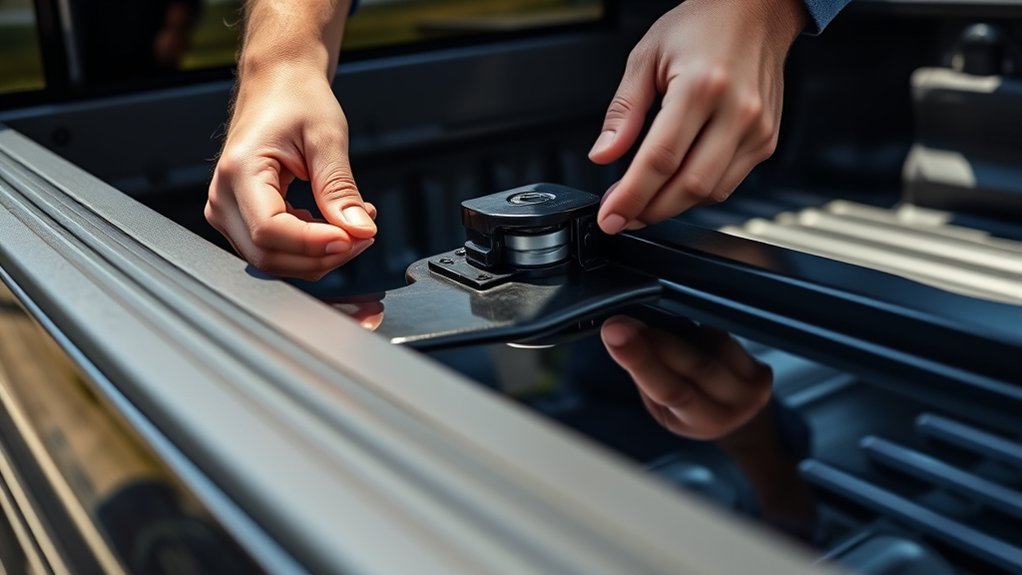
Use screwdrivers and pliers to loosen the bolts, then realign the latch with the strike plate. Once aligned, retighten the bolts securely to hold the latch in place.
Next, clean the latch mechanism thoroughly and apply silicone lubricant to promote smooth operation. Test the latch engagement by opening and closing it several times to ensure consistent performance.
If the latch still does not work properly, you may need to replace worn parts or consult a professional. Following these steps will help you maintain and troubleshoot your tonneau cover latch effectively.
How To Identify Common Tonneau Cover Latch Problems Like Misalignment And Wear
Although tonneau cover latches are designed for durability, they can develop issues like misalignment and wear over time. You’ll notice misalignment issues if the latch doesn’t engage smoothly or if the cover sits unevenly.
Check for gaps or resistance when closing the latch, as these indicate the components aren’t lining up properly. Wear concerns typically appear as visible deterioration on the latch mechanism, such as worn hooks, cracked plastic, or rusted metal parts.
You might also feel looseness or hear unusual noises during operation. Inspect the latch carefully for these signs to diagnose problems early. Identifying misalignment issues and wear concerns promptly helps you prevent further damage and maintain your tonneau cover’s secure fit and function.
How To Gather Tools For Fixing A Tonneau Cover Latch
Where do you start when preparing to fix a tonneau cover latch? Begin by focusing on tool organization and material sourcing to streamline the repair process. Gather essential hand tools like screwdrivers and pliers, and ensure you have replacement parts specific to your latch model.
Organize tools in a portable container to keep everything accessible.
| Tool Type | Purpose | Material Sourcing |
|---|---|---|
| Screwdrivers | Remove/install screws | Hardware store or online |
| Pliers | Grip and adjust latch | Local tool supplier |
| Replacement Parts | Fix worn latch elements | Manufacturer or specialty retailers |
| Lubricants | Ensure smooth operation | Automotive or hardware stores |
| Cleaning Supplies | Prep latch surfaces | General retail or automotive outlets |
Proper tool organization and quality material sourcing will save you time and avoid frustration during repairs.
How To Remove Your Tonneau Cover Safely For Latch Access
To begin, clear and arrange your workspace to prevent harm and keep parts within reach. Next, carefully detach the tonneau cover components, noting their positions for easy reassembly. This approach guarantees safe access to the latch without causing unnecessary wear or misalignment.
Prepare Your Workspace
How do you guarantee a safe and efficient removal of your tonneau cover for latch access? Start by preparing your workspace methodically. Clear the area around your vehicle to ensure unobstructed movement and reduce trip hazards, prioritizing workspace safety.
Lay down a clean mat or soft surface to protect the cover and prevent scratches. Gather all necessary tools beforehand, focusing on those with ergonomic designs to minimize strain during use. Position your tools within easy reach to maintain efficient workflow and avoid unnecessary bending or stretching.
Ensure adequate lighting to clearly see fasteners and components. By organizing your workspace with safety and tool ergonomics in mind, you reduce the risk of injury and damage, setting the stage for a smooth, controlled tonneau cover removal process.
Detach Cover Components
Why is detaching the cover components carefully essential when accessing the tonneau cover latch? Proper detachment prevents damage to latch aesthetics and ensures color coordination remains intact. You’ll avoid misalignment or scratches that affect both function and appearance.
Follow this table to detach components safely:
| Step | Tool Needed | Tip |
|---|---|---|
| Loosen clamps | Screwdriver | Turn counterclockwise gently |
| Remove screws | Allen wrench | Keep screws organized |
| Detach hinges | Socket wrench | Support cover to prevent falls |
| Lift cover | None | Use steady, even pressure |
Handle each part with care. Maintaining latch aesthetics and color coordination helps preserve your tonneau cover’s functionality and visual appeal.
How To Clean And Lubricate Your Tonneau Cover Latch
When was the last time you cleaned and lubricated your tonneau cover latch? Regular latch lubrication is essential to maintain smooth operation and prevent corrosion.
Start by wiping the latch with a clean cloth to remove dirt and debris. Use a mild solvent if necessary to dissolve stubborn grime.
Once clean, apply a thin layer of lubricant designed for metal components, such as a silicone-based spray or lithium grease. Focus on moving parts and pivot points to ensure optimal performance.
Avoid over-application, which can attract more dirt. Proper latch lubrication not only facilitates easy opening and closing but also plays a crucial role in corrosion prevention, prolonging the life of your tonneau cover latch.
Repeat this process every few months or after exposure to harsh weather conditions.
How To Fix A Misaligned Tonneau Cover Latch
Regular cleaning and lubrication keep your tonneau cover latch operating smoothly, but misalignment can still occur, causing difficulty in securing the cover. To fix a misaligned latch, start by inspecting the latch and strike plate for visible shifts or damage.
Loosen mounting bolts slightly, realign the latch so it properly engages with the strike plate, then retighten bolts securely. Avoid unused topic ideas like adjusting components unrelated to alignment, as these create irrelevant discussion and distract from the precise fix.
Test the latch repeatedly to confirm smooth operation and secure closure. If misalignment persists, check for bent parts or warped surfaces needing replacement. By focusing solely on alignment adjustments, you ensure a practical, efficient repair without unnecessary complications.
How To Tighten Loose Tonneau Cover Latch Components
How can you restore secure operation to a loose tonneau cover latch? First, inspect the latch components for signs of irreversible corrosion, which can weaken metal parts and compromise tightening efforts. If corrosion is present, address it promptly to avoid further damage.
Use a suitable wrench or screwdriver to tighten all screws, bolts, and fasteners carefully. Don’t overtighten, as this may strip threads or damage parts. If the latch housing or mounting points appear worn, consider light cosmetic refinishing to improve appearance and prevent rust.
After tightening, test the latch for firm engagement and smooth operation. Regular maintenance, including cleaning and lubrication, can prevent loosening. This approach ensures your tonneau cover latch remains secure without risking damage or premature wear.
How To Replace A Broken Tonneau Cover Latch
A broken tonneau cover latch compromises your truck bed’s security and requires prompt replacement. First, remove the damaged latch by unscrewing mounting hardware.
Understand latch physics: ensure the new latch’s mechanism aligns perfectly for secure closure. Avoid cosmetic latch-only replacements that look fine but fail functionally.
Install the new latch by securing it firmly, then verify alignment with the cover’s catch.
| Step | Detail |
|---|---|
| Remove latch | Unscrew mounting bolts |
| Inspect mechanism | Check for alignment and wear |
| Select latch | Match model, focus on latch physics |
| Install latch | Secure firmly, avoid overtightening |
| Verify fit | Ensure smooth locking/unlocking |
Replacing the latch correctly restores security and functionality to your tonneau cover.
How To Test Your Tonneau Cover Latch After Repairs
After repairing your tonneau cover latch, start by performing a visual inspection checklist to ensure all components are correctly aligned and secure. Next, conduct a functional operation test by opening and closing the latch several times to confirm smooth engagement and release. These steps help verify that your repair was successful and the latch works reliably.
Visual Inspection Checklist
Where should you focus your attention when testing the tonneau cover latch after repairs? Start with a thorough visual inspection. Check the latch mechanism for any visible signs of damage, corrosion, or misalignment.
Ensure the latch engages and disengages cleanly without obstruction. Examine mounting points and fasteners for tightness and integrity. Confirm that the sealing gasket is intact and properly seated to prevent water ingress.
Before you begin, verify your tool readiness. Have screwdrivers, pliers, and cleaning supplies on hand to address minor adjustments immediately. This proactive approach helps identify issues that could compromise latch performance.
Functional Operation Test
Once you confirm the latch shows no visible damage or misalignment, move on to testing its functional operation. Start by closing the tonneau cover slowly to observe the latch timing. Ensure it engages smoothly without delay or excessive force.
If the latch clicks at the right moment, it indicates proper synchronization. Next, check the seal integrity by pressing evenly around the cover’s edge to confirm a tight, uniform seal. Any gaps or uneven pressure suggest adjustment is needed.
Operate the latch multiple times to verify consistent performance, paying attention to smooth opening and closing actions. Finally, test under various conditions, such as with the tailgate open or closed, to ensure the latch maintains secure locking and optimal seal integrity in all scenarios.
Maintenance Tips To Prevent Future Tonneau Cover Latch Problems
How can you extend the life of your tonneau cover latch and avoid frequent repairs? Establish a consistent maintenance schedule and apply weatherproofing tips regularly. Inspect the latch for debris and corrosion, lubricate moving parts with silicone spray, and tighten loose screws.
Protect the latch from harsh weather by using waterproof covers or sealants to prevent rust and wear.
| Task | Frequency |
|---|---|
| Clean latch | Monthly |
| Lubricate mechanism | Every 3 months |
| Check screws | Monthly |
| Apply weatherproofing | Biannually |
| Inspect for damage | Quarterly |
Following this routine ensures your tonneau cover latch stays functional longer with minimal issues.
How To Choose The Right Replacement Tonneau Cover Latch
Selecting the right replacement tonneau cover latch starts with understanding your truck’s make, model, and the specific cover type you use. Check the original latch’s design and material to ensure compatibility.
Choosing the correct replacement latch begins with knowing your truck’s make, model, and cover type.
Look for latches made from durable materials like stainless steel or reinforced plastic to withstand weather and frequent use. Consider the latch’s locking mechanism, whether it’s a twist, snap, or lever style, to match your current system for seamless integration.
Verify that the replacement latch includes all necessary mounting hardware to simplify installation. Incorporate the replacement latch into your maintenance routine by regularly inspecting it for wear and lubricating moving parts.
This proactive approach extends latch life and maintains secure cover closure, preventing future issues and ensuring your tonneau cover functions reliably.
When To Call A Professional For Tonneau Cover Latch Repairs
If your tonneau cover latch faces complex mechanical issues or keeps malfunctioning despite basic fixes, it’s time to call a professional. You shouldn’t risk safety by attempting repairs beyond your skill level. A technician can accurately diagnose and resolve problems to ensure reliable and secure latch operation.
Complex Mechanical Issues
When does a tonneau cover latch problem require professional attention? Complex mechanical issues often stem from intricate latch design elements that are difficult to diagnose or repair without specialized tools. If your latch involves multiple interlocking parts, springs, or electronic components, attempting a DIY fix may worsen the problem or void your warranty coverage.
Professionals understand the nuances of various latch mechanisms and can identify hidden faults efficiently. Additionally, if your cover is still under warranty, unauthorized repairs might lead to coverage denial. In such cases, relying on expert technicians ensures proper handling, preserves your warranty, and restores functionality.
Don’t hesitate to call a professional when the problem extends beyond simple adjustments or visible damage. Complex latch issues demand precise expertise.
Persistent Latch Malfunction
Why does your tonneau cover latch keep malfunctioning despite repeated attempts to fix it? When DIY troubleshooting fails, persistent issues like misaligned components or internal mechanism failure require professional intervention. Ignoring problems can affect your fuel economy by increasing drag.
| Symptom | Possible Cause | Professional Action Needed |
|---|---|---|
| Latch won’t engage | Worn or broken latch | Replace latch assembly |
| Cover won’t lock tight | Frame misalignment | Realign or repair frame |
| Intermittent failure | Internal mechanism damage | Diagnose and replace components |
| Difficulty releasing | Rust or corrosion | Clean or replace corroded parts |
For complex repairs, professionals ensure proper function, preserving your tonneau cover’s durability and your vehicle’s efficiency. Consider professional help if problems persist beyond basic adjustments or DIY photography documentation.
Safety Concerns With Repairs
How do you know when a tonneau cover latch repair crosses the line from simple to hazardous? If the issue involves complex mechanisms, electrical components, or structural damage, it’s best to call a professional. Attempting repairs beyond your skill level can cause further damage or personal injury.
Avoid engaging in unrelated topic debates or irrelevant discussion about minor cosmetic flaws that don’t affect latch functionality; focus strictly on the mechanical problem. When you notice persistent malfunctions despite basic fixes, or if the latch affects vehicle security and safety, professional assessment is crucial.
Experts have specialized tools and knowledge to safely diagnose and repair the latch without risking your safety or voiding warranties. Don’t compromise safety for the sake of DIY repairs. Know your limits and seek professional help when needed.
Frequently Asked Questions
What Types of Tonneau Covers Are Compatible With Latch Repairs?
You’ll find hard, soft, and retractable tonneau covers compatible with latch repairs. Focus on types compatibility by checking manufacturer specs and latch design, ensuring you choose covers with accessible, replaceable latch mechanisms for effective, practical repairs.
Can Weather Conditions Affect Tonneau Cover Latch Performance?
Yes, cold weather can cause latch alignment issues and hardware corrosion. Moisture ingress accelerates corrosion, impairing latch function.
You should regularly inspect and lubricate latches to maintain performance and prevent weather-related damage.
How Long Does a Typical Tonneau Cover Latch Repair Take?
Time’s of the essence when it comes to latch repair timing; typically, it takes 30 minutes to an hour.
Keep in mind, weather impact like moisture or cold can slow your progress and complicate the fix.
Are Tonneau Cover Latch Repairs Covered by Vehicle Warranty?
You usually won’t find truck bed latch repair covered under your vehicle warranty since tonneau covers are aftermarket accessories.
Check your cover’s warranty instead, as manufacturers often handle latch repairs separately from the truck’s coverage.
What Safety Precautions Should I Take When Working Near the Truck Bed?
To keep things smooth, always prioritize safety precautions by wearing gloves and eye protection. Choose the right tool selection to avoid slips or damage.
Ensure the truck bed is stable and clear of hazards before you start working.
Conclusion
Fixing your tonneau cover latch might seem like a task from the days of dial-up, but with the right steps, it’s straightforward and effective. By identifying issues, cleaning, lubricating, and aligning your latch, you ensure secure closure and longevity.
Regular maintenance prevents future problems, saving you time and frustration. If the repair feels beyond your reach, don’t hesitate to call a professional.
Your truck deserves reliable protection—keep it well locked and ready with a properly functioning tonneau cover latch.