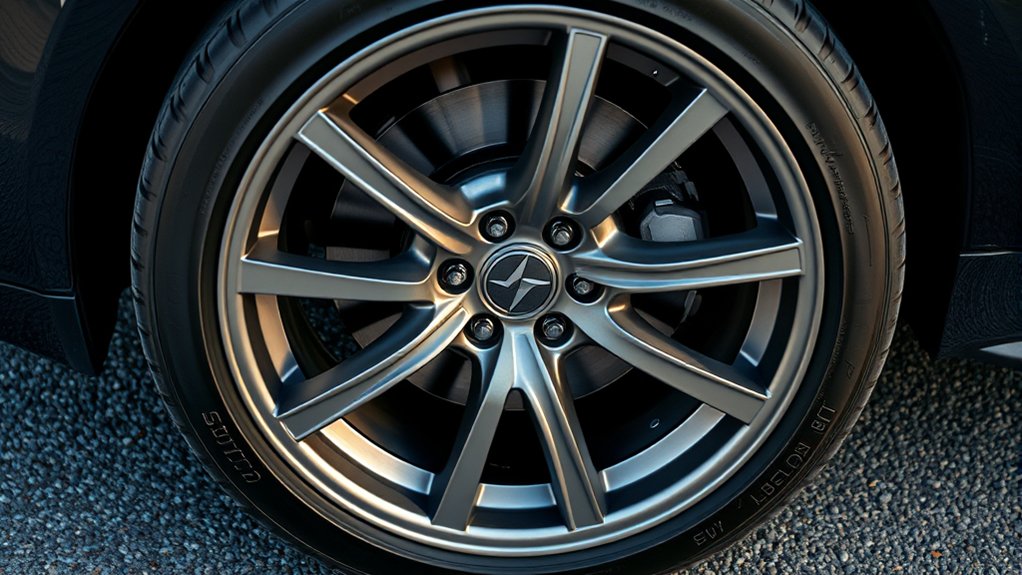
What Is Wheel Offset
Wheel offset is the distance between your wheel’s mounting surface and its centerline, controlling how far your wheels sit inward or outward relative to the hub. This measurement is crucial for ensuring proper fitment and performance of your vehicle’s wheels.
It directly influences your vehicle’s clearance, tire wear, and handling characteristics by shaping track width and steering geometry. Using the correct offset helps avoid excessive tire scrub, structural strain, and damage on uneven terrain.
Understanding this precise measurement is key to optimizing your wheel fit and overall performance. Further insights on measuring and selecting the right offset are essential for maintaining your vehicle’s safety and efficiency.
What Wheel Offset Means and Why It Matters
What exactly is wheel offset, and why should you pay attention to it? Wheel offset is the distance between the wheel’s mounting surface and its centerline. This measurement determines how far your wheels sit inward or outward relative to the hub.
You need to consider wheel offset carefully because it directly impacts off road clearance and tire wear. If the offset is too low or too high, your wheels may protrude or recess excessively, reducing clearance and increasing the risk of damage on uneven terrain.
Moreover, improper offset can cause uneven tire wear by altering the load distribution across the tire’s contact patch. Getting the offset right ensures your wheels fit correctly, maintain optimal clearance, and promote even tire wear, which enhances both vehicle performance and longevity.
How Wheel Offset Affects Your Car’s Handling and Fit
How does wheel offset influence your car’s handling and fit? Wheel offset directly affects your vehicle’s track width, impacting stability and steering response.
Wheel offset shapes track width, directly influencing your vehicle’s stability and steering precision.
A lower offset pushes wheels outward, increasing off-road clearance but risking tire scrub against the wheel well during sharp turns. Conversely, a higher offset pulls wheels inward, reducing off-road clearance and potentially causing suspension component interference.
You must balance offset to prevent tire scrub, which can wear tires prematurely and degrade handling precision. Additionally, incorrect offset can alter steering geometry, leading to unpredictable handling characteristics.
Proper offset ensures the wheel sits flush with the fender, maintaining optimal fit and preventing structural strain. Understanding these dynamics helps you optimize both the performance and durability of your vehicle’s setup.
How to Accurately Measure Your Wheel Offset
Measuring wheel offset requires careful attention to detail and the right tools to guarantee accuracy. Start by placing the wheel face down on a flat surface.
Measure the wheel’s total width (A), then find its centerline by dividing this width by two (B). Next, measure the distance from the mounting surface to the wheel’s back edge (C).
Subtract B from C to get the offset. This method helps avoid common wheel offset misconceptions, such as confusing backspacing with offset. Ensure your measuring tools are compatible with your wheel’s coating compatibility to prevent surface damage.
| Step | Description |
|---|---|
| A | Measure total wheel width |
| B | Calculate centerline (A ÷ 2) |
| C | Measure from mounting surface |
| D | Calculate offset (C – B) |
| Verify | Confirm measurement accuracy |
How to Choose the Right Wheel Offset for Your Vehicle
Selecting the correct wheel offset plays a critical role in optimizing your vehicle’s performance and safety. To choose the right offset, first consider your vehicle’s OEM specifications, as deviations can affect handling and suspension geometry.
Ensure tire compatibility by verifying that the wheel’s offset allows sufficient clearance within the wheel well, avoiding rubbing during turns or suspension compression. For off-road impact, selecting a slightly lower offset can widen the track, improving stability on uneven terrain.
However, excessive negative offset risks damaging suspension components. Use precise measurements to evaluate how the offset influences scrub radius and steering response. Balancing these factors ensures your wheels fit properly without compromising mechanical function or safety, maintaining optimal performance on both paved roads and off-road conditions.
Wheel Offset Mistakes You Should Avoid
Why do many wheel offset errors occur despite clear guidelines? You often overlook the critical impact of improper offset on front suspension geometry and tire alignment.
One common wheel offset mistake you should avoid is selecting an offset that pushes the wheel too far inward or outward. This misalignment stresses suspension components, causing premature wear and unpredictable handling.
Another error is ignoring manufacturer specifications, which can lead to tire rubbing against the wheel well or suspension arms.
Failing to consider the effect on tire alignment disrupts steering response and accelerates uneven tire wear.
To ensure optimal performance, always measure offset precisely, verify compatibility with your front suspension design, and assess clearance thoroughly. Avoiding these mistakes preserves vehicle safety, handling integrity, and suspension longevity.
Frequently Asked Questions
Can Wheel Offset Affect Tire Wear?
Yes, incorrect offset compatibility can cause uneven tire wear by altering tire fitment and suspension geometry. You’ll want to ensure proper offset to maintain optimal contact patch, preventing premature wear and preserving handling performance.
Does Wheel Offset Impact Fuel Efficiency?
Yes, wheel offset impacts fuel efficiency by altering rolling resistance and vehicle aerodynamics. You’ll notice changes in tire grip and drivetrain load, so careful two word discussion idea1 and two word discussion idea2 analysis helps optimize your vehicle’s performance.
How Does Wheel Offset Influence Brake Clearance?
Think of wheel offset as a key releasing brake clearance; if it’s off, you risk rubbing. You’ll need to balance wheel compatibility with performance tradeoffs carefully to avoid interference and maintain optimal braking efficiency.
Are There Industry Standards for Wheel Offset?
Yes, industry standards for wheel offset exist to ensure proper wheel geometry and rim compatibility. You’ll find specifications vary by vehicle type, maintaining optimal fitment, handling, and safety.
These standards help prevent interference with brakes or suspension components.
Can Wheel Offset Affect Speedometer Accuracy?
Think of your speedometer as a clock synced to your wheels’ dance. Changing wheel offset can shift brake clearance, subtly skewing speedometer accuracy.
Conclusion
Understanding wheel offset is essential for optimizing your vehicle’s performance and fit. You might think measuring it is complicated, but with the right tools and guidance, it’s straightforward. Choosing the correct offset improves handling, prevents tire rubbing, and protects suspension components.
Avoiding common mistakes guarantees your wheels function safely and efficiently. By applying these technical insights, you’ll confidently select the perfect wheel offset, enhancing both your car’s performance and longevity. Remember, mastering wheel offset is key to getting the most out of your vehicle.