How Do I Test a Fuel Pump Relay
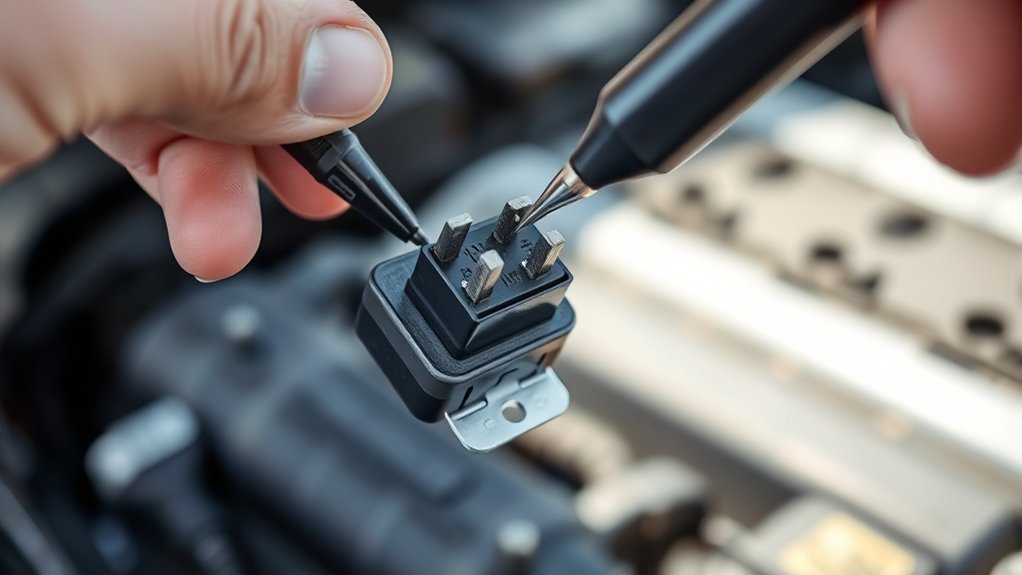
To test your fuel pump relay, first locate it—usually in the fuse box under the hood—and disconnect the battery. Using a multimeter, check for voltage at the relay terminals to ensure proper power supply.
Next, perform a coil activation test by applying 12V to the relay and listening for a click, which indicates the relay is engaging correctly.
Verify continuity and measure the output voltage to confirm that power reaches the fuel pump as expected. If the relay fails any of these tests or shows intermittent signals, it needs to be replaced.
Explore further to understand detailed steps and safety precautions for a thorough and safe testing process.
Understanding the Fuel Pump Relay and Its Role
How does the fuel pump relay impact your vehicle’s operation? It controls the power supply to the fuel pump, ensuring consistent fuel delivery within the fuel system. Without a properly functioning relay, the pump won’t receive the electrical current needed, disrupting fuel flow and engine performance.
When you perform electrical testing on the fuel pump relay, you verify its ability to transmit voltage from the battery to the pump. This involves checking continuity and resistance across relay terminals and confirming activation through relay clicks or multimeter readings.
Understanding this precise role helps you isolate fuel system problems efficiently. Proper relay operation is critical, so mastering its function and testing techniques is essential for accurate diagnostics and maintaining vehicle reliability.
Common Signs Your Fuel Pump Relay Is Failing
Knowing how the fuel pump relay manages power flow to your fuel pump helps you recognize when it starts to fail. Symptoms often involve interrupted delivery of vital fluids, risking engine stalling and inefficient fuel use.
Ensuring electrical safety is critical, as a faulty relay may cause shorts or electrical surges.
| Symptom | Impact on Vehicle | Electrical Safety Concern |
|---|---|---|
| Engine stalls | Loss of fuel supply | Relay contacts may weld |
| No start | Pump fails to engage | Possible open circuit |
| Intermittent power | Fluctuating fuel pressure | Risk of electrical arcing |
Identifying these signs early prevents damage and maintains proper fuel system operation.
Locating the Fuel Pump Relay in Your Vehicle
Where exactly is your fuel pump relay located? Typically, you’ll find it in the vehicle’s fuse box under the hood or near the dashboard. Consult your owner’s manual for precise placement; it varies by make and model.
The relay appears as a small, square module labeled “fuel pump” or with a pump icon. Locating this component is crucial for your two word discussion ideas on fuel efficiency and engine torque, as a faulty relay can interrupt fuel delivery, reducing engine torque and decreasing fuel efficiency.
Before testing, visually inspect the relay slot for corrosion or damage. Knowing the exact relay location ensures accurate diagnostics, helping maintain optimal engine performance and avoid unnecessary repairs.
This step sets the foundation for effective fuel pump relay troubleshooting.
Tools You Need to Test Your Fuel Pump Relay
To test your fuel pump relay effectively, you’ll need a few essential tools, starting with a reliable multimeter. Understanding the multimeter’s key functions—like continuity and voltage measurement—is vital for accurate diagnostics. Additionally, having tools like a test light and basic hand tools will streamline the process.
Essential Testing Equipment
Which tools do you need to accurately test a fuel pump relay? First, a reliable multimeter is essential for electrical testing, allowing you to measure voltage, resistance, and continuity in the relay circuit. You’ll also want a test light to quickly check for power at the relay terminals.
Additionally, a fuel pressure gauge is crucial to verify that the relay activates the fuel pump properly, ensuring the system maintains correct fuel pressure. A basic wiring diagram or relay pinout will help you identify the correct terminals for testing.
Finally, insulated tools such as pliers and screwdrivers ensure safety while handling electrical components. Equipped with these precise tools, you can effectively diagnose relay function and related fuel system issues without guesswork.
Multimeter Functions Overview
How do you ensure your multimeter delivers accurate readings when testing a fuel pump relay? First, select a digital multimeter with functions for measuring voltage, resistance, and continuity. These are essential for fuel system diagnostic techniques.
Use the voltage setting to verify power at the relay terminals, confirming the relay receives battery voltage. The resistance function helps check coil resistance to determine if the relay coil is intact. Continuity testing identifies if the relay contacts close properly when energized.
Calibrate your multimeter according to the manufacturer’s guidelines before testing to avoid false readings. Precise use of these functions allows you to isolate fuel pump relay faults quickly, ensuring reliable fuel system operation.
Mastering these diagnostic techniques streamlines troubleshooting, saving time and preventing unnecessary part replacements.
Additional Helpful Tools
Accurate multimeter readings form the foundation of effective fuel pump relay testing, but having the right supplementary tools can enhance your diagnostic process. A test light is invaluable for quickly confirming power presence in the fuel system circuits.
You’ll also benefit from a jumper wire set, which allows you to bypass relay terminals safely and perform a controlled jump start on the relay coil to check for clicking or activation. Additionally, a wiring diagram specific to your vehicle helps you trace circuits accurately, ensuring you test the correct terminals.
Finally, insulated pliers or relay pullers make removing and reinstalling the relay easier without damaging connectors. Using these additional tools alongside your multimeter streamlines testing and improves accuracy when diagnosing fuel pump relay issues.
How to Test Your Fuel Pump Relay
When should you test your fuel pump relay to assure it functions correctly? Test it if your engine stalls or won’t start, as ignoring this could lead to an irrelevant topic or random idea about the problem source. First, locate the relay, often near the fuse box. Use a multimeter to check for continuity and resistance.
Next, apply 12V power to the relay coil terminals and listen for a click, indicating it activates. Finally, measure voltage across the output terminals to confirm current flow.
| Step | Action | Expected Result |
|---|---|---|
| Locate Relay | Find relay in fuse box | Relay identified |
| Coil Test | Apply 12V | Audible click |
| Output Test | Measure voltage | Voltage present (12V) |
Interpreting Your Fuel Pump Relay Test Results
After completing the relay tests, you need to interpret the results to determine if the fuel pump relay is functioning properly. If the relay consistently shows continuity between terminals and triggers the coil without fluctuation, it indicates reliable operation.
However, if you detect intermittent power during testing, this suggests internal contact wear or corrosion, which can cause inconsistent fuel pump activation. Additionally, be alert for electrical noise on the multimeter or oscilloscope readings; such noise often points to relay coil degradation or loose connections.
A stable voltage reading and clean signal confirm the relay is delivering steady power to the fuel pump. Conversely, erratic readings or voltage drops imply the relay may fail under load, affecting engine performance. Use these observations to assess the relay’s condition accurately.
When and How to Replace Your Fuel Pump Relay
You’ll know it’s time to replace your fuel pump relay if you notice engine stalling, no-start conditions, or intermittent power loss. Follow a step-by-step guide to remove the faulty relay safely, ensuring the ignition is off and disconnecting the battery first. Taking proper safety precautions prevents electrical hazards and protects your vehicle’s components during replacement.
Signs of Relay Failure
Recognizing the signs of a failing fuel pump relay is essential to maintaining your vehicle’s performance and preventing unexpected breakdowns. You’ll notice intermittent engine stalling or difficulty starting, especially during freeway etiquette when consistent power delivery is critical.
A failing relay may cause the engine to crank without firing, reflecting poor fuel pump activation. Additionally, irregular engine cosmetics such as sputtering or uneven idling can indicate relay issues.
Listen for a clicking sound from the relay when turning the ignition; absence of this sound often signals relay failure. Ignoring these signs risks complete fuel pump shutdown, leading to roadside breakdowns.
Addressing relay faults promptly ensures your fuel system functions optimally, preserving engine performance and preventing costly repairs.
Step-by-Step Replacement Guide
When your fuel pump relay shows signs of failure, replacing it promptly can restore reliable fuel delivery and engine performance. First, locate the relay using your vehicle’s manual; it’s often found in the fuse box or near the fuel pump.
Disconnect the battery to prevent electrical shorts. Carefully remove the faulty relay by pulling it straight out, avoiding damage to automotive wiring. Compare the replacement relay’s specifications to ensure compatibility.
Insert the new relay firmly into the socket. Reconnect the battery and start the engine to verify proper function. Use troubleshooting electronics tools like a multimeter to confirm voltage continuity if the relay doesn’t activate.
This step-by-step replacement ensures your fuel system operates correctly without risking further electrical issues.
Safety Precautions During Replacement
How can you guarantee safety while replacing the fuel pump relay? Begin by strictly following safety protocols to prevent electrical shocks or accidental shorts. Always disconnect the battery before starting; battery disconnects are essential to eliminate power flow to the relay circuit.
Use insulated tools to avoid conductive contact, and wear safety gloves and eye protection. Work in a well-ventilated area to reduce inhalation risks from any fuel vapors. Avoid open flames or sparks nearby, as fuel system components are flammable.
After disconnecting the battery, verify no residual voltage exists by testing the circuit with a multimeter. Handle the relay carefully to prevent damage. Following these precise safety steps ensures a secure replacement process, protecting both you and your vehicle’s electrical system.
Frequently Asked Questions
Can a Faulty Fuel Pump Relay Cause a No-Start Condition?
Yes, a faulty relay can cause a no-start condition by preventing power to the fuel pump. You’ll need electrical testing to confirm continuity and proper operation before replacing the relay to restore fuel delivery.
How Long Does a Fuel Pump Relay Typically Last?
When it comes to fuel pump relays, they usually last 5-10 years, but don’t count your chickens before they hatch. Failure symptoms vary. Follow testing procedures carefully to pinpoint relay issues before they cause serious problems.
Are Fuel Pump Relays Universal or Vehicle-Specific?
Fuel pump relays aren’t universal; they’re vehicle-specific to guarantee fuel compatibility and proper operation.
You’ll need the exact relay model designed for your vehicle’s electrical system to avoid malfunctions or damage.
Can a Bad Relay Damage the Fuel Pump?
Yes, a bad relay can cause costly complications. Misleading diagnostics might mask motor malfunctions, and unrelated wiring shortcuts sometimes stress the pump.
Is It Safe to Bypass the Fuel Pump Relay Temporarily?
You shouldn’t bypass the fuel pump relay temporarily, as it risks electrical damage and safety hazards. This unrelated topic doesn’t affect car aesthetics but requires proper diagnostics to avoid further mechanical issues or compromising your vehicle’s performance and safety.
Conclusion
Now that you know how to test your fuel pump relay, the real challenge begins. Will your relay pass the test, or reveal hidden faults disrupting your fuel system? Don’t rush—accurate diagnosis is key to avoiding costly repairs.
If your relay fails, replacing it promptly can restore your vehicle’s performance and reliability. Stay sharp, follow the steps carefully, and you’ll know exactly when it’s time to act.
The next move is yours, and knowing how to test a fuel pump relay will guide you to the right decision.