How to Install a Back Rack With a Tonneau Cover
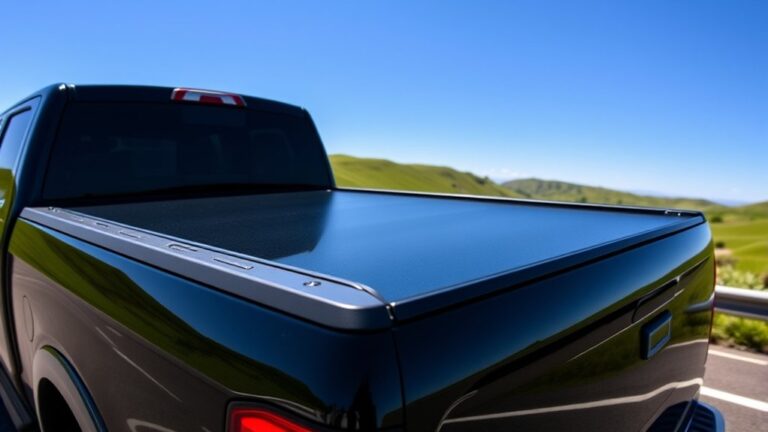
To install a back rack with a tonneau cover, first ensure both parts are compatible with your truck’s make and bed dimensions. Confirming the fit is crucial for a successful installation.
Gather all necessary tools, such as wrenches and mounting hardware, before starting. Clean and inspect the truck bed for any damage or debris to provide a solid foundation.
Securely bolt the back rack in place, making sure it is aligned precisely. Next, attach the tonneau frame, fitting it around the rack without causing any interference.
Seal all edges using weather-resistant materials to protect against the elements. Finally, test the cover’s fit and function thoroughly to ensure durability and smooth operation.
Understanding these detailed steps will optimize your installation results and enhance the overall performance of your back rack and tonneau cover.
Choose the Right Back Rack and Tonneau Cover
How do you guarantee compatibility between your back rack and tonneau cover? Start by prioritizing backrack selection that matches your truck’s make and model. Verify the rack’s dimensions against your truck bed specifications to ensure secure mounting points.
Next, evaluate tonneau fit compatibility by checking cover types: roll-up, folding, or retractable, and their integration with your chosen back rack. Measure clearance and attachment methods to prevent interference during operation.
Confirm that the back rack design accommodates the tonneau’s locking mechanisms and seals to maintain weather resistance. Consulting manufacturer guidelines and fitment charts streamlines this process.
Gather Tools and Materials Needed for Installation
Where should you begin when preparing to install a back rack with a tonneau cover? Start by gathering all necessary tools and materials to ensure a smooth installation process. You’ll need a socket wrench set, screwdrivers, torque wrench, measuring tape, and possibly a drill with appropriate bits.
Don’t forget mounting hardware, such as bolts, washers, and brackets, usually included with the back rack kit. Avoid mixing discussion ideas or unrelated topics like vehicle modifications unrelated to the bed area to maintain focus.
Organize your workspace to keep these items accessible and prevent delays. Having everything ready before you begin streamlines the installation, reduces errors, and ensures you’re not interrupted searching for tools mid-process.
This methodical preparation is key to a successful, efficient installation.
Prepare Your Truck Bed for Installation
Before you begin installing the back rack and tonneau cover, thoroughly clean and inspect your truck bed to ensure a secure fit. Remove dirt, debris, and any residues using a brush and appropriate cleaning agent.
Check the truck bed surface for dents, rust, or damage that could affect installation. Use a flashlight to examine corners and edges carefully. Verify that mounting points for the back rack and tonneau cover are intact and free from obstructions.
Gather your installation tools and keep them within reach to streamline the process. Ensure the truck bed is dry before proceeding to prevent moisture-related issues during installation.
Taking these preparatory steps enhances alignment accuracy and guarantees the durability of both the back rack and tonneau cover once installed.
Install the Back Rack Securely to Your Truck Bed
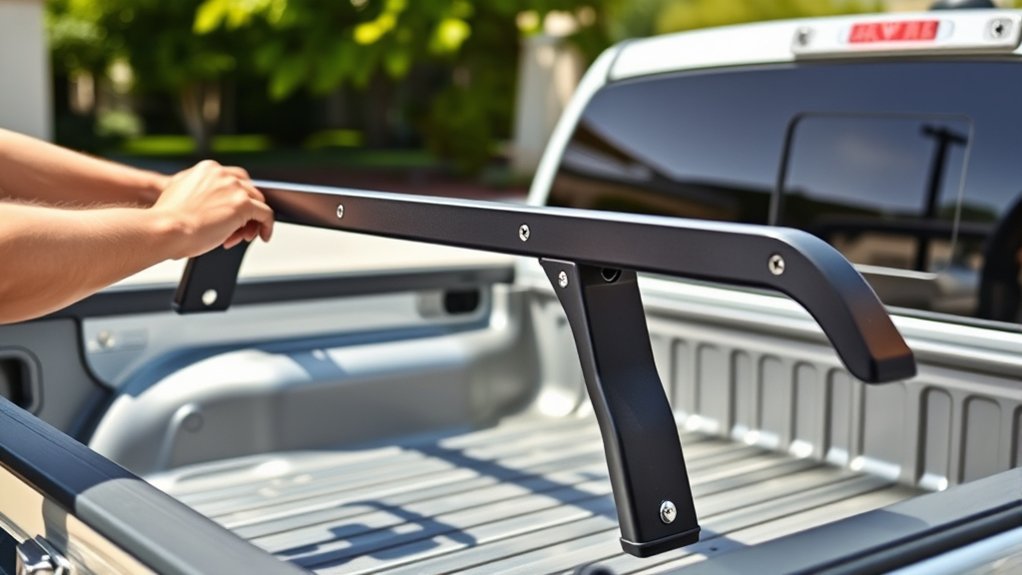
With your truck bed clean, dry, and inspected, you’re ready to position the back rack. Align the rack precisely at the front edge of the bed, ensuring it does not interfere with the tonneau cover’s mechanism.
Secure the back rack using the mounting points provided on your truck bed. Follow these steps:
- Place the back rack evenly across the width of the truck bed.
- Confirm clearance between the rack and tonneau cover frame.
- Insert bolts through the rack’s base into factory-drilled holes.
- Use washers and lock nuts to prevent loosening.
- Tighten all fasteners with a torque wrench to manufacturer specifications.
This methodical approach guarantees a solid, vibration-free installation that won’t compromise the tonneau cover’s functionality or your truck’s structural integrity.
Attach the Tonneau Cover Frame to Your Truck Bed
Start by carefully aligning the tonneau cover frame with your truck bed to guarantee a proper fit. Next, secure the frame by tightening all clamps evenly, following the manufacturer’s torque specifications. Finally, double-check the frame’s stability before proceeding to the next step.
Align Frame With Bed
How do you guarantee the tonneau cover frame fits securely onto your truck bed? Start by carefully aligning the frame to ensure a flush fit with your truck’s edges and the back rack. Precise positioning is critical to avoid gaps and ensure structural integrity.
Focus on these key alignment points:
- Position frame rails parallel to bed sides
- Center frame front edge against the back rack
- Confirm uniform clearance along both rails
- Adjust frame height to match bed sides evenly
- Verify no interference with tailgate operation
This meticulous alignment ensures your back rack and tonneau cover work seamlessly together, providing both protection and durability. Take your time; accuracy here sets the foundation for a secure installation.
Secure Clamps Tightening Process
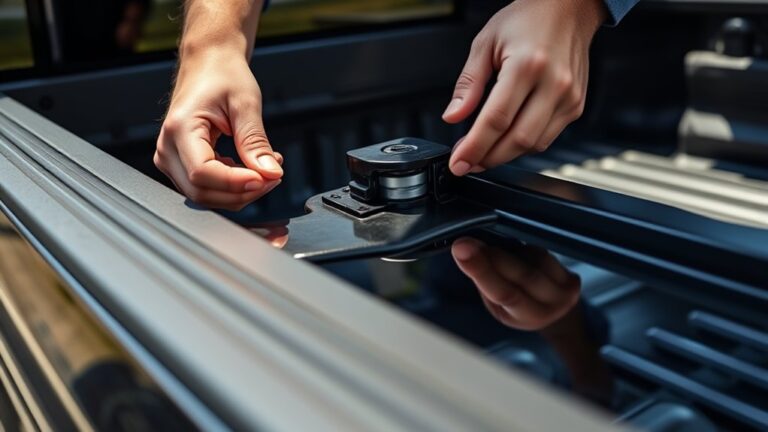
A secure connection between the tonneau cover frame and your truck bed depends on properly tightening the clamps. Begin by referencing the clamp torque guidelines to ensure the correct torque is applied, preventing damage or loosening under load.
Use a calibrated torque wrench to tighten each clamp evenly, minimizing uneven pressure that could affect frame integrity. Perform a back stress analysis by visually inspecting clamp points for any deformation or misalignment.
Tighten clamps incrementally in a cross-pattern sequence to distribute forces uniformly.
| Step | Action |
|---|---|
| 1 | Position clamp on frame edge |
| 2 | Hand-tighten clamp |
| 3 | Apply torque wrench per guide |
| 4 | Inspect clamp alignment |
| 5 | Repeat for all clamps |
Following this method ensures a durable, stable attachment.
Check Frame Stability
Why is verifying frame stability essential after attaching the tonneau cover frame to your truck bed? A thorough frame inspection ensures secure attachment, prevents damage, and maintains safety. Neglecting this step may void warranty considerations or cause premature wear.
Follow these steps to check frame stability:
- Visually inspect all joints and mounting points for gaps or misalignment.
- Apply moderate pressure to test for any frame movement or flex.
- Confirm that all clamps and bolts remain tight after initial installation.
- Use a torque wrench to verify fasteners meet manufacturer specifications.
- Listen for unusual noises when applying stress to the frame.
Performing this methodical check guarantees your tonneau cover frame remains stable, protecting your investment and complying with warranty requirements.
Fit the Tonneau Cover Around the Back Rack
Start by carefully aligning the tonneau cover so it fits snugly around the back rack. Make sure the edges and corners are positioned correctly to avoid gaps or tension. Then, secure the cover firmly to maintain a tight, weather-resistant seal.
Align Cover With Rack
How do you guarantee the tonneau cover fits neatly around the back rack? Begin by positioning the cover so it aligns precisely with the rack’s edges. Pay attention to the following:
- Confirm the cover’s orientation matches your truck bed and rack.
- Adjust for soundproofing comfort by ensuring the cover sits flush without gaps.
- Check color options to maintain aesthetic consistency with your vehicle.
- Smooth out wrinkles or folds to avoid interference with the rack structure.
- Use visual markers on both the cover and rack to verify symmetrical alignment.
This methodical approach ensures the cover contours perfectly around the back rack, promoting durability and optimal performance. Proper alignment not only enhances soundproofing comfort but also prevents premature wear caused by misfitting edges.
Secure Edges And Corners
Once the tonneau cover is properly aligned, you’ll need to secure its edges and corners tightly around the back rack to ensure a stable fit. Start by pulling the cover’s edges evenly over the rack’s frame, avoiding any slack that could cause shifting.
Use the built-in fastening system, whether snaps, Velcro, or clamps, to firmly secure edges along the perimeter. Pay special attention to corner reinforcement; these areas endure more stress and require additional tightening to prevent lifting or wear.
If your cover includes corner reinforcements or added straps, engage them fully to lock the cover in place. Double-check that all fasteners are engaged and that the cover contours snugly without tension points.
This methodical approach ensures durability and consistent protection from weather and debris.
Seal and Secure the Tonneau Cover on Your Truck Bed
Why is it essential to seal and secure the tonneau cover properly on your truck bed? Proper sealing ensures protection against water, dust, and debris while maintaining the structural integrity between the back rack and tonneau cover.
To effectively seal and secure the tonneau cover, follow these steps:
- Align the cover’s edges flush with the truck bed rails and back rack.
- Use weather-resistant adhesive strips or rubber gaskets along contact points.
- Engage all clamps or latches firmly to prevent movement.
- Inspect and adjust tension cables or straps for an even pull.
- Check for gaps or loose spots, reinforcing with additional sealing tape if necessary.
This methodical approach guarantees a tight, secure fit, preserving the durability and functionality of both the back rack and tonneau cover.
Test the Fit and Functionality of Your Back Rack and Tonneau Cover
Where should you focus when testing the fit and functionality of your back rack and tonneau cover? Begin by inspecting all mounting points on the back rack to confirm secure attachment without play or looseness.
Next, examine the tonneau cover alignment to ensure it sits flush against the truck bed rails and seals properly. Open and close the tonneau cover multiple times, verifying smooth operation without catching on the back rack or other components.
Check for any gaps or misalignments that could allow water ingress or reduce security. Finally, test the stability of the combined setup by applying moderate pressure to the back rack and tonneau cover, confirming there’s no unwanted flex or movement.
This methodical evaluation guarantees your installation performs reliably under typical driving conditions.
Maintain and Clean Your Back Rack and Tonneau Cover
How often should you maintain and clean your back rack and tonneau cover to ensure optimal performance? Establishing a regular cleaning routine is essential to prevent corrosion, fading, and mechanical wear. Follow these maintenance tips to keep both components in peak condition:
Inspect mounting points and fasteners weekly for tightness and corrosion.
Check mounting points and fasteners weekly to ensure they remain tight and free from corrosion.
Clean the tonneau cover with mild soap and water monthly, avoiding harsh chemicals.
Lubricate hinge and latch mechanisms every three months to ensure smooth operation.
Remove debris and dirt from the back rack surfaces weekly to prevent abrasion.
Apply a UV protectant on the tonneau cover quarterly to maintain material integrity.
Frequently Asked Questions
Can I Install a Back Rack and Tonneau Cover Without Professional Help?
You can install a back rack and tonneau cover without professional help by carefully verifying installing compatibility. Follow precise instructions and prioritize installation safety to avoid damage or injury during the methodical assembly process.
Will a Back Rack Affect My Truck’s Fuel Efficiency?
Yes, a back rack can affect your truck’s fuel economy by altering rack aerodynamics, increasing drag. To minimize fuel loss, choose a low-profile rack designed for optimal airflow and secure it tightly to reduce turbulence while driving.
Are There Weight Limits for Loading Items on the Back Rack?
You should never exceed your back rack’s weight limits, typically around 200-300 pounds. Proper load distribution is vital to avoid structural damage and maintain vehicle stability.
Always follow manufacturer specifications precisely and methodically.
Can I Use a Tonneau Cover With a Back Rack on Different Truck Models?
You can use a tonneau cover with a back rack on various truck models, but ensure backrack fitment matches your truck’s dimensions. Verify tonneau compatibility to prevent interference and maintain secure installation and function.
How Does a Back Rack Impact My Truck’s Warranty?
Don’t bite off more than you can chew. Improper back rack compatibility or insufficient tonneau clearance can void your truck’s warranty. Always check manufacturer guidelines to ensure installation won’t negatively impact warranty coverage or vehicle integrity.
Conclusion
Installing a back rack with a tonneau cover might seem complex, but following each step methodically guarantees a secure, functional fit. Don’t worry about compatibility—choosing the right products upfront eliminates most issues.
With proper preparation, precise installation, and thorough testing, you’ll achieve a durable setup that protects your cargo and enhances your truck’s utility. Regular maintenance keeps everything operating smoothly, making the effort well worth your time and investment.
By carefully installing a back rack with a tonneau cover, you ensure long-lasting protection and improved functionality for your vehicle.