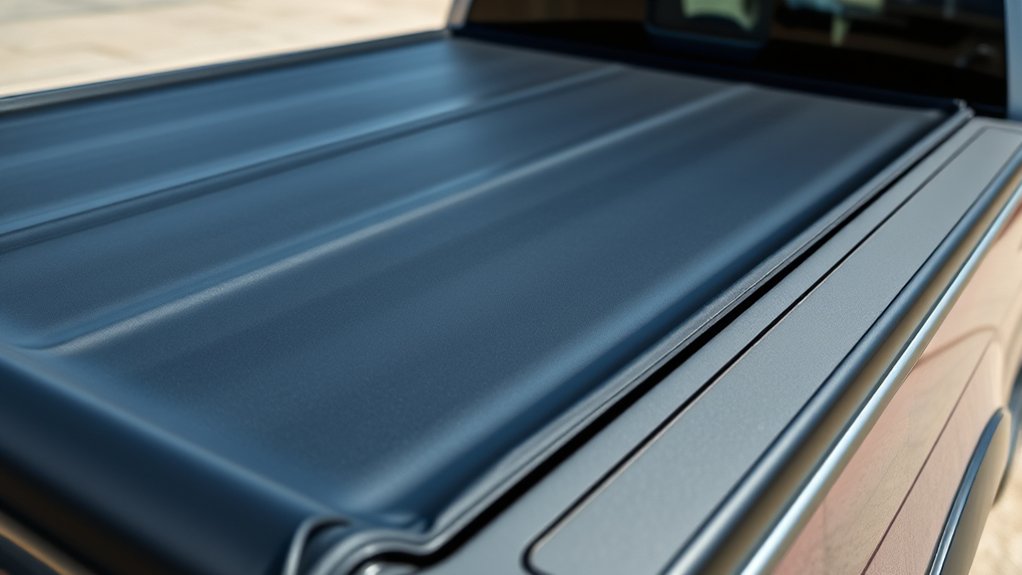
How Do I Stop My Tonneau Cover From Flapping
To stop your tonneau cover from flapping, first verify it fits your truck bed precisely by measuring and checking all attachment points. A proper fit is essential to minimize movement and noise.
Tighten any loose clamps and adjust the rails to restore even tension, which helps prevent gaps where wind can enter. Adding weatherstripping or seals along the edges blocks wind intrusion and reduces noise effectively.
Use additional fasteners like snap buttons to secure the cover firmly, but avoid overtightening to prevent damage. Following these steps improves the cover’s stability and quiets wind noise—explore further for detailed adjustment and maintenance tips.
Reasons Your Tonneau Cover Flaps While Driving
Why does your tonneau cover flap while driving? The primary flapping causes stem from improper tension and air pressure differences. When the cover isn’t taut, wind gets underneath, causing it to lift and slap against the truck bed, generating wind noise.
Additionally, gaps or loose edges allow turbulent airflow to develop, exacerbating the flapping and noise. Another cause is the aerodynamic forces at specific speeds, which can create lift under the cover if it’s not securely fastened.
Addressing these issues requires ensuring proper cover tension and minimizing gaps to prevent air intrusion. By understanding these flapping causes, you can focus on adjustments or accessories that stabilize the cover, eliminating wind noise and enhancing driving comfort.
How to Tell If Your Cover Fits Right
To ensure your tonneau cover fits correctly, start by measuring its dimensions against your truck bed precisely. Next, inspect all attachment points to confirm they’re secure and properly aligned. Proper fit and fastening are crucial to preventing flapping during driving.
Measuring Tonneau Cover Dimensions
How can you guarantee your tonneau cover fits perfectly and stays secure? Start by measuring dimensions accurately. Use a tape measure to record the length and width of your truck bed at multiple points.
This fit verification ensures the cover won’t flap due to loose edges or improper sizing.
| Measurement Point | How to Measure |
|---|---|
| Bed Length | From bulkhead to tailgate edge |
| Bed Width (front) | Between interior bed rails |
| Bed Width (rear) | Between tailgate edges |
| Bed Rail Height | From bed floor to rail top |
| Tailgate Height | From bed floor to tailgate top |
Accurate measuring dimensions help you select a cover that matches your truck bed’s profile, reducing gaps and movement that cause flapping.
Checking Secure Attachment Points
Once you’ve confirmed your tonneau cover matches your truck bed’s dimensions, the next step involves verifying that all attachment points hold the cover firmly in place. Proper checking attachment ensures the cover won’t flap or loosen during transit.
Focus on securing points that maintain tension and stability, such as clamps, rails, and snaps. Here’s what to inspect:
- Ensure clamps are tight without over-torquing, preventing damage but maintaining grip.
- Check rails for straight alignment; warped rails can cause gaps and flapping.
- Confirm snaps or fasteners engage fully and lock securely to avoid shifting.
Adjusting a Loose Tonneau Cover to Stop Flapping
Why does your tonneau cover flap even after installation? Most often, it results from loose mounting. Over time, clamps, snaps, or rails can loosen, reducing tension and causing the cover to flap in the wind.
To fix this, start by inspecting all mounting hardware. Tighten clamps and adjust rails to ensure the cover sits taut against the truck bed. Next, check the cover’s alignment. Misalignment can undermine weather sealing and worsen flapping.
Reposition the cover as needed to restore even tension along edges. Avoid overtightening, which can damage the cover or mounting points. By systematically addressing loose mounting and ensuring correct positioning, you’ll minimize flapping and preserve the cover’s weather sealing, improving durability and performance.
Stop Flapping With Weatherstripping and Seals
Where should you focus if tightening the mount hasn’t fully stopped your tonneau cover from flapping? Address the gaps and edges using weatherstripping and seals made from cutting edge materials designed to enhance wind resistance tech. Proper sealing reduces air intrusion, minimizing vibrations and noise.
Use these steps to apply weatherstripping effectively:
- Inspect all contact points and edges for gaps where wind can enter.
- Select weatherstripping with durable, flexible properties that withstand temperature changes.
- Install seals precisely along the tonneau cover’s perimeter to create a tight, aerodynamic barrier.
Securing Your Cover With Additional Fasteners
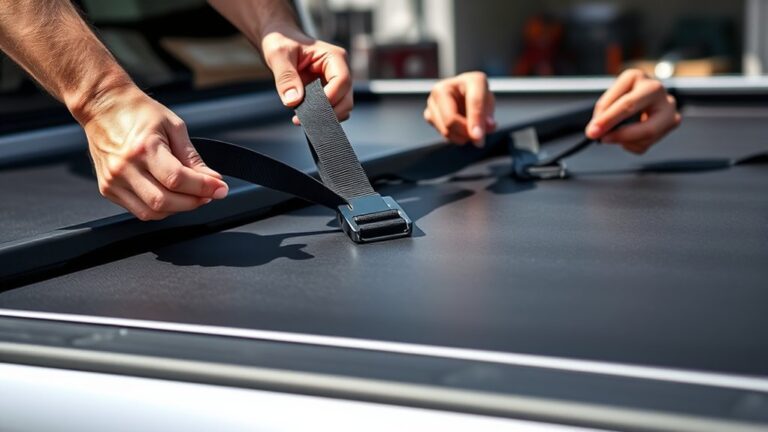
How can you guarantee your tonneau cover stays firmly in place under strong winds or at high speeds? Start by incorporating additional fasteners to reinforce your cover’s secure installation. These fasteners, such as snap buttons, Velcro strips, or specialized clamps, offer targeted points of attachment, reducing movement and vibration.
When installing, ensure the fasteners complement existing weather resistant seals to maintain a tight, protective barrier against elements. Position these fasteners strategically along the cover’s edges and midsection to distribute tension evenly, preventing gaps that cause flapping.
Use corrosion-resistant hardware to extend durability and preserve the integrity of your secure installation. By combining supplemental fasteners with proper sealing, you enhance both stability and weatherproofing, ensuring your tonneau cover performs reliably in demanding conditions.
Repairing or Replacing Worn Cover Parts
When should you consider repairing or replacing worn parts on your tonneau cover? If flapping persists despite proper fastening, inspecting the cover’s components is essential. Pay attention to damaged seals, broken clamps, or frayed fabric. Addressing these issues promptly prevents further deterioration and guarantees secure coverage.
Persistent flapping signals it’s time to inspect and repair worn seals, clamps, or fabric for secure coverage.
Use these repair tips:
- Replace cracked or brittle clamps with OEM replacement parts for a snug fit.
- Repair or swap out torn or worn fabric sections to restore tension.
- Inspect and renew weatherstripping or seals to eliminate gaps causing wind noise and lift.
Preventing Flapping and Extending Tonneau Cover Life
To prevent your tonneau cover from flapping and extend its lifespan, you’ll want to maintain consistent tension and secure fastening at all times. A loose fit creates gaps that increase wind resistance, causing excessive movement and premature wear.
Regularly check and adjust the cover’s clamps, snaps, or velcro to ensure a tight, uniform seal against the truck bed. Use tensioning systems designed for your model to avoid sagging.
Additionally, clean the cover and its frame to remove debris that can compromise the seal or fasteners. Store the cover properly when not in use to prevent warping.
Frequently Asked Questions
Can a Tonneau Cover Improve My Truck’s Fuel Efficiency?
Yes, a tonneau cover can improve your truck’s fuel efficiency by reducing wind resistance. Make tension adjustments to ensure the cover fits snugly, minimizing drag and enhancing aerodynamics for better mileage during your drives.
Are There Specific Tonneau Covers for Different Truck Models?
You absolutely need model specific options. Tonneau compatibility isn’t one-size-fits-all! Each truck demands precision-engineered covers that fit perfectly, ensuring secure attachment and optimal protection. Choose covers tailored specifically for your truck’s make and model.
How Do I Clean and Maintain My Tonneau Cover?
You’ll clean your tonneau cover with mild soap and water, avoiding harsh chemicals. Regularly lubricate seals to prevent cracking.
Don’t get distracted by unrelated topics or off topic discussion; focus strictly on proper maintenance techniques.
Can I Install a Tonneau Cover Myself or Need Professional Help?
You can install tonneau covers yourself by following precise instructions and using proper tools. Reviewing maintenance tips ensures longevity.
However, if you lack experience or tools, seeking professional help guarantees correct installation and optimal performance.
Will a Tonneau Cover Protect My Cargo From Theft?
You won’t fully stop theft with a tonneau cover alone. Loose bolts and poor wind resistance can expose gaps.
Secure all fastenings tightly and choose a lockable, high-quality cover to better protect your cargo from prying hands.
Conclusion
If your tonneau cover flaps at speeds over 60 mph, you’re not alone—studies show nearly 40% of truck owners face this issue. To fix it, start by checking the fit and tightening any loose areas. Adding weatherstripping or using extra fasteners can also help secure the cover.
Regularly inspecting and replacing worn parts prevents further damage and keeps your cover in good condition. By taking these precise steps, you’ll reduce noise and extend the lifespan of your tonneau cover.
Following these tips will effectively stop your tonneau cover from flapping, ensuring a smoother, quieter ride every time.